Room 2 / The century of Angevin monarchs
At the beginning of the 14th century, the Hungarian throne was seized by the Angevin of Naples, Charles Robert. His successor, his son Louis I, became King of Poland in 1370. Economic and military reforms made the country a great power again in Central Europe. A new, representative seat of royal power was built at Visegrád. The country's economic strength was boosted by the newly opened mines. These mines accounted for most of Europe's gold production in the first half of the 14th century. The boom in precious metal mining had a particularly positive effect on the gold- and silversmithing. Most of the surviving masterpieces of the period are liturgical objects for ecclesiastical use. The wealth of secular treasures is reflected in the treasure troves.
Fun facts:
- In the first half of the 14th century, most of Europe's gold production came from mines in Hungary.
- The Visegrád wall fountain, carved of different types and colours of stone, were once even painted.
- The first tiled stoves in Hungary were made in the 14th century.
- The double cross of Louis I. is a 19th-century Viennese forgery, but the enamel pieces on the base are original.
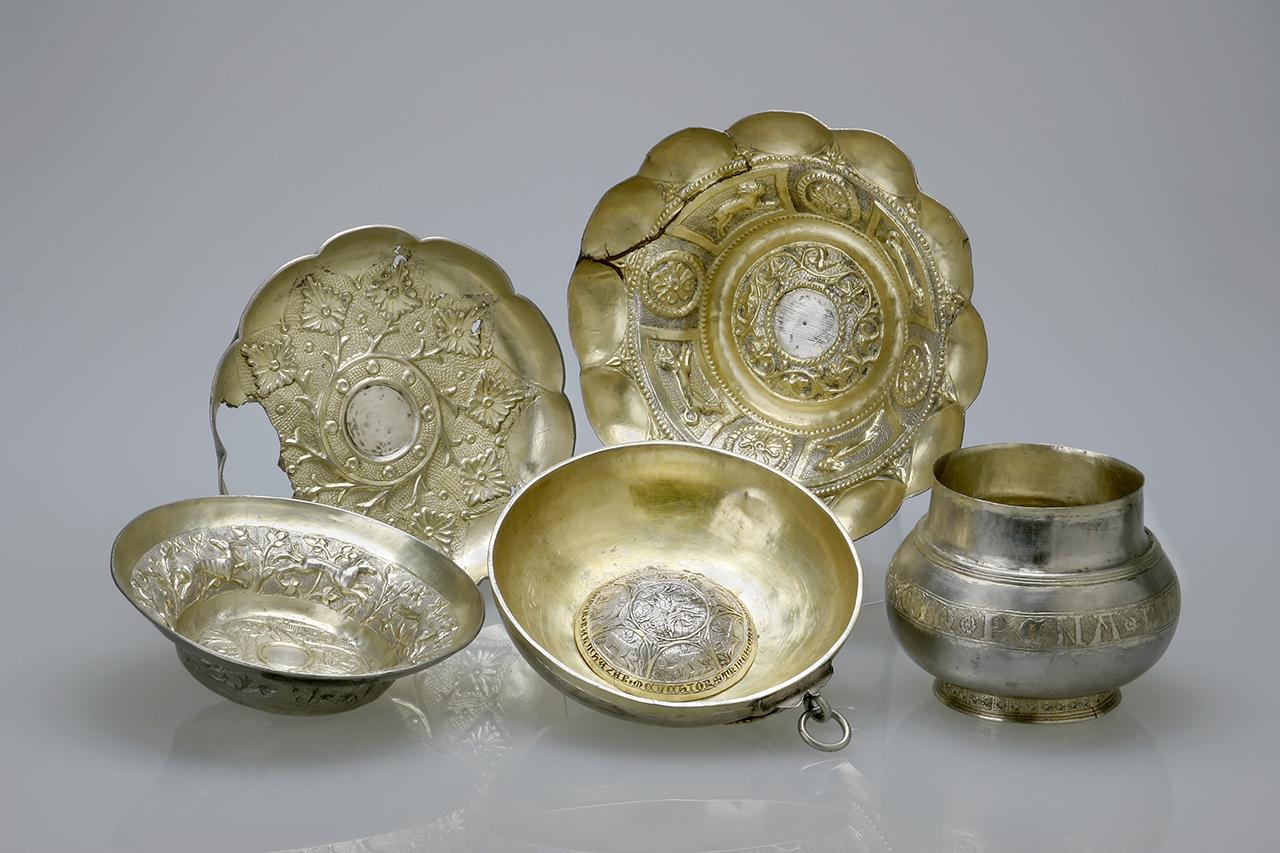
The treasure trove was found in the garden of the castle in Körmend at the beginning of the 19th century. The inscribed, gilded silver vessels and crosses indicate a church owner. The silver coins buried together with the artefacts were collected for over a century: the oldest was a coin of King Andrew III (1290–1301), the most recent of Queen Mary (1382–1395).
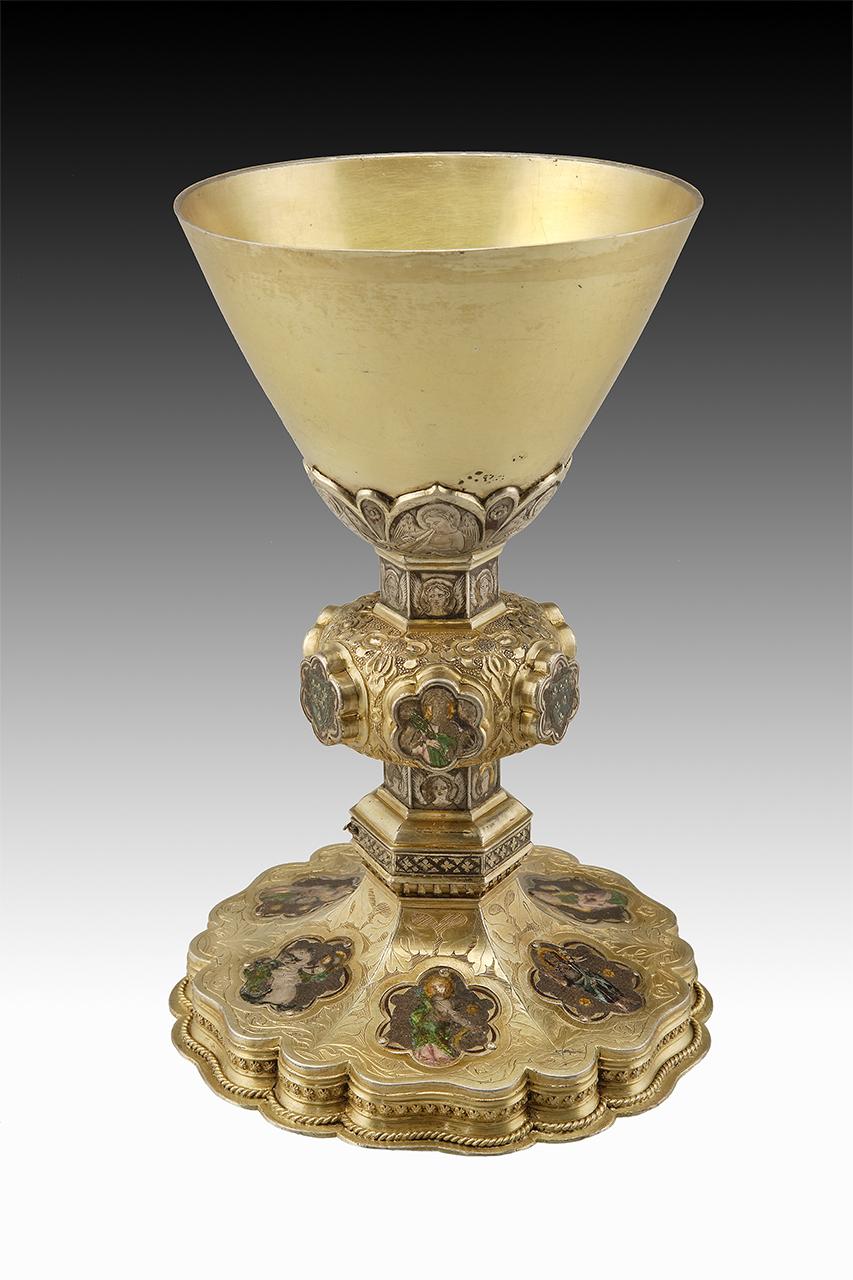
The chalice is from the Reformed church in Vízakna (today: Ocna Sibiului, Romania). Gilded silver, 14th century, it comes from Italy. On the base, enamelled plates depict the figures of Saint George and Saint Barbara.
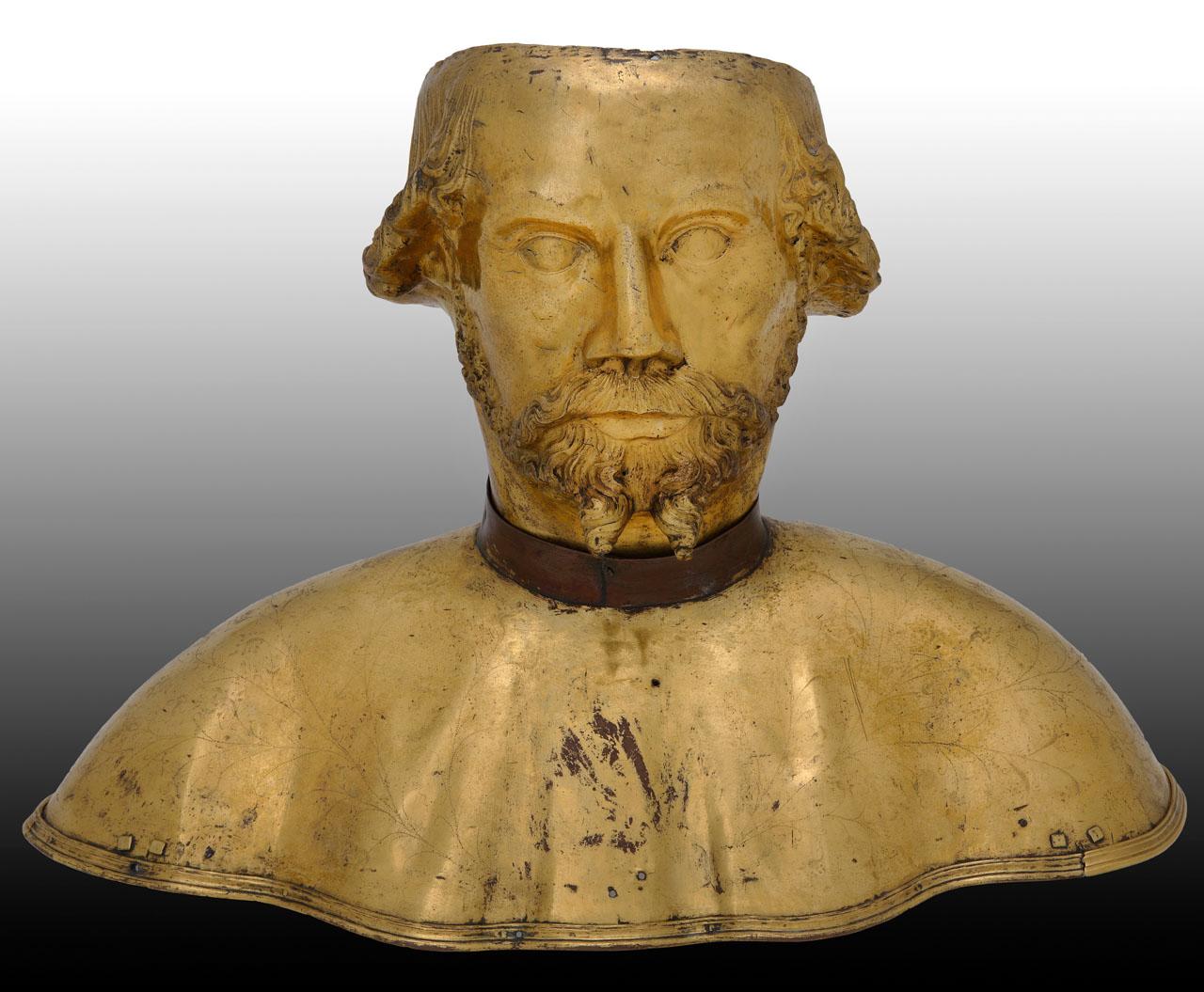
The gilded copper head reliquary was made in the early 15th century. The head may once have been covered with a crown or bishop's mitre. Its maker probably followed South German models, but the punched motifs on the chest show French influence.