Room 1 / Árpádian period
The room presents the first three hundred years of the Kingdom of Hungary (1000-1301), the era of the Árpádian dinasty. Several artefacts are related to the important rulers of the period, including the founding monarch Saint Stephen, and to Saint Ladislaus, and also to Béla III and Béla IV. The exhibition also features relics of the various strata of feudal society (secular and ecclesiastical aristocracy, military, peasantry), as well as those of emerging towns and the Cumans who settled in Hungary after the Mongol invasion.
Fun facts:
- "Latins", i.e. merchants and craftsmen who settled in Hungary from Italy, France, Flanders and Wallonia, played a major role in the formation of cities in the Árpádian period.
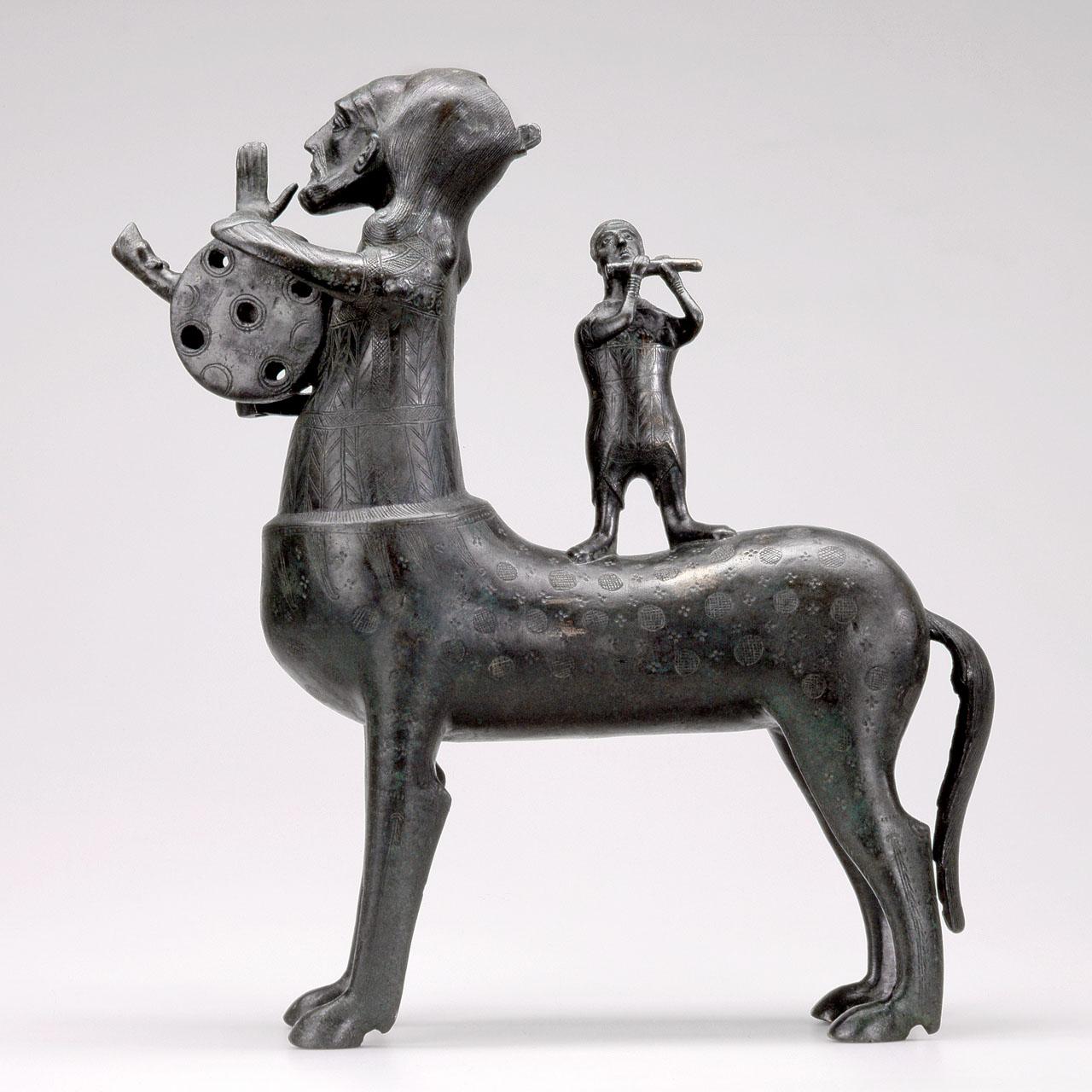
- Human-shaped (female and male heads, hunters, centaurs) or animal-shaped (horse, lion, griffin) bronze water vessels (aquamanilia) were initially used for washing hands during the Holy Mass, but later became popular among the secular aristocracy.
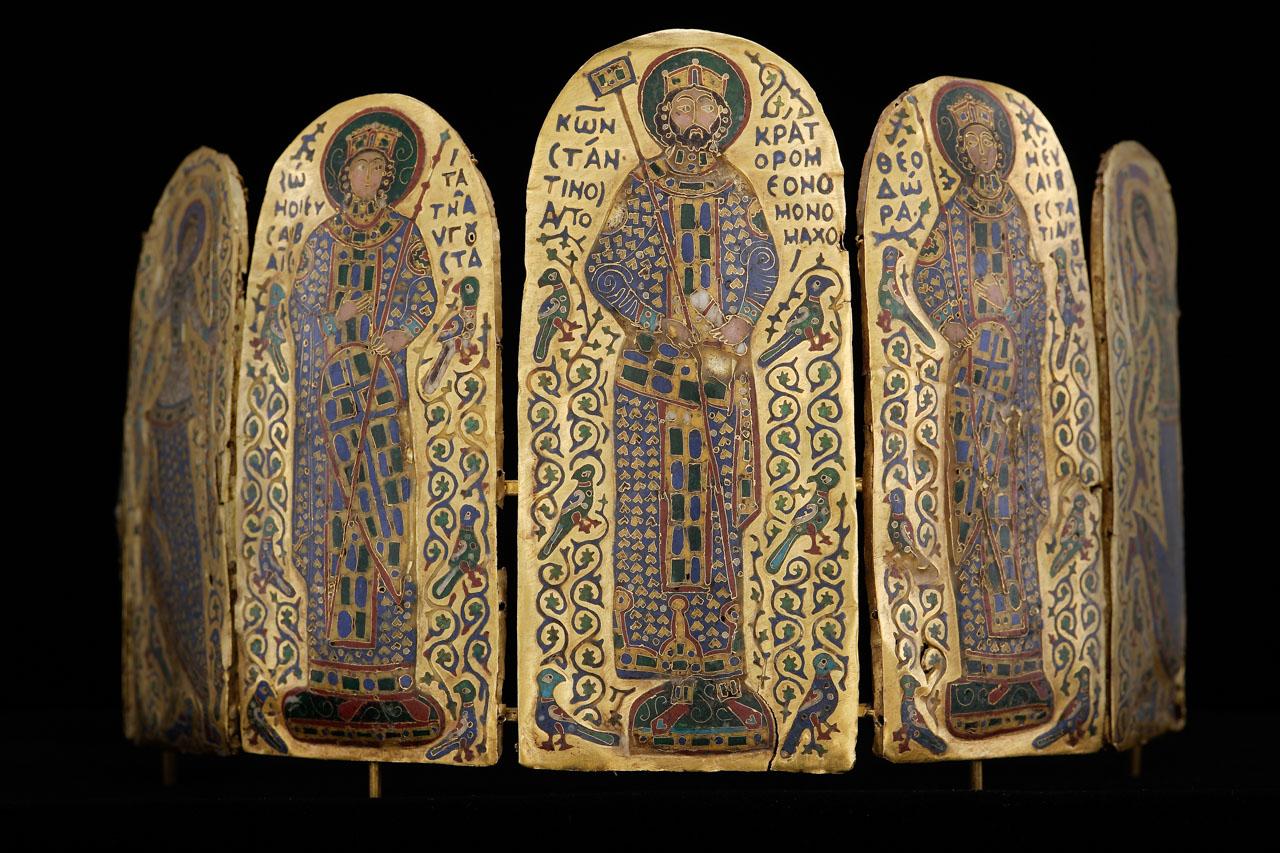
- The unparalleled Monomachus Crown crafted in the Byzantine imperial court, was brought to light by chance. Hidden in the ground during the power struggles of the second half of the 11th century, the crown was turned up by a plough from the ground in 1860 on the outskirts of Nyitraivánka (today: Ivanka pri Nitre, Slovakia).
The seven semi-circular gold plates of the Byzantine cloisonné ensemble, discovered in 1861 in Nyitraivánka (today: Ivanka pri Nitre, Slovakia), depict the "Roman" Emperor Monomachus IX Constantine (r. 1042–1055) and six standing female figures, while two medallions show the bust of apostolic brothers, Saint Andrew and Saint Peter. The plates decreasing in size in pairs, depict female figures, the last descendants of the Macedonian dynasty, Zoë (d. 1050) and her sister, the Empress Theodora (d. 1056), two dancing women and two figures of the Virtues, Truth and Humility, surrounded by a vine scroll of birds and a pair of cypresses (the Virtues) respectively. The plates may originally have been mounted on a cap and their universal peace programme could be interpreted in a Sasanid, Islamic, ancient and Old Testament context, while the two apostles, which were included in this ensemble for secondary use, referred to Rome and Constantinople, the scene of their activities, and the Latin and Greek churches they led respectively.
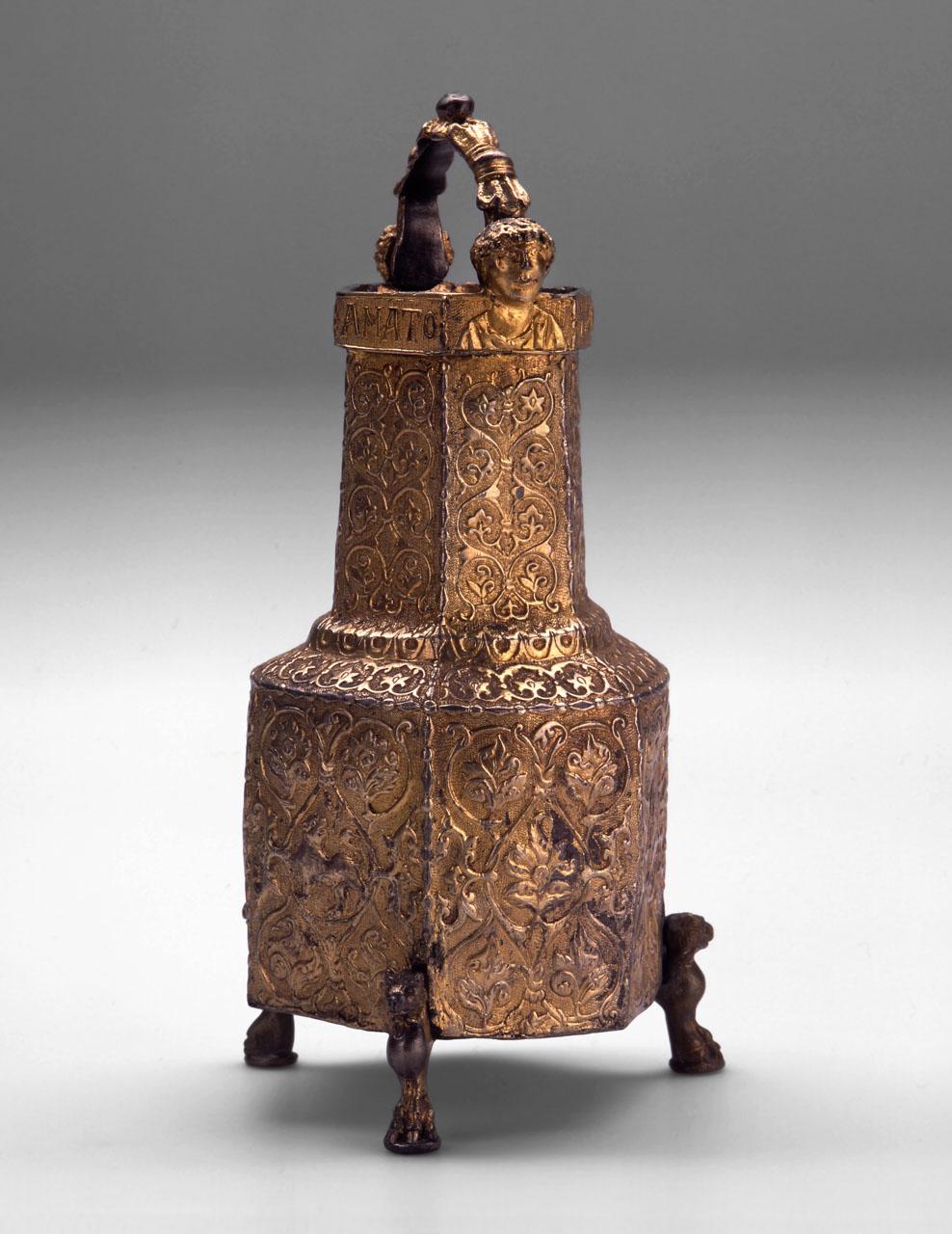
The Byzantine, gilded silver holy water font inscribed in Greek is supported by three – partially reconstructed – lion and griffin ornamented legs, its body a hexagonal form, the wider base is connected to the narrower upper part by a stepped, sloping section. Its movable upper handle is joined to the vessel at the bust of two youths, and above, at the level of the youths' busts, is the corrupted Greek inscription, the current interpretation of which is: "Christ, the living fountain of healings". The palmette vines covering the vessel are set against a circular punched background, with three palmettes alternating with three mythological beasts in the lower almond-shaped space of the vines. The palmettes are an early example of the so-called flower-leaf ornamentation renewed at the Byzantine imperial court in the mid-10th century, based on Chinese designs.
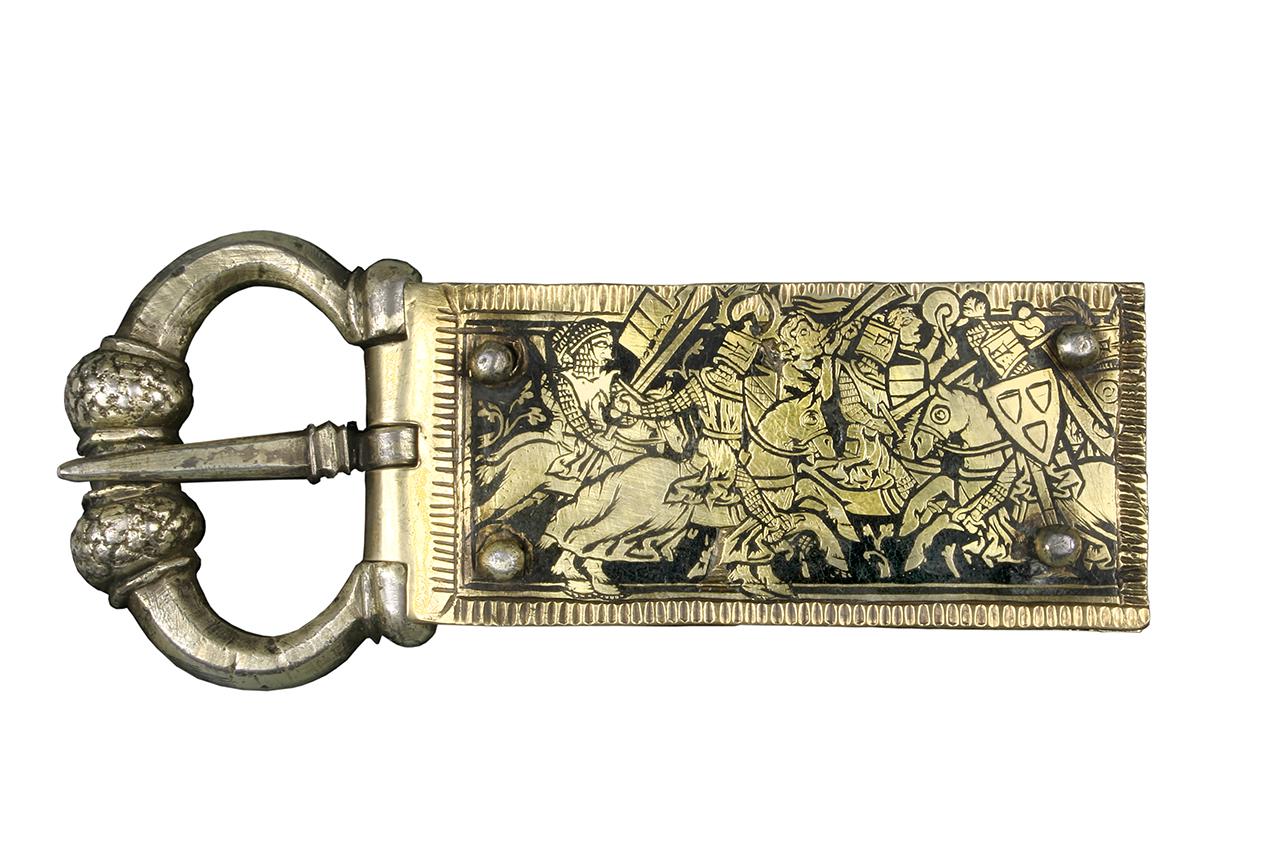
The gilded silver buckle found at Bajna was made in the mid-13th century using the opus duplex technique particularly popular at the courts of Andrew II and Béla IV.
The centaur and the flute-playing boy figure on his back (probably Chiron and Achilles) are the product of the famous Hildesheim bronze foundry from the 1220s, and may have come to Hungary thanks to the close links established with the German Empire at the court of Andrew II.
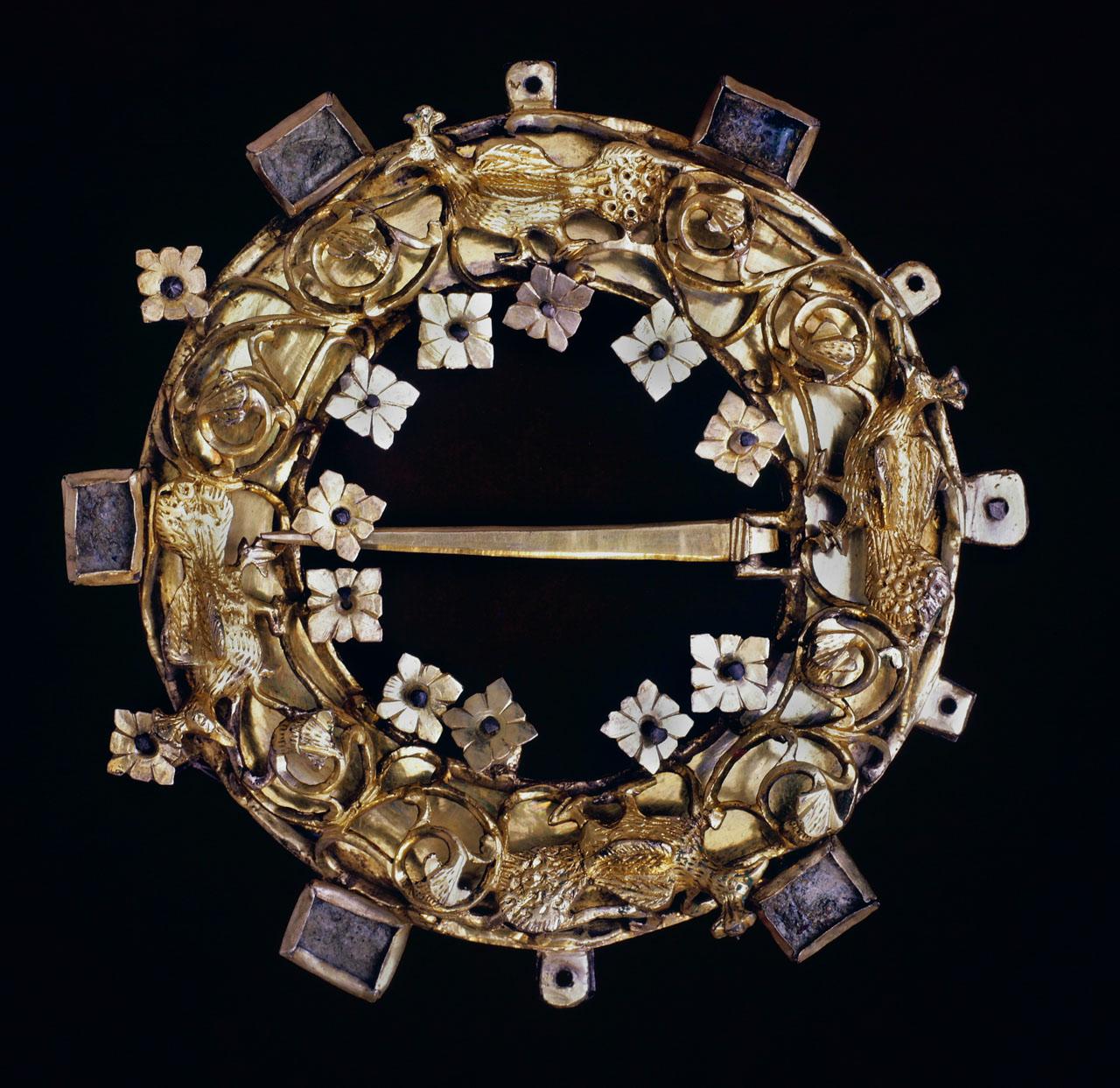
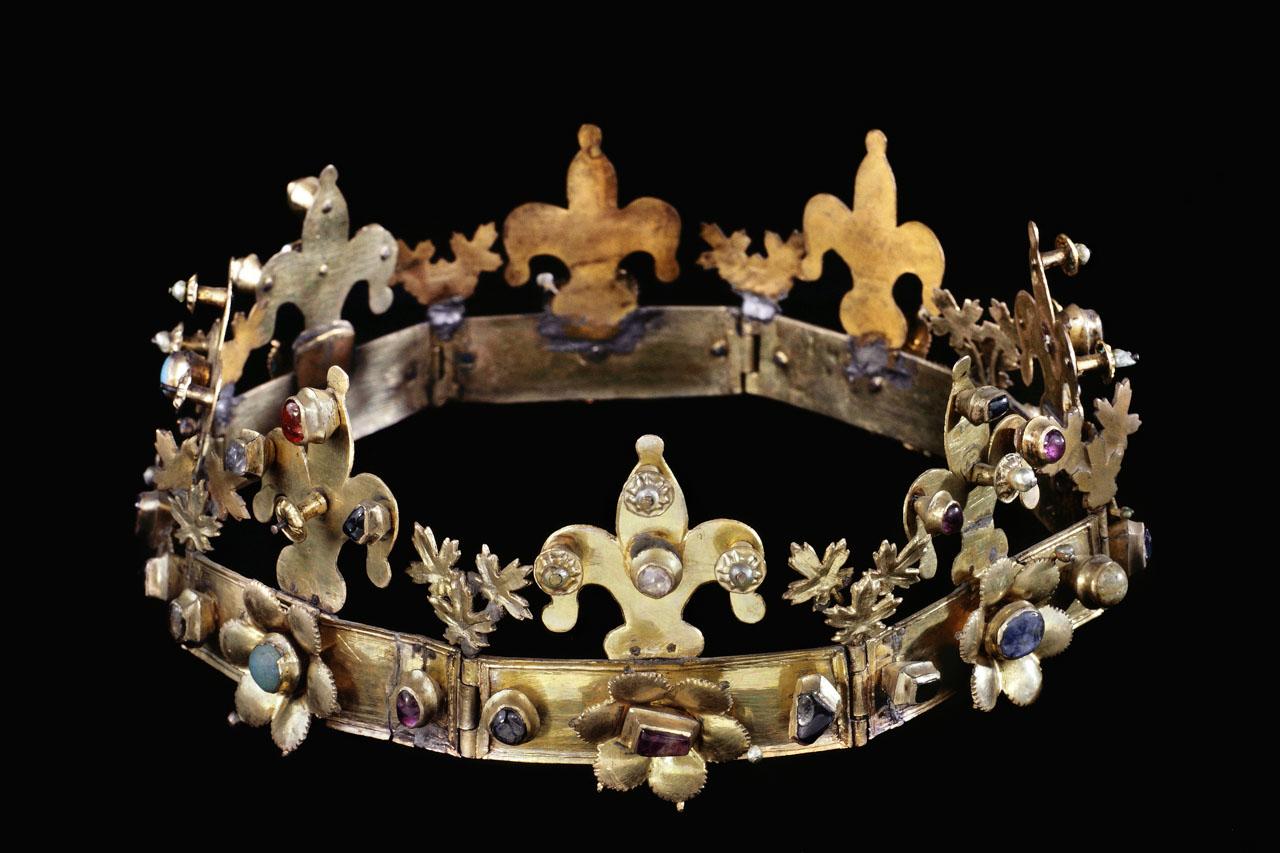
The lily and rosette ornamented crown was found in 1838 in a royal tomb of a Dominican monastery on Margaret Island – perhaps the tomb of King Stephen V. It may have been crafted in the second half of the 13th century, influenced by French classical Gothic style.
The golden belt buckle found in the tomb of a Cuman noble shows a chivalric combat scene decorated with niello, while on the circular mounts, also with niello, a prayer to the saints James, Bartholomew, Stephen and Margaret can be read. The French-influenced, but presumably Italian, object may bear witness to the relationship between the Angevin rulers of Naples and the Cuman nobles of Hungary from the 1260s–70s.