Room 3 / King Sigismund and the Hunyadis
During the long, 50-year reign of King Sigismund of Luxembourg (1387–1437), royal residences (Visegrád, Buda, Pozsony) were built one after the other, representing the great power of the ruler, who had been elected German king and later emperor. Sigismund's ambition to shape world politics naturally had an impact on Hungary's domestic policy. Among the outstanding examples of late Gothic art, we mainly present church furnishings, altar vessels and costumes. In the period following the death of Sigismund, the task of preparing for the war against the Turks fell to János Hunyadi, who was elected governor.
Fun facts:
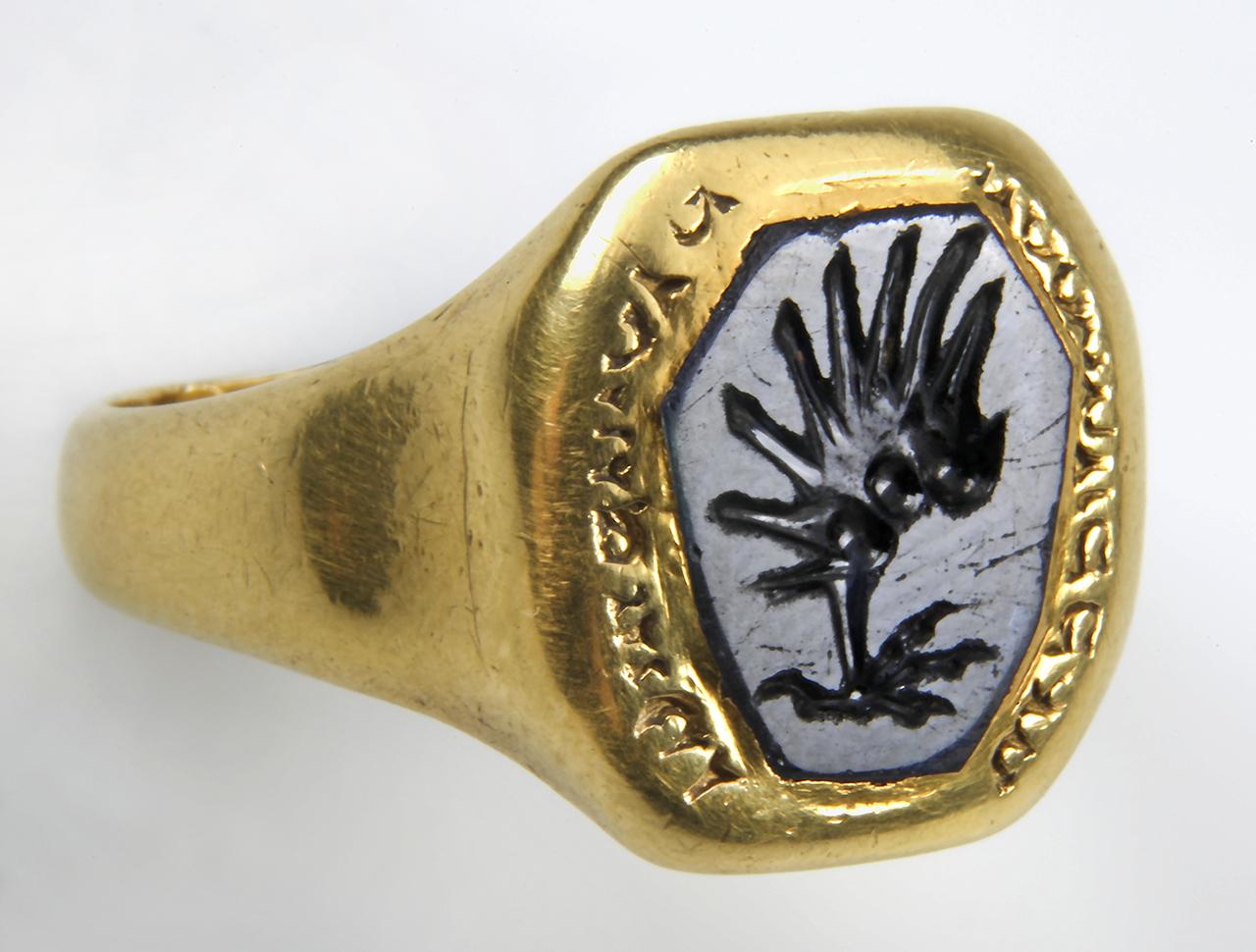
- The king was imprisoned by the Hungarian barons at Siklós in 1401. The leader of the anti-Sigmond league was János Kanizsai, Archbishop of Esztergom, who was in charge of the Council of the Holy Crown and lost the ring with a coat of arms displayed in the left front display case.
- Upon being captured the king was defended by Lőrinc Tari alone, and he was injured in the process. He then embarked on a long pilgrimage to Bari, Crete, Compostela, and then saw a vision in Saint Patrick's Purgatory (a deep cave on an island in Ireland), the description of which is one of the major works of medieval visionary literature. According to Sebestyén Lantos Tinódi, in Lőrinc's vision, his king Sigismund and his queen Borbála Cillei appeared in a fiery stream of hell. When King Sigismund was told this, he was terrified and founded the Church of St. Sigismund in the Buda Castle, pledging 7 towns in Szepesség (today: Spiš, Slovakia) to Poland. Retreating to his estate, Lőrinc merely added to the sanctuary of his church, including the window shown in the exhibition.
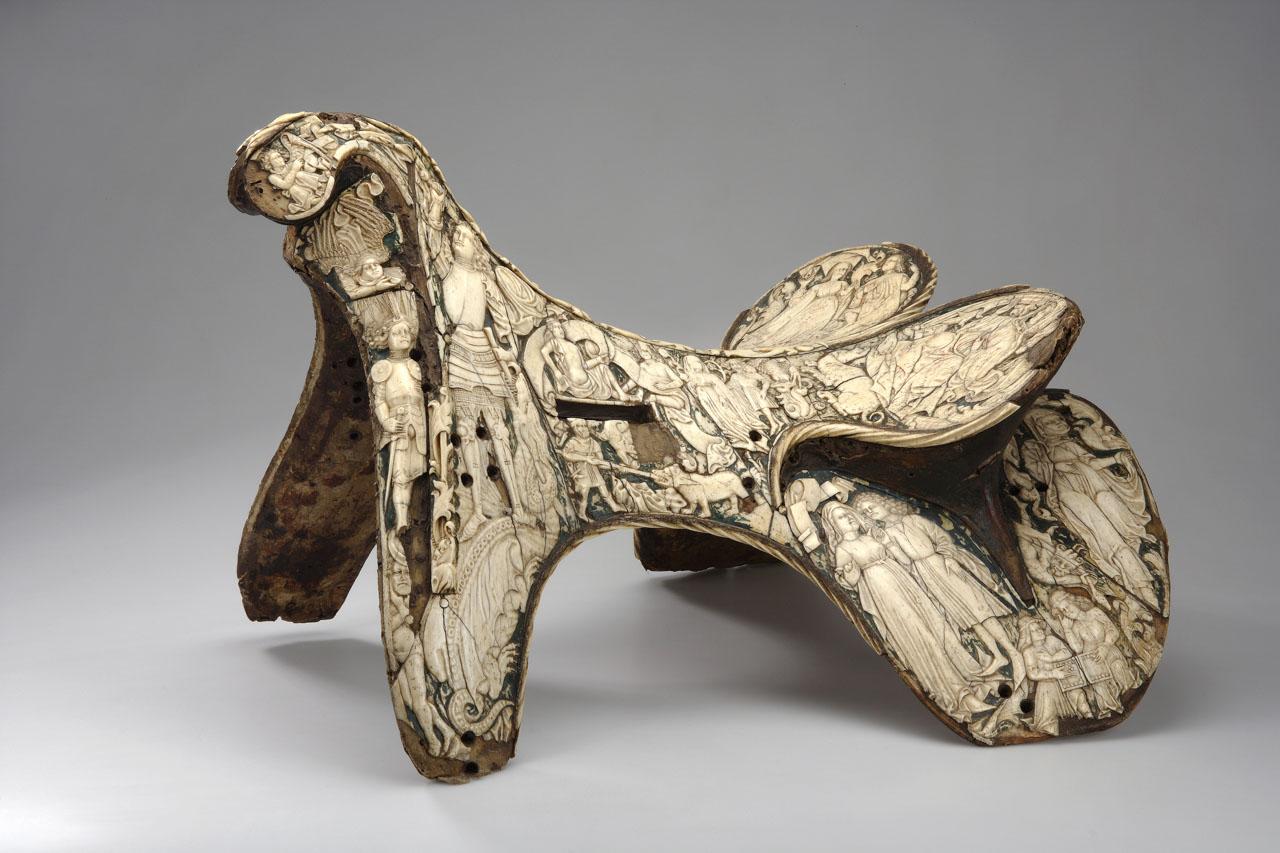
- The Order of the Dragon, founded in 1408 by Sigismund and his wife Queen Borbála, with 22 members, was named after the dragon slain by Saint George. Among the members of the Order was the notorious Dracula (Vlad Ţepes, Viscount of Havasalfödi), to whom tradition associates the Jankovich saddle in the exhibition.
- Both as German king and emperor, Sigismund remained steadfast in his veneration of King Saint Ladislaus. In 1408 he decreed that he should be buried next to King Saint Ladislaus in Nagyvárad (today: Oradea, Romania). Indeed he was buried there after his death in 1437 in Bohemia, and his funerary markers were found in 1755 in Nagyvárad.
Many of the carvings on the ceremonial saddle bought by Miklós Jankovich in Bucharest feature popular courtly themes around the scene of Saint George and the dragon, but also the badge of the Order of the Dragon, founded by King Sigismund is visible, which may support the legend that it was originally owned by Vlad Tepes, better known as Dracula, who got his name because of his membership in the Order.
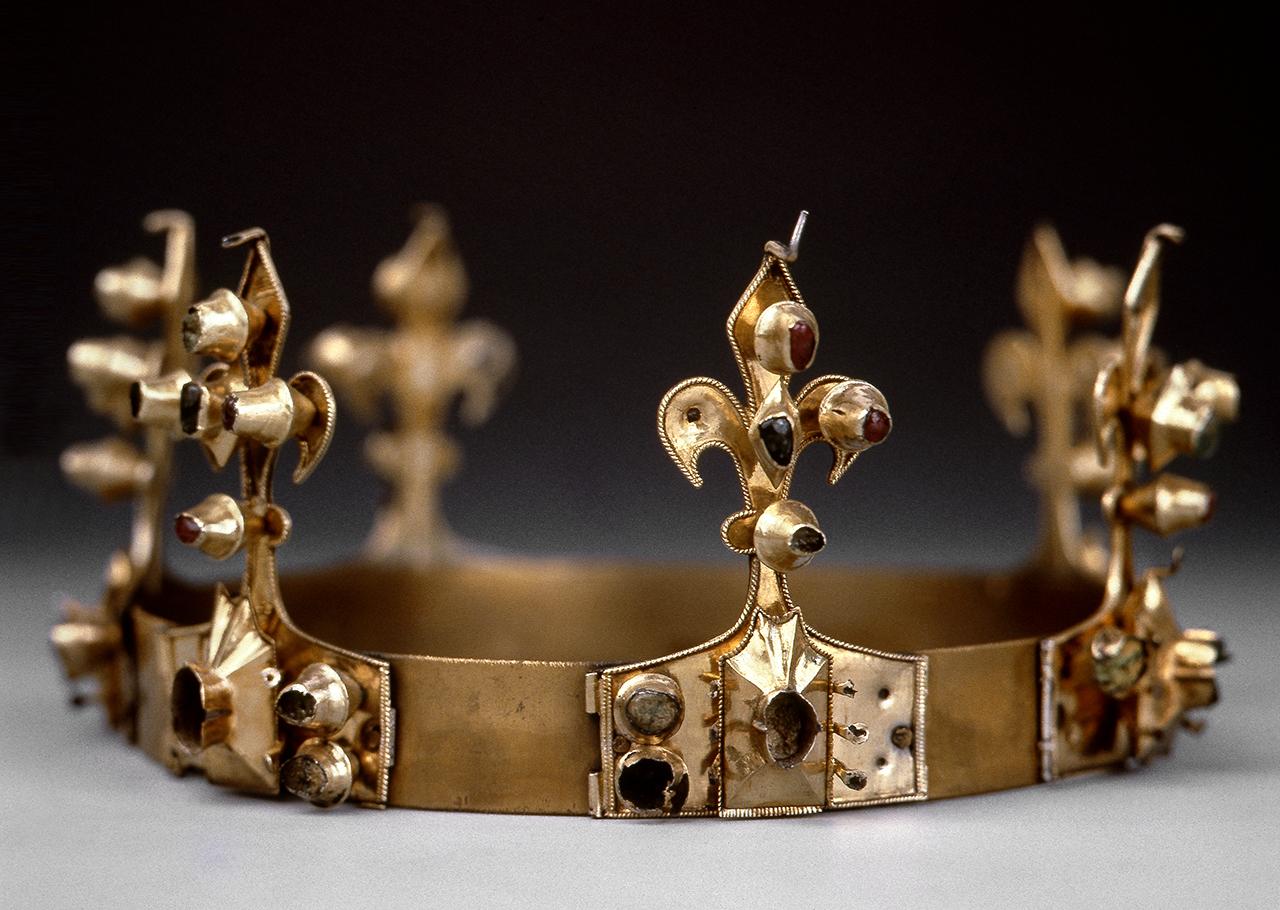
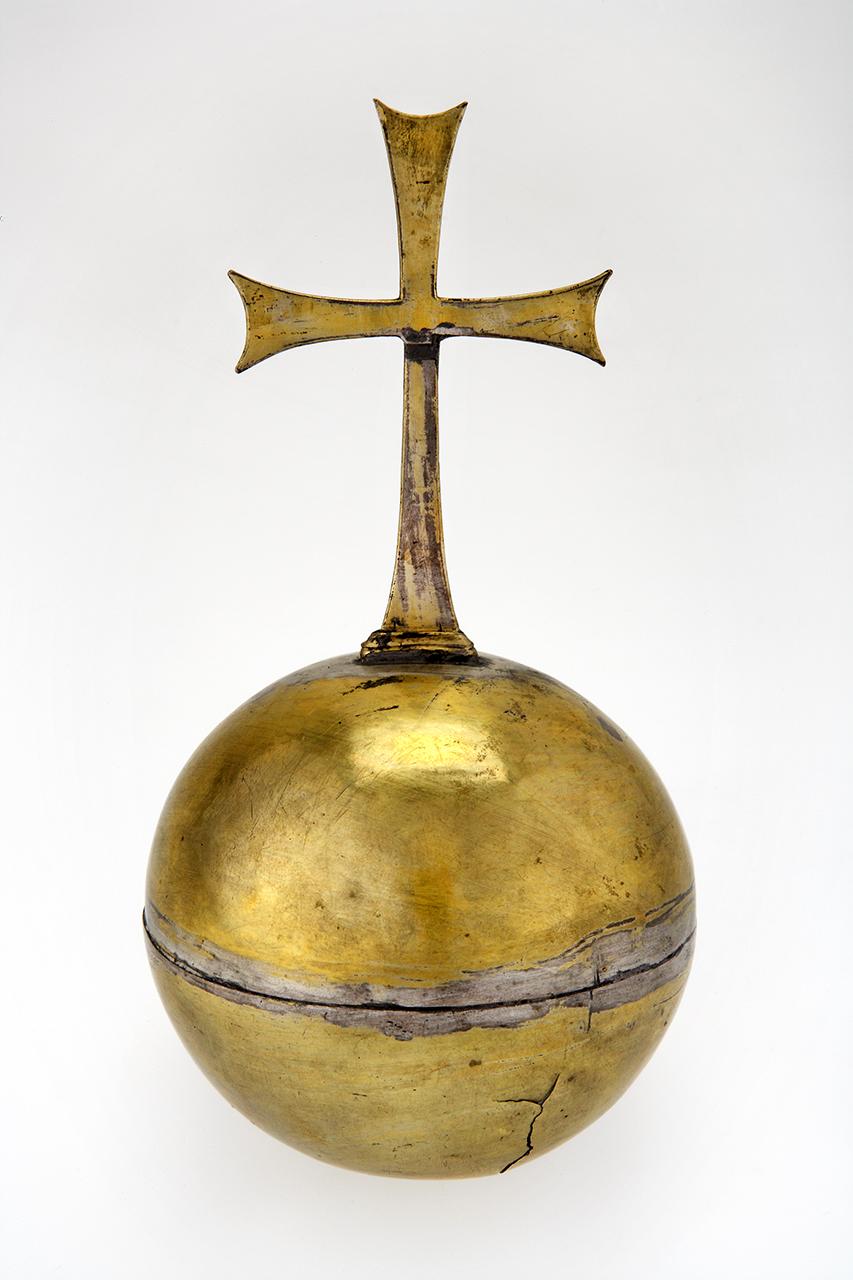
In 1755, a crown and an orb were discovered in a royal tomb in Nagyvárad (today: Oradea, Romania), accompanied by a badge of the Order of the Dragon, which has since been lost. These insignia identify the tomb with that of King Sigismund, who had already ordered as early as in 1408 to be buried in Nagyvárad, near the relics of Saint László.
The royal orb, discovered in 1755 in the royal tomb of Nagyvárad.
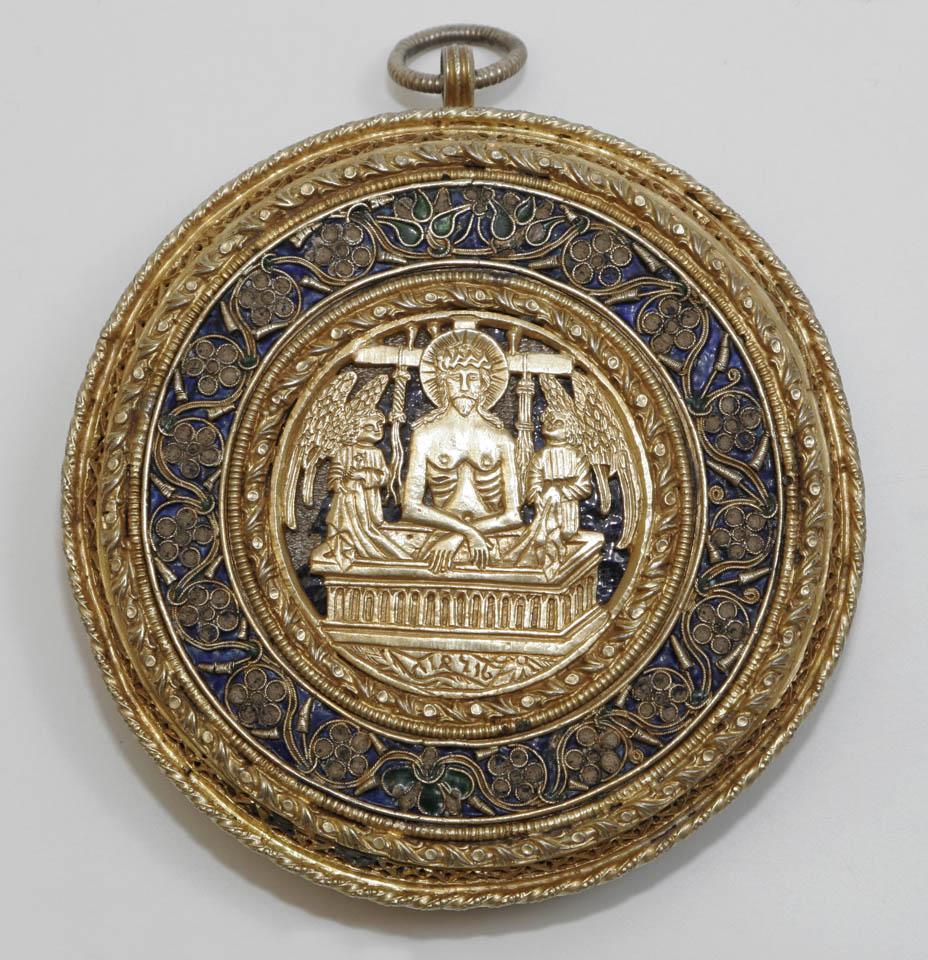
The viaticum pyx – a holder of the host for the sick –, presumably from Transylvania, is richly decorated with wire enamel cloisonné and depicts the Vir Dolorum, the so-called "Christ in Sorrow" rising from the grave, a popular late-medieval symbol of the Eucharist.
János Kanizsai Archbishop of Esztergom lost the gold ring with his coat of arms and sapphire in the monastery of Vértesszentkerest, his family estate, around 1404, at the time of the capture of King Sigismund, when the Holy Crown Council, led by the Archbishop, was ruling instead of the King. After that, he used a different signet ring, as the documents sealed by him show.