Hall 9 / 9th century, Zalavár
In the 9th century the Carpathian Basin was divided into two parts. Areas east of the Danube were inhabited by the remnants of the Avar communities. The area west of the Danube came under the rule of the Carolingian Empire, with the centre of Mosaburg (today's Zalavár). Its churches and palaces gave the settlement the rightful name of "royal city". The objects of costume and utensils testify to the richness and diversity of the culture of its inhabitants.
Fun facts:
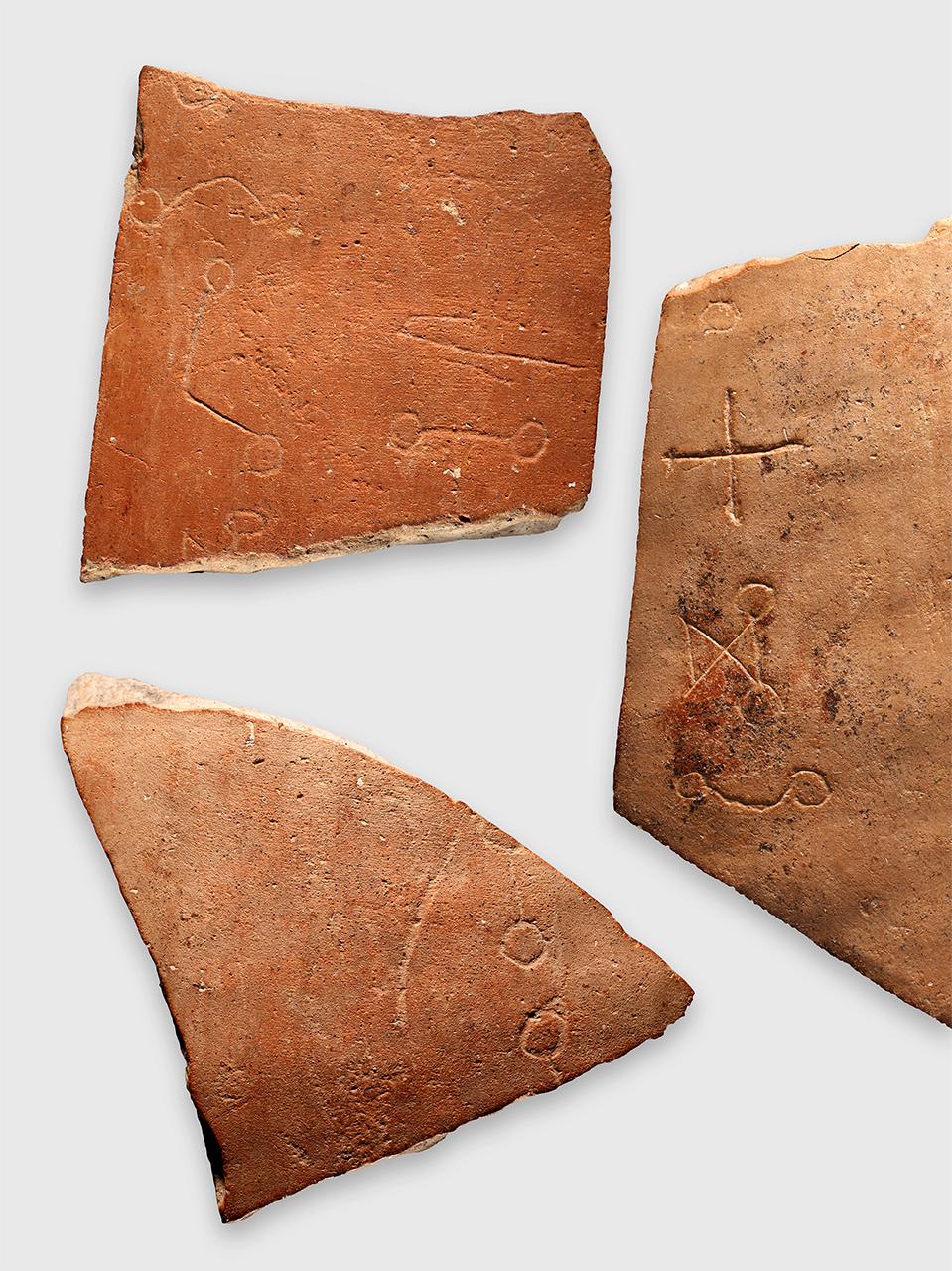
- The earliest evidence of round Glagolitic script (obla glagolica), developed by Constantine (Kirill) around 863 for the specific sounds of the Slavic language, is known from Mosaburg. The graphic signs were carved on the bottles around 866–867 by the disciple believers or possibly by the teachers themselves.
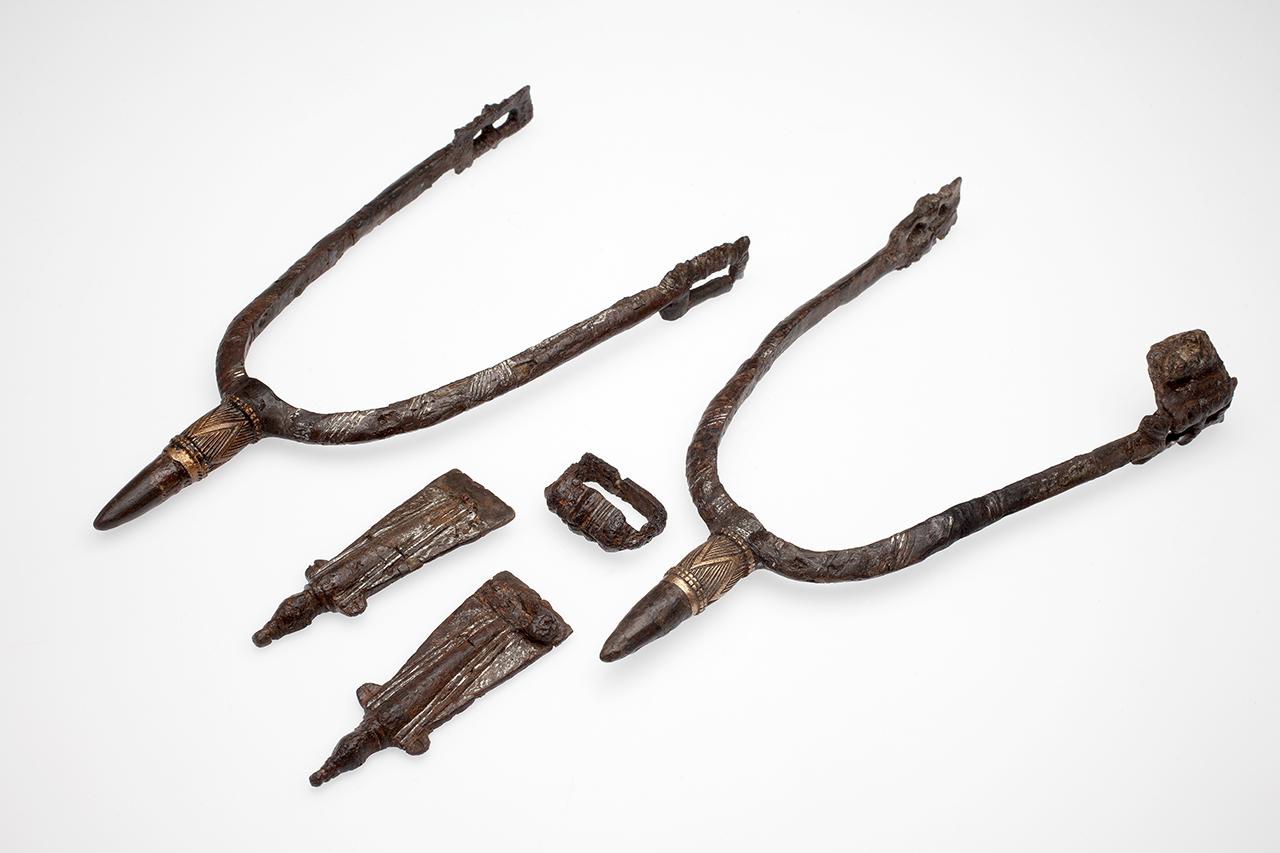
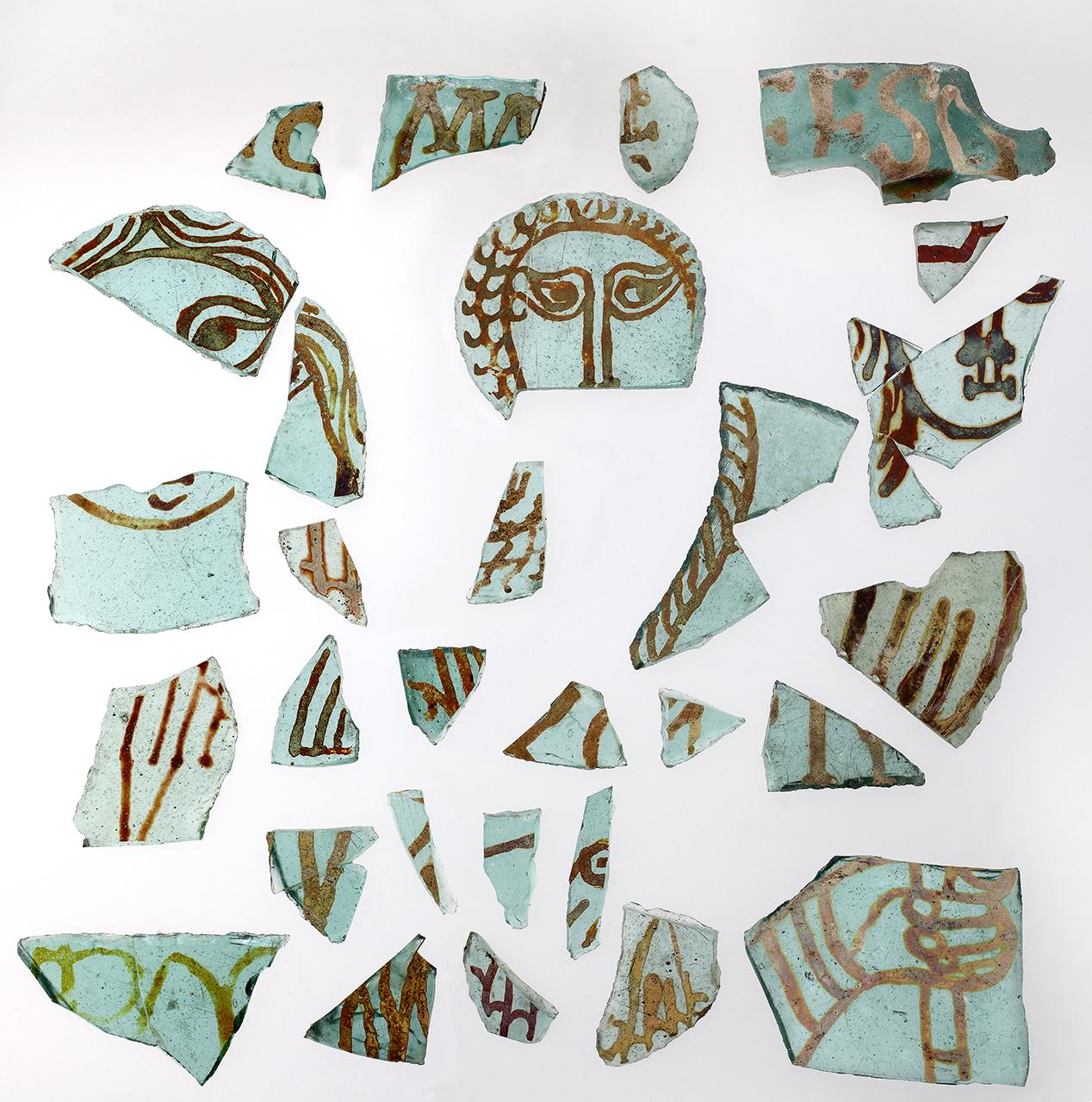
- The fragments of stained glass found in and around the Hadrian martyr pilgrimage church of Mosaburg are among the earliest in Europe, dating back to the 9th century. Using paired spurs and wearing of ornate straps with buckles, bows and strap-ends became common in Western Europe from the Carolingian period onwards. In Mosaburg, only noble youths who died at the beginning of adulthood were buried with their spurs, so most of the spur sets known from here is small.
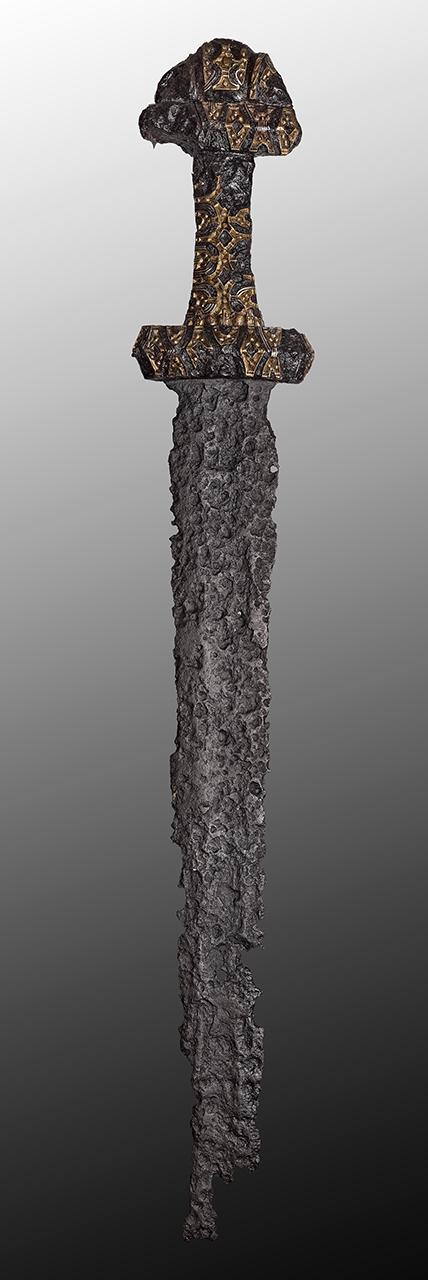
A group of artefacts associated with the tribal leadership was found near Blatnica, on the northern edge of the Avar territory, including a sword, a winged spear, an axe, a spur, a belt for suspending the sword, and Carolingian and Avar horse harness mounts. The hilt, pommel and crossguard of the double-edged iron sword are covered with gilded bronze and silver inlaid geometric motifs and half-man, half-animal head figures. The late Avar and Carolingian weapons and harness ornaments reflect accurately the cultural diversity of the transitional period.
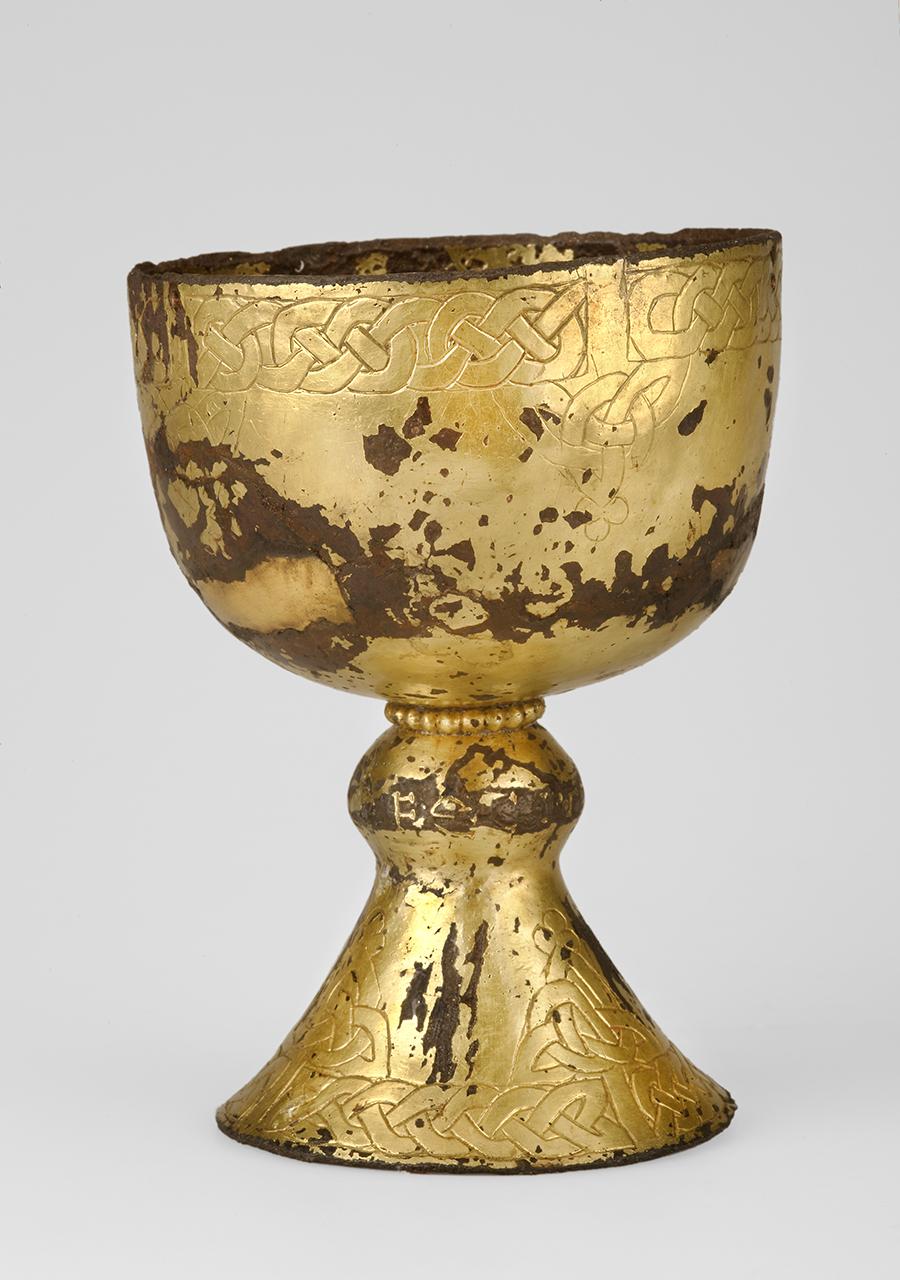
The conversion of Transdanubia to Christianity started around the end of the 8th century AD, as evidenced by the gilded copper "travelling chalice" with the engraved inscription of the Bavarian maker's or commissioner's name "+ CUNDPALD FECIT". The chalice may have been made in a Bavarian monastery between the last and the first third of the 8th and 9th centuries for a high-ranking ecclesiastic person, possibly a missionary bishop, and then modified in the Carolingian period and used as a chalice suspended above an altar on three small chains. Eventually, under unknown circumstances, it fell in the Ikva stream near Petőháza, where it was discovered in 1879 during the damming of the stream bed.
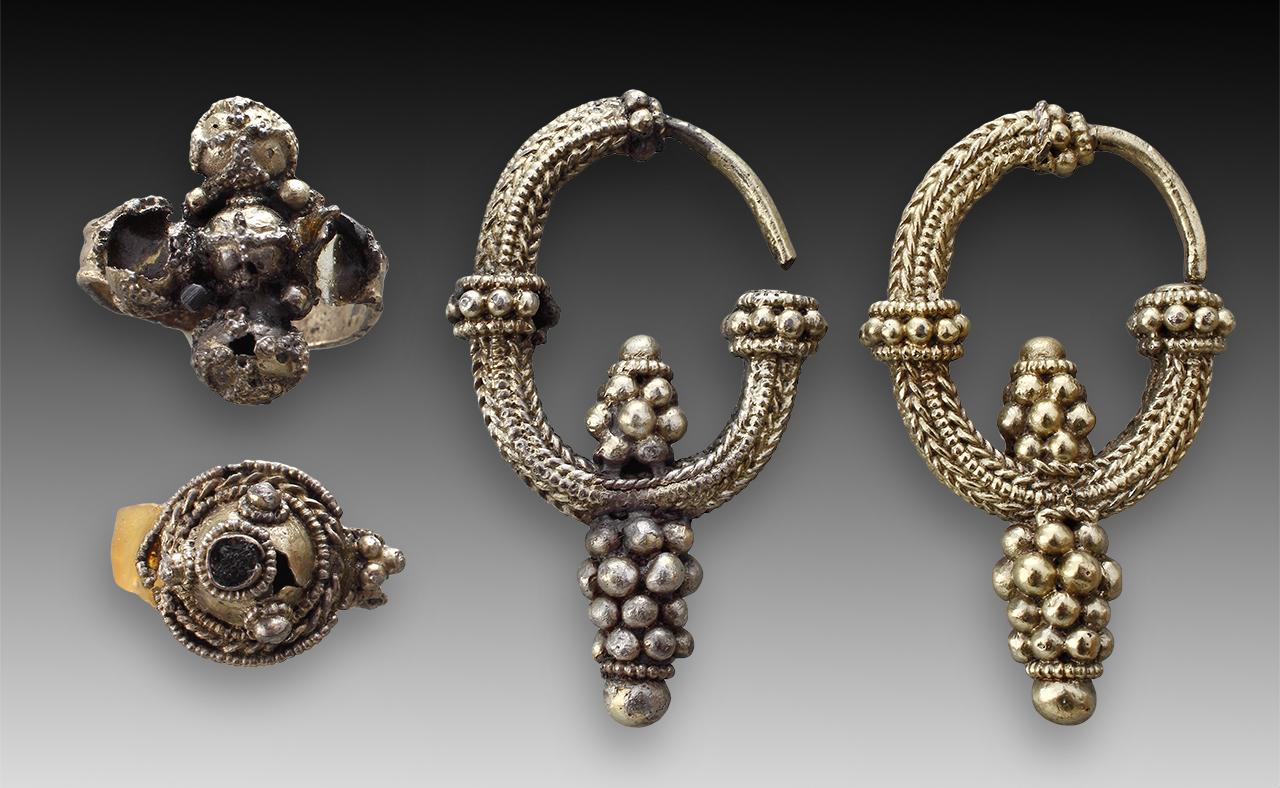
In Mosaburg, the largest and most diverse group of jewels not only of commoners but also noble women is pendants. They were almost exclusively made of silver or gilded silver. The most common are grape-cluster pendants, but the four-plate globular, the openwork basket and the openwork crescent pendant on the lower hoop were also popular. Unique pieces include cross-shaped rings with domed heads and rings with glass inlays. One of the first emblematic finds of the Zalavár-Vársziget excavations, in the so-called "Byzantine-oriental" style, was discovered in 1951 in the grave of a female member of the founding family or noble family and her entourage, in the cemetery around the church dedicated to the Virgin Mary.
The 50 m long main church of Mosaburg/Zalavár was built in the second half of the 850s at the geometrical centre of Vársziget. The three-nave basilica, with a semicircular sanctuary and a corridor crypt in the east and a monastic wing in the west, served as a pilgrimage church and briefly as an epircopal church.
In the area of the sanctuary and the corridor crypt, the windows were covered with leaded glass depicting holy figures and inscriptions in sea-blue, blue-green, blue, emerald green, olive green, brownish-purple and yellow colours, and in a technique developed in the Eastern Mediterranean, copper-red and silver-yellow.
The tableware used by the nobility for their meals was made of finely sanded clay on a hand wheel, mostly carefully polished and fired to a golden brown: mainly bottles, but also single and double handled jugs, table amphorae, a "soup bowl", a flat and a deep bowl, a cup, a glass, and a lid.
Sometimes inscriptions were scratched onto the surface of the decorative vessels. The most notable of these are the fragments of inscriptions in rounded obla glagolica script, which are a reminder of the Byzantine brothers Constantine and Method's activity in Mosaburg. Among the letters, the cross can be recognised as a space or as a (as), as well as g (glagolь), d (dobro), v (vědi), i (iže), o (onъ), f (fertь), ja (jat').
Garments and accessories of men making up the noble retinue of the comital seat, as revealed by the graves excavated around the churches of Mosaburg, followed the Carolingian Empire's fashion much more closely than that of the women. The spurs, which are not very common in men's tombs, but are very important because of their status, belong to three or four basic types, their decoration, however, is unique on each. Their parallels are found not only in Moravia area and in the Little Hungarian Plain north of the Danube, but also in Slovenia and on the Croatian coast.