Hall 10 / The Age of Conquest
The Hungarian tribes arrived in the Carpathian Basin in 895, unified the Carpathian Basin, and populated the lowland areas. Their raids on the 9th–10th centuries not only provided the tribal-clan aristocracy with considerable material wealth, but also kept the Byzantine and German conquerors away from their organizing country. From the mid-10th century onwards, they successfully adapted to the changed international environment, enabling them to establish the Christian Kingdom of Hungary at the turn of the millennium, which became the most powerful state in the region.
Fun facts:
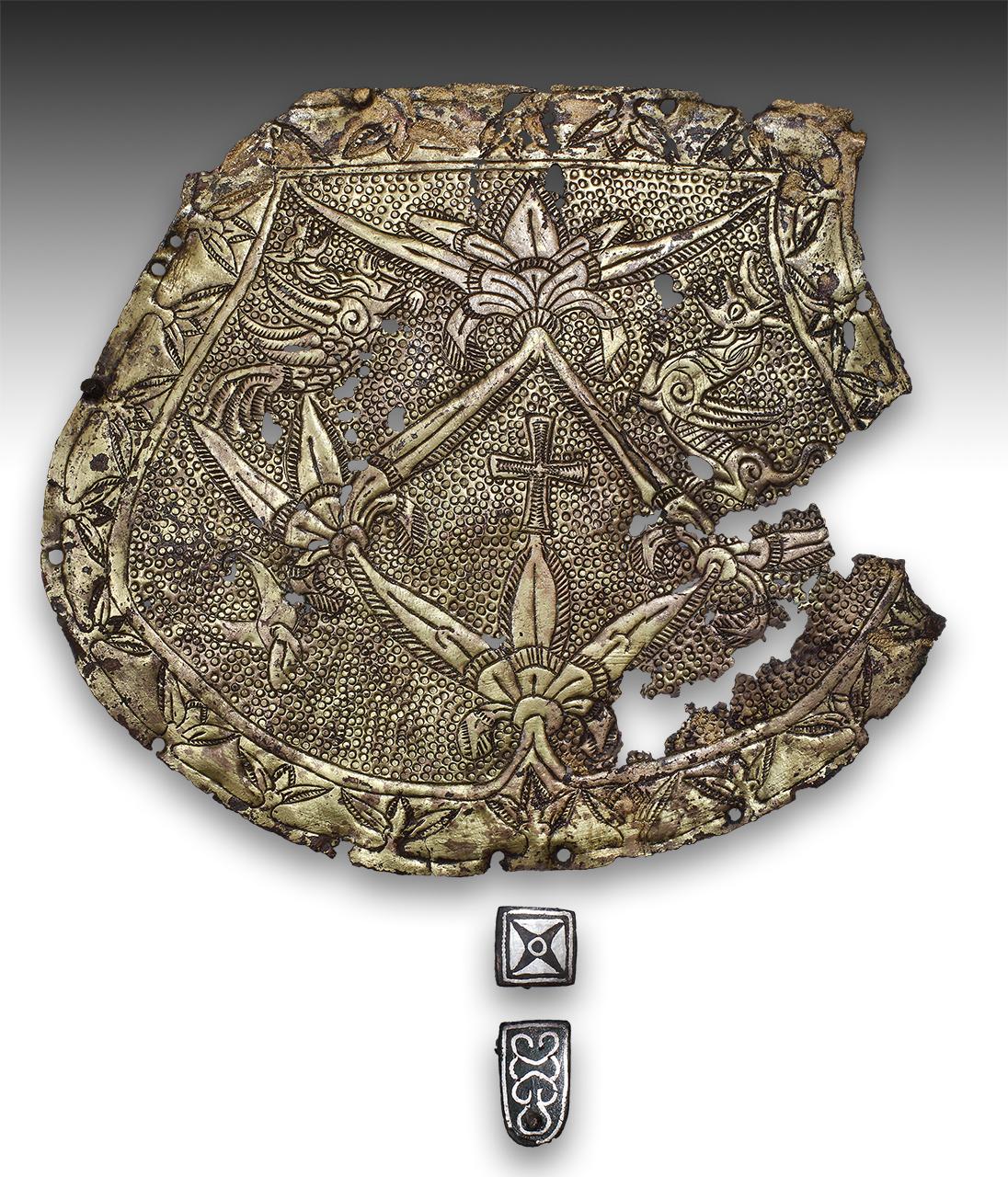
- The rare sabretache plates were the insignia of nobility in the service of the princely power, and many of them are considered to be first-rate works of silversmithing.
- The clothing of wealthy women was adorned with decorative mounts with pendants, but important artefacts include the gilded silver rosette horse harnesses used by them as well.
- Hair braid discs decorated with palmettes or mythical animal figures were also part of women's accessories. The Hungarian jewellers also made them in pressed plate and cast openwork versions. Women wore these discs on ribbons braided into their hair.
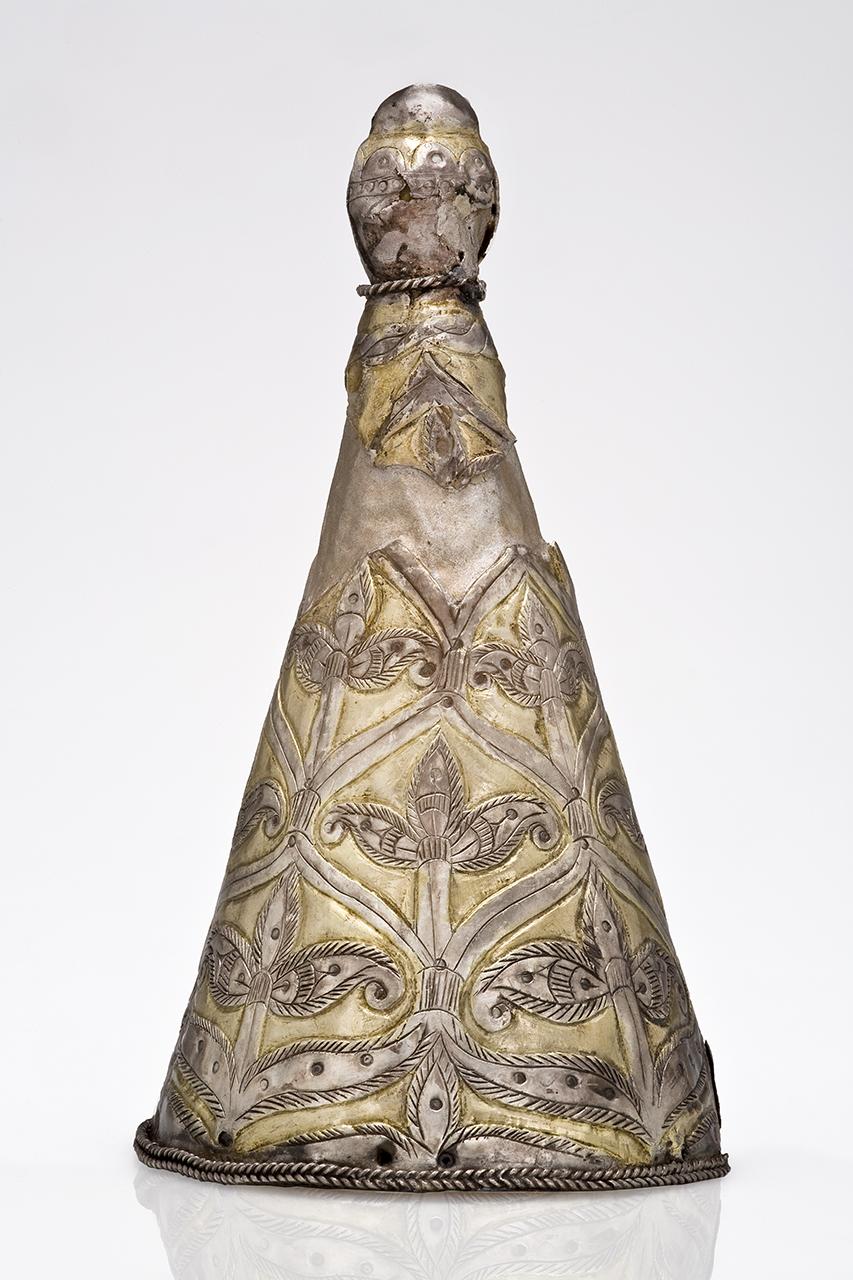
Conical cap top decorated with gilded silver palmettes. Its surface is interlaced with vines, interspersed with triple leaf clusters, and finished with a ribbon braid.
A gilded copper sabretache plate with punched decoration. The surface is ornamented with vine scroll motifs, two senmurvs (peacock dragons from the Iranian ornamental repertoire) and a Byzantine cross in the centre.
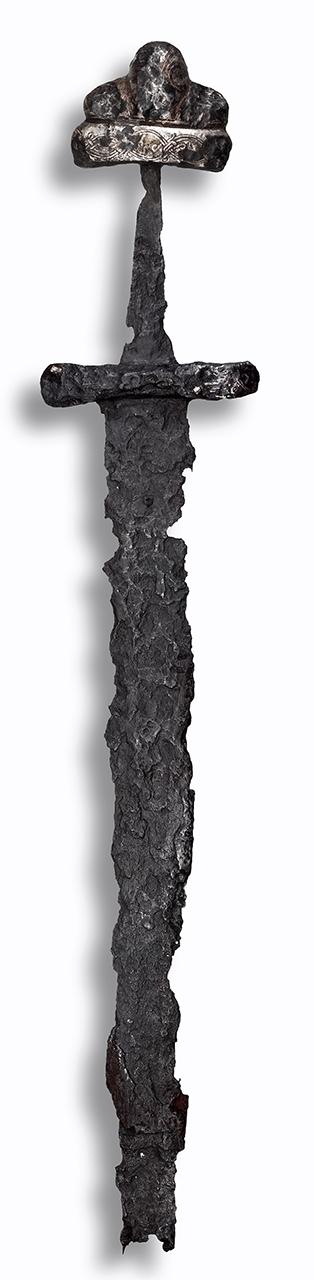
A double-edged iron sword with a straight and wide blade. The hilt is tripartite and the crossguard is straight.
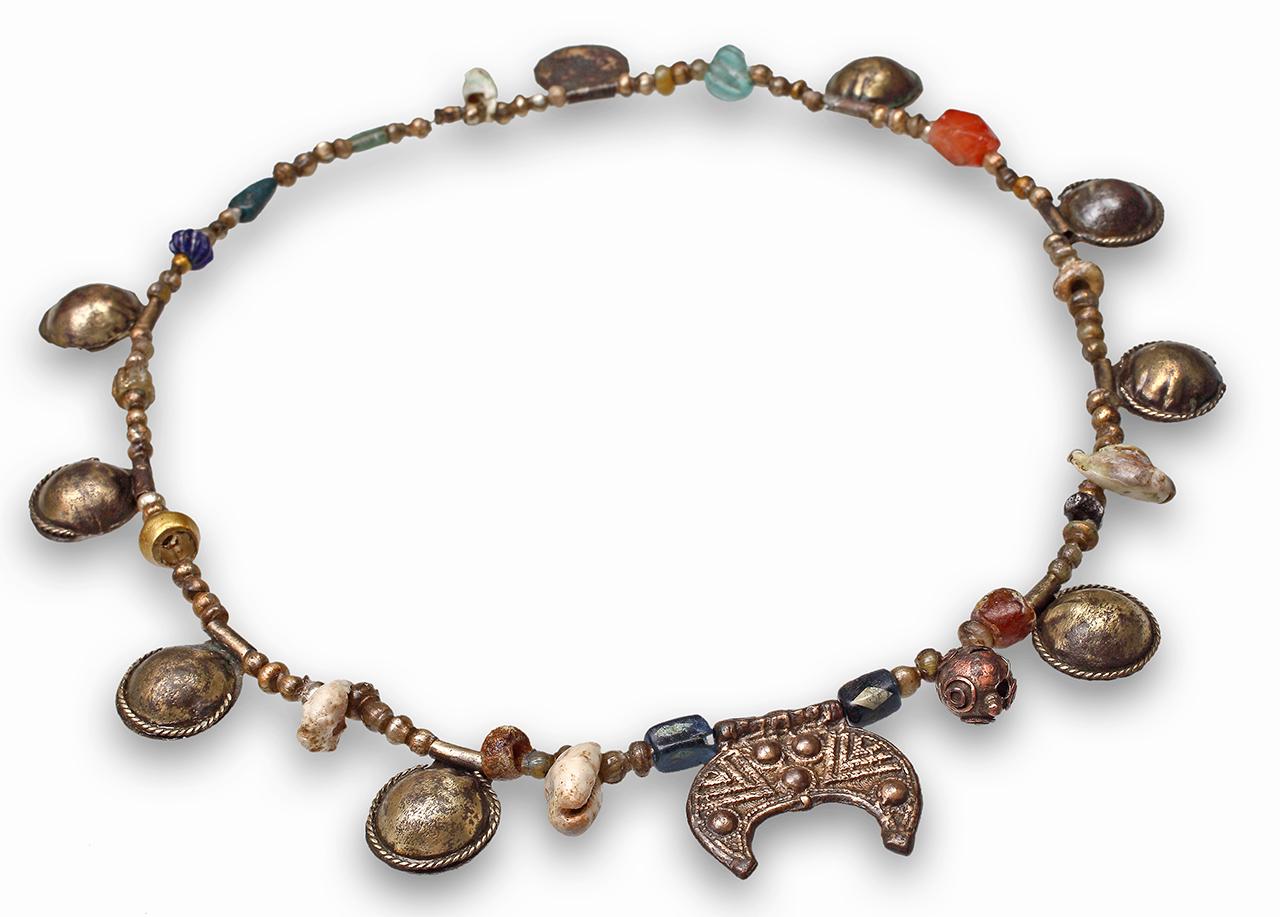
One-of-a-kind necklace with glass beads, metal mounts and crescent shaped pendant.