Hall 8 / Avar period (567/568-804)
The Avars, of Central and Inner Asian origin, arrived in the Carpathian Basin in 567/68, where their empire lasted for nearly 250 years until the early 9th century, uniting the entire Carpathian Basin under a single political authority for the first time. In its early phase, the Avar culture was influenced by the diversity of Byzantine, Eastern and Western European cultures. The highly unified "late Avar culture", emerging in the 8th century, is a phenomenon primarily typical of the Carpathian Basin. In the exhibition visitors can observe typical objects and horse gears of the early Avar period associated with high-ranking individuals, relics of late Antiquity and of the Avar-Byzantine and Onogur/Bulgarian contacts, Germanic Avar artefacts, tools related to lifestyle, crafts and religion. The exhibition also presents the 8th century commoners of the region east of the River Tisza in a nutshell, and a precious-metal replica of the Nagyszentmiklós treasure.
Fun facts:
- Stirrups were introduced to Europe by the Avars. Using the stirrup, the rider can keep himself upright in the saddle, "stand up" and shoot arrows on the move.
- In the winter of 558–559, the whole city of Constantinople "flocked together, for they had never seen such a people" as the Avars.
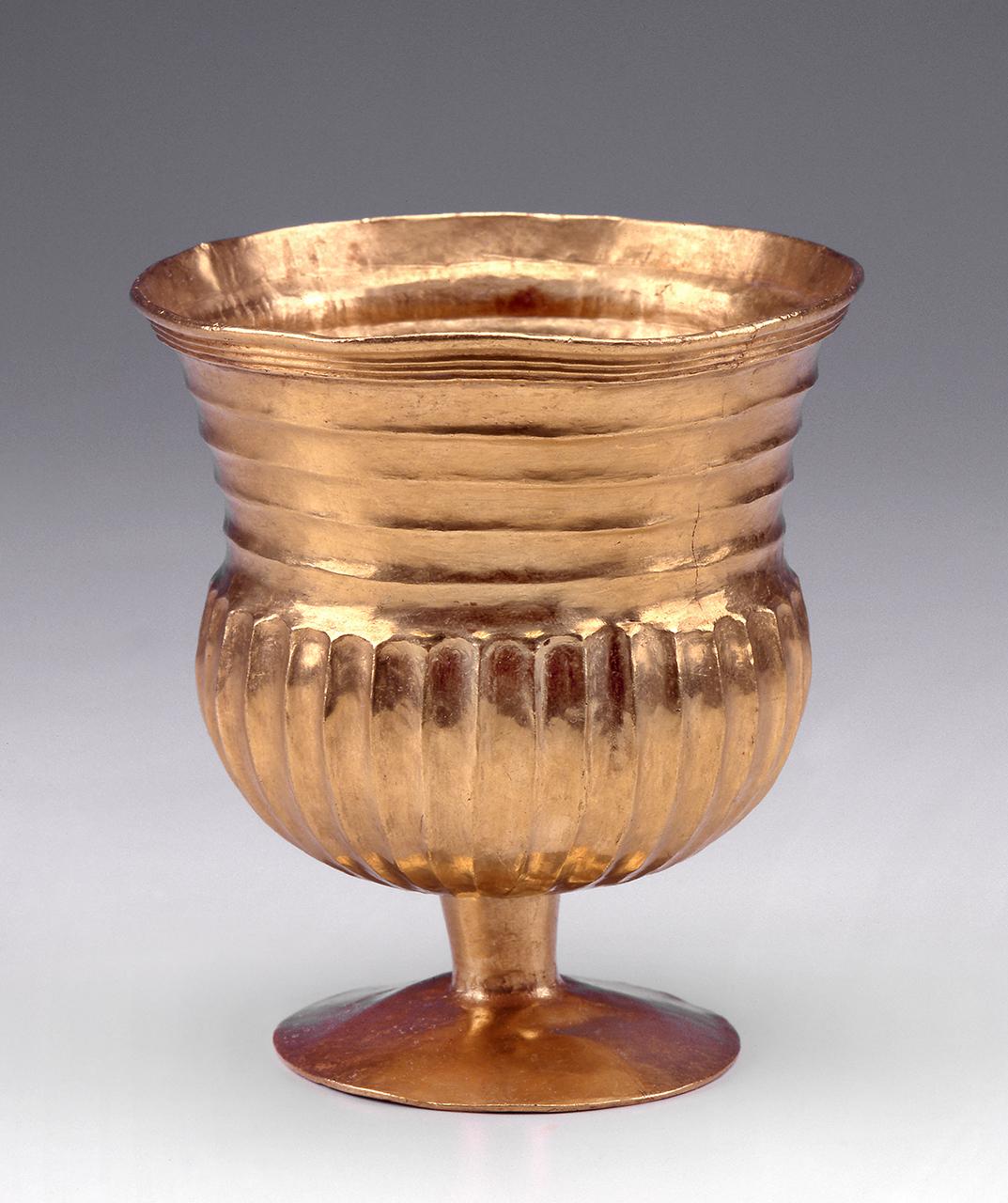
In 1935, the grave discovered in the Danube-Tisza river interfluve was probably the burial place of a high-ranking official who was presumably indirectly under the Kagan. His rank is indicated not only by the solitary burial, but also by the high quality and value of the objects buried together with him: earrings, rings, Byzantine-style belts decorated with disc-shaped beads and chinstraps, a gold-plated sword, a quiver, a silver jug, a gold chalice and a drinking horn. Precious-metal funnel-mouthed drinking vessels such as the gold chalice with grooved decoration, or flat spherical stemmed cups and larger oval-shaped jugs with handles were part of the drinking sets of the 7th century Avar nobility. These pieces, which were probably made locally in the Carpathian Basin and show an independent formal style, are evidence of the high level of Avar craftsmanship. (Bócsa, first half of the 7th century)
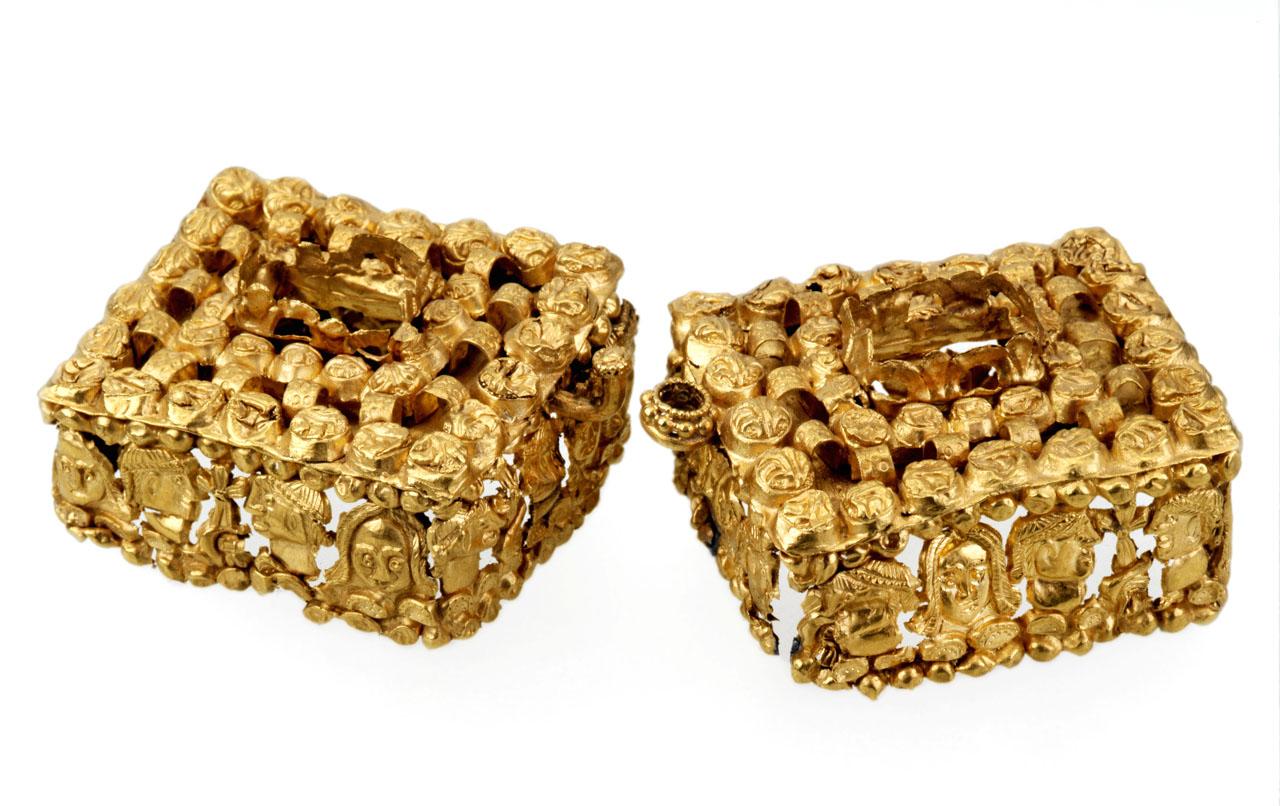
In the Carpathian Basin, several variations of breast-pins were used to bind women's outer garments or cloaks in the late Avar period. This piece, presumably purchased for the museum from the Dunapataj area, is a forerunner of the so-called box type. This piece of jewellery was probably made by a Byzantine goldsmith and passed to the Avars. This is indicated not only by its high quality, but also by the Byzantine jewellery techniques: the design of the central mounting for holding a stone, the gold ribbon bundles on the cover plate holding a string of pearls, the long-haired figures of men holding a cross in the framing frieze. The depiction of a man holding a cross may be linked to Christianity, but it does not directly refer to the religion of the Avars. (Dunapataj, late 7th century, first third of the 8th century)
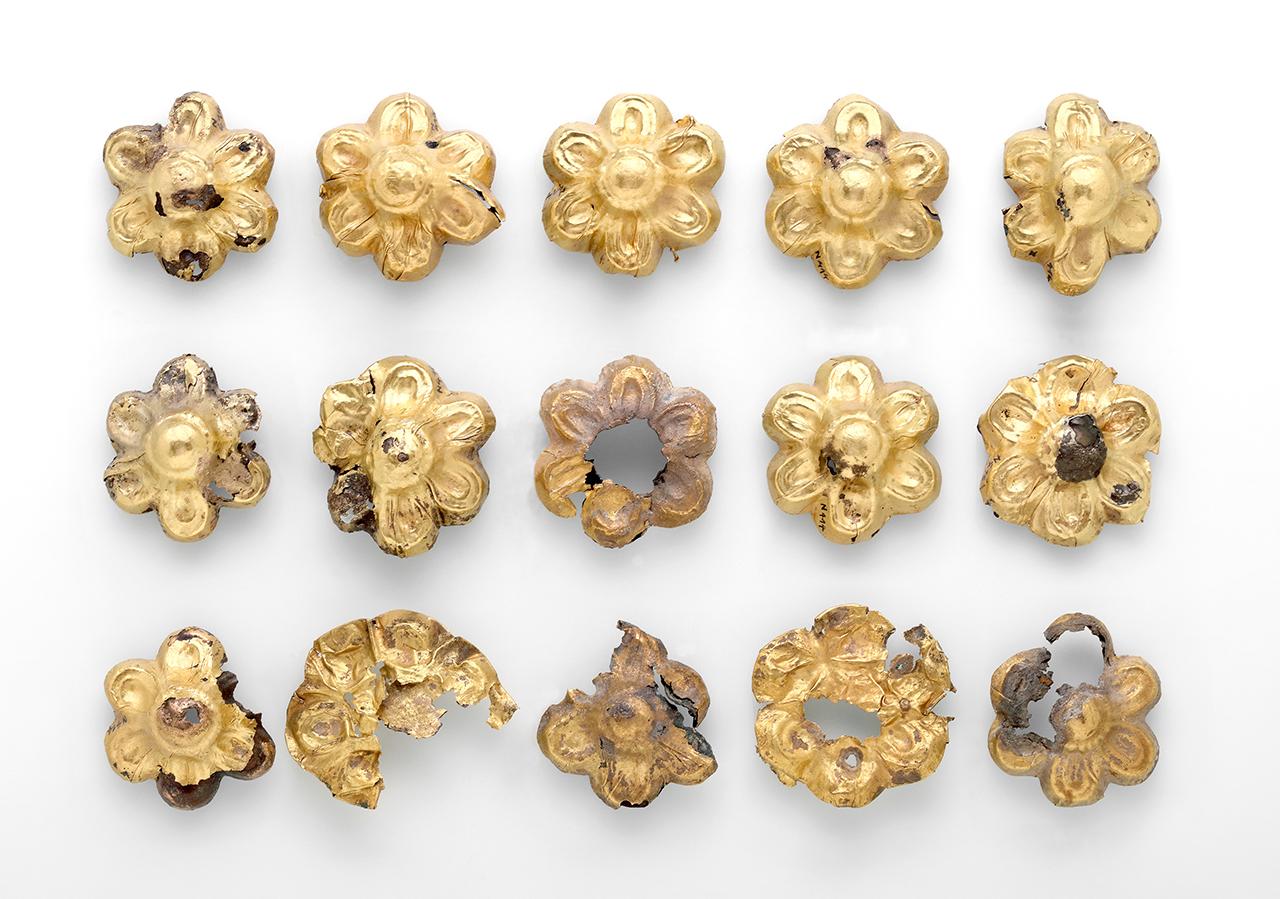
The gold-plated harness mounts found in what is now Croatia belong to the category of pressed rosette mounts, to the group of flowerpetal mounts. The mounts decorated the bridle on the horse's head of a noble rider. (Vörösmart, last third of the 7th century - early 8th century)
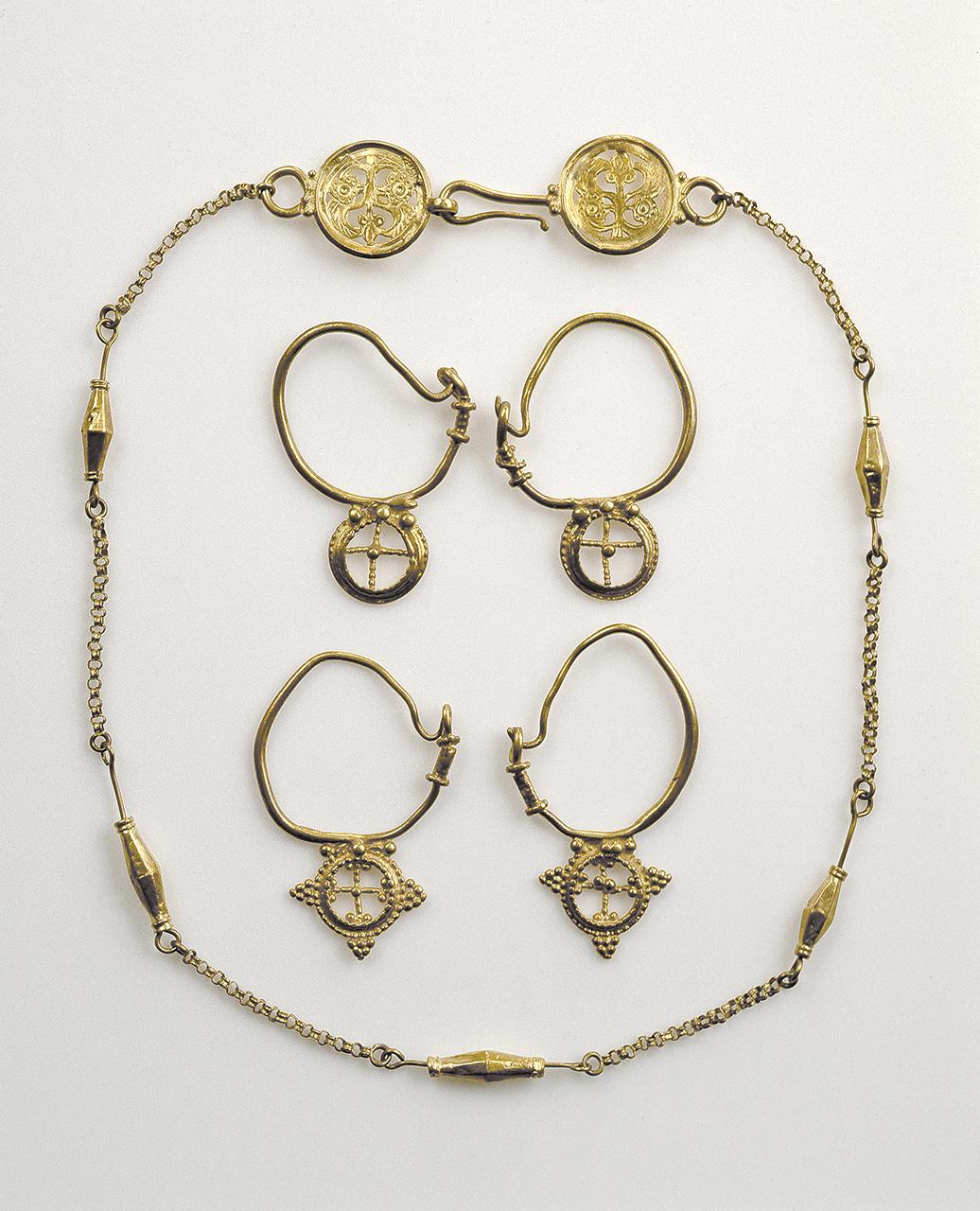
The necklace and two pairs of earrings, which came to the Hungarian National Museum as an isolated find, possibly part of a treasure trove, are the masterpieces of a Byzantine workshop. The medallions of the gold plate, engraved and embossed on the disc-shaped clasp of the necklace, depict a palmette and a tree of life, and the earrings, decorated with gold beads in granular technique, were brought to the Avar nobility from the Byzantine Empire (Gács, late 6th - 7th century)
.