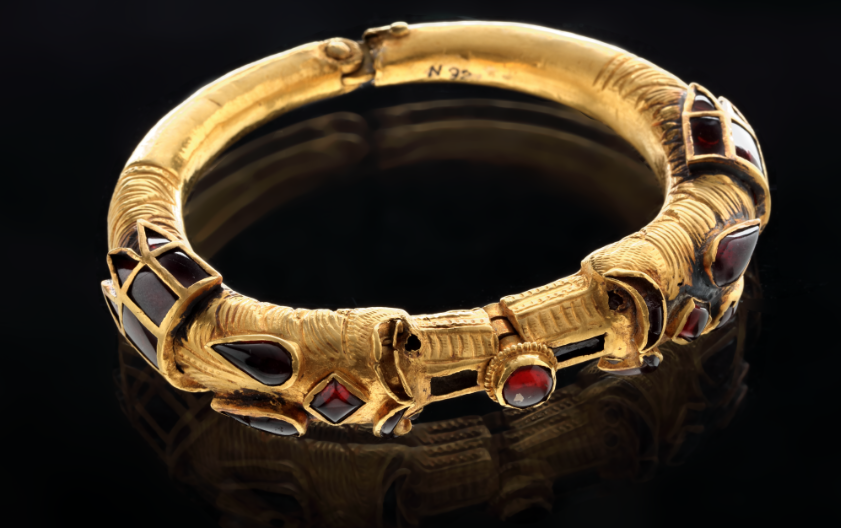
Hall 7 / Huns, Germanic tribes (420–568)
During the one and a half centuries of the early Migration Period, peoples arrived in the Carpathian Basin from various directions. The Huns, the Eastern Goths, the Heruls, the Scythians, the Lombards settled in the region for longer or shorter stretches of time. A large part of the objects on display – representing the wealth and sophistication of the upper classes of barbarian societies – are jewellery made of precious metals, artistic work and insignia. Their daily life is shown in the light of agriculture, domestic and craft activities (bone-carving, weaving, blacksmithing, pottery), and the cemeteries of the period are represented by a warrior's tomb who was buried in the 6th century.
Fun facts:
- Artificial cranial deformation was a typical custom in the 4th and 5th centuries AD north of the Black Sea, which spread to the Carpathian Basin with the movement of the Huns.
- A fibula a decorative brooch. This type of object is also found amonf the relics of the Huns, Gepids and Lombards.
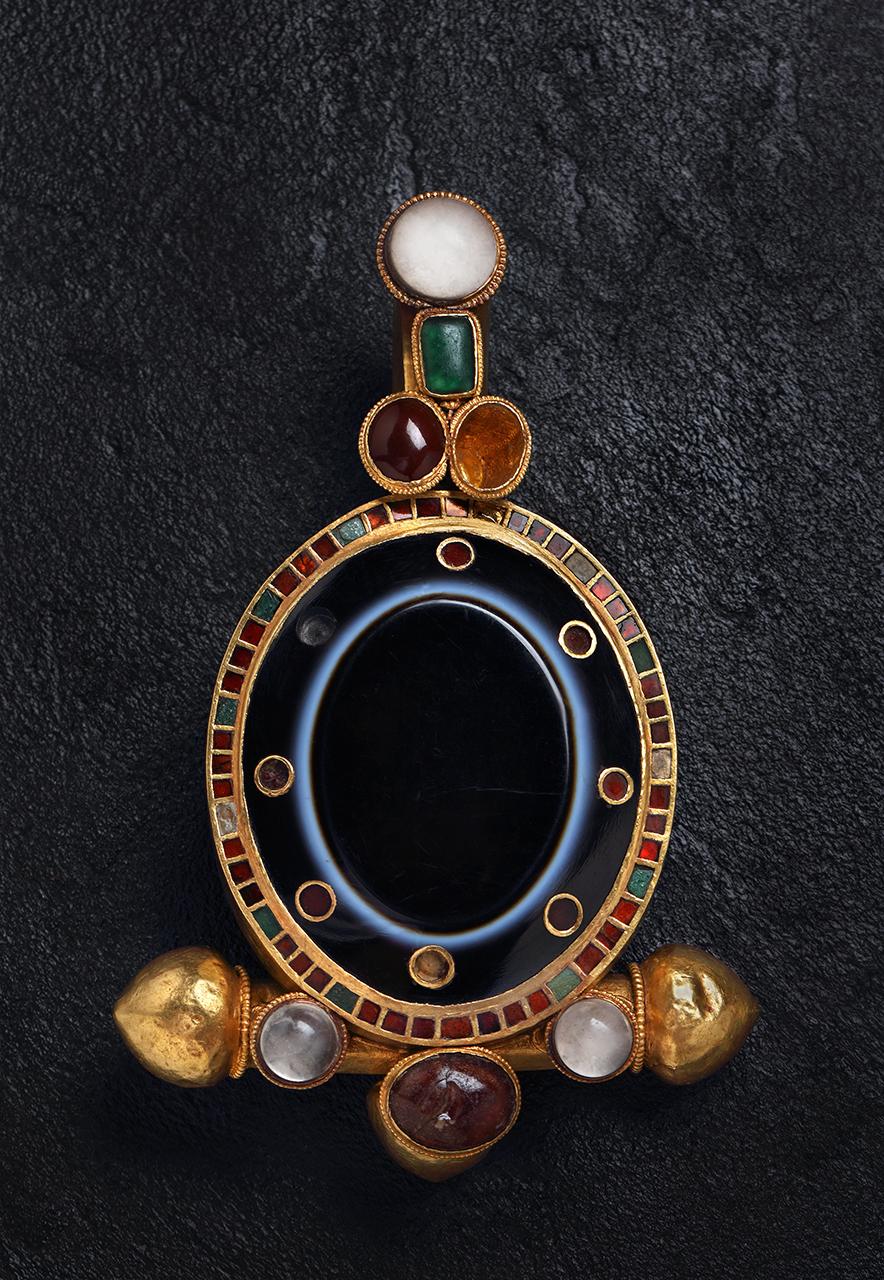
The Roman lantern-shaped brooch, containing a large onyx stone, was worn exclusively by the emperors of the Roman Empire. This first-rate goldsmith work is a rare surviving example of a type of fibula known from reliefs and mosaics. The object, made in a late antique workshop in the 360–370s, is thought to have belonged to the royal family of the Goths and was found in a treasure trove buried in Szilágysomlyó in the mid-5th century.
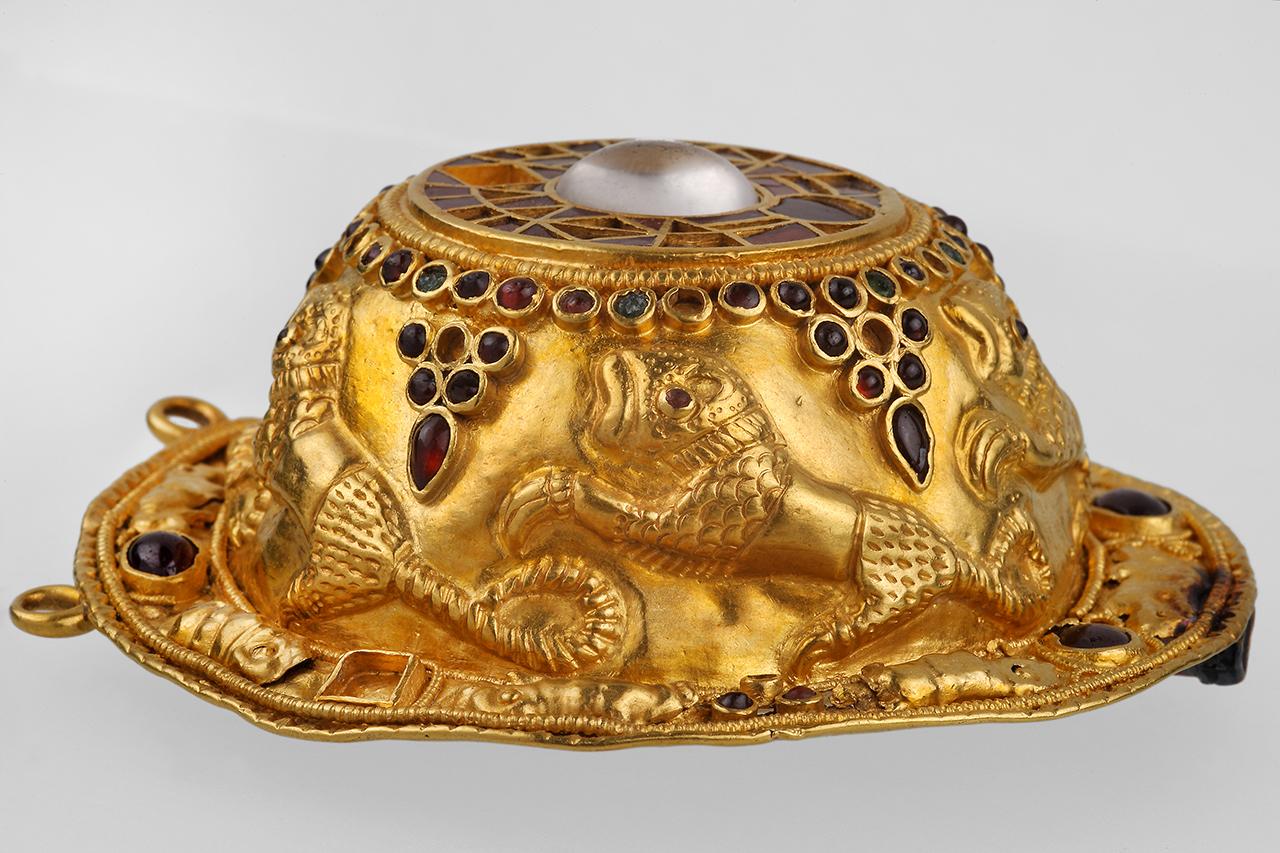
From one of the most important Hun period treasure troves of the Carpathian Basin, this late antique pure gold masterpiece was made in the last third of the 4th century. Worn by the Germanic elite, it is a rare reminder of the fashion for an outer female garment with a pair of fibulae on the shoulder. Decorated with embossed lion shapes, rock crystal, garnet stone and glass inlays, it is a much-used, worn piece of jewellery.
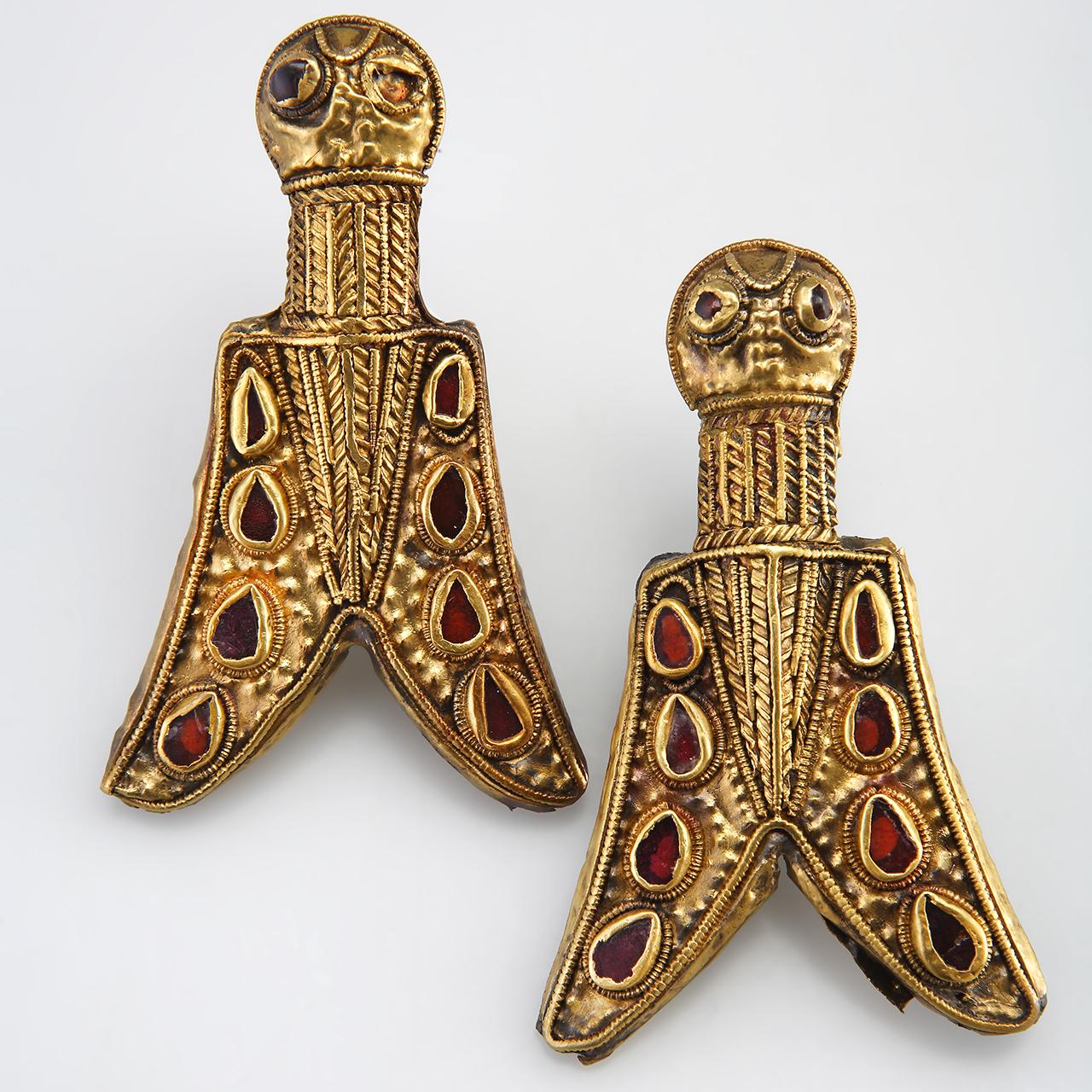
Györköny, first half of the 5th century
Cicada-shaped fibulae, the Hun period's jewellery of Eastern origin, which probably also had some kind of protective, apotropaic function. They are found in the burials of both commoners and nobles, and were used by women to pin their clothes on the chest or in pairs on the shoulders. They came in a variety of forms and designs.
An embossed gold-plated bangle with garnet inlay, forming two facing, snarling beast heads, hinged and fastened with a screw, a typical jewel of the Hun female elite. Its almost identical counterpart is known from a tomb in the Crimea, indicating the fashion that developed across vast distances in the Hun Empire. The Bakodpuszta bangle / video