
Hungarian Conquest period find assemblages preserved in exceptionally good condition have recently been discovered on the outskirts of Akasztó in Bács-Kiskun County. The previously unknown site was identified by volunteers participating in the community archaeology programme of the Katona József Museum in Kecskemét. The subsequent excavation was led by Gábor Wilhelm, Head of the Department of Archaeology, and carried out by a team comprising museum professionals and volunteers, representatives of the local government of Akasztó, and several colleagues, including Ágnes Füredi of the HNM–Public Collection Centre, National Institute for Archaeology.
Fieldwork resulted in the discovery of the graves of three warriors buried in the AD 920s–930s. All three burials were preserved in exceptional condition and contained numerous notable finds, including a silver sabretache plate, a unique belt set, lavishly decorated horse gear, several Italian coins from the period, and organic remains of mortuary clothing. Following the excavation, a complex research programme was launched with the participation of the HNM–Public Collection Centre to undertake the archaeological and instrumental analysis of the finds.
The youth with the sabretache plate
The wealthiest grave yielded an extraordinary discovery. It was the final resting place of a high-ranking warrior aged 17–18—a youth by today’s standards—whose attire included a unique silk belt with a gilded silver hinged mount and a silver sabretache plate worn at the right hip. In the area around the metal fittings, the organic components of the multiple layers of clothing, as well as the belt and the sabretache, were preserved in such excellent condition that they could be removed from the grave in their original position (in situ). The Hungarian National Museum was granted the opportunity to study, using state-of-the-art conservation and analytical techniques, this assemblage, which is unique not only in Hungary but also in Europe.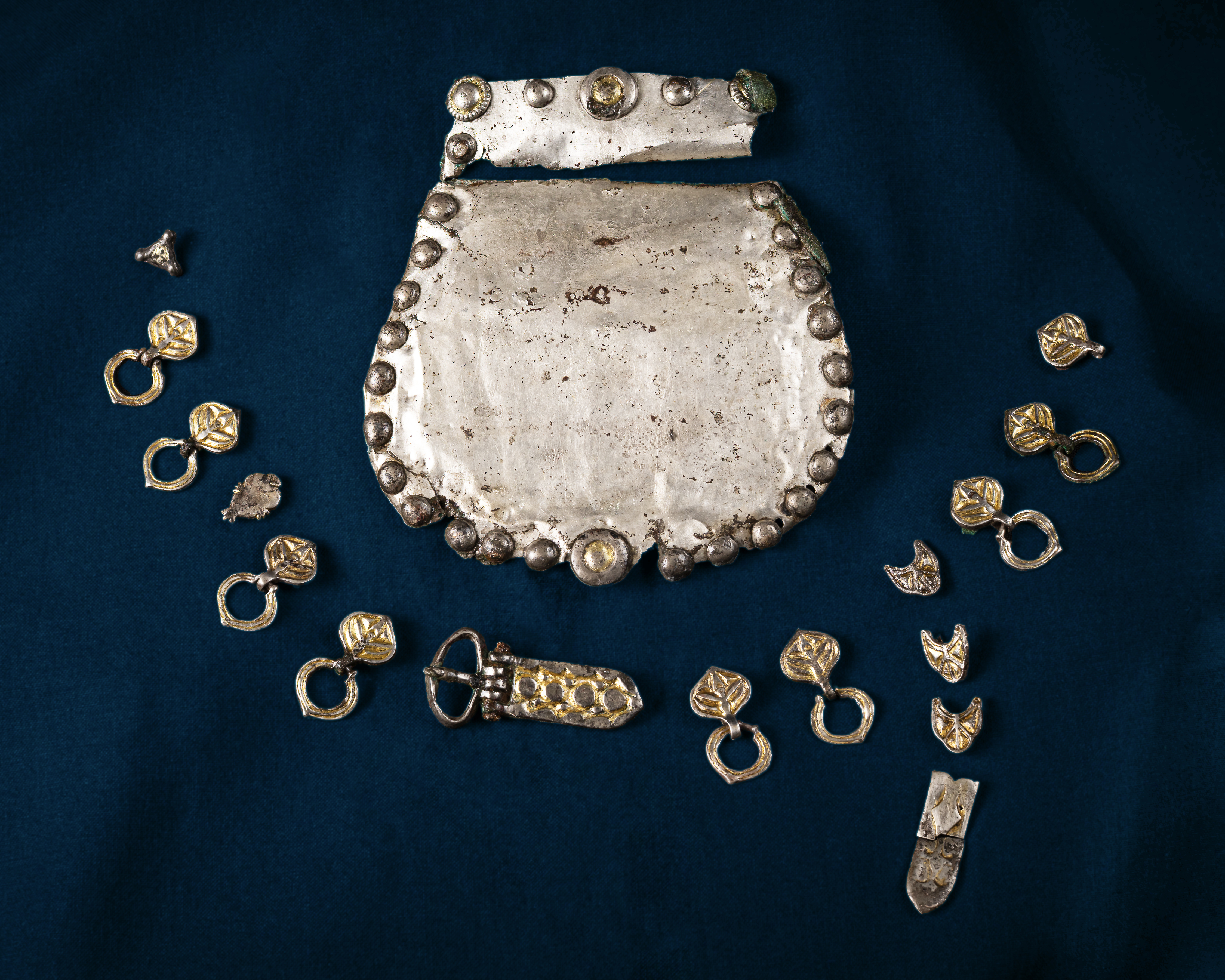
The silver sabretache plate and a part of the belt: some gilded silver decorative mounts and the belt buckle.
Silk, leather, and fur under the microscope
The removed block was excavated with the utmost care under laboratory conditions, yielding unparalleled insights into the fashion of the Hungarian Conquest period. During this process, parts of the original clothing, the belt, and the complete plate-decorated sabretache were identified. The sabretache proved to be far more complex than previously assumed on the basis of parallels, and two distinct—and not a bit less simple—structures (objects) were attached to it and to the belt.
The sabretache is adorned with a silver plate secured by gilded silver rivets. The plate features a secondary set of rivet holes, suggesting repair or reuse. Although its backplate is missing, the length of the rivets indicates that the original design included one; thus, the silver plate was riveted directly to the leather front flap of the sabretache. The threads used to sew the leather components together have completely decayed, but the simple structure of the purse and the fact that it was constructed from multiple pieces of leather could still be discerned. Analysis of the tanning agents detected aluminium, indicating alum tanning.
The clothing of the deceased comprised a range of materials, including leather, plain-woven textiles, and silk (samite and taffeta). Notably, the belt itself was made of samite rather than leather; hinged mounts with leaf-shaped pendant elements were attached to it at intervals of approximately one centimetre, and the sabretache was also suspended from it.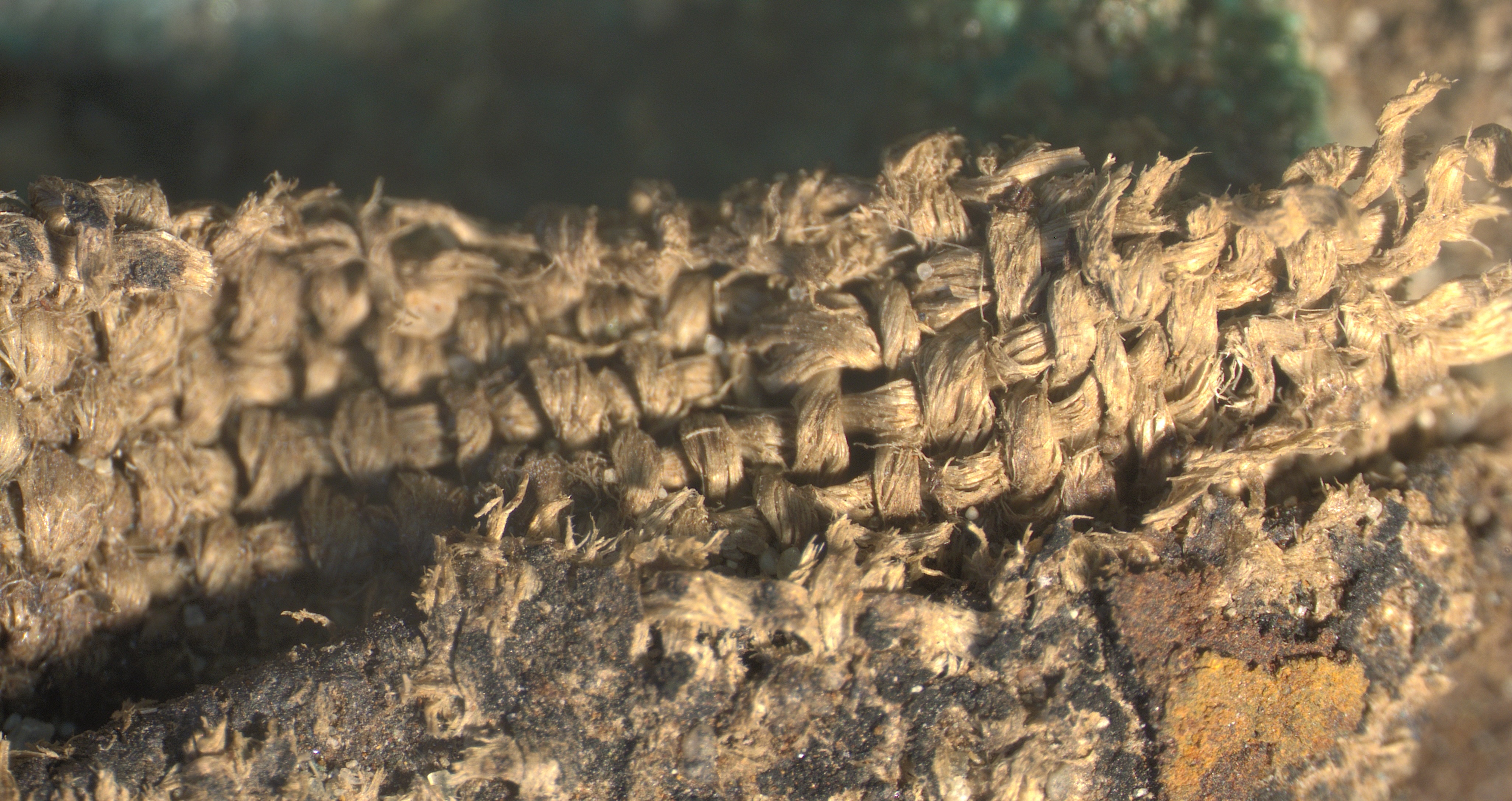
Microscope images of the second unit found at the sabretache: detail of a high-quality textile fabric
Results of the material composition analysis
The precious metal fittings recovered from the grave attest to the exceptional craftsmanship of goldsmiths of the period. Non-destructive XRF analysis, applied in this case, enables the determination of raw material provenance, the identification of alloying techniques, and even the reconstruction of connections between workshops.
Likely all elements of the sabretache plate were produced in the same workshop from the same silver, which contained a measurable amount of bismuth. However, the goldsmith adjusted the composition of the metal in accordance with the intended function of each component. The plate itself was made of highly pure metal, with a silver content of 86–92%, which facilitated mechanical shaping and borrowed a lustrous silvery-white sheen to the artefact. By contrast, the metal of the rivets was alloyed with significant proportions of bronze, as indicated by elevated copper and tin content. This lowered the melting point, facilitated casting, and produced a more durable final product.
The grave assemblage from Akasztó contributes far more than another sabretache to the archaeological record of the Hungarian Conquest period. The complex structures of the belt and the sabretache, the precious silk fabrics, the furs, and the exceptional quality of the metal artefacts all reflect the material culture of the elite of the era. The uniquely preserved organic components of the clothing allow for detailed study, offering an unparalleled opportunity to reveal previously unknown details about material use and technological knowledge in this period.
Subjected to state-of-the-art instrumental analyses, these artefacts are valued not only for their aesthetic qualities but also as historical sources that shed light on previously unknown aspects of the past and enhance our understanding of it.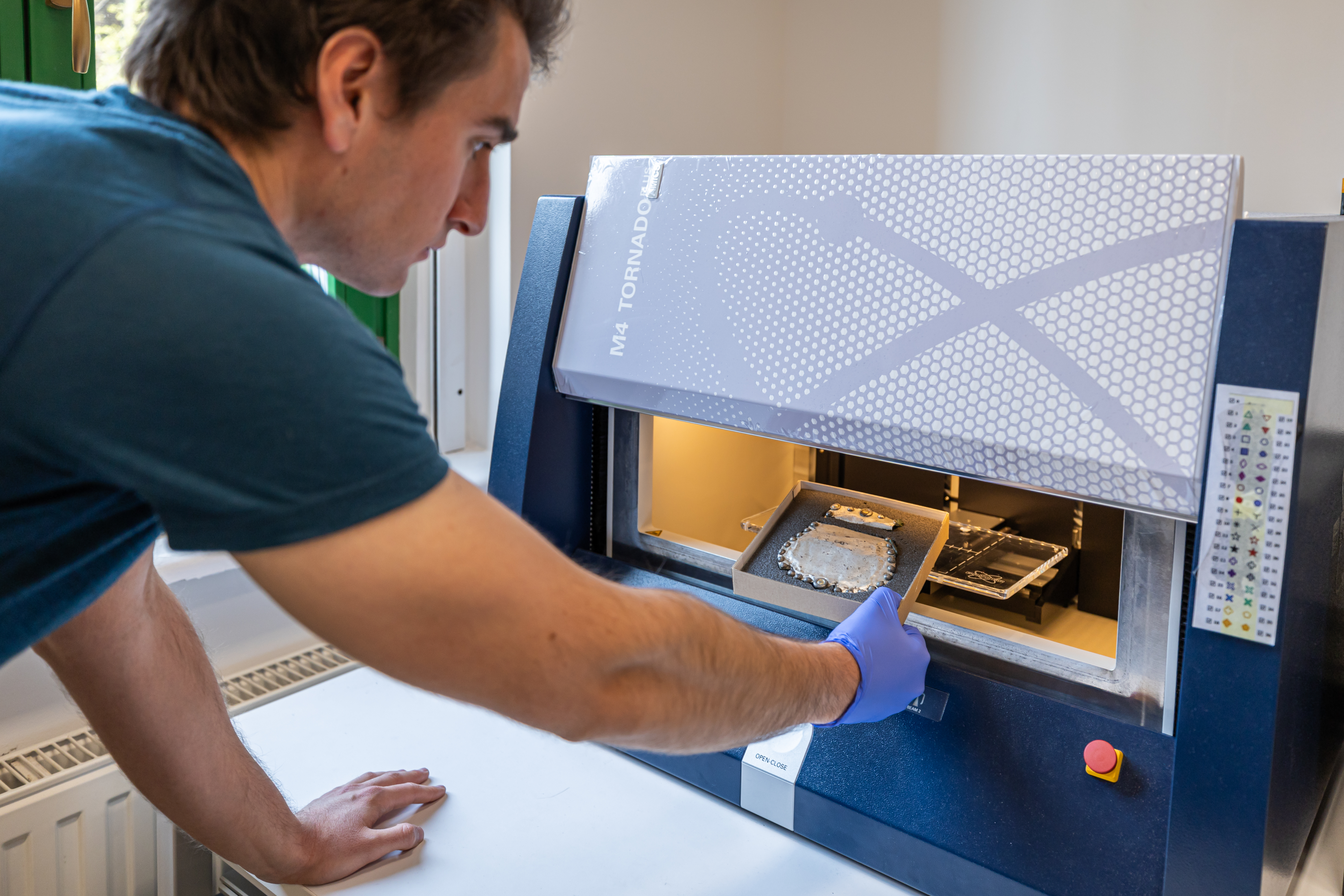
XRF (X-ray fluorescent spectroscopy) analysis of the sabretache plate
The temporary exhibition Girded with Splendour: Remains of a Belt and a Sabretache Plate from the Hungarian Conquest Period will be open to visitors from 8 May 2026 in the Southern Fireplace Room of the Hungarian National Museum.