The Hungarian National Museum’s silver-eyed Apollo statue, lost for 80 years, is back on display
Silver gaze, divine harmony – Apollo lost and found
Even in the twenty-first century, museum stores are still hiding fascinating secrets and treasures believed to be lost. The recent (re)discovery of an exceptional bronze statue in the Miscellaneous Collection of the Department of Modern History of the Hungarian National Museum has proved such an archaeological sensation. The statue in focus was listed in the 1961 inventory as a decorative figure from a pharmacy, dating to the mid-19th century and of unknown origin. However, the trained eyes of the museum’s conservators and archaeologists revealed its true identity and eventful history.
Some detective work confirmed that this artefact was truly an ancient statue of Apollo that had disappeared during the Second World War. It is one of the first objects to enter the Hungarian National Museum’s collections, having been acquired before 1825. According to its first scholarly publication in 1894, it was probably found in Pécs, known in Roman times as Sopianae. Before the Second World War, the sculpture was a prominent feature of the museum’s archaeological exhibitions. Amid the confusion in the museum after the war, it was transferred to the Modern History Collection, where its precise date and origin remained unknown for decades. This masterpiece, long recorded as lost during the war, has now returned intact to the Roman Collection after 80 years – a cause for celebration.
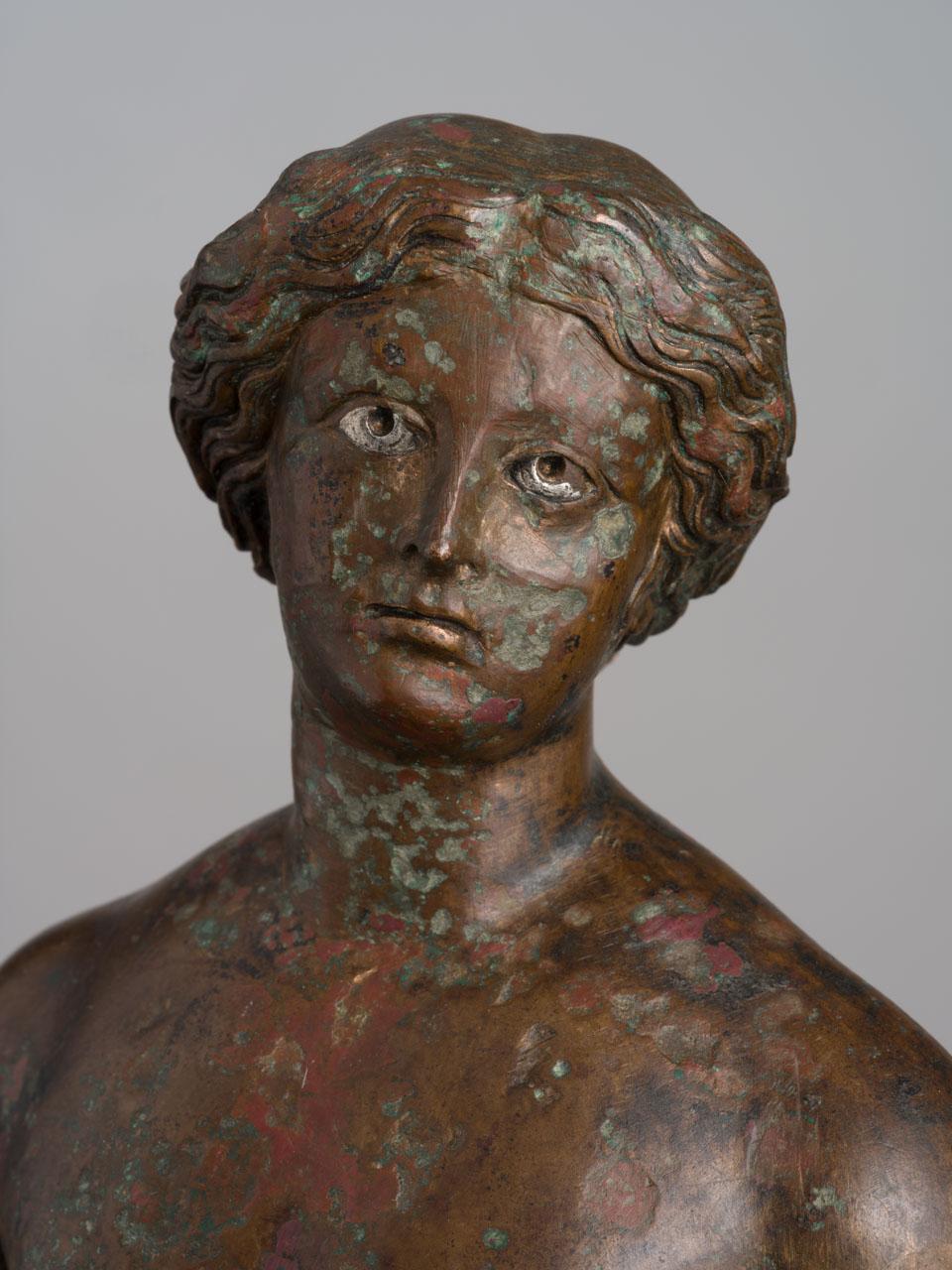
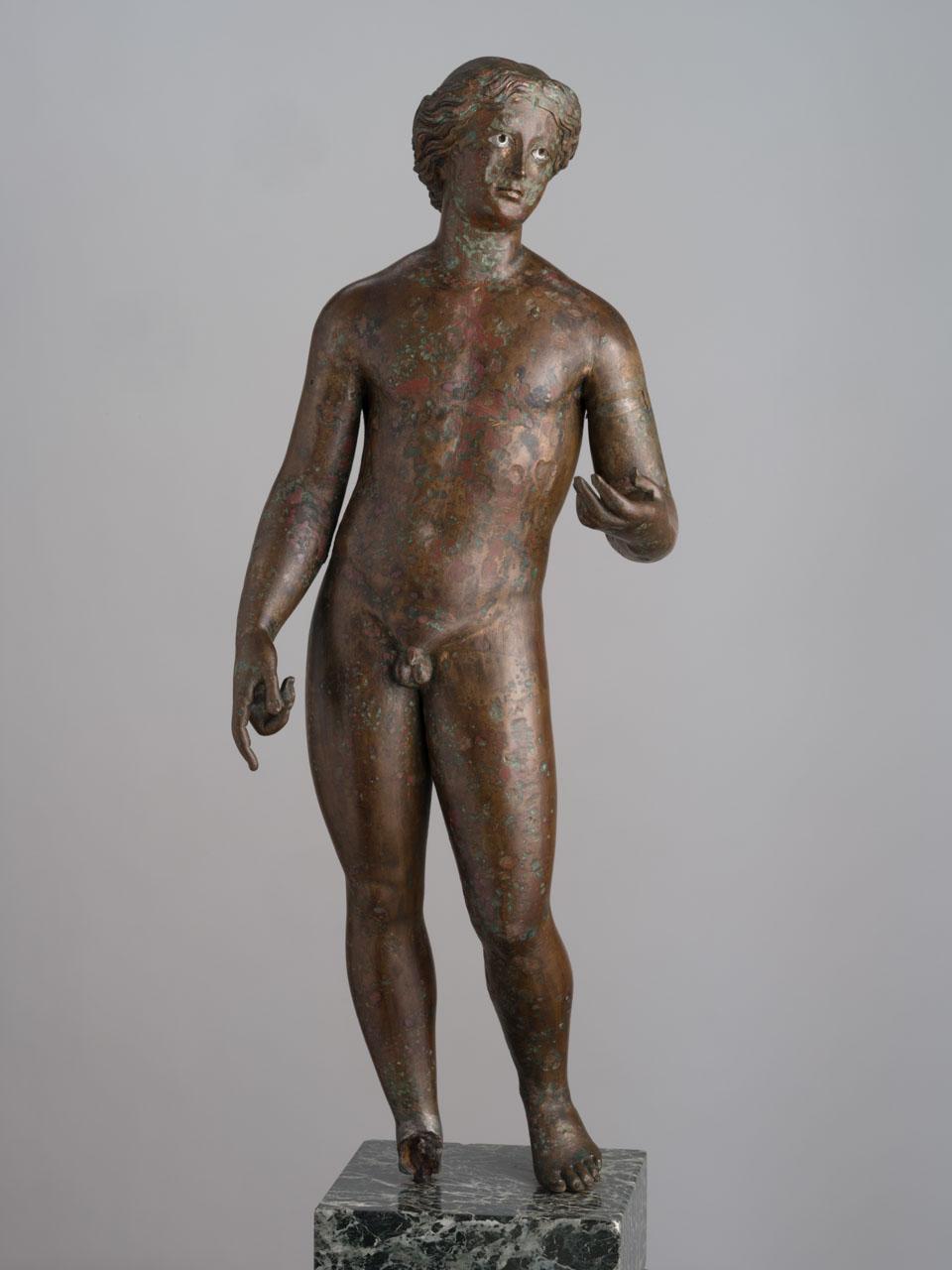
The 56-centimetre-tall statue depicts a nude youth in a contrapposto stance, with his weight resting on one leg, typical of High Classical sculpture. His face has idealised, harmonious, androgynous features that blend masculine and feminine qualities. The sculptor deliberately combined male and female features to show that the god rises above earthly distinctions and represents the world of the intellect. The statue’s eyes were covered with thin silver sheet, making them gleam against the dark bronze face. Their silvery sparkle gives a vivid, mystical quality to his melancholy, inspired gaze as he looks pensively towards the heavens.
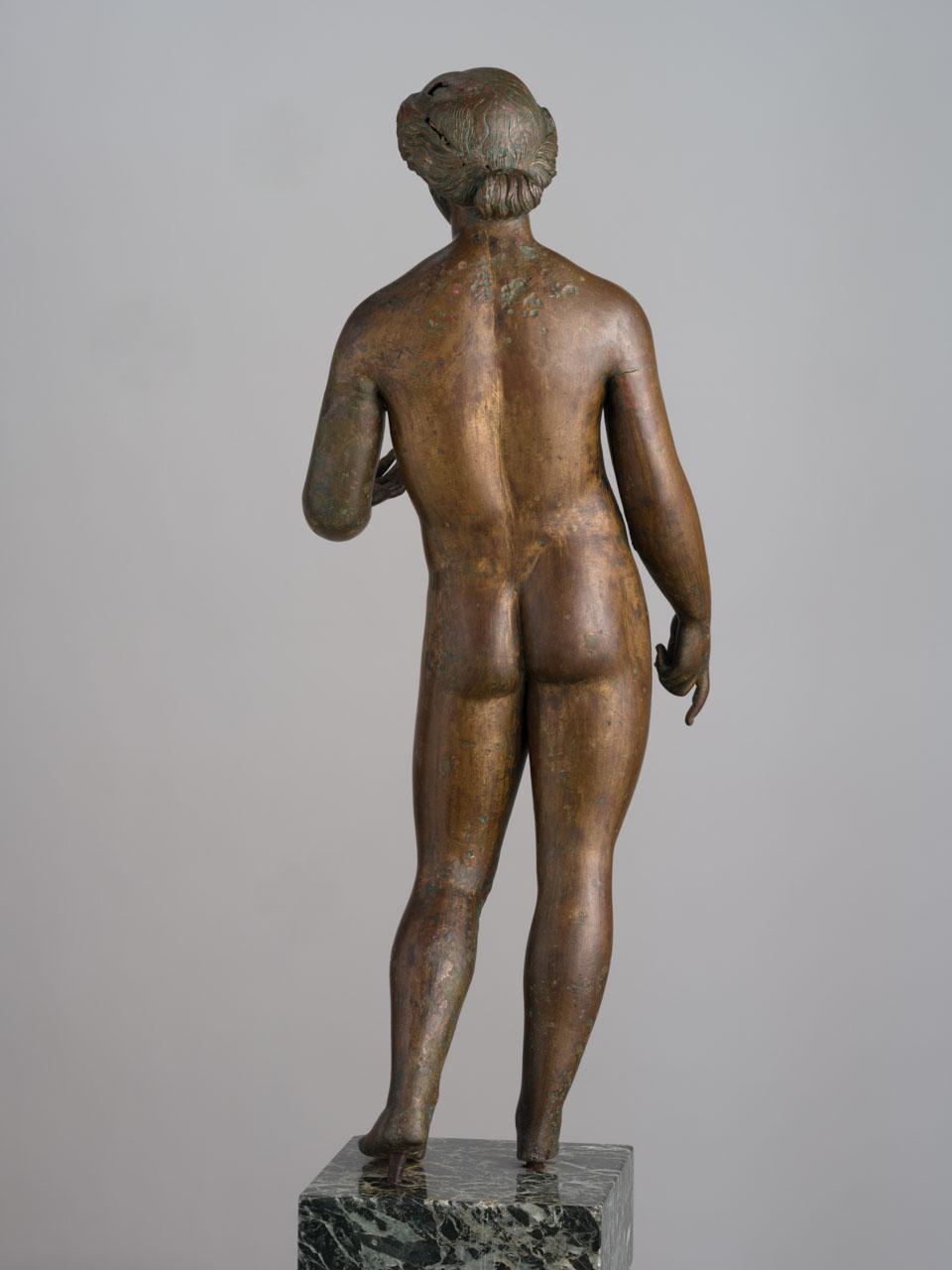
The stockier proportions and deeply grooved hair indicate that the statue was made in the Antonine period, in the second half of the 2nd century AD. The face is closest in style to that of the celebrated statue of Victoria, the Roman goddess of victory, from Fossombrone. Ancient bronze workers made this hollow, thin-walled casting using the indirect lost-wax method; cast body parts were cast separately and joined by soldering. Interestingly, while the front of the artefact suffered severe pitting corrosion leaving small cavities in the metal, its the back has survived the centuries almost intact.
Apollo is the most complex god in Greek mythology, embodying order, brilliant reason, and moral purity. The pose follows the Apollo Citharoedus type: Apollo singing to the kithara, a type of lyre. This form was popular from the Hellenistic period (323–31 BC) onwards. His raised left arm once supported the heavy instrument, while his lowered right hand held a plectrum for plucking the strings. The statue captures the moment just after his performance, when the god is still absorbed in the music. His stringed instrument symbolised mathematical precision and the triumph of civilisation over the unrestrained wildness associated with Dionysus, the god of wine. Medium-sized bronze statues are rare because they were extremely costly to make. This newly identified masterpiece may once have adorned a reception area in a Roman town house or country villa, or perhaps its garden or ornamental fountain.
The Hungarian National Museum’s long lost and recently rediscovered statue of Apollo, front view (Hungarian National Museum, Budapest; photo: Iván Jaksity)
The Hungarian National Museum’s long lost and recently rediscovered statue of Apollo, back view (Hungarian National Museum, Budapest; photo: Iván Jaksity)
The face of the Apollo statue with its silver eyes (Hungarian National Museum, Budapest; photo: Iván Jaksity)