Room 1 / Old Stone Age
The Old Stone Age is the longest period in human history, lasting around 3.3 million years, beginning with the appearance of the first cracked stone tools and ending with the appearance of the first farmers 10 000 years ago. Most of the older Stone Age is the Palaeolithic, which ends 12 000 years ago with the end of the Ice Age. From this date we count the younger and very short phase of the older Stone Age, the Mesolithic.
During this time, everyone lived a hunter-gatherer lifestyle. The material culture of man includes a wide variety of everyday objects and artifacts made of stone and bone. Hungary's oldest Palaeolithic site, Vértesszőlős, is only 350 000 years old and is the site of the Homo heidelbergensis settlement.
Fun facts:
- Most of the oldest Stone Age sites are in the open air, not in caves.
- Even prehistoric man made musical instruments. Visit our museum to see for yourself, and even listen to its sound!
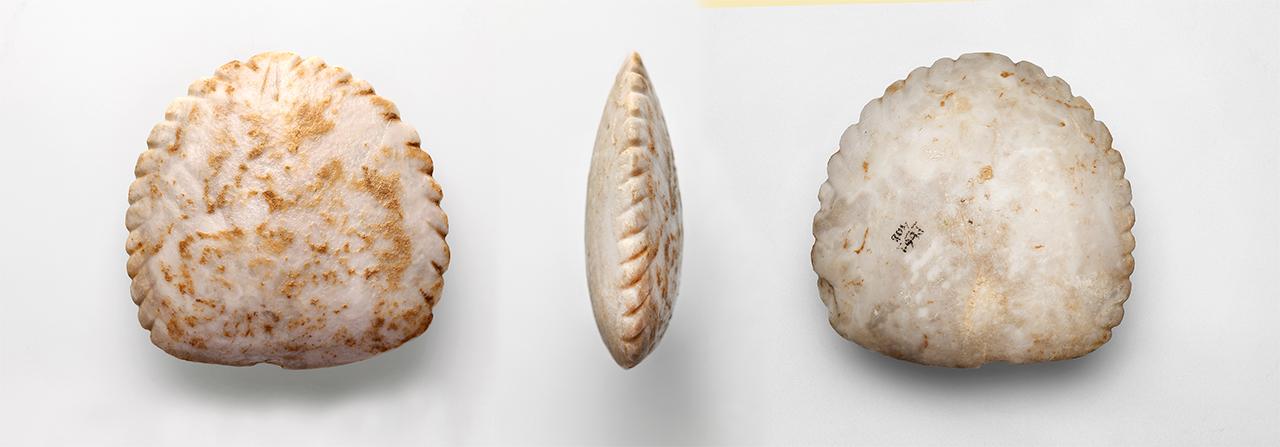
In 1963, the excavation of the upper Palaeolithic site of Bodrogkeresztúr-Henye produced a notched-edge pebble interpreted as a lunar calendar by László Vértes field archaeologist. It is 29,000 years old.
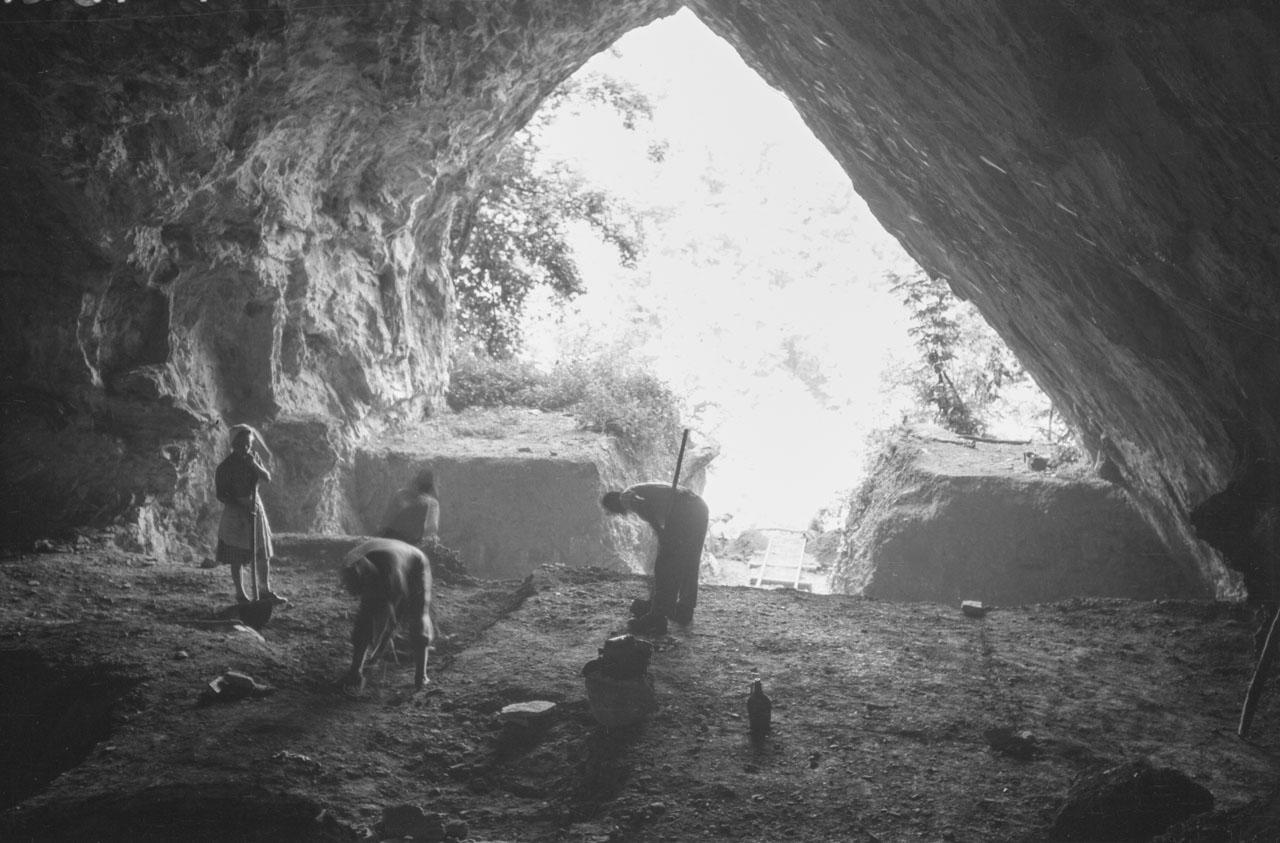
Excavation of the cave of Istállós-kő in the 1950s. This was where the bear cub's bone was discovered, and later described as a wind instrument by László Vértes. It is 35,000 years old.
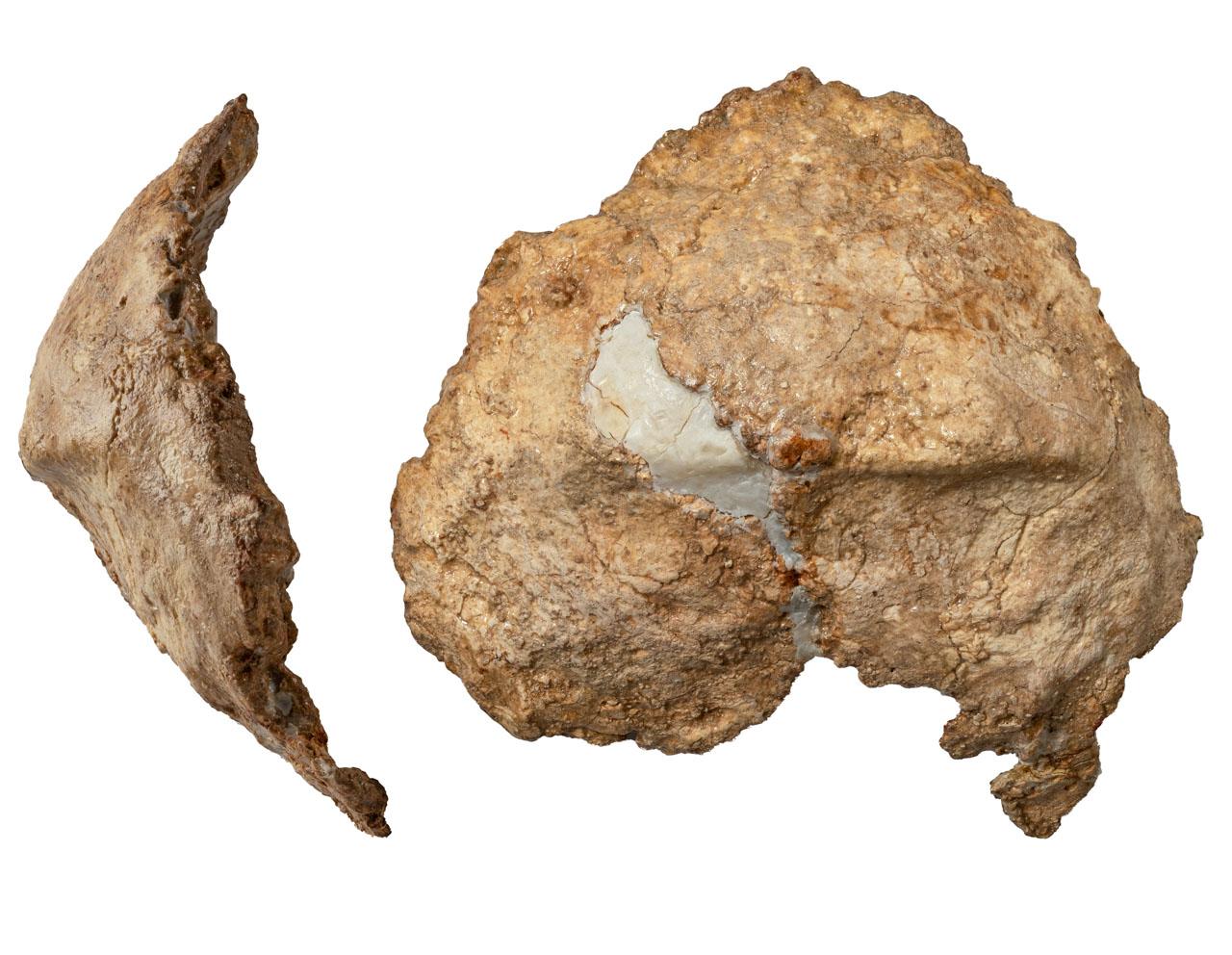
Samuel, the prehistoric man from Vértesszőlős; his remnants were discovered August 21, 1965. The find consists of only one occipital bone and is 270-350,000 years old.
Samuel's stone tools are typically 3-4 cm in size. He used them to cut up his prey and carve his hunting weapons.
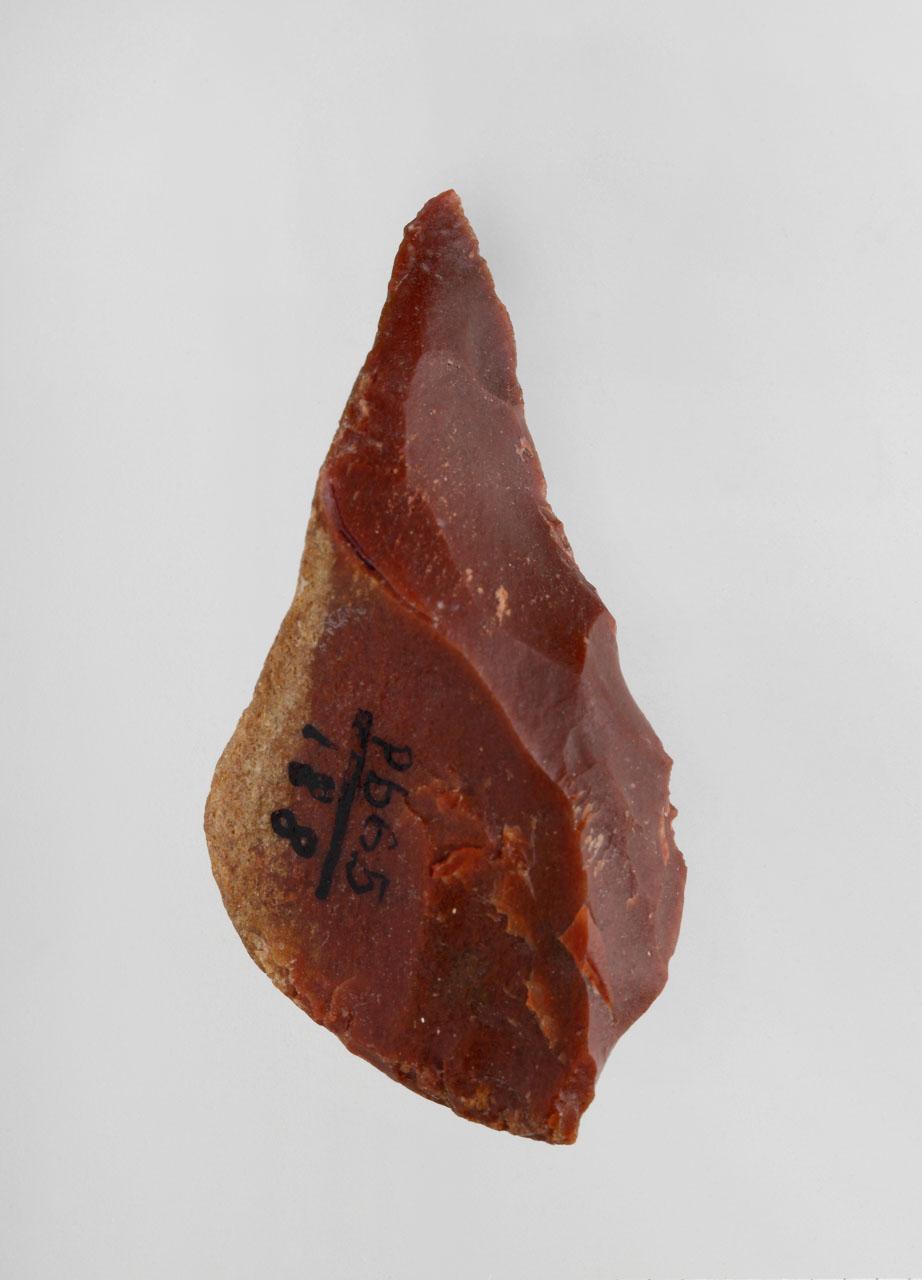
The tip of a Neanderthal hunting weapon, discovered during the excavation of the Suba-lyuk cave in 1932. It is from layer 3, 130,000 years old.
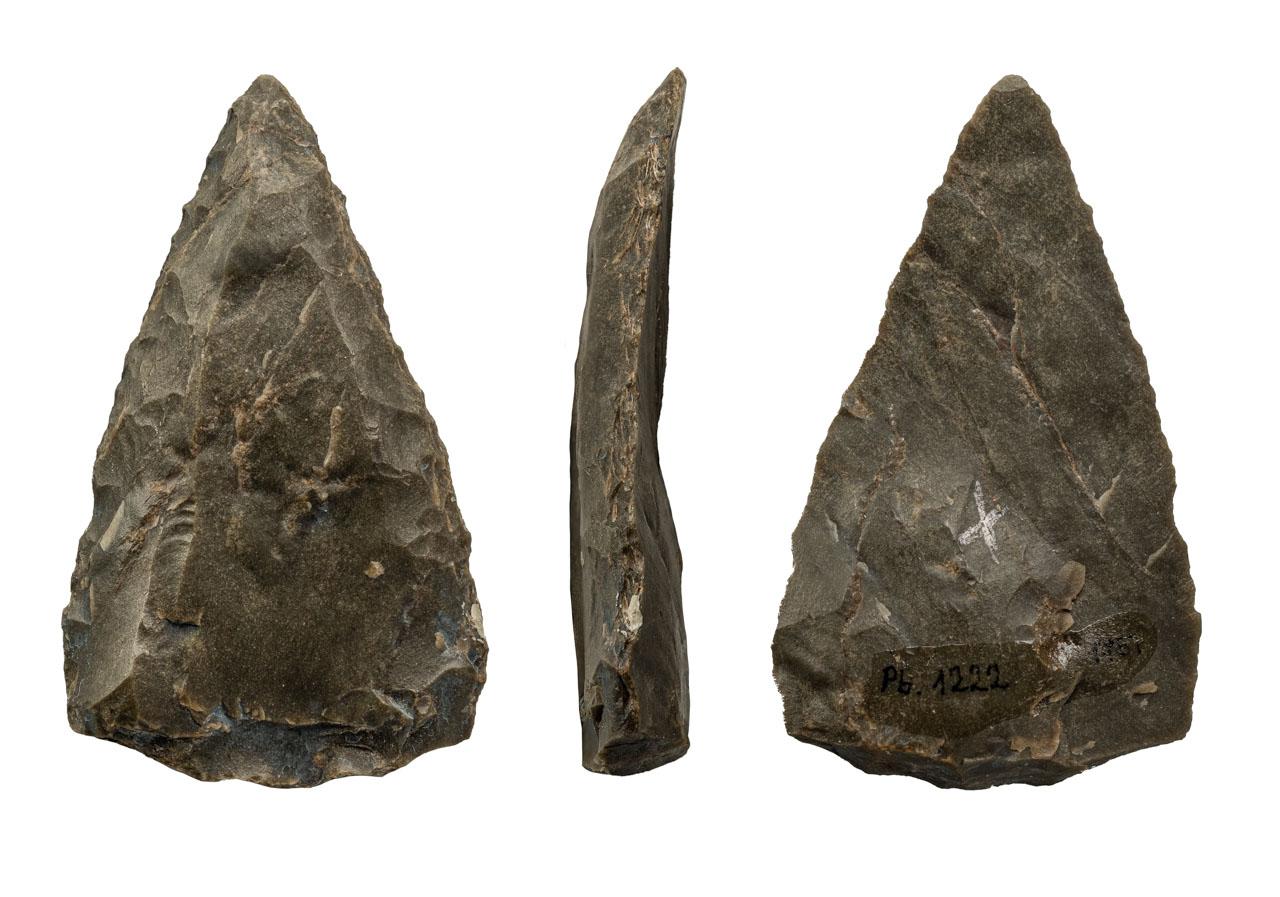
In 1891, three stone tools were found during the construction of János Bársony's house at the foot of the Avas Mountain in Miskolc, and they are associated with the beginning of systematic prehistoric research in Hungary. The three stone tools eventually ended up in the hands of Ottó Herman, who gave them the name "szakóca": the fishermen of Lake Balaton used similar, axe-shaped, heavy tools for fishing under the ice. A decade and a half of controversy surrounding these tools led to the modern approach to methodical exploration of the caves in the Bükk Mountains, including the discovery of the leaf-shaped tips of the Szeleta cave in 1907.
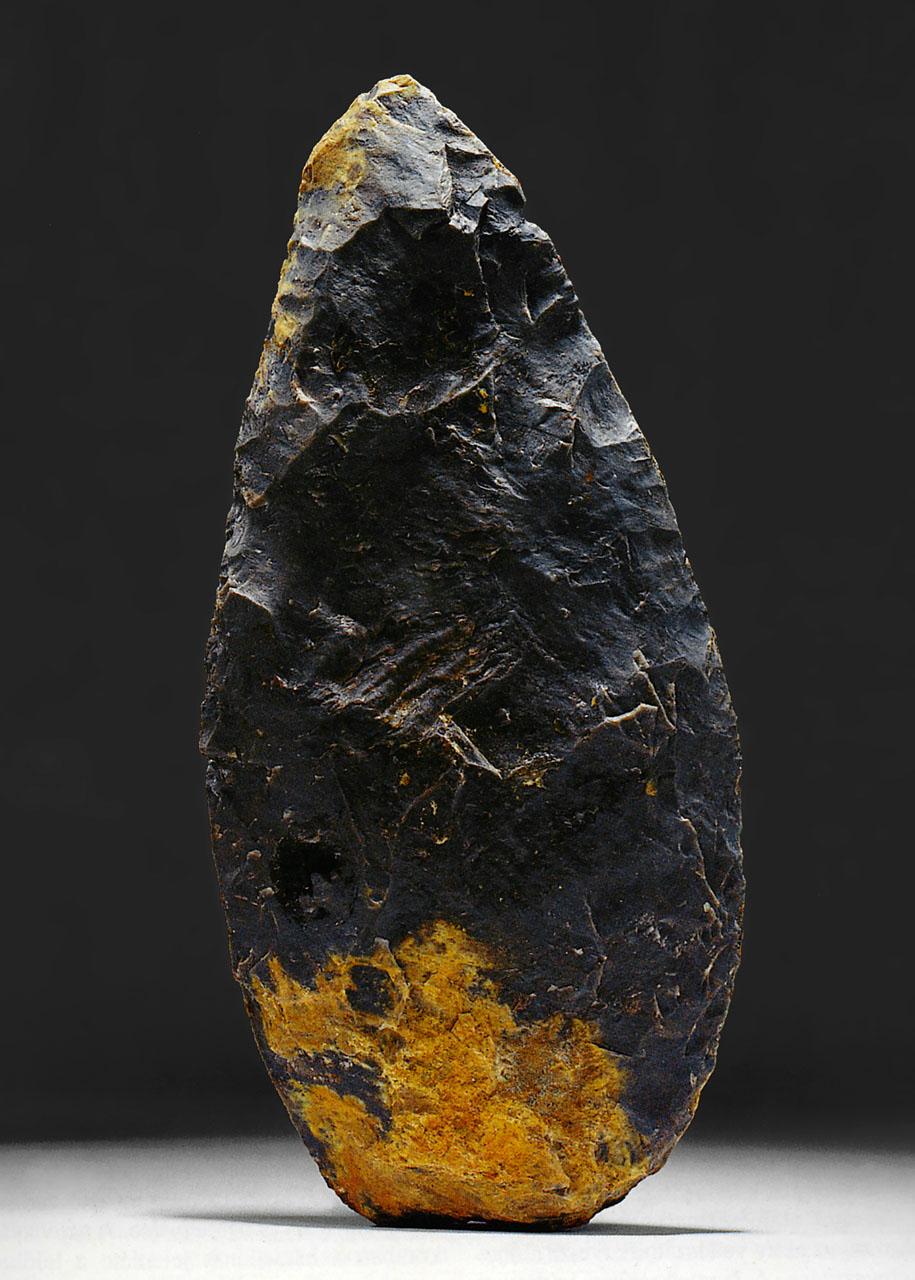
The large tool, made of an elephant long bone fragment, was found in the lowest cultural layer of the oldest archaeological site in Hungary, the Vértesszőlős I. site, which also contains human remains.
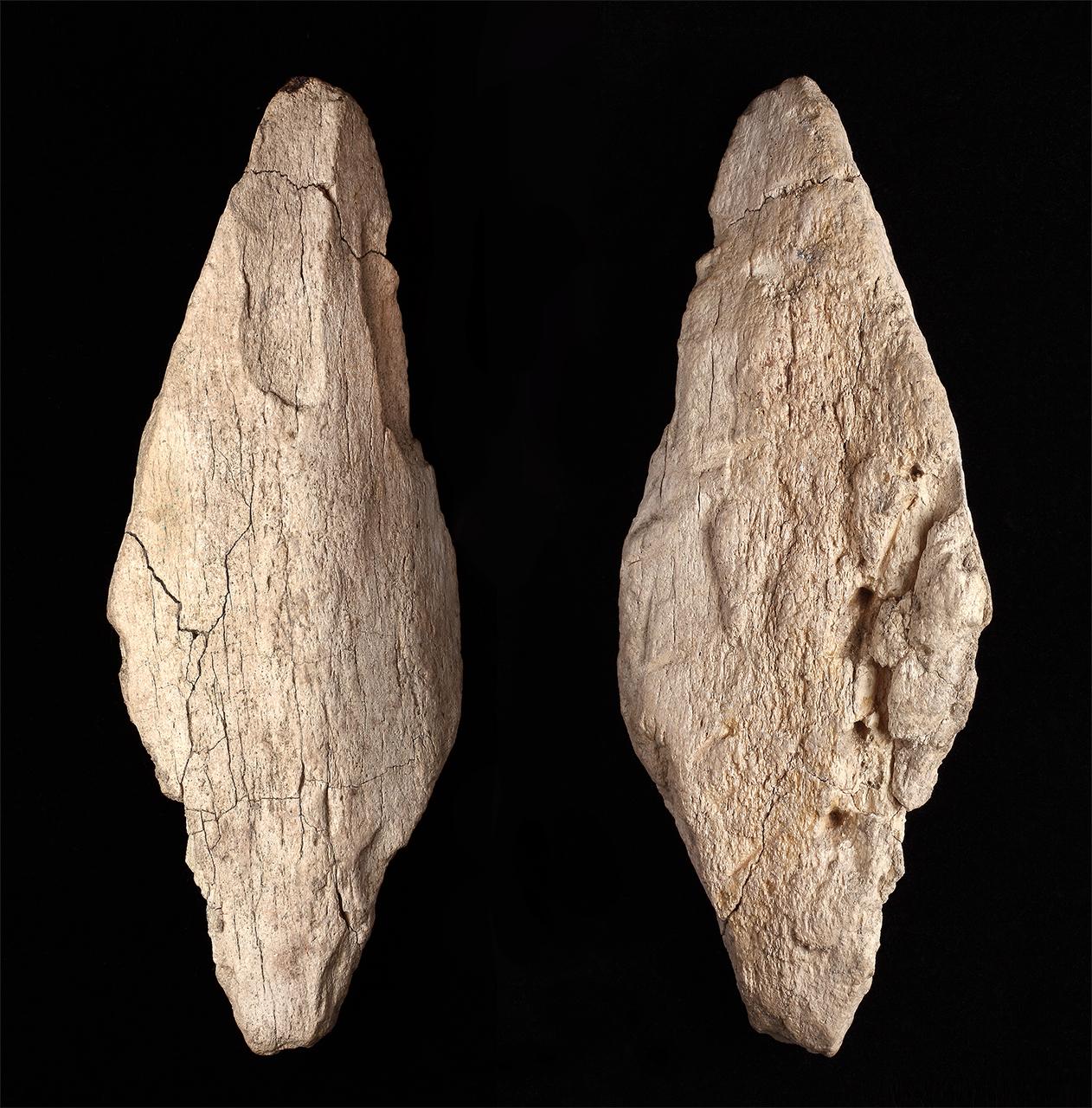
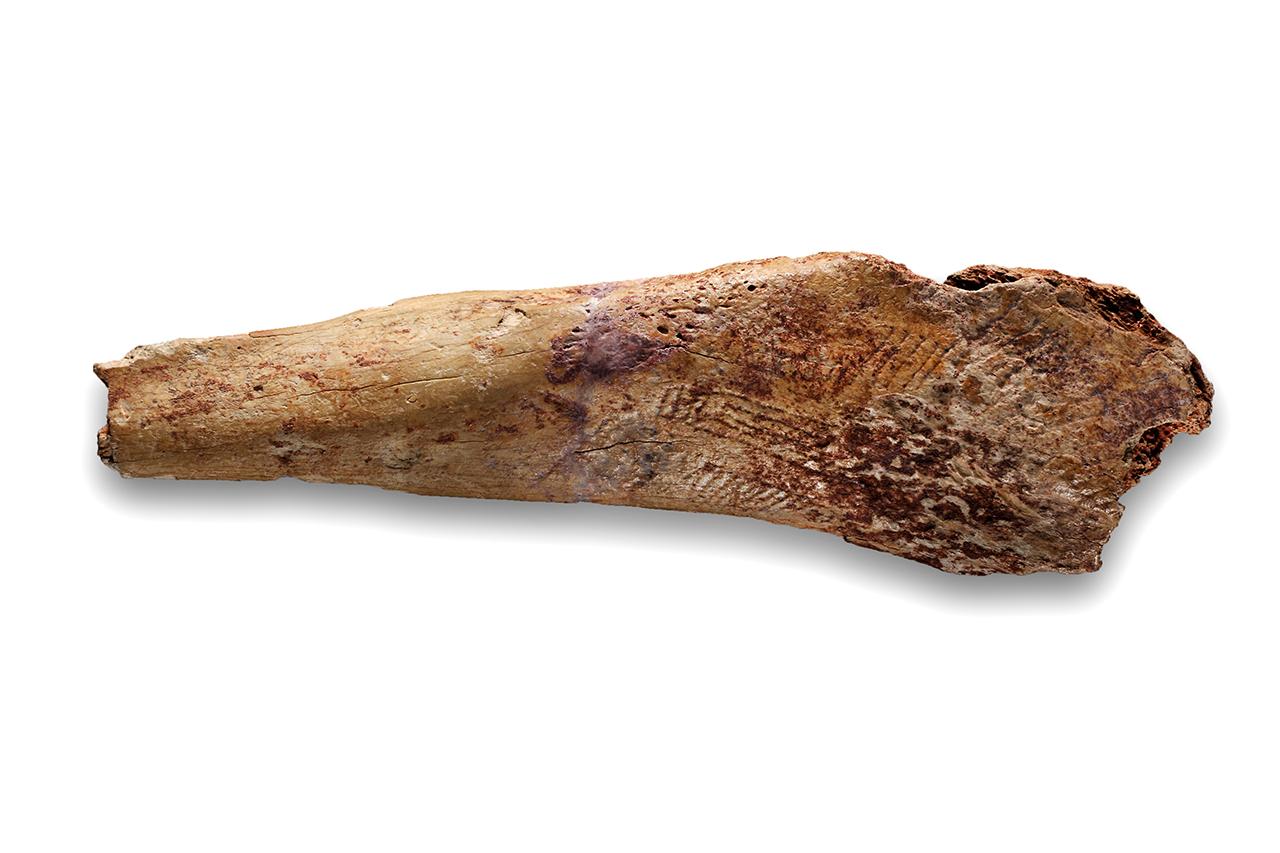
In the 1950s, one of the most interesting prehistoric sites in Hungary, the Lovas paint quarry, was discovered in a quarry in the Balaton highlands, when some knapped stones and bones of prehistoric animals were found in the 3–4 m deep cavities filled with reddish clay. For prehistoric man the red colour of the soft, spreadable clay deposited here was a symbol of blood and life. The seventy tools found here, showing signs of use, were made from elk ulna or antlers, specially adapted for the extraction of clay fill. The linear decoration seen on one of the tools is typical of the age of the painted caves, around 14-12,000 years ago, confirmed by the radiocarbon dating of 11,700 years.