Hall 2 / New Stone Age and Copper Age
In the New Stone Age and Copper Age (6000 BC–2800 BC), the basis of livelihood was already based on productive farming – agriculture and animal husbandry. People lived in permanent settlements, villages or small farm-like occupation sites. The tools of agriculture and domestic life are preserved in stone, bone, antlers and burnt clay: organic remains can only be reconstructed indirectly. Cemeteries and idols bear witness to beliefs and ideas about the afterlife.
By the end of the Copper Age, the use of copper and gold had become widespread, and fortified settlements appeared along with the growing wealth.
Fun facts:
- The efficiency of polished stone axes rivalled that of metal axes of today. These tools were not only indispensable until the invention of ironmaking, but also had a symbolic role at weddings, funerals and community celebrations at times.
- The density of settlements in the Great Hungarian Plain during the Neolithic period was equal to or even outnumbered settlements today, and the size of dwellings often far exceeded the size of today's average dwellings.
- Take a look through the doorway of the house on display to find out what man's first crafts were.
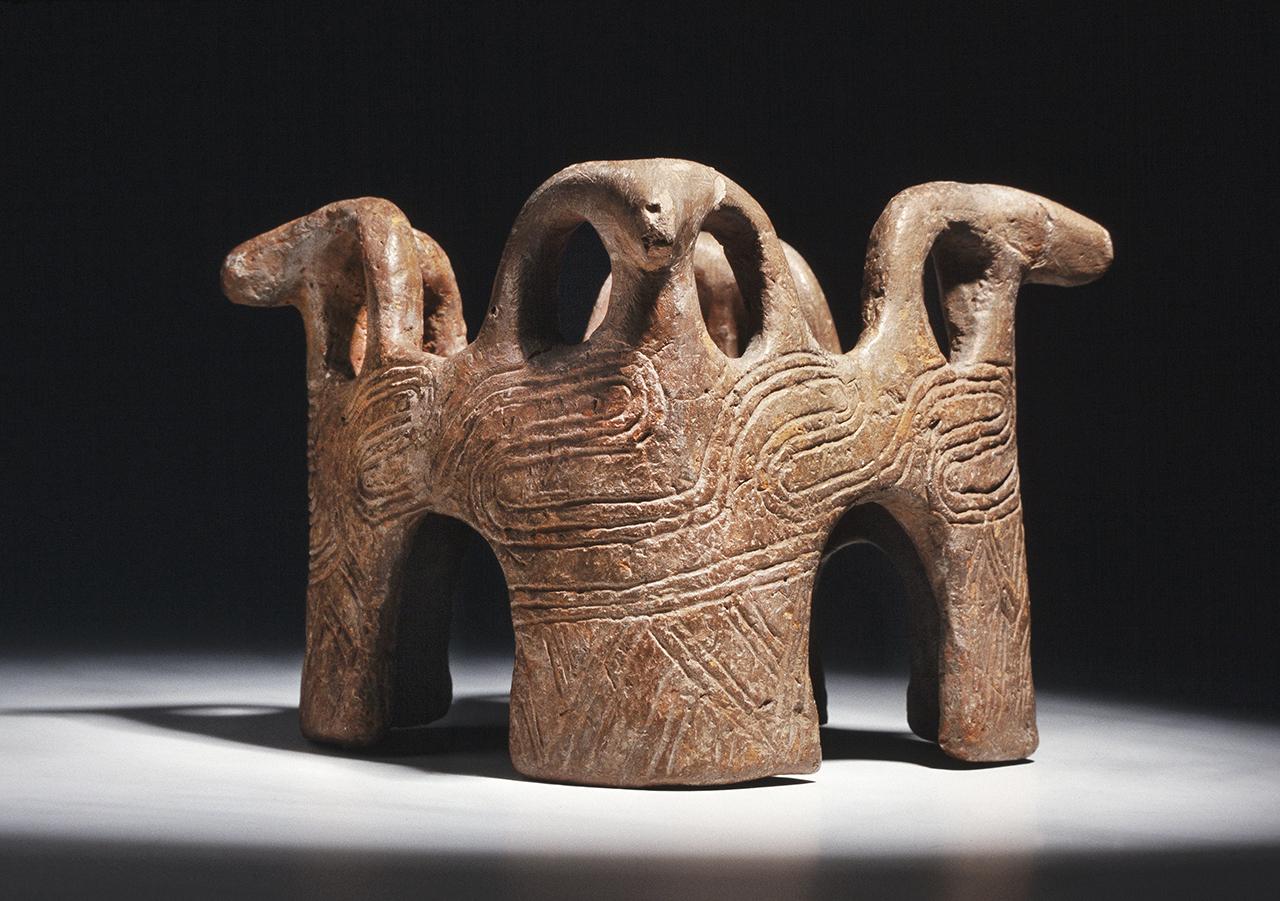
It was in the Southern Great Plain region that early settlements of farmers first appeared, bringing with them a new landscape of plants and animals. These species acquired a symbolic meaning in their material culture, as can be seen in the sculpture of a ram or goat's head on the four corners of a clay altar from the Szeged area. The small triangular or rectangular clay altars were a dominant object type in the material and spiritual culture of many aspects of South-eastern Europe, where this type of object was used in rituals within the household.
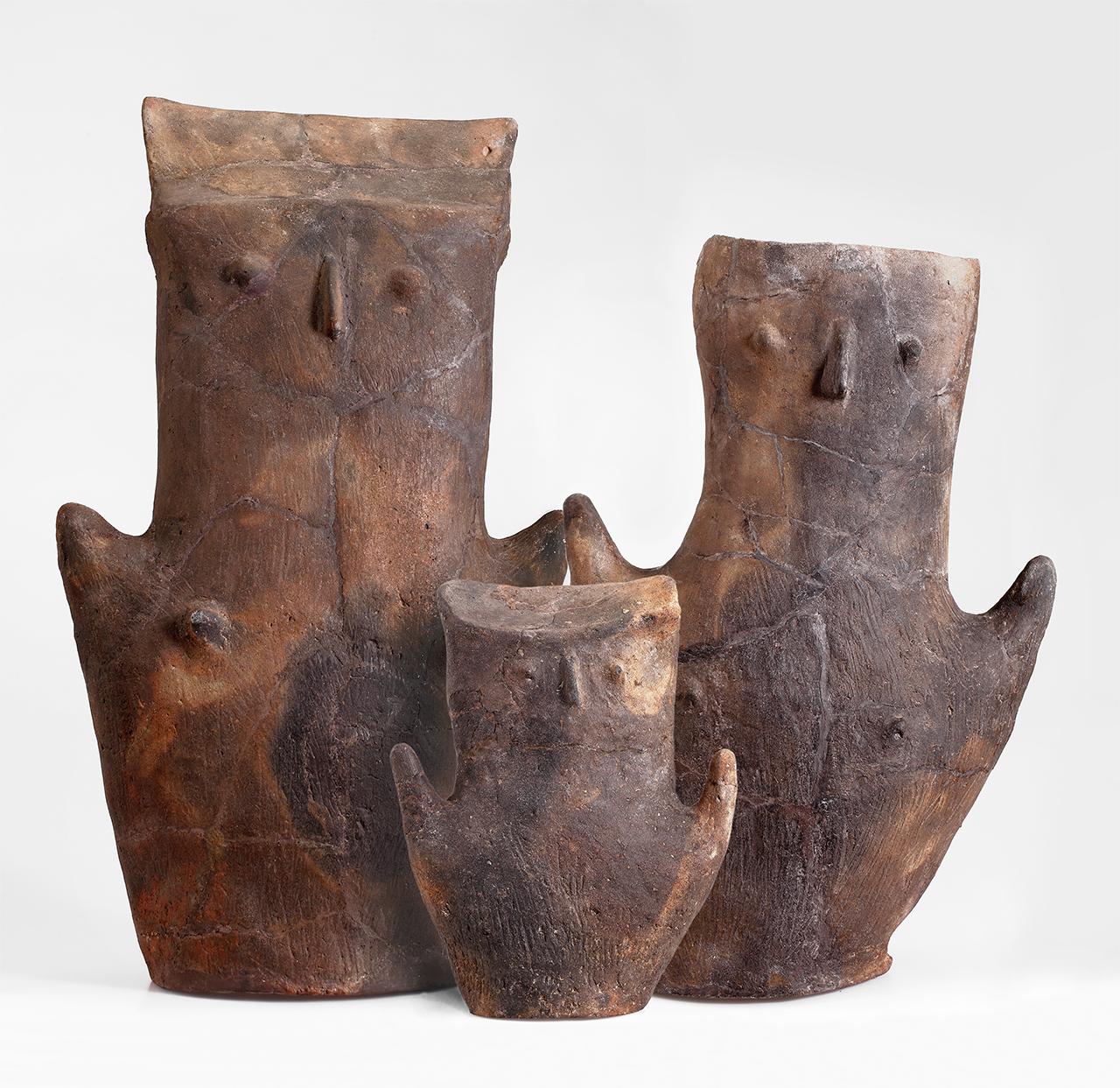
The anthropomorphic urns were found at the Ózd-Center site in 1958, in a stone-lined burial pit. The objects are related to the late Bronze Age Baden culture (3300–2800 BC), a group of people, mainly from the Sajó Valley, who in mostly placed the ashes of the deceased in human-shaped urns. Although the urns are highly schematic in their representation, they were designed in different ways, which suggests personalised manufacturing. Examination of the ashes recovered from the three urns revealed that the largest one preserved the remains of a middle-aged woman, while the two smaller ones held those of two children (Late Bronze Age, Baden culture)
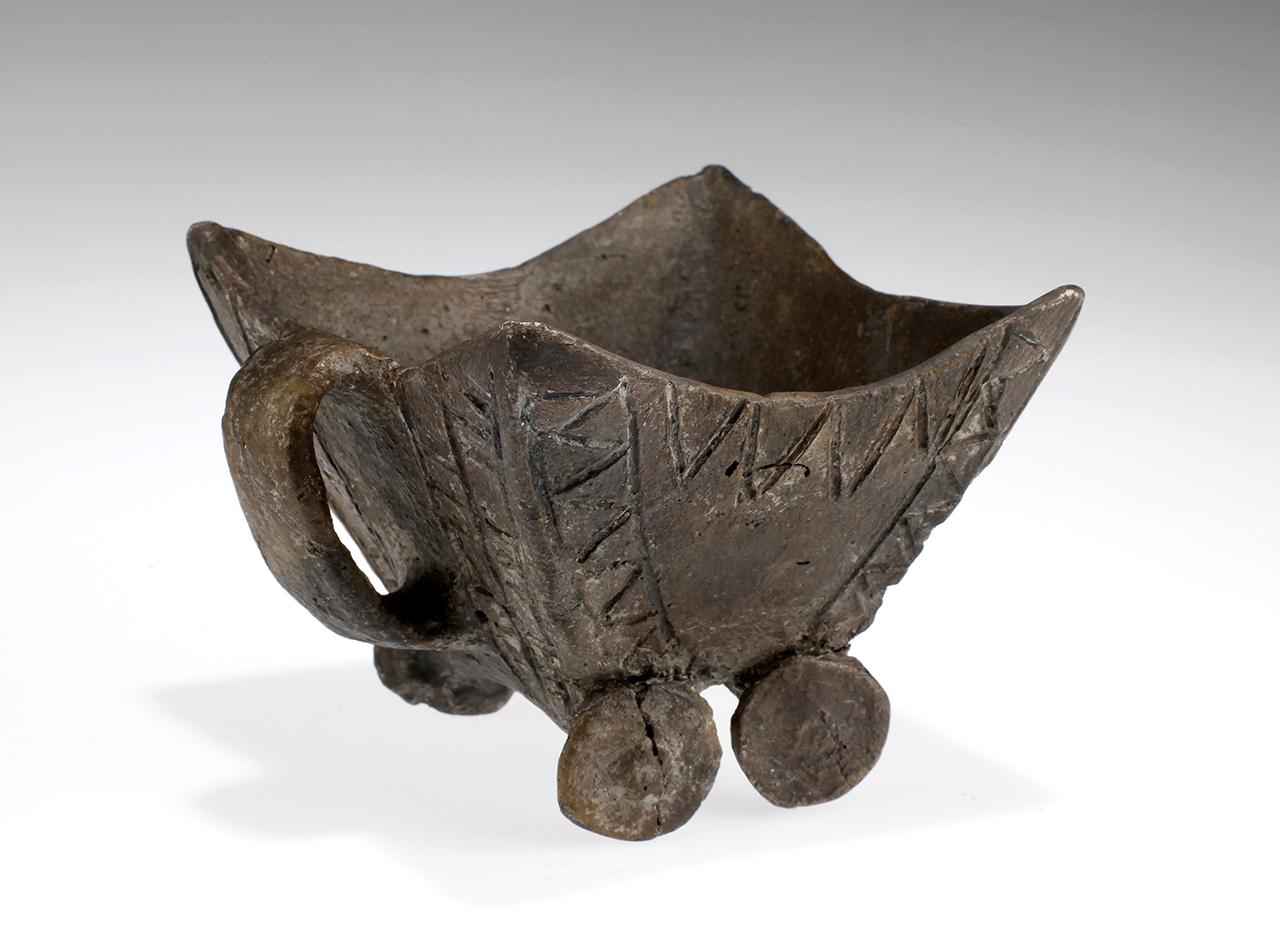
The model, an eared, cart-shaped vessel, was discovered in 1972 in Szigetszentmárton from a grave dating to the late Bronze Age Baden culture (3300–2800 BC). At the bottom of the ornate model, the round, roller-like wheels are connected by cylindrical shafts. Carts appeared in the middle of the 4th millennium BC, interestingly over a vast area at the same time: there are early finds of them from the Alps to the Caucasus, from northern Germany to Mesopotamia. Even today, research is still unable to delineate the core area of the emergence of these vehicles, presumably because the technological knowledge of how to assemble and use them spread rapidly. In addition to their practical function, i.e. in facilitating transport, they also had an important prestige function, making their owners more mobile. Thus, the models that represented carts in funerals may also have been important markers of the prominent social role of the dead.