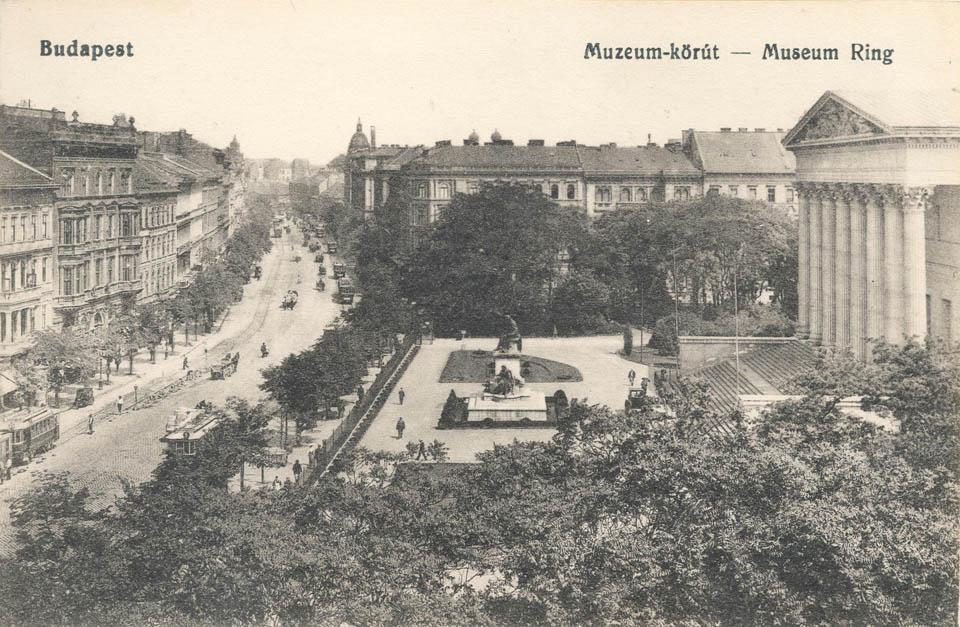
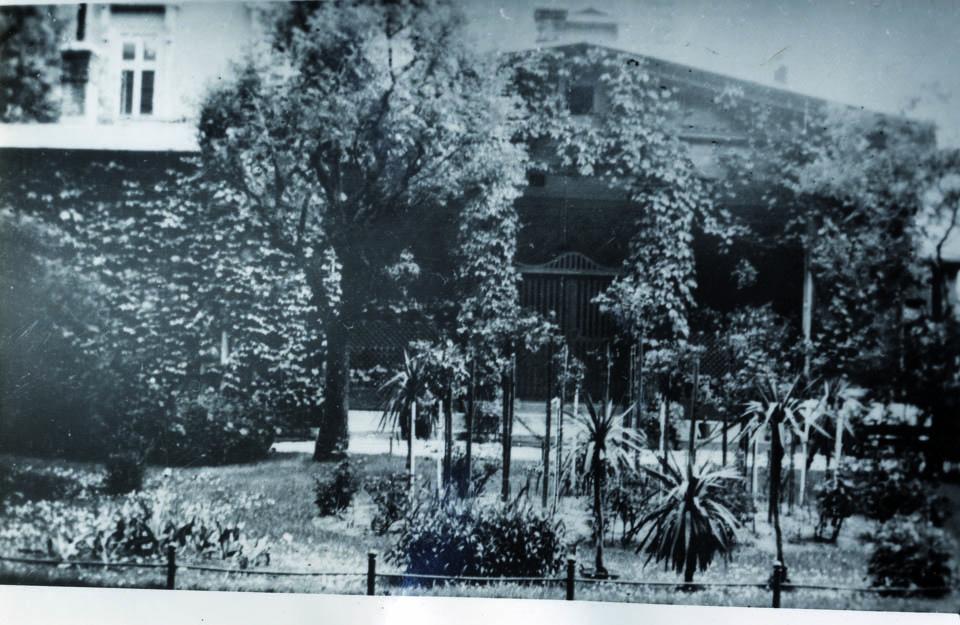
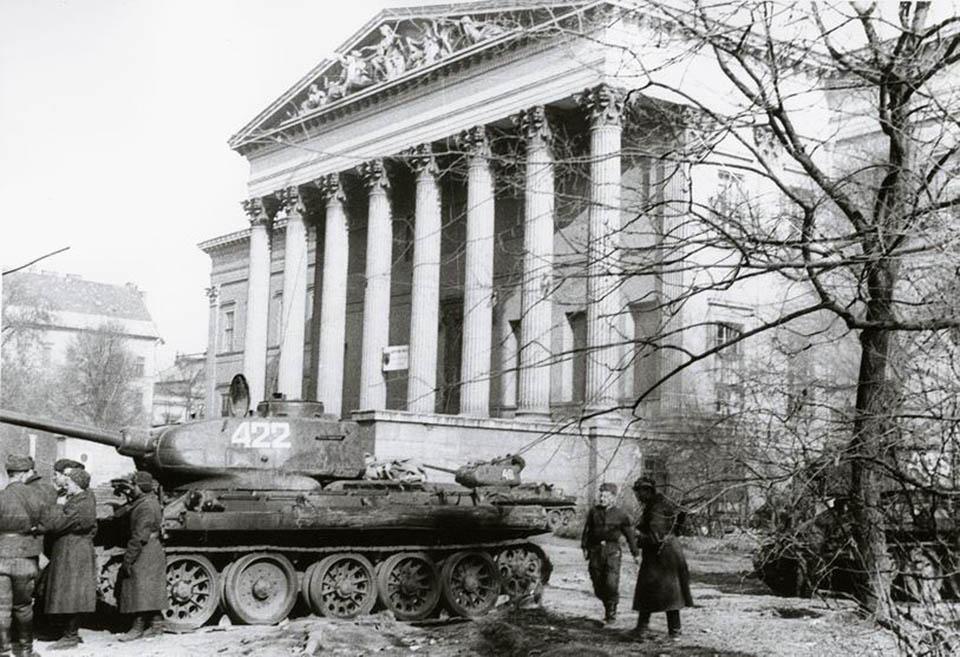
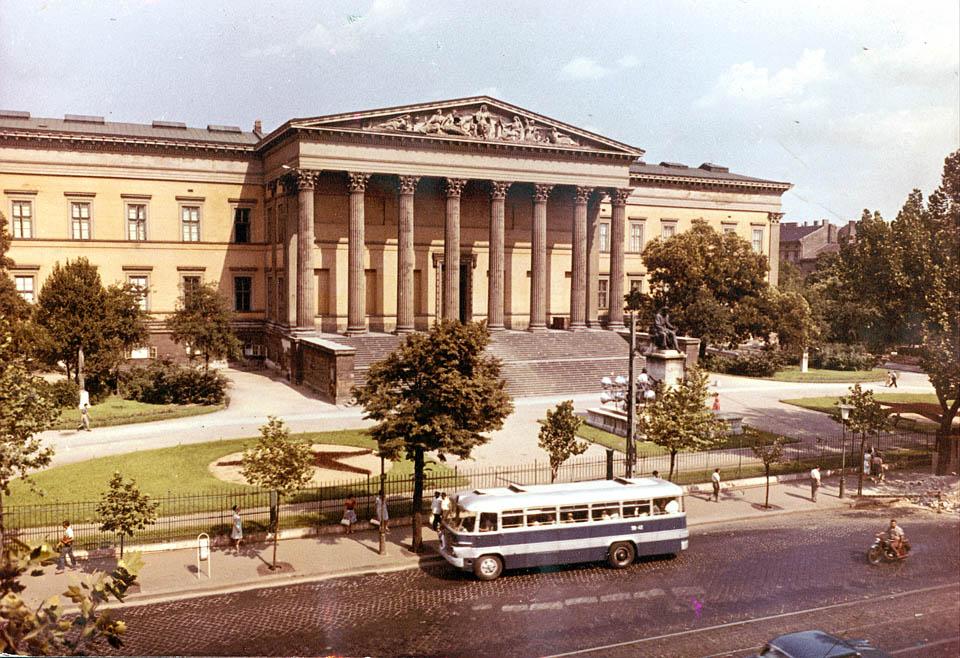
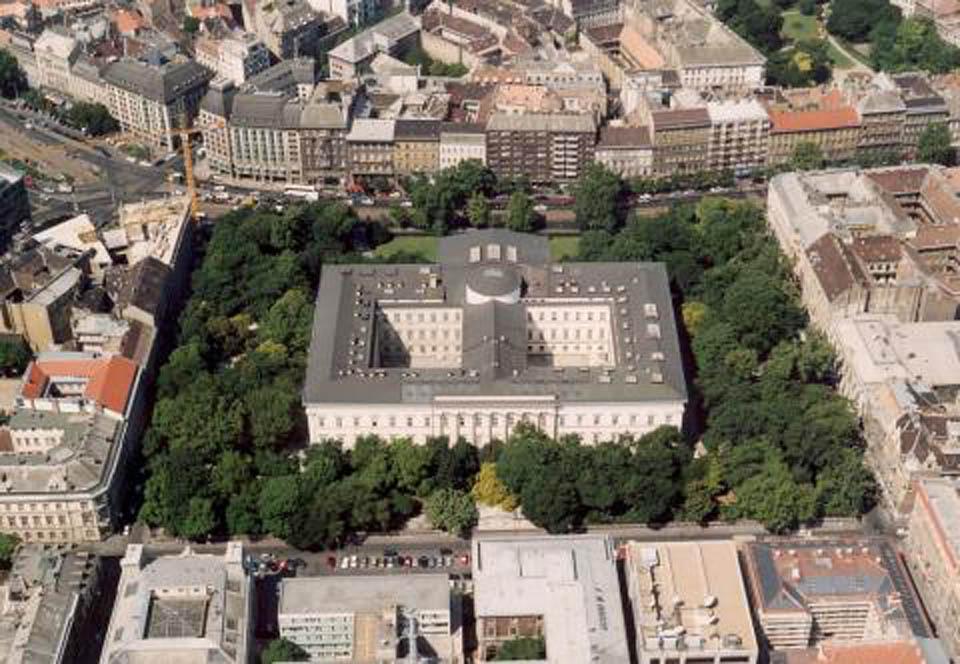
The plot of land measuring 8,700 acres, located at today's 14–16 Múzeum körút, was purchased by the state in 1813 from the Batthyány family for the purpose of establishing the Hungarian National Museum. The Museum’s collections were temporarily housed in a villa building standing on the site. By 1846, the permanent museum building—the imposing palace designed by Mihály Pollack and still standing today—was fully completed. Its surroundings, however, remained an undeveloped, barren outer courtyard until 1855. Pollack himself had already formulated concrete ideas for landscaping the area, and in early 1848, plans were also submitted by Károly Muszely, a horticulturist working in Pest.
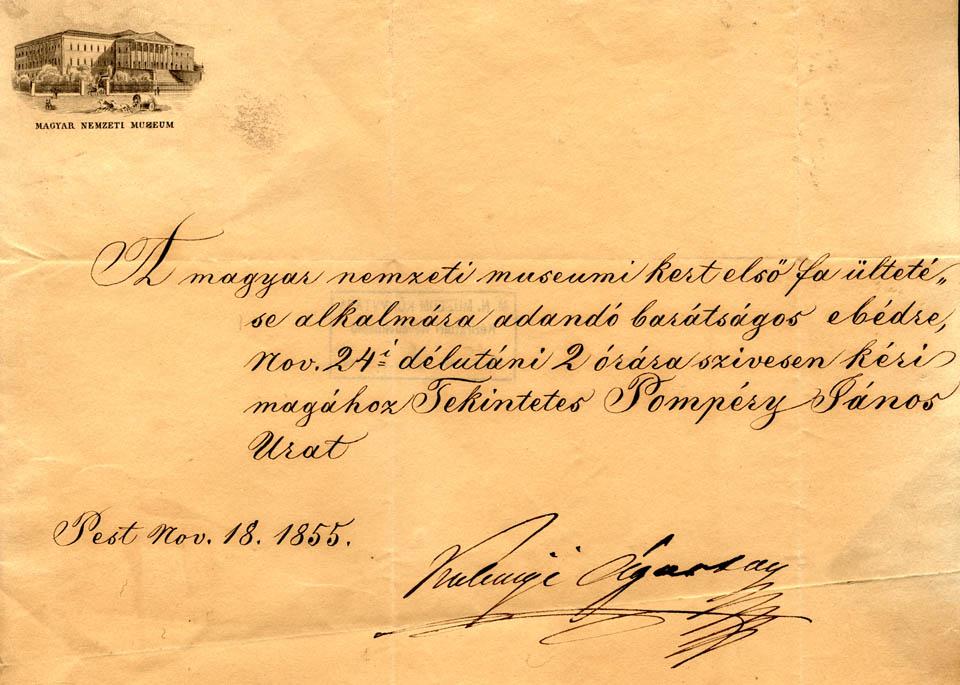
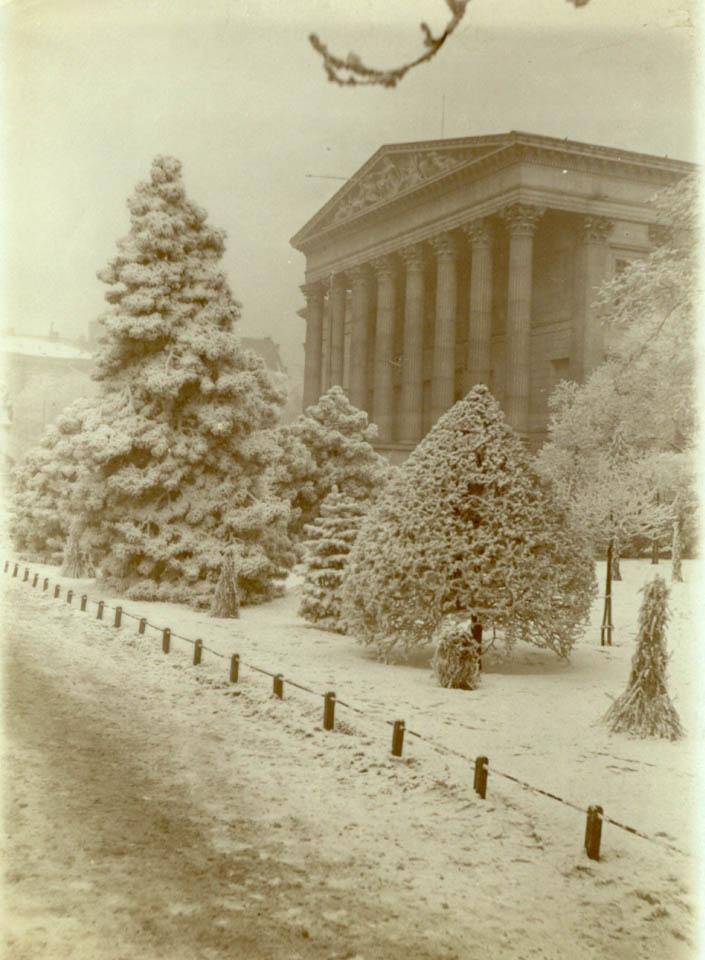
The revolutionary events of 1848–1849, during which the square in front of the Museum became a major historical stage, swept these plans aside, and the development of the Museum Garden could only be taken up again after the defeat of the War of Independence. As the state provided no financial support, the necessary funds had to be raised through public initiative. To this end, a so-called “garden fund” was established from 1852, and concerts were held in the Museum’s ceremonial hall for its benefit. (In the 1850s, this activity made the National Museum the capital’s leading concert venue.) Using the proceeds of this fundraising, the gardener’s house, which still stands today, was built in 1852, and in the following year Ármin Petz, head gardener of the Orczy Garden, prepared an English landscape garden plan for the Museum Garden. The first trees were planted in a ceremonial event on 24 November 1855. One of the leading newspapers of the time, the Budapesti Hírlap, reported on the occasion in its issue of 26 November as follows: “The day before yesterday, that is on Saturday, the inauguration—so to speak—of the garden or promenade to be established in the courtyard of the National Museum took place. After the necessary earthworks and embankments had been completed, the planting of the first living trees of the promenade, destined to adorn this part of the city, was carried out around noon in the presence of several high-ranking officials (among them Ede Kapy, head of Pest County, and József Krászonyi, Mayor of Pest), scholars, and guests. On this occasion, the Museum’s director, Imperial and Royal Councillor Ágoston Kubinyi, delivered a speech appropriate to the purpose of the ceremony, after which those present watered the newly planted trees. This was followed by a cheerful luncheon, seasoned with Hungarian hospitality, at the home of the Museum Director, to which the assembled company had been invited.” From reports in other newspapers, we also know that the first trees were planted in the section of the garden at the corner of today’s Múzeum körút and Bródy Sándor Street, and were watered using an ornate watering can specially crafted for the occasion by József Kortsák, a tinsmith from Pest. Among the distinguished figures of the age present at the ceremony were József Eötvös and the young Frigyes Podmaniczky.
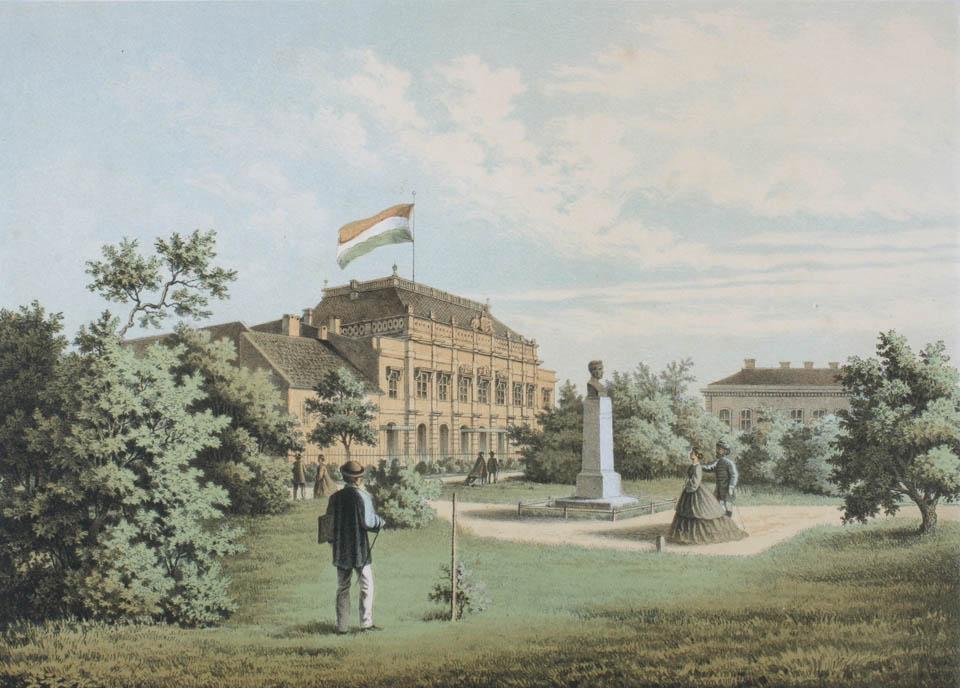
The planting of the garden was carried out under the direction of Henrik Kallina, the Museum’s first gardener, and was completed in 1857. The first trees were brought from Margaret Island, followed by the transport of 1,000 young trees sent from the Kiskunlacháza estate of Sámuel Egressy on twelve horse-drawn wagons. The finest lime trees were donated by Simon Sina from his estate in Gödöllő.
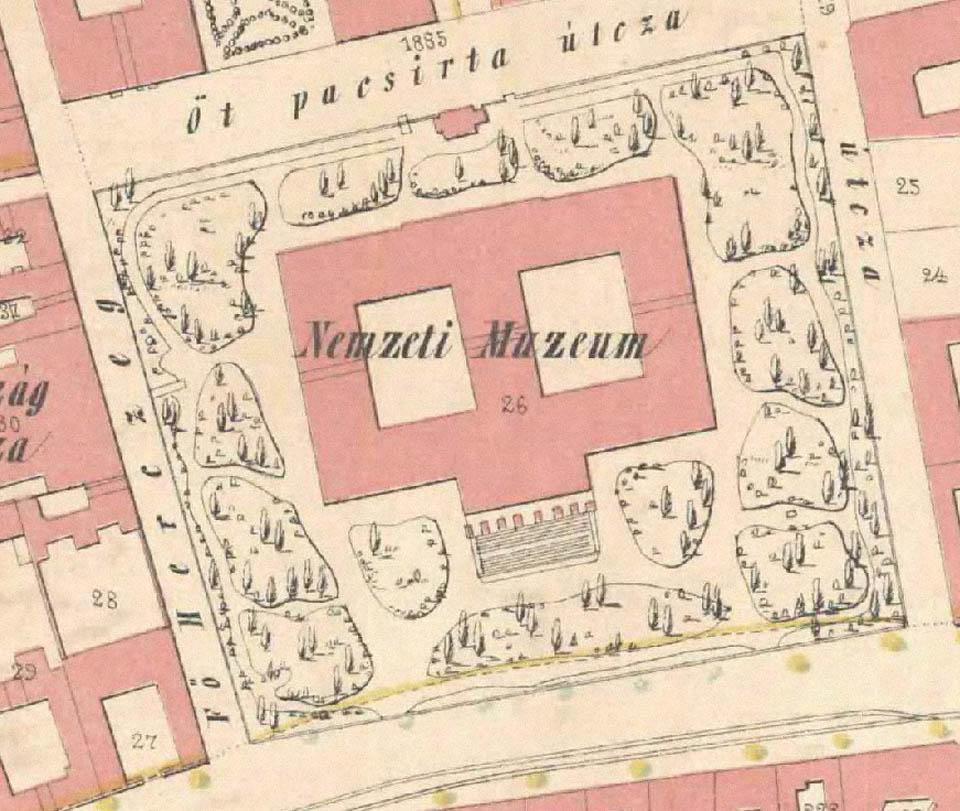
The Museum Garden acquired its final layout in 1880, when the widening of Museum körút required the incorporation of an area of 264 acres into the roadway. At that time, the fence—originally completed in 1865 according to the designs of Miklós Ybl—was moved further inward. The Garden later underwent major redevelopment works in 1952–1953, again in 1973, and most recently in 2017–2018. Until 1953, the maintenance of the Garden was carried out by the Museum itself. Since then, horticultural management has been undertaken by FŐKERT Company.
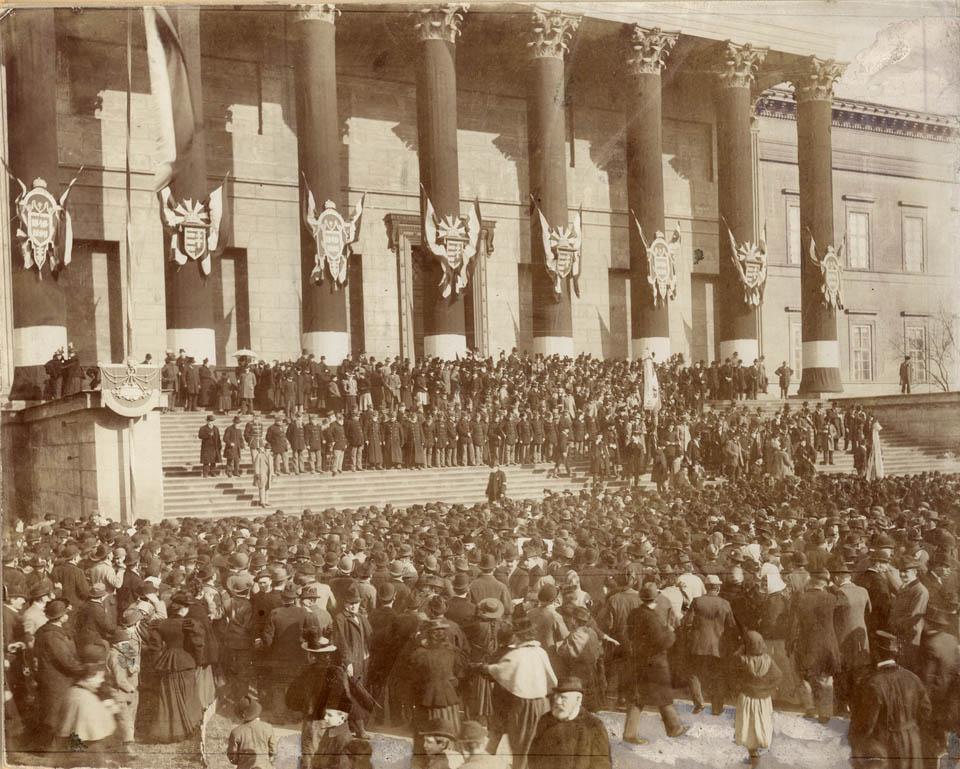
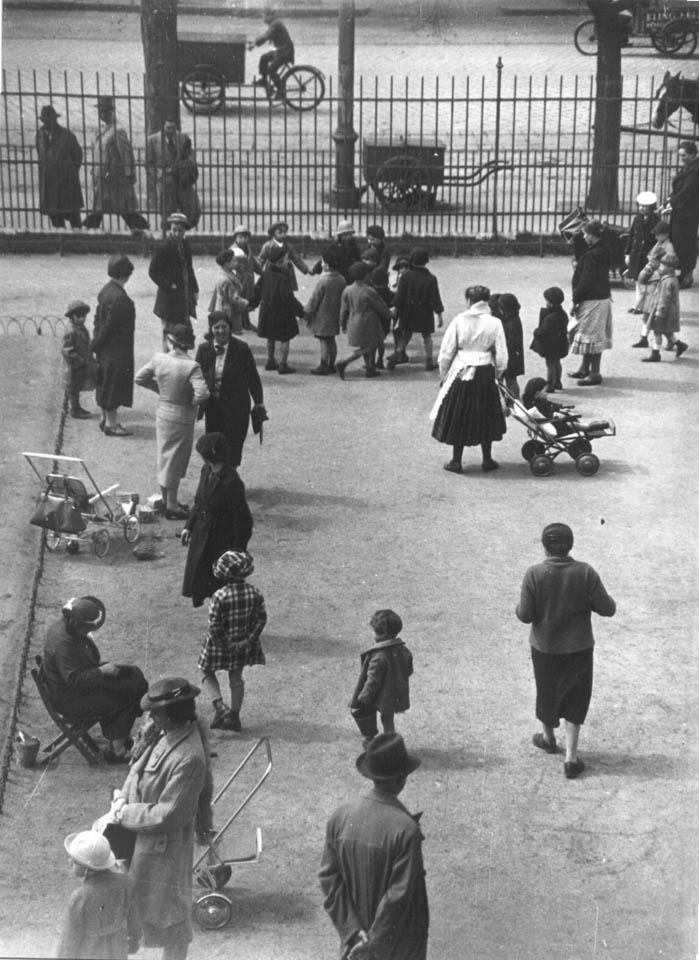
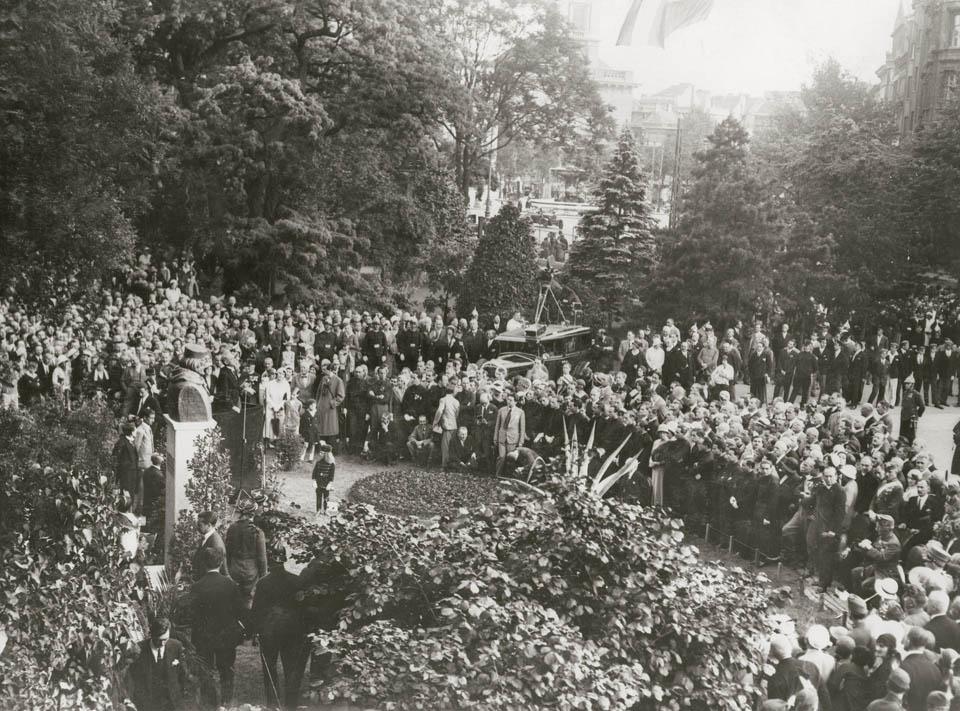
Beyond the famous revolutionary mass meeting of 15 March, the garden of the Hungarian National Museum has served as the venue for numerous important social events, including suffrage rallies, strike assemblies, funeral ceremonies, and commemorations. At the same time, the “Muzi” has always been a beloved place of everyday recreation. Over the past two decades, it has also become a festival venue: since 1996, the Museums’ May Festival, a gathering of museums from Hungary and beyond the borders, has been held here every May.
Colour lithograph by Adam Slowikowski, 1865