Shattered Light
The Hungarian National Museum welcomes visitors to a new temporary exhibition. Shattered Light – The Jagiellonians until the Battle of Mohács (1490–1526) is open from 24 November 2026 to 4 April 2027.
The exhibition presents the flourishing Kingdom of Hungary in the Jagiellonian era concluded by the disaster at Mohács in 1526. It also explores how people have remembered this decisive battle over the past 500 years, and how views of it continue to change even today.
The title reflects the exhibition’s two themes. Light evokes a cultural, economic, and political golden age in the Kingdom of Hungary under the Jagiellos. Shattering symbolises the disaster at Mohács and its lasting historical consequences.
The exhibition presents the Kingdom of Hungary as a it was — a major political power integrated into the fabric of Europe — and highlights its widespread diplomatic and cultural connections.
It also explores the rapidly shifting balance of power in Europe during the Jagiellonian era.
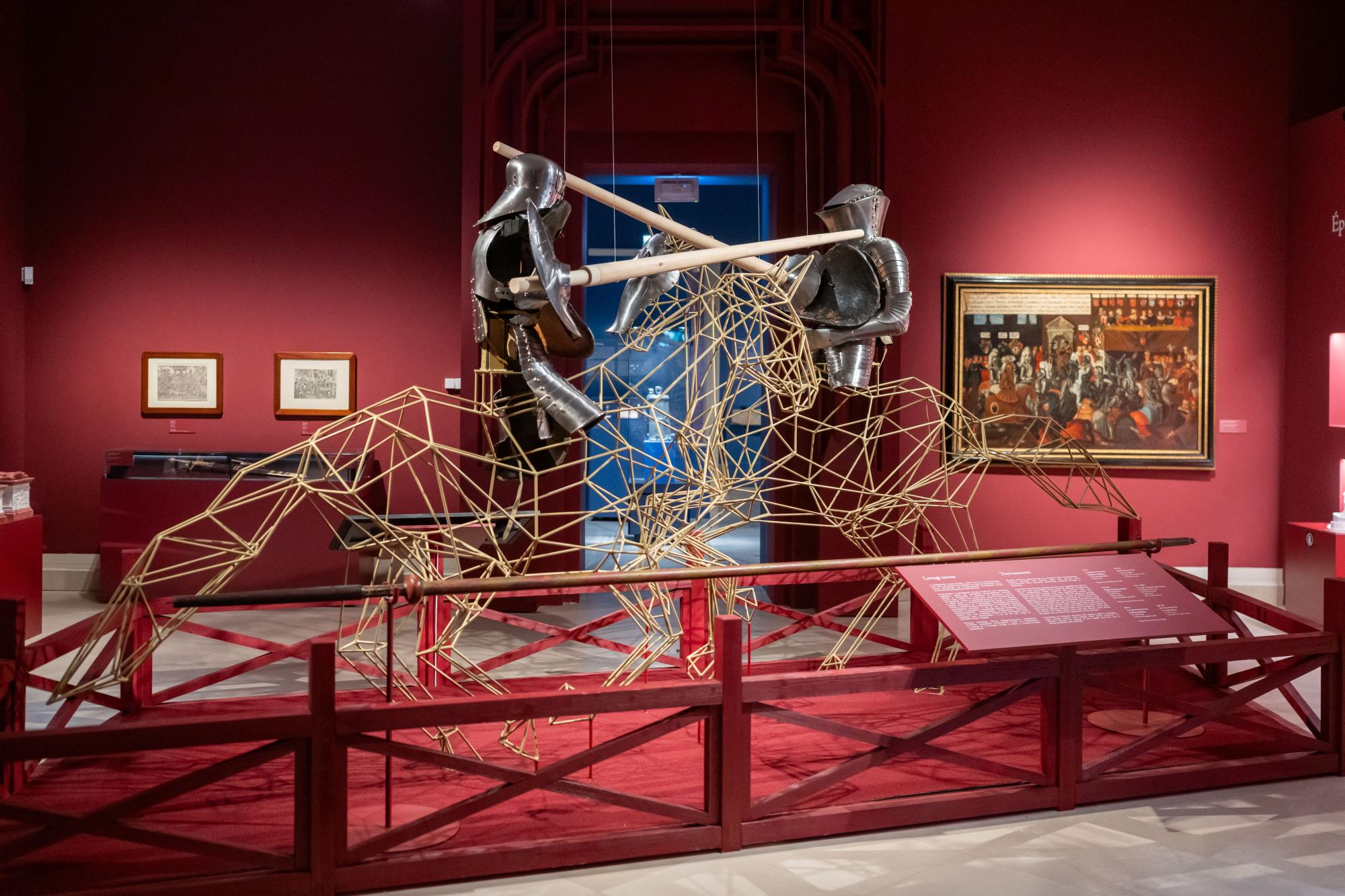
This exhibition draws on several fields of study to look beyond political and military history. Visitors can discover the impact of geographical discoveries, advances in medicine and astronomy, the lively spectacle of court life, and the world of knightly tournaments. It also traces the major political changes that contributed to bringing about the tragedy at Mohács. The end of the Jagiellonian era is presented through the fates of King Louis II of Hungary and Queen Mary of Austria.
Fine stone carvings offer a glimpse of the period’s architecture. Outstanding pottery from local workshops, objects relating to mining, and rare documents from the early history of writing in Hungarian reveal everyday life in towns and villages. The legacy of cathedrals and monasteries evokes the richness of religious life before the Reformation.
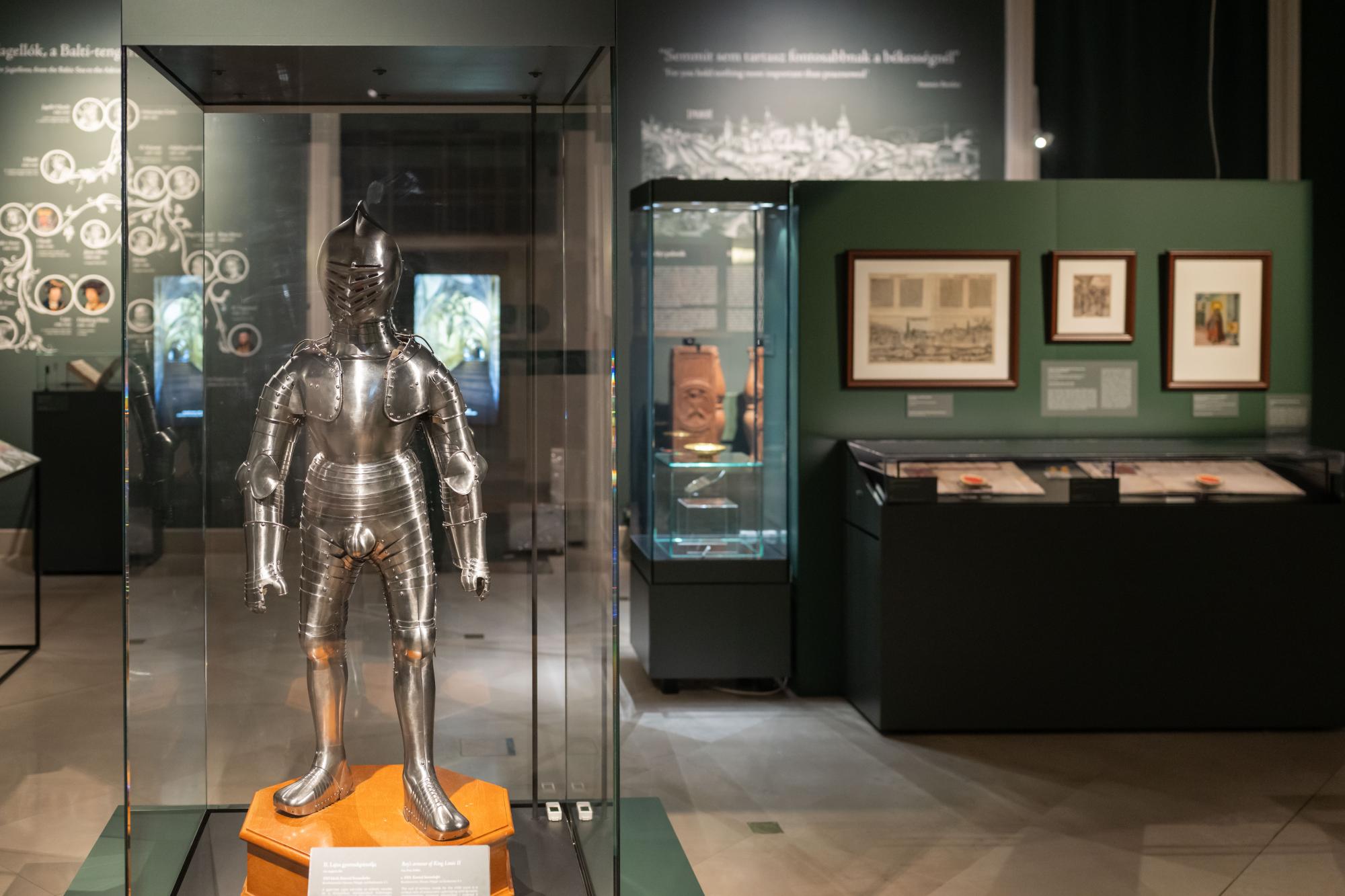
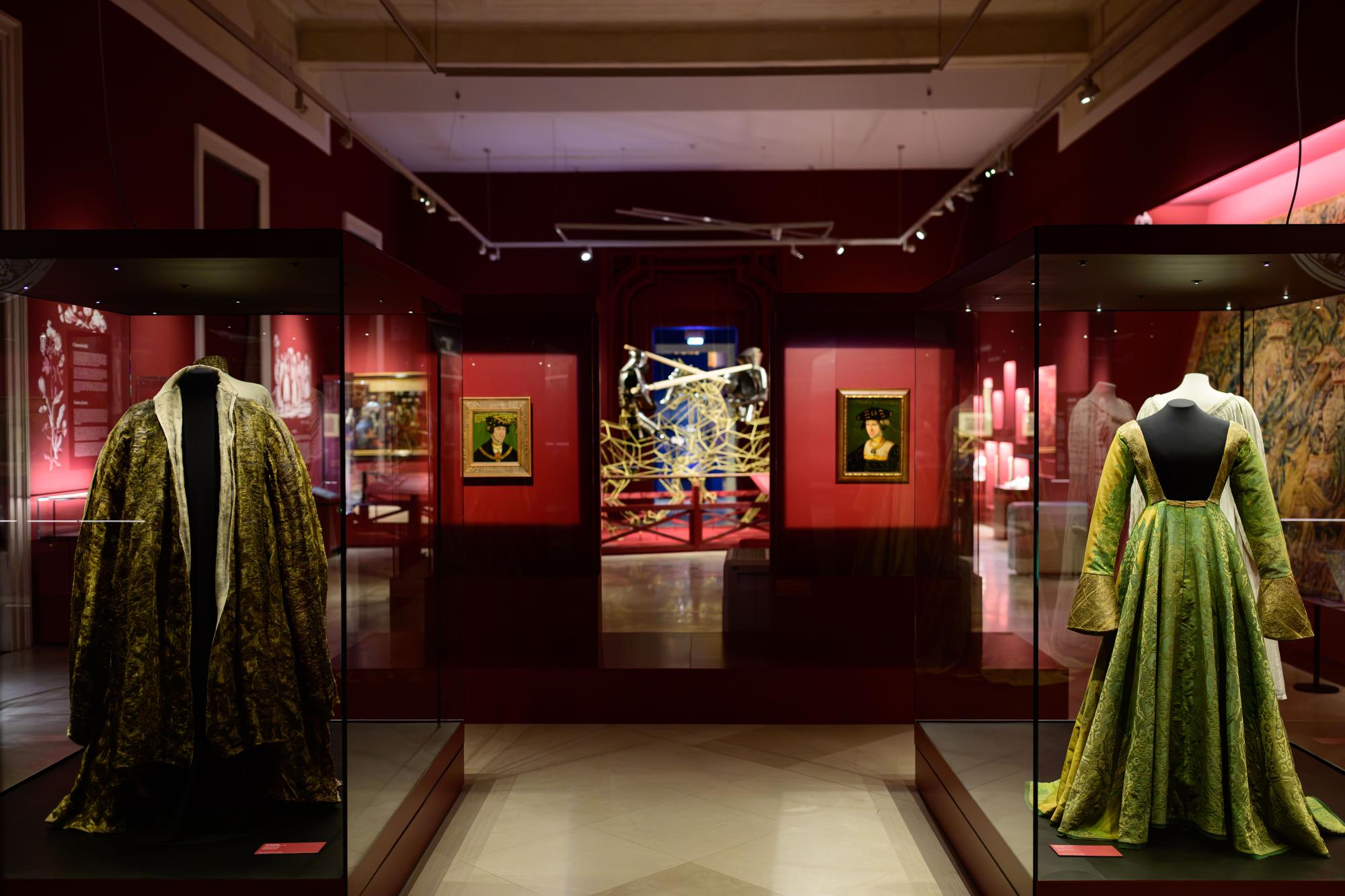
Highlights include King Louis II’s tournament helmet, on loan from the Metropolitan Museum of Art in New York, the suit of armour made for him as a child, from the Kunsthistorisches Museum in Vienna, a richly decorated silk dress believed to have belonged to Queen Mary, from the Hungarian National Museum’s collection, and the Kölesd hoard, a group of gilded cups hidden at the time of the Battle of Mohács.
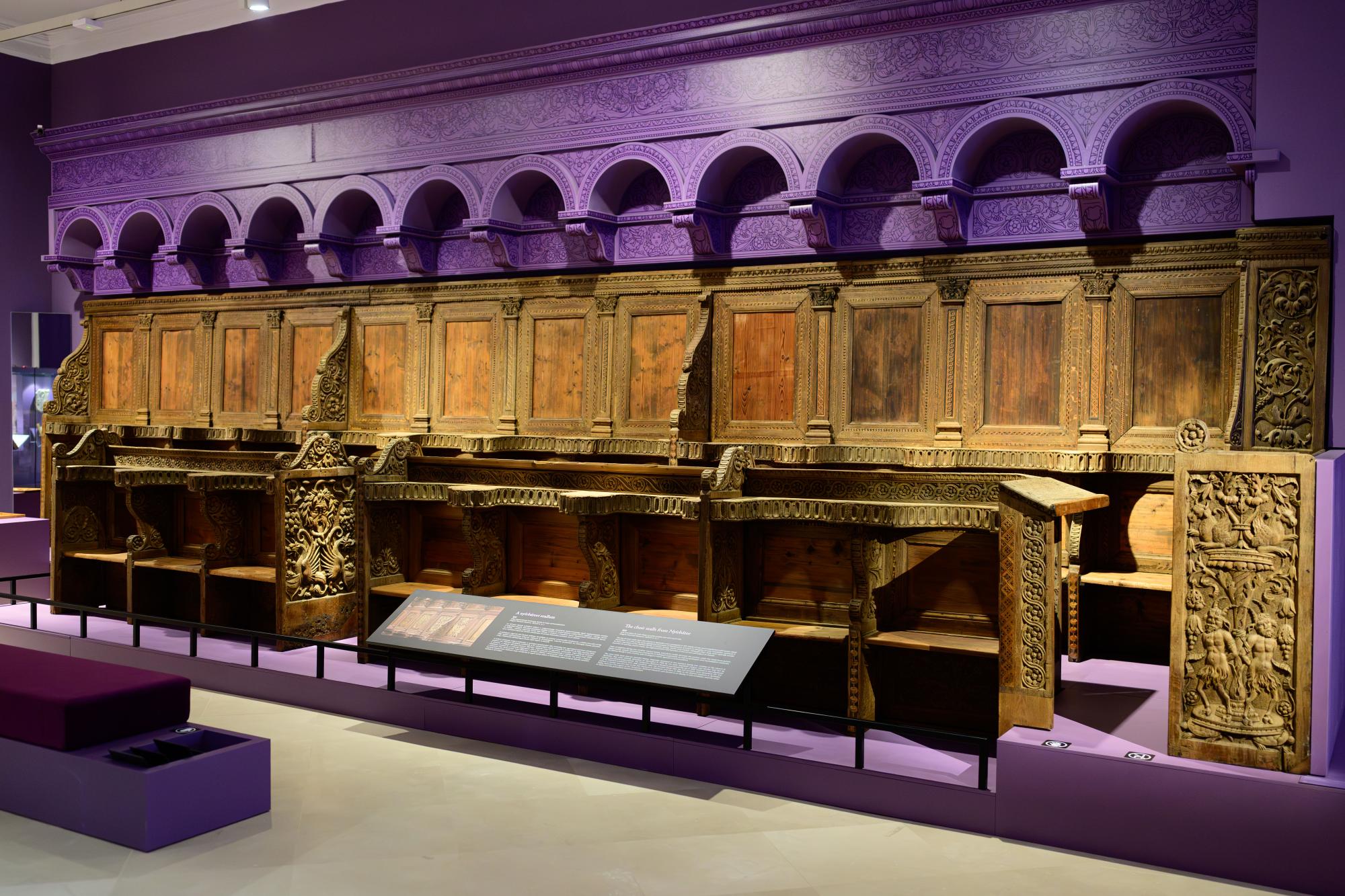
Recently discovered objects, such as fragments of a Renaissance altar from the Franciscan church at Visegrád and a cloth embroidered with coats of arms, made for the Jagiello–Habsburg double wedding in 1515, are also on display. A section of the choir stalls from Nyírbátor, made in 1511, is being shown in its restored state for the first time.
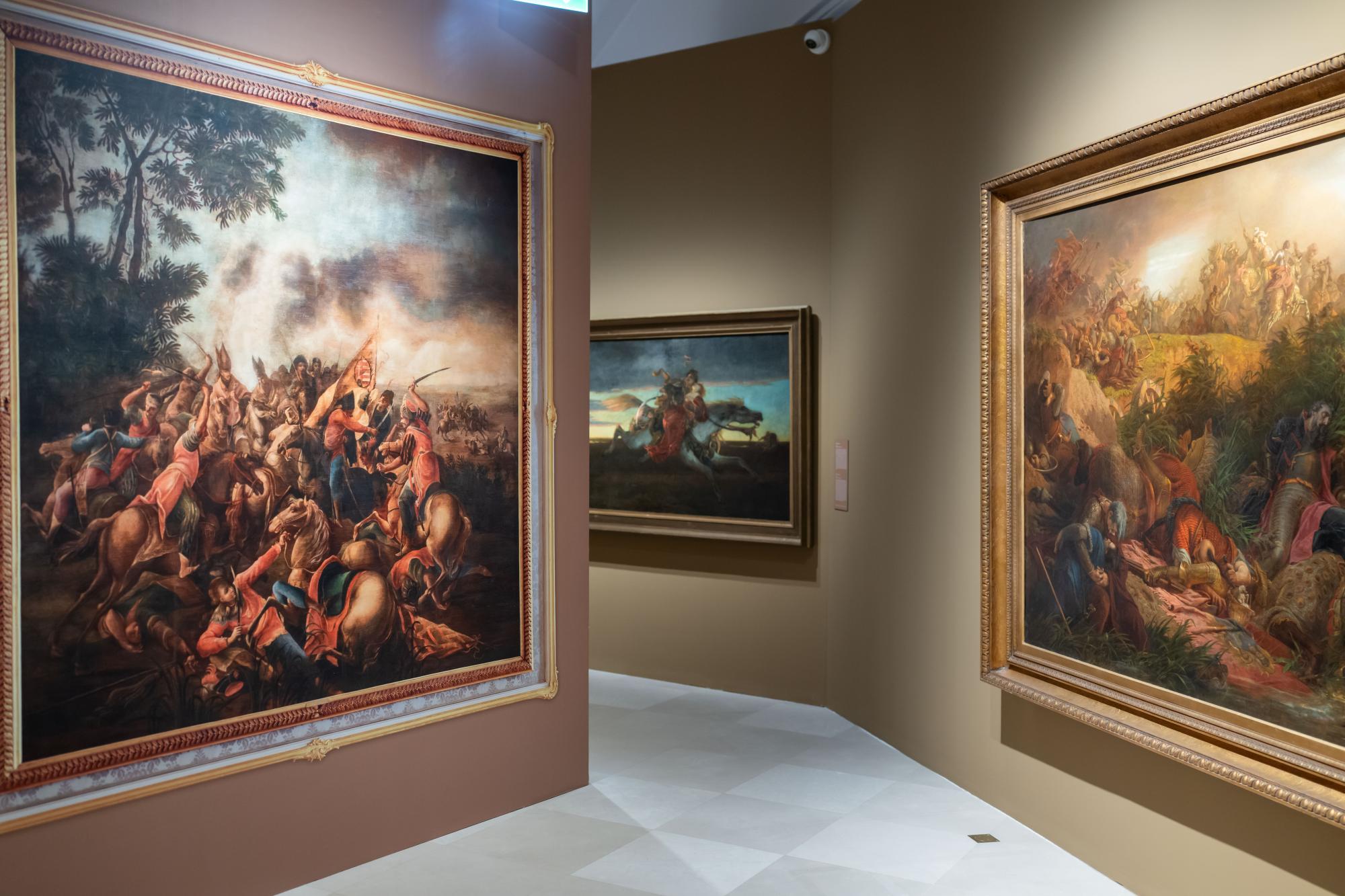
The final section revolves around the Battle of Mohács, the decisive moment 500 years ago when this world was shattered. It explores the burial of the heroes of Mohács, the growth of the cult of Louis II, how the tragedy is commemorated today, and where current research stands.
Curators: Gábor Tomka, Zsuzsa Pető, Mátyás Gödölle, and Gergely Buzás