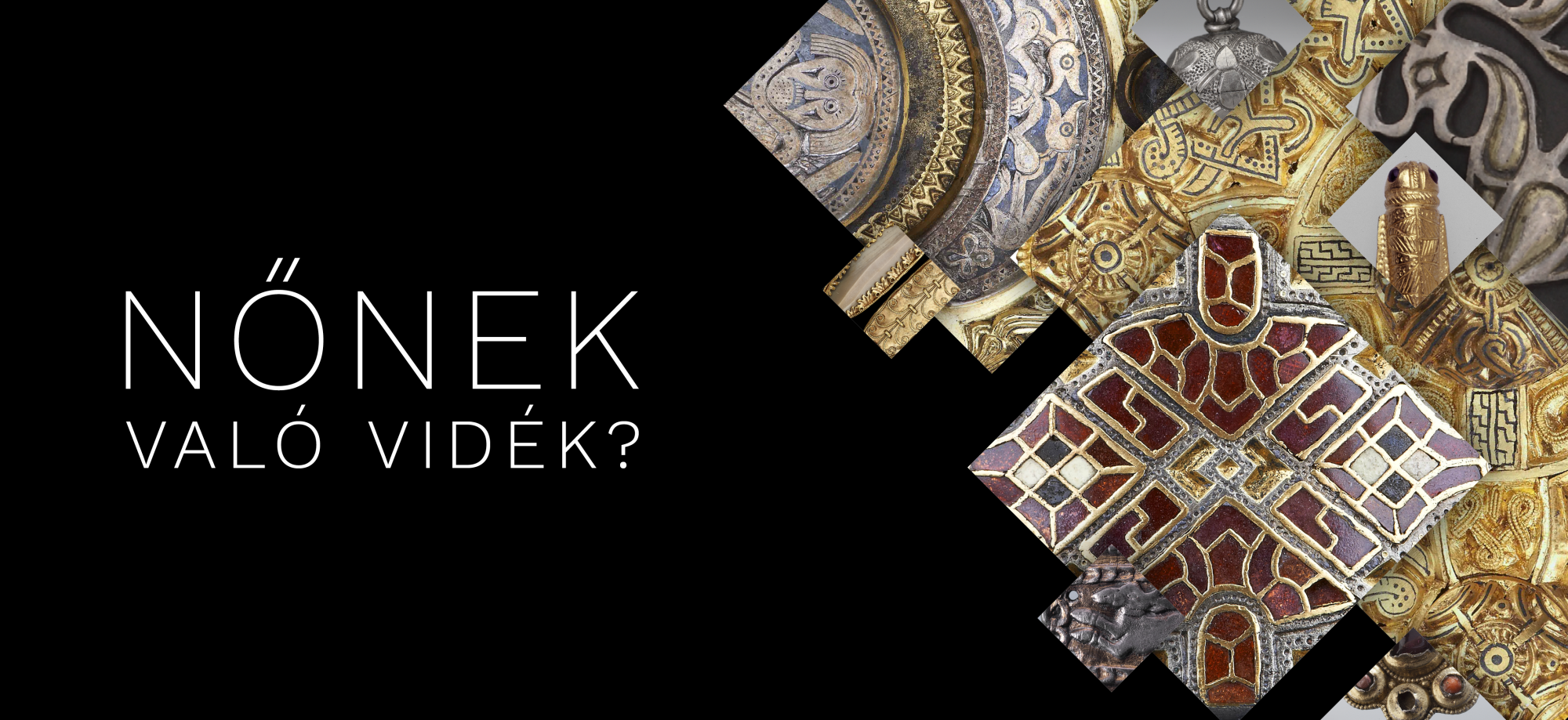
At the dawn of the Middle Ages, when peoples of different origins and cultures were interchanging in the Carpathian Basin, written sources mainly recalled the world of men and warfare, while women remained almost invisible. In archaeological terms, however, it is often the graves of women that are more spectacular, richer and more colourful than those of men. These women - among them saints, queens, wives and daughters of noble families, women taken into captivity, women who sealed alliances by marriage, and, of course, intriguing mothers who fought for the well-being of their children - played a major role in transforming Europe. The artefacts unearthed in archaeological excavations reveal not only the dress and utensils worn by women of the period, but also the prominent role they played in their communities. Their precious metal jewellery and carefully crafted tools show that the prestige objects of the 'weaker sex' were not inferior to those of men. Available in Hungarian and English, the online exhibition "A Country for a Woman?" explores the female dimension of representation, dress, everyday life and belief in the intersection of the Hun (late 4th - mid 5th century), Germanic (mid 5th - mid 6th century), Avar (mid 6th - early 9th century), Carolingian (9th century) and Habsburg (10th century) periods.
In creating this virtual exhibition, the curators have sought to present another side of the archaeological periods that are popular and well-known to many, and to draw attention to the unparalleled richness of the collections of the Hungarian National Museum's Archaeological Collection. Their aim was to use spectacular images and 3D models, with accompanying texts, to give visitors not only a chance to see the first-rate artifacts and everyday objects, but also to gain insight into the personal stories behind the objects.
Artists:
Curators: Katalin Gergely, Zsuzsanna Hajnal, Rita Soós
Graphics: Karolina Taivainen
Translation: Bartus-Szöllősi Szilvia
Virtual exhibition: Krisztina Farkas, Rita Kovács
Coordinator: Éva Kómár
On the eve of International Women's Day 2021. On 7 March at 7 pm, the museum opened the virtual exhibition online Facebook page, where the archaeologist curators of the exhibition and art historian and curator Kata Oltai discussed how the experiences and memories of women and girls of different eras are reflected in the collections and exhibitions of museums. The discussion was not only about the new virtual exhibition and the archaeological periods, but also about the changing image of women and the roles of women represented in museums.
Participants in the discussion were:
- Kata Oltai art historian
- Katalin Gergely archaeologist, Archaeological Collection (MNM - Zalavár Collection)
- Hajnal Zsuzsanna archaeologist, Archaeological Tár (MNM - Migration Period Collection)
- Soós Rita Archaeologist, Archaeological Tár (MNM - Occupation Period Collection)
- Moderator: Marianna Berényi, journalist, Head of the Department of Communication and Public Culture of the MNM