Room 12 / The Age of the Revolution and War of Independence of 1848/49
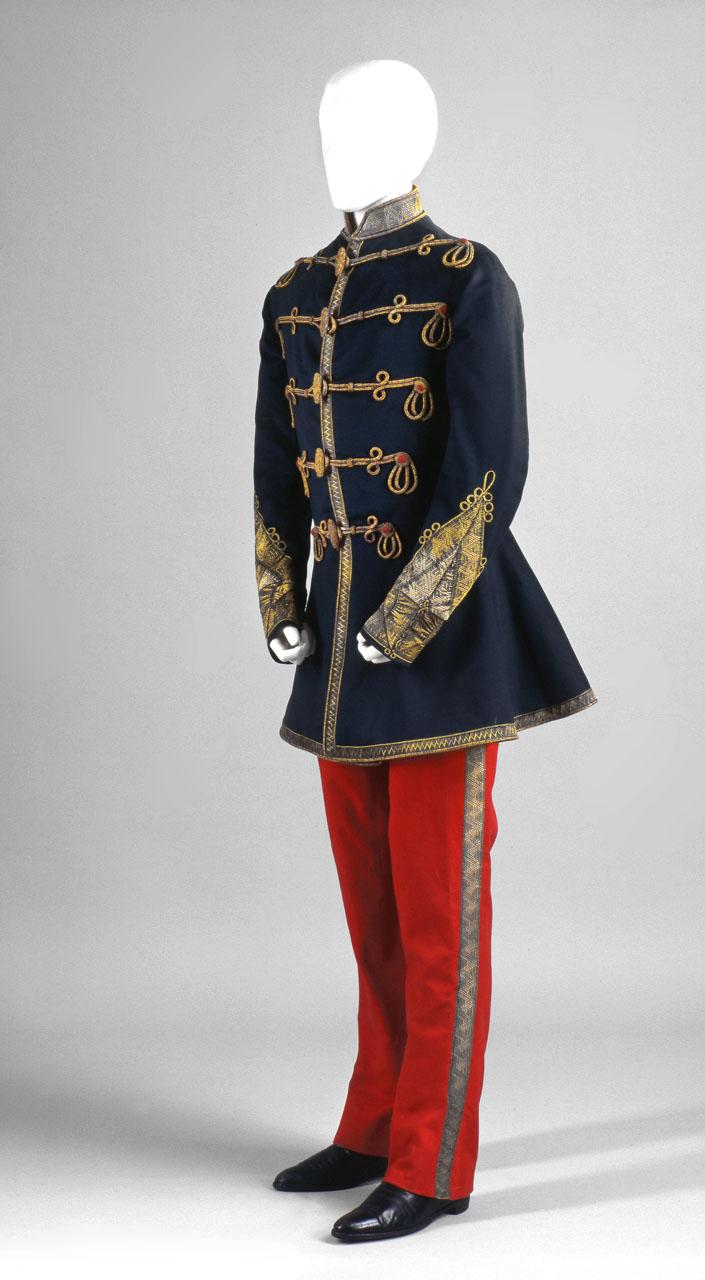
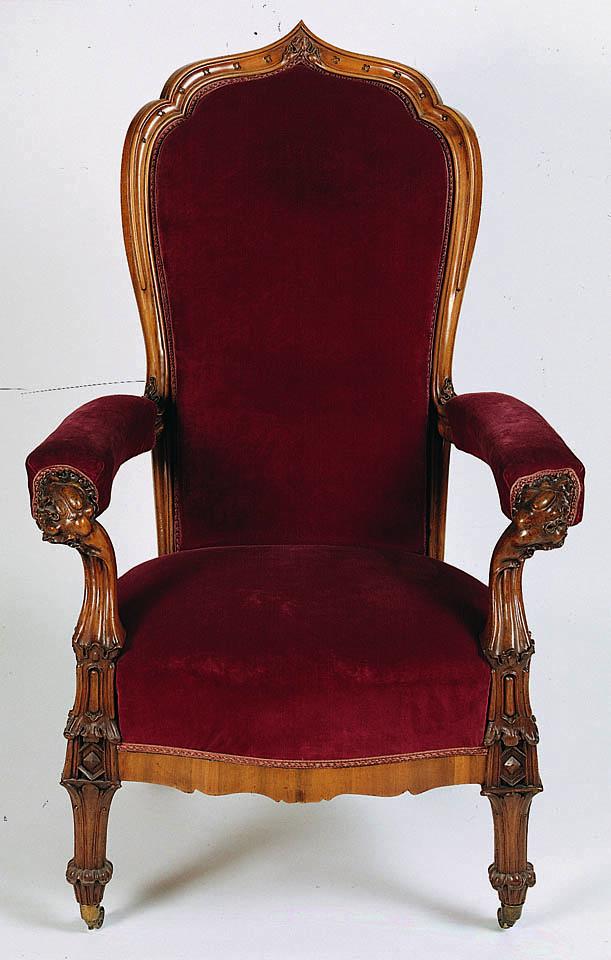
The printing press, together with the Twelve Points above it, refers to one of the most important achievements of the 1848 Revolution, freedom of the press. The exhibited pictures and ministerial velvet armchairs commemorate the members of the first accountable Hungarian government formed in the wake of the political aspirations. In addition to Kossuth's ceremonial governor's attire, the arms of the Hungarian army and the personal belongings of the generals evoke the events of the War of Independence.
Fun facts:
• General Artúr Görgei, who was vested with full military authority at the age of 31, was short-sighted, so he studied military maps with a magnifying glass attached to his sabre.
• Some of the Kossuth banknotes, still highly valued after the fall of the War of Independence, were the first banknotes issued without actual precious-metal backing.
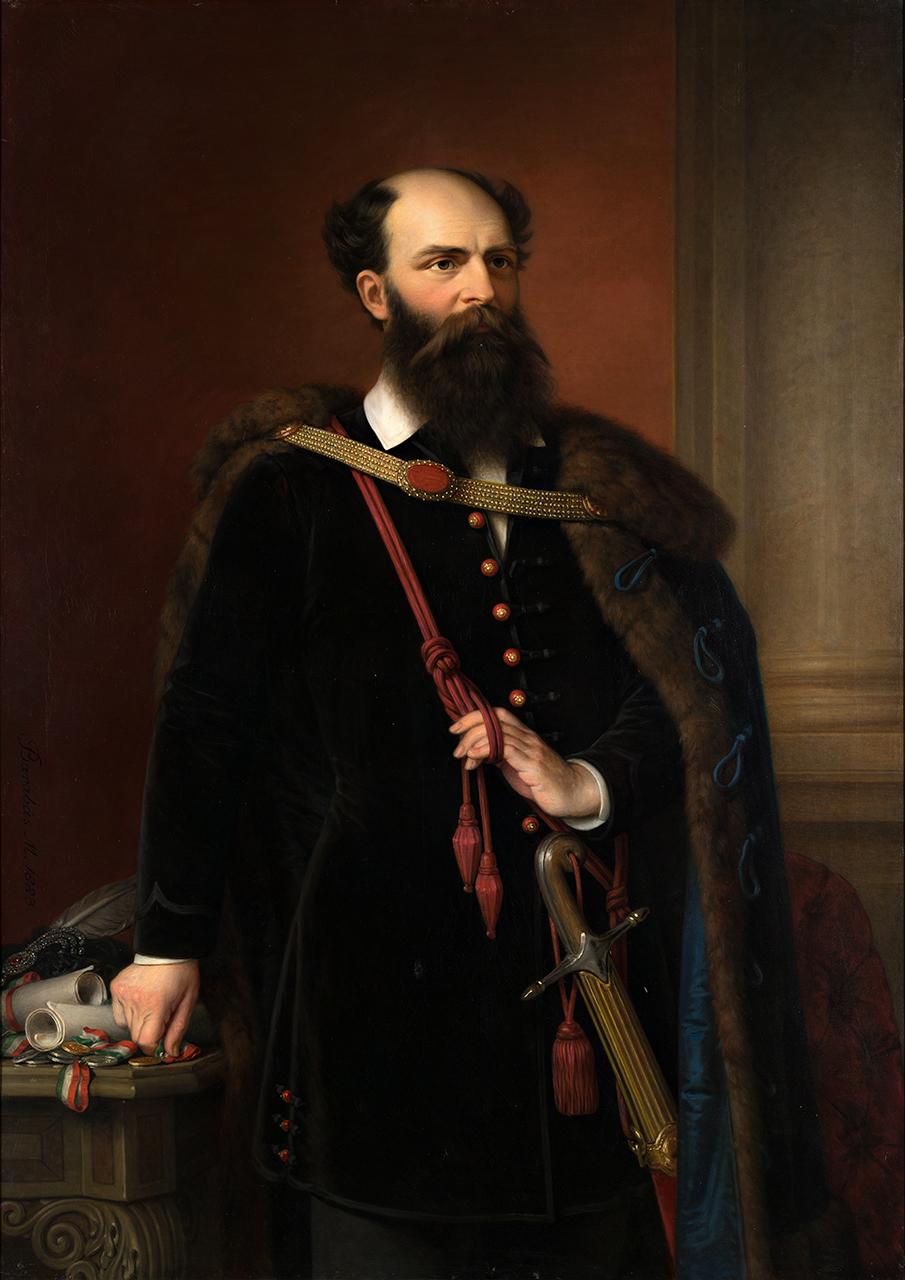
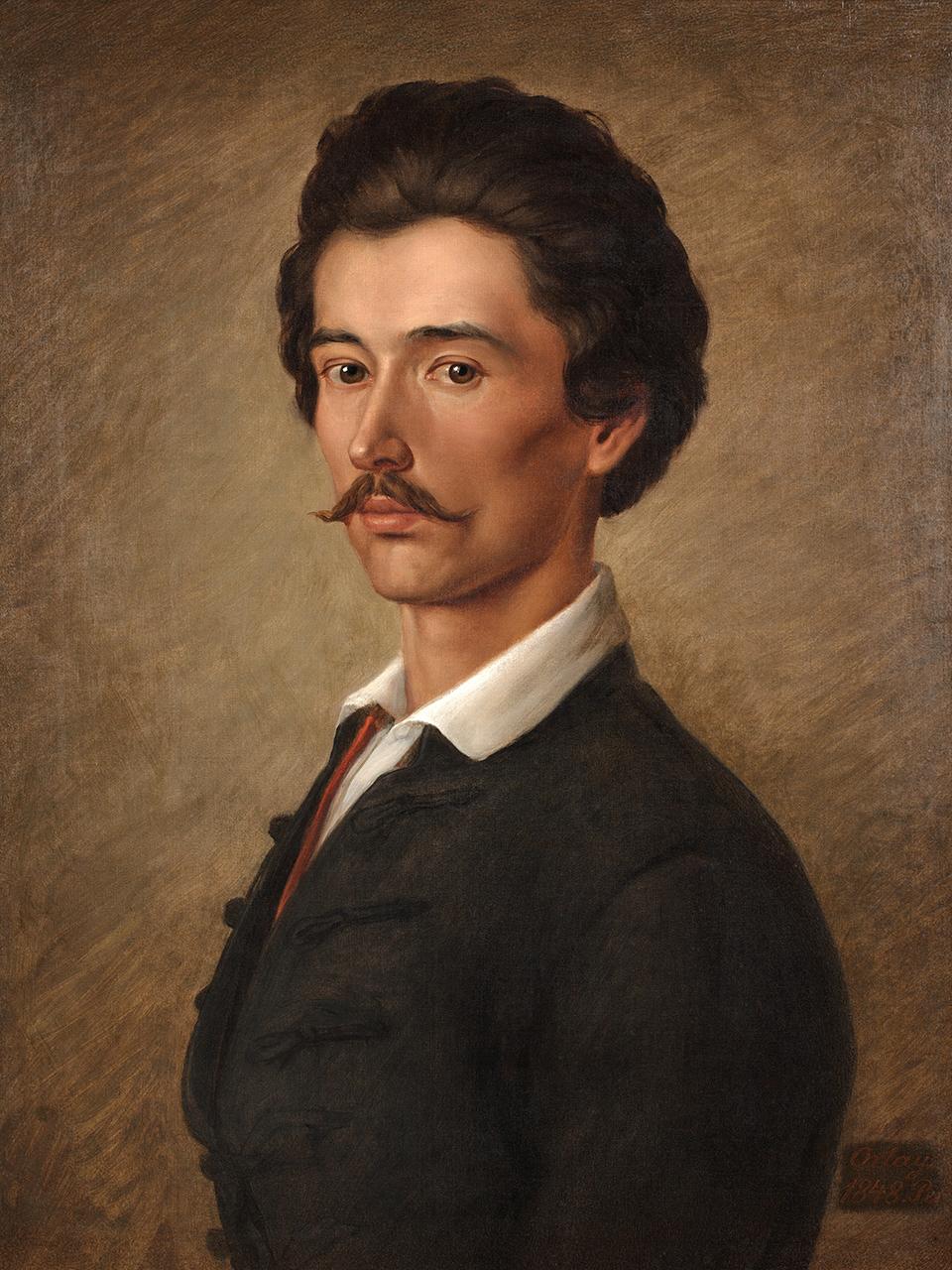
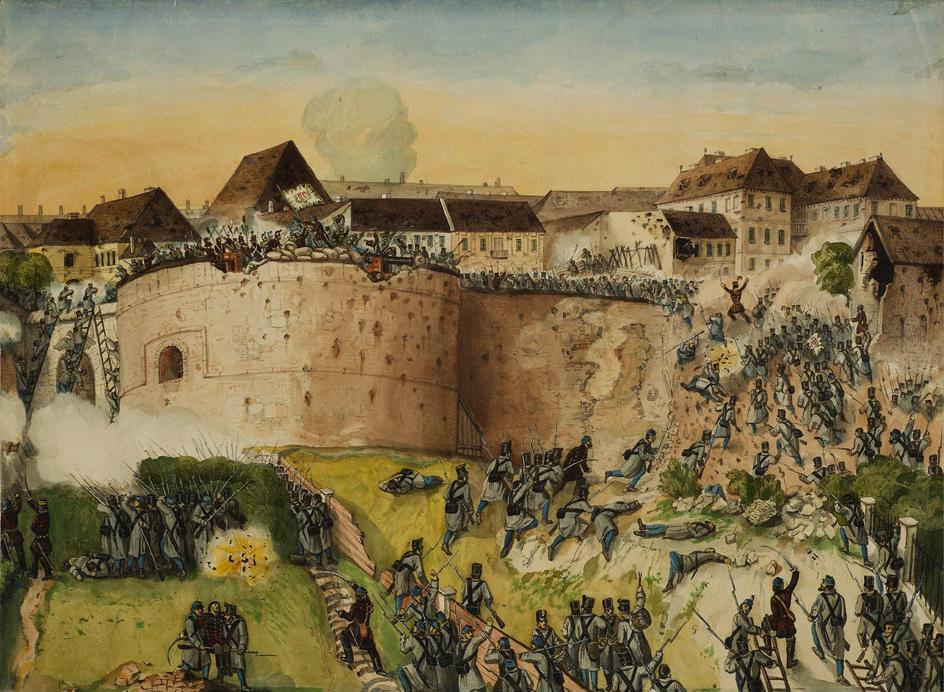
Sándor Petőfi poet is one of the most significant and influential figures in the history of Hungarian literature.
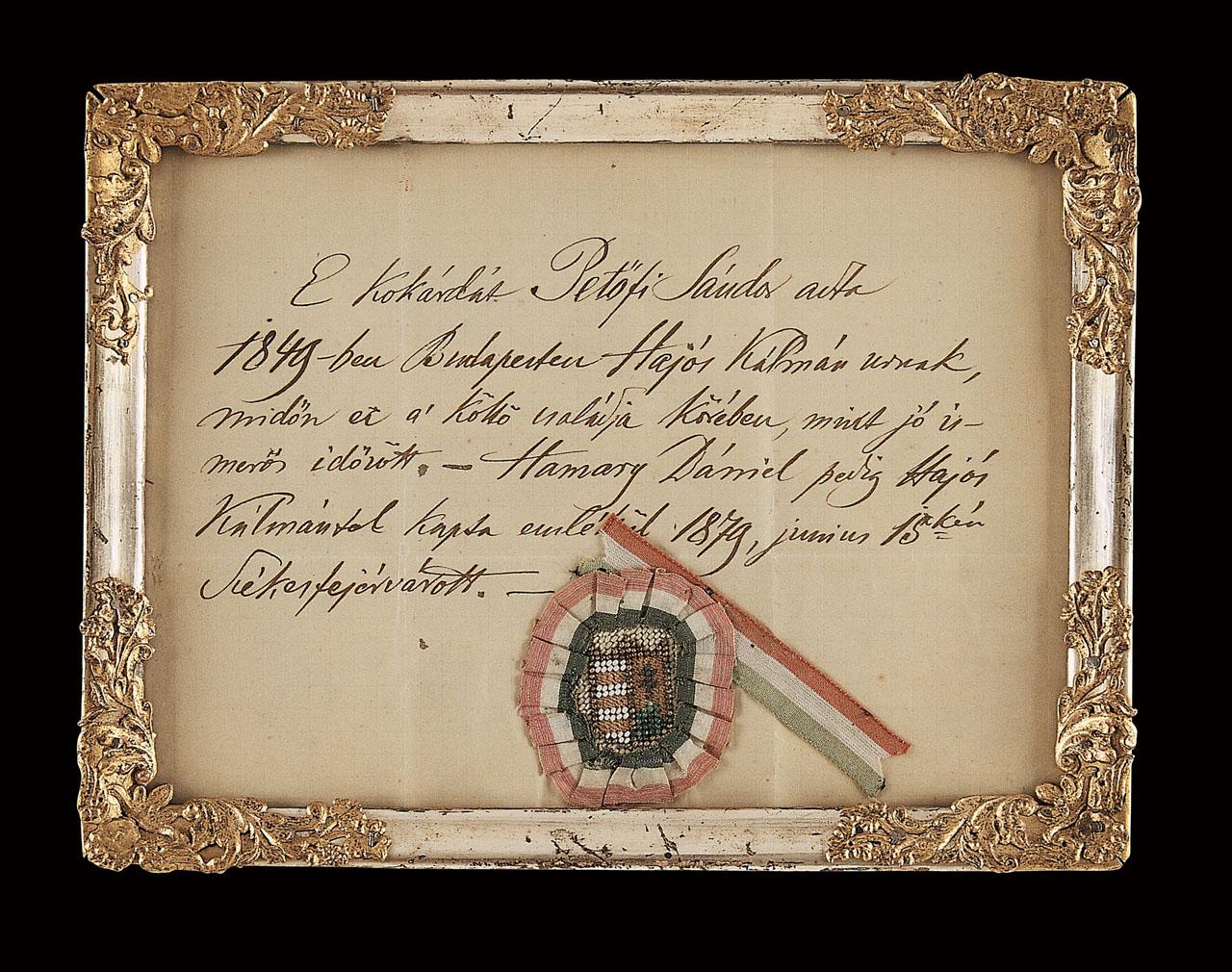
As one of the leaders of the March youths who sparked off the revolution of March 15, 1848, and later as a martyr of the 1848–49 War of Independence, he became one of the central legendary figures of national heroic tradition. His life became as much of a cult as his poetry. The national cockade shown here, according to the authenticating document, belonged to Sándor Petőfi.
The costume of braided broadcloth "atilla" jacket and straight red trousers was once worn by Lajos Kossuth Governor-President. It was donated to the Hungarian National Museum by his son's widow, Mrs. Ferenc Kossuth.