The earliest items in the collection are photographs of the coronation of Franz Joseph in 1867. From the turn of the 19th and 20th centuries, we can learn about political and social life, cultural and sporting events from the photographs of the emerging photojournalistic profession of Gyula Jelfy, Rudolf Balogh, János Müllner and their colleagues. Our collection abounds in images from the First World War, the coronation of the last Hungarian king, Charles IV, the 1918 revolution and the Hungarian Soviet Republic. Photographs of natural disasters in the 1870s, major construction projects in the 1890s, changes in transport, agricultural production, industry and commerce are a special group in this period. Photographs taken by amateur photographers from the late 19th century onwards show, among many other things, housing and living conditions, and the small events of everyday life.
Contact Zsuzsanna Szegedy-Maszák, szegedy.maszak.zsuzsanna@hnm.hu Tel: +36 1 327-7784
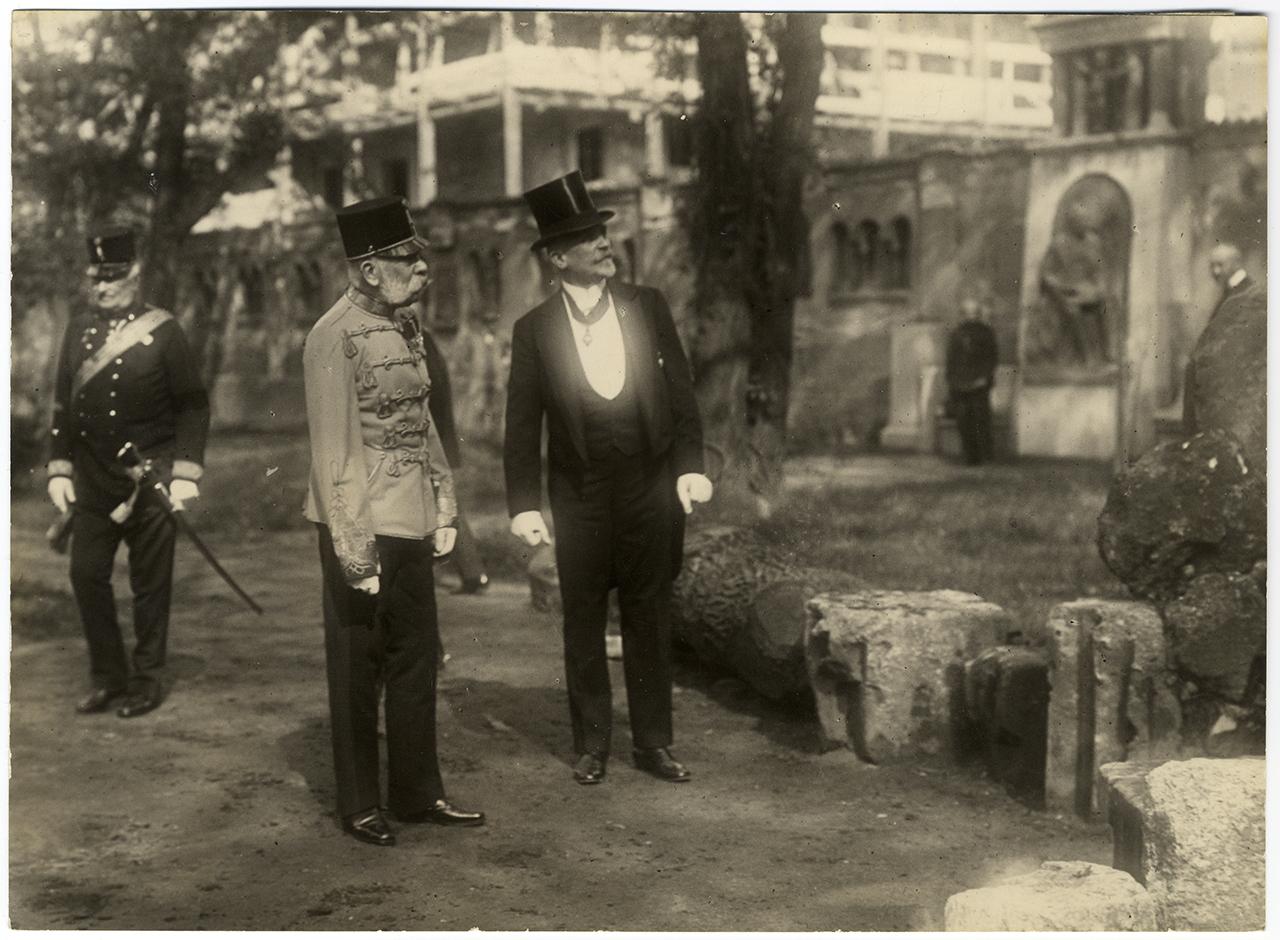
The artists' colony near the Mintarajztanoda (now the University of Fine Arts) on Andrássy út began to develop in the 1880s, with studio buildings. Following foreign examples, visiting the studios soon became a fashionable social activity, and news reports about it served as advertising of sorts for the artist in question. This was especially true when the Emperor himself, Franz Joseph, came to visit. A photograph taken by the court photographer Oszkár Kallós on the occasion of such a visit, which was followed at another moment and from another angle by a photograph taken by photojournalist János Müllner, is also preserved in the Historical Photo Department.
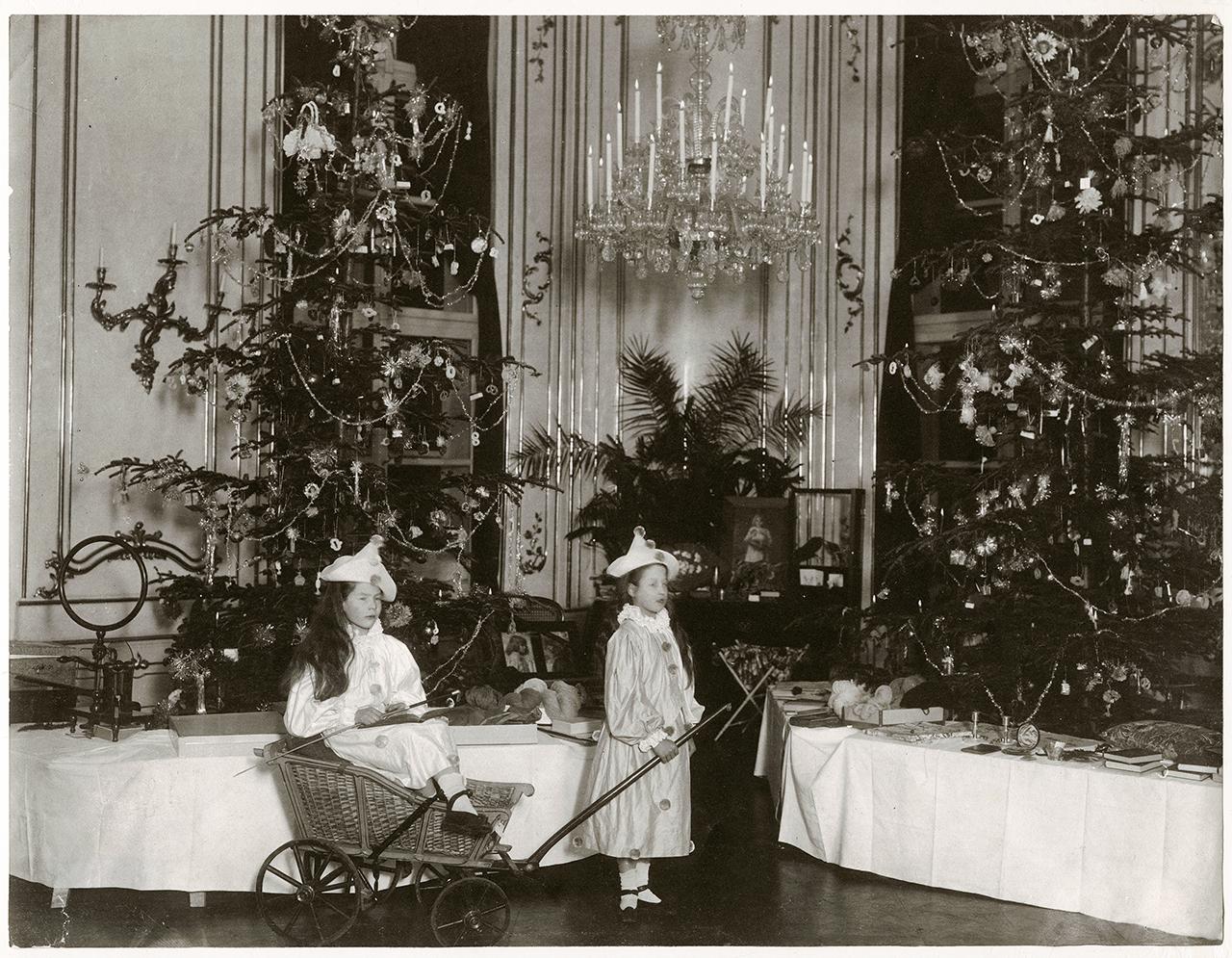
The costumes of the two little girls are a girls' version of the commedia dell'arte figure Pierrot (Pedrolino), in a baggy white suit with large buttons. Their costumes and accessories (a wicker wagon with a wagon pole, a book) are intended to show off the new gifts for Christmas, as are the gifts richly spread at the base of the Christmas trees behind them. Every element of the picture is about opulence: the presence of not one but two Christmas trees, the room's palpably spacious dimensions and the glittering, shiny surfaces and objects: the silk-sewn costumes, the Christmas tree ornaments, the chandelier with its many candles and the silver souvenirs.
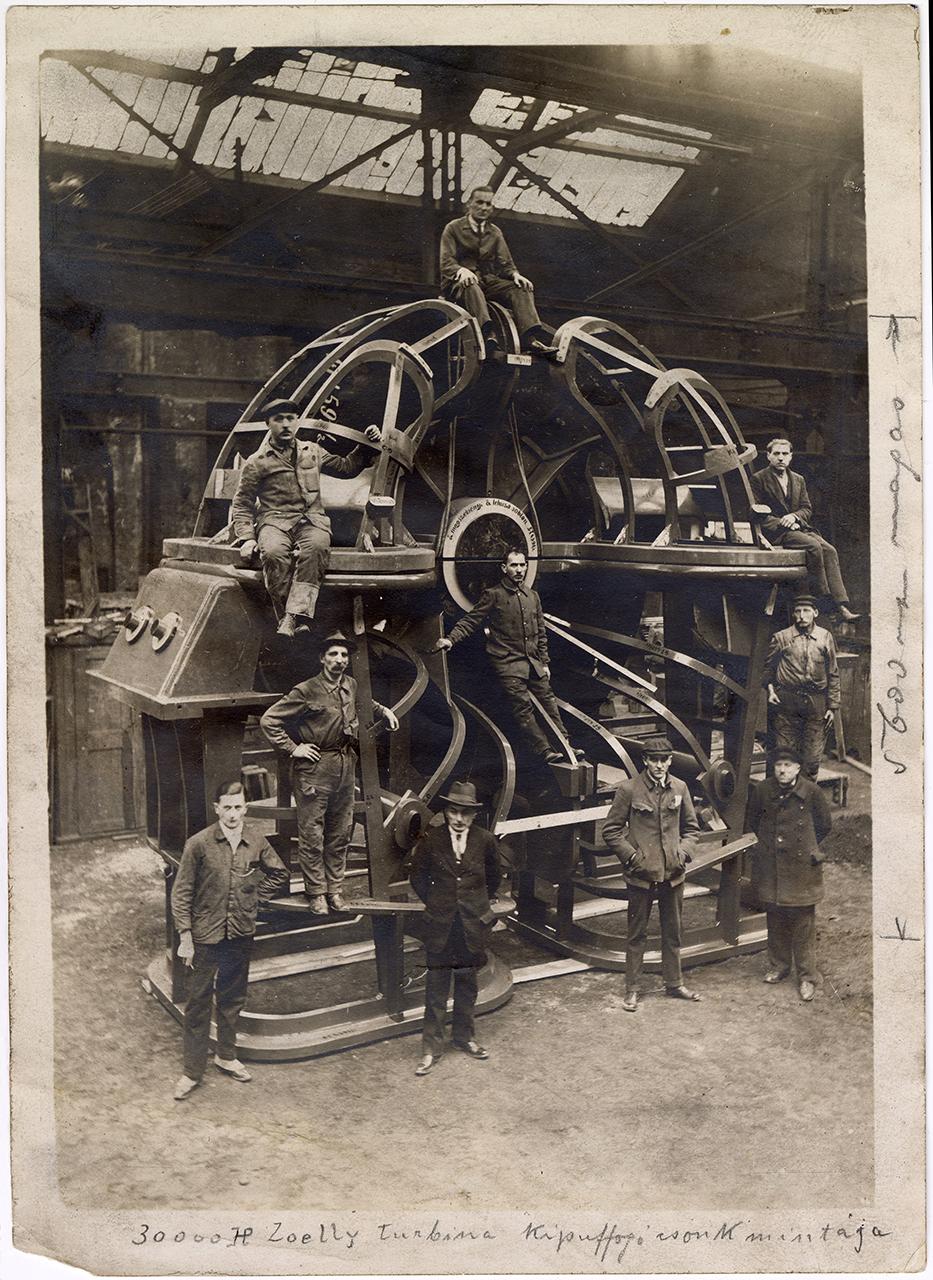
László Láng founded his machine repair workshop in 1868, which he expanded and moved to Váci út five years later. Manufacturing power engines became the company's main activity, and in the 1890s the Láng factory was able to supply Hungary's steam engine demand. At the beginning of the 20th century, Ganz generators powered by Láng power engines played a major role in electrification. The electric power stations of the capital's tram transport were also powered by Láng turbines.
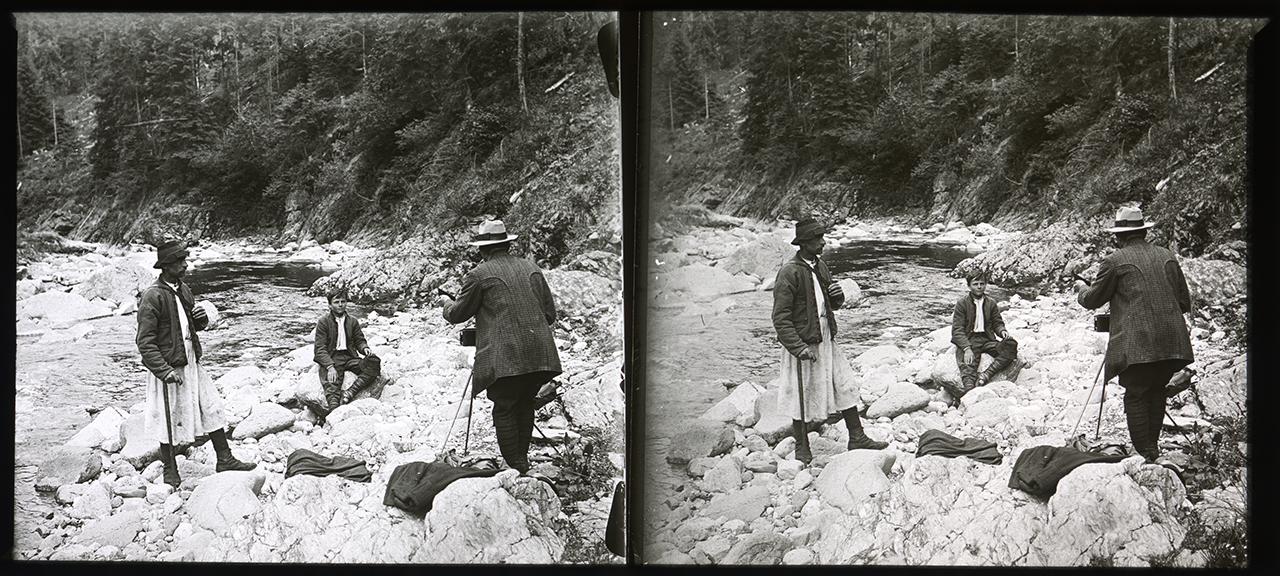
Gusztáv Stein, an amateur photographer from Kolozsvár (Today: Cluj-Napoca, Romania) was keen to learn about and capture the culture and natural world of his native land. With the social changes brought about by industrialisation and a rapid disappearance of traditional village life at the turn of the century, enthusiastic amateurs, alongside the newly established Transylvanian institutions, collected and documented architectural monuments, objects and folk costumes of ethnographic interest. The scene we are witnessing, however, is not merely a documentation of a world in the process of disappearing, but recording the documentation itself.
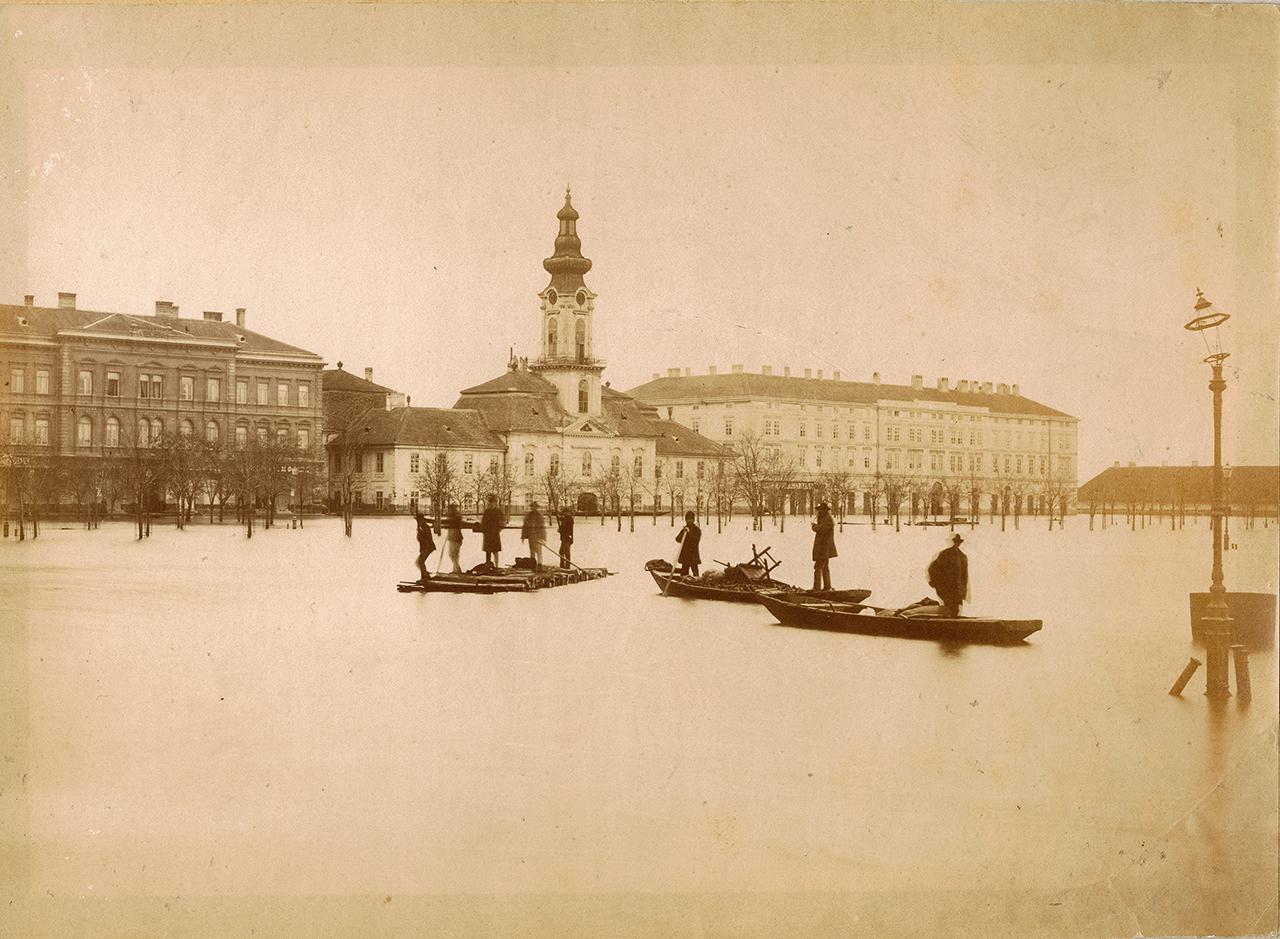
On March 12, 1879, the River Tisza flooded Szeged, killing more than 150 people and leaving 60,000 homeless. The signal of impending disaster for many people was the sound of the Szeged town hall bells in the picture. As the waters of the Tisza did not recede for months, the city was only accessible by boat, raft and floating walkways made of planks.
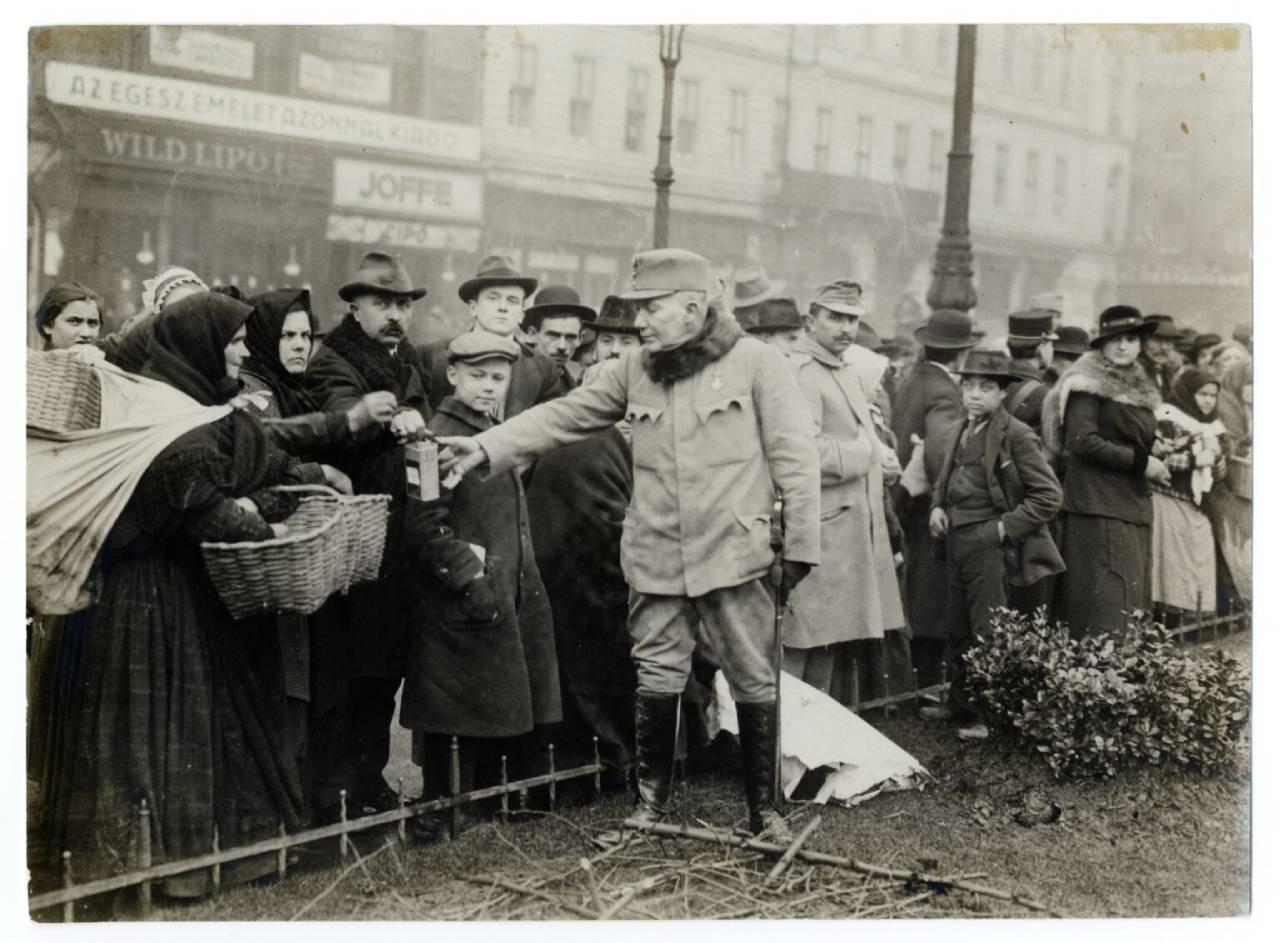
During the First World War, János Müllner (1870–1925), a photojournalist, took hundreds of photographs of everyday life in Budapest. In the crowds queuing up there are ladies in fur collars, young men and children, and women carrying their goods on their backs. What many of them have in common is that they are aware of the photographer's presence and of the fact that they are making a visual record of the donations. The central motif, the monye box is at the meeting of the two opposing directions – the line moving to the right and the soldier moving to the left.