The Seal Collection is one of the oldest groups of artefacts in the Hungarian National Museum, and is the most significant sphragistic collection in our country, both in terms of its number and its sigillographic and historic value. In addition to seals, it also includes minting dies, stamps, signets, bullae, and seal copies. The museum boasts a number of outstandingly valuable medieval bullae and typariums, most of which can be seen in the permanent exhibition. Among our royal and princely seals and seal stamps, the most precious are the golden bullae of Kings Béla III and Béla IV, the seal stamps of János Kemény, Prince of Transylvania, and Ferenc Rákóczi II. The collection’s sphragistic material from 1848–49 is particularly rich. One of the earliest relics of urban history is double seal press of the Latins of Esztergom from the first half of the 13th century – indeed it is our earliest urban typarium – and the seal presses of the city of Újbánya (today: Nová Baňa, Slovakia) from the 14th century. The golden printing plate of Zemplén County's seal is noteworthy, on the back of which the name of Lord Lieutenant Bálint Drugeth Homonnai, and the year of production (1603) can be read. An important piece of archiepiscopal seal presses is that of of Bishop Henrik of Croya from the 14th century. The richest collection of guild seal presses in Hungary is in our museum, too. A unique sigillographic section in the collection are the typaria with family crests of the most significant historical families of Hungary (e.g. Pálffy, Teleki, Esterházy).
Contact: Dr. Orgona Angelika, orgona.angelika@hnm.hu
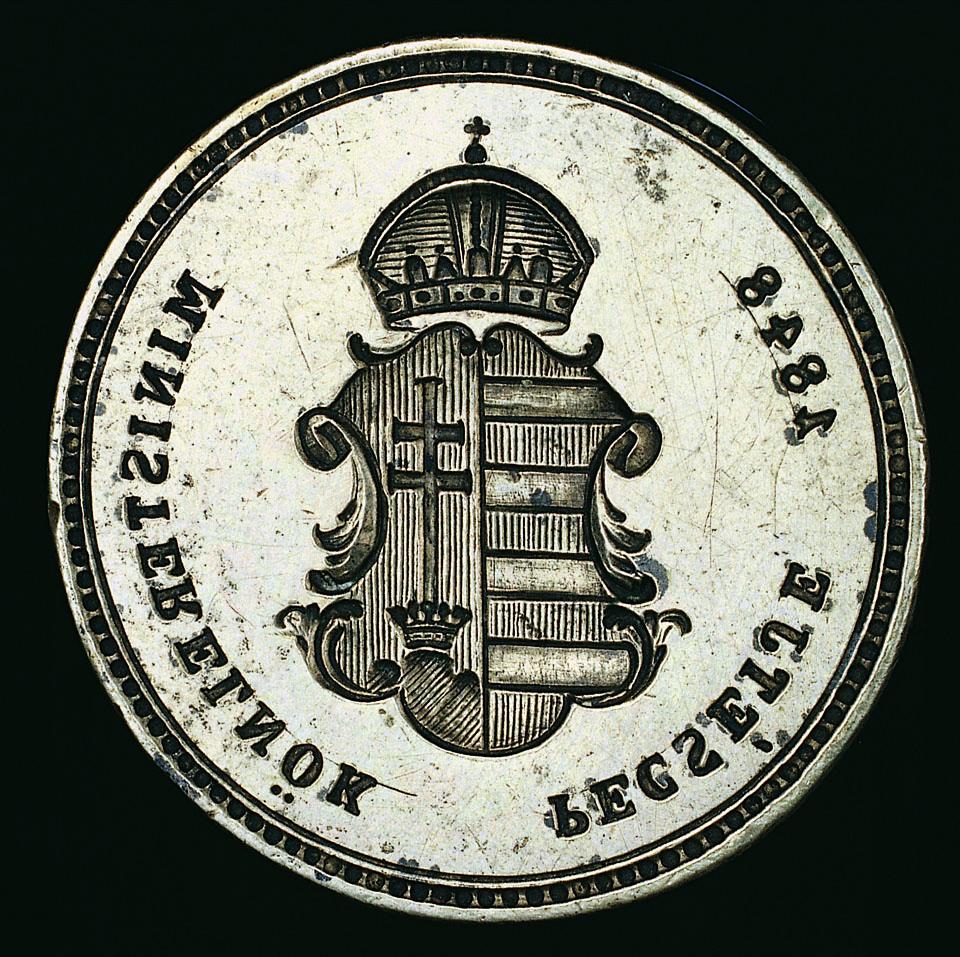
The spirit of the Hungarian National Museum is greatly influenced by the Hungarian reform era, the revolution and the war of independence. It is no coincidence that the largest sphragistic collection of 1848–49 was gathered in the museum. The seal stamps of the ministers of the first autonomous responsible Hungarian ministry, the typaria related to Lajos Kossuth, and the seal stamps of the "Honvéd" (national defense) units were preserved here for posterity. The seal stamp of Count Lajos Batthyány (1807–1849), the first Hungarian Prime Minister who died a martyr's death, has the same depiction as the other ministerial seal stamps: in the middle of the seal field is the crowned Hungarian coat of arms, around it is a circular inscription in Hungarian: SEAL OF THE PRIME MINISTER 1848.
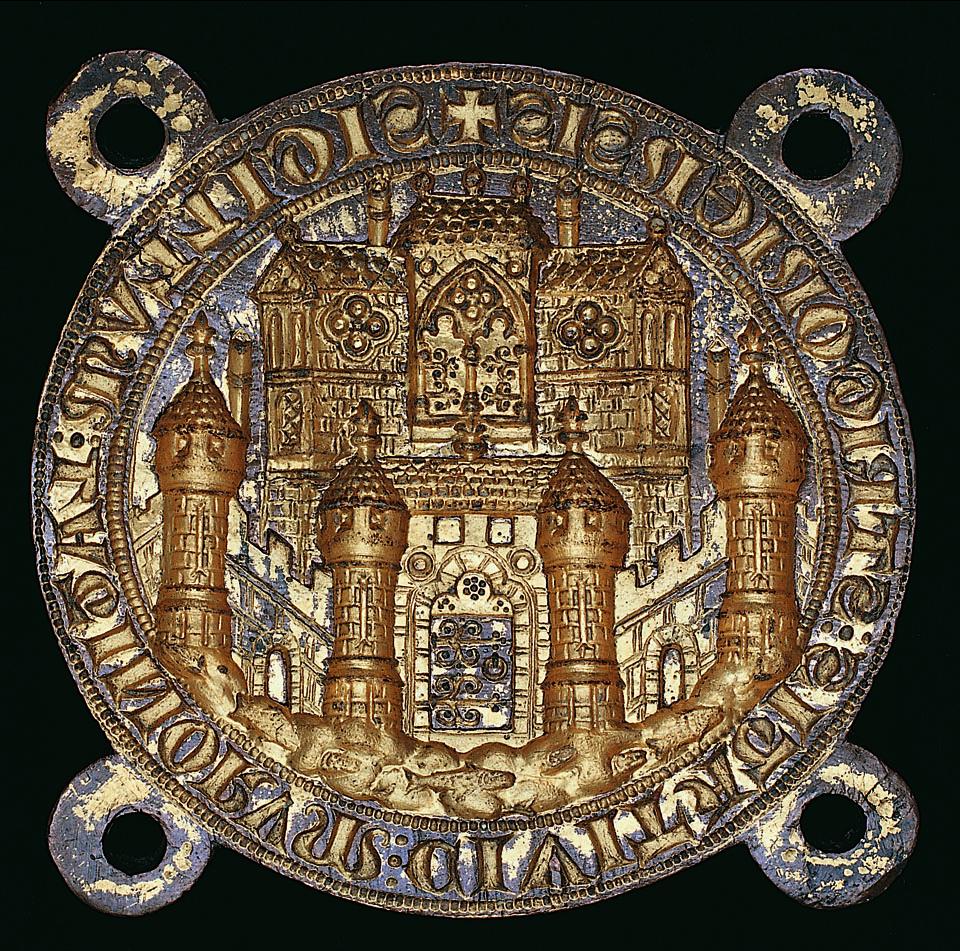
The double seal of the French, Italian, Spanish and Walloon hospes (privileged settlers called Latins) who became citizens, came to the Hungarian National Museum in January 1814 from the archives of the city of Esztergom, where it was brought from the Gyöngyös region. The seal dates back to the first half of the 13th century, the first impression is known from 1265. On the front side, a Gothic palace is visible surrounded by a city wall and four cylindrical towers. On the other side, a shield quarterly of nine. Its circular inscription: SIGILLVM LATINORVM CIVITATIS STRIGONIENSIS. On the back: SECRETVM LATINORVM CIVITATIS STRIGONIENSIS.
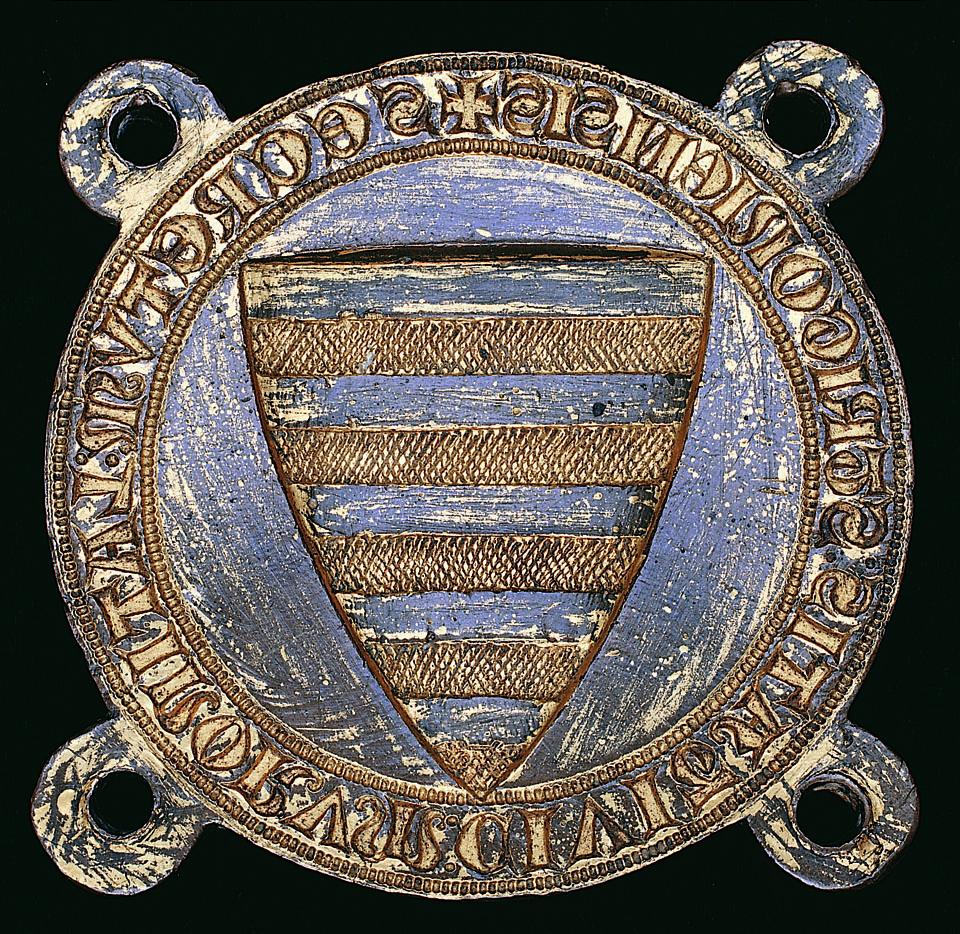
The double seal of the French, Italian, Spanish and Walloon hospes (privileged settlers called Latins) who became citizens, came to the Hungarian National Museum in January 1814 from the archives of the city of Esztergom, where it was brought from the Gyöngyös region. The seal dates back to the first half of the 13th century, the first impression is known from 1265. On the front side, a Gothic palace is visible surrounded by a city wall and four cylindrical towers. On the other side, a shield quarterly of nine. Its circular inscription: SIGILLVM LATINORVM CIVITATIS STRIGONIENSIS. On the back: SECRETVM LATINORVM CIVITATIS STRIGONIENSIS.
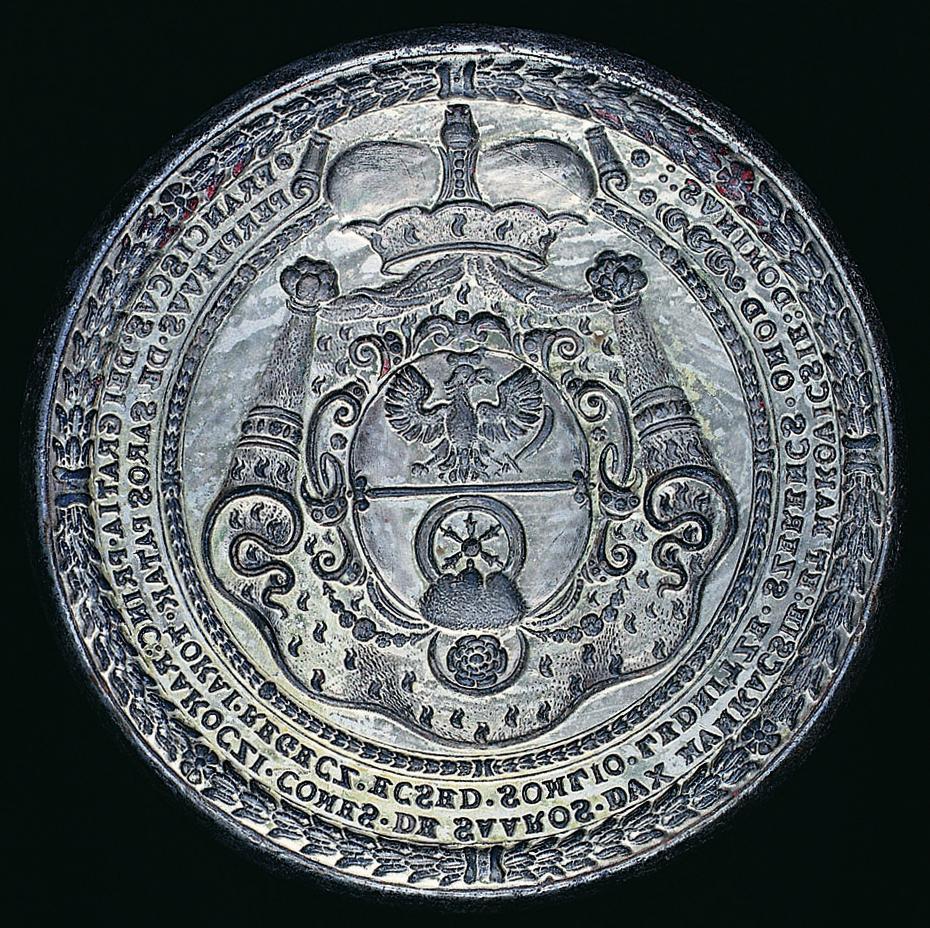
The steel seal stamp, with its impressive 6.4 cm diameter silver plate, is considered a "royal" seal size. It was used after the outbreak of the War of Independence, and its impressions are known from December 1703. It is noteworthy that the coat of arms visible in the seal field rests on an ermine cloak, and is surmounted by a closed princely crown, which refer to Rákóczi's title of Holy Roman Imperial Prince (1697). Rich baroque ornamentation can be seen around the oval, divided, uncolored shield. Its two-line circular inscription indicates the princely rank and the estates considered most important by the prince: FRANCISCUS.DEI.GRATIA. PRINC[eps]: RÁKÓCZI COMES DE SAAROS. DUX MVNKACSIE: ET MAKOVICSIE: DOMI- US: / PERPETVVS. DE SÁROS PATAK. TOKAI REGECZ. ECSED. SOMLIO. LEDNITZE. LUCK. ONOD. The typarium was donated to the museum in December 1873 by Ferenc Éder (1810–1889), a delegate of Kassa (today: Košice, Slovakia).
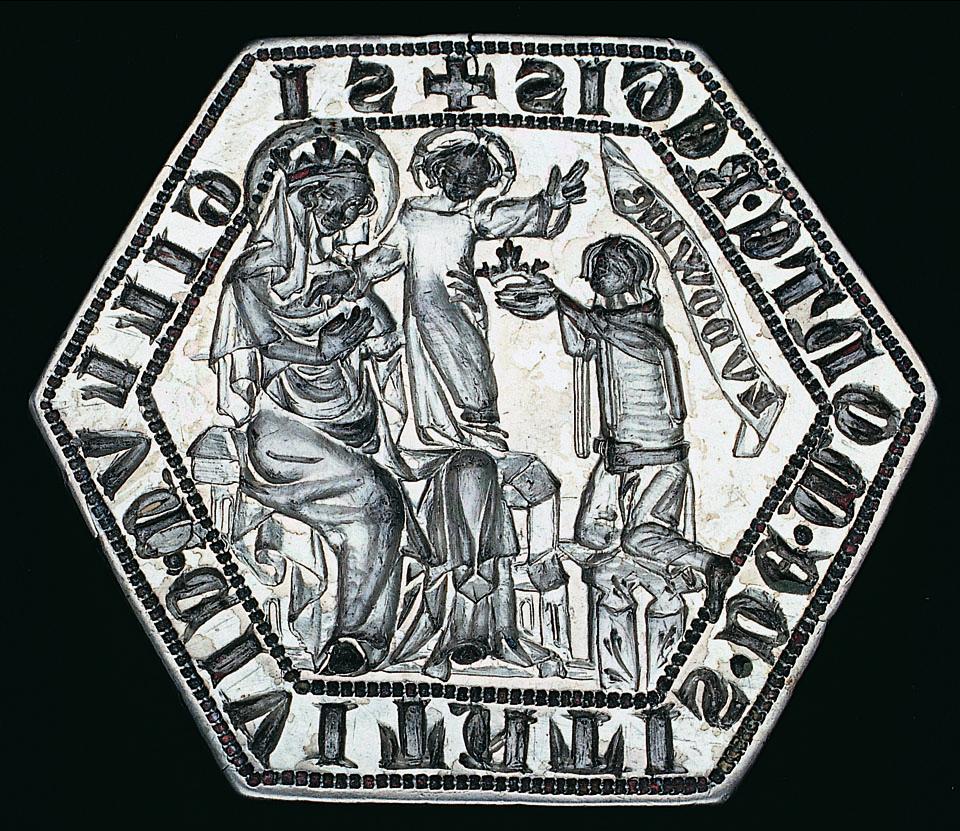
On the hexagonal seal of the city of Újbánya, the infant Jesus, standing in the lap of the Madonna, seated on a throne without a back, gives a blessing to the king, who kneels before him and offers his lily crown. Behind the king, a ribbon reads: LVDOWIC[US]. The city received its privileges from King Louis I (the Great) (1342–1382). The city's middle and lesser seals follow the depiction of the great seal.
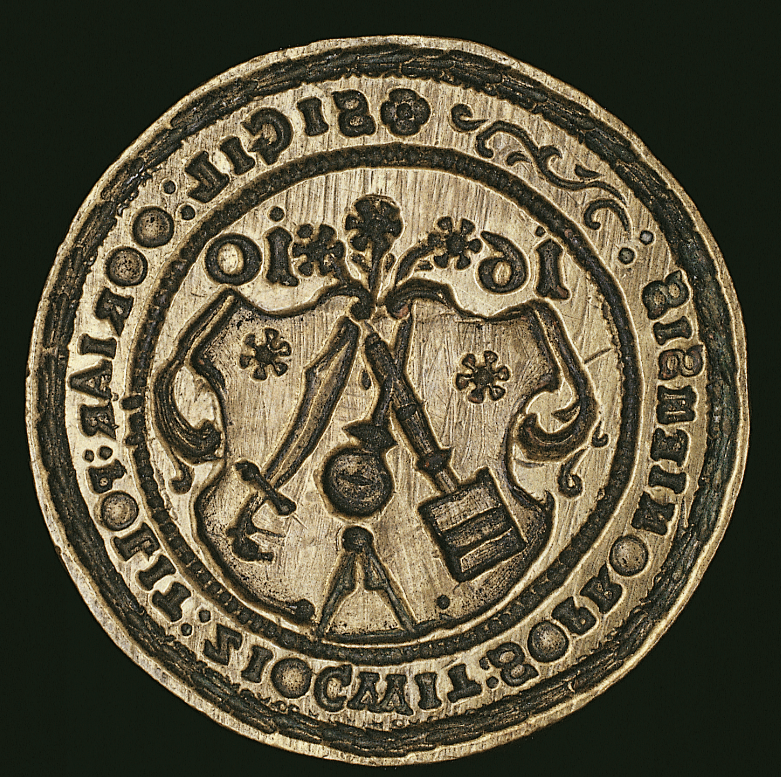
While the early guild seals of the 14th–15th centuries depicted the patron saints of the guilds with their attributes, from the 16th century onwards, guild shields increasingly present the characteristic guild tools. Their seal stamp was kept by the guild master in the guild chest and was used to seal the official documents of the guild. On the Sopron guild seal, a sabre, a spear, a spear holder and a compass placed on a Renaissance coat of arms refer to the activities of the guild.
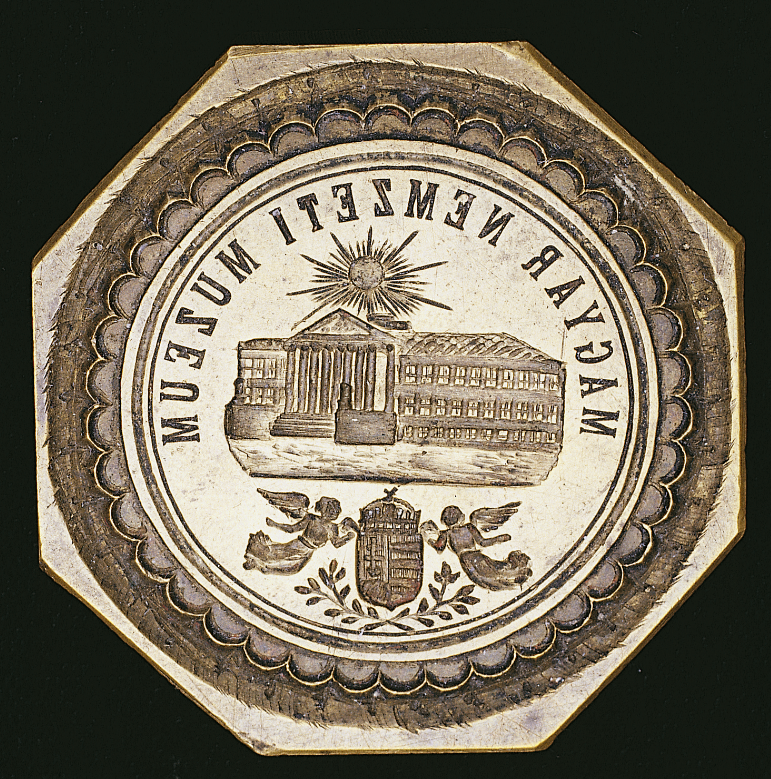
Although the museum's first seal stamp has not survived, the stamp engraved in the style of the first seals has immortalized its first symbol, the museum's classicist facade, which remained in use for more than two hundred years. In the lower third of the seal field, angels hold the Hungarian coat of arms with the crown, and above the tympanum of the facade, a rising, radiant sun shines.