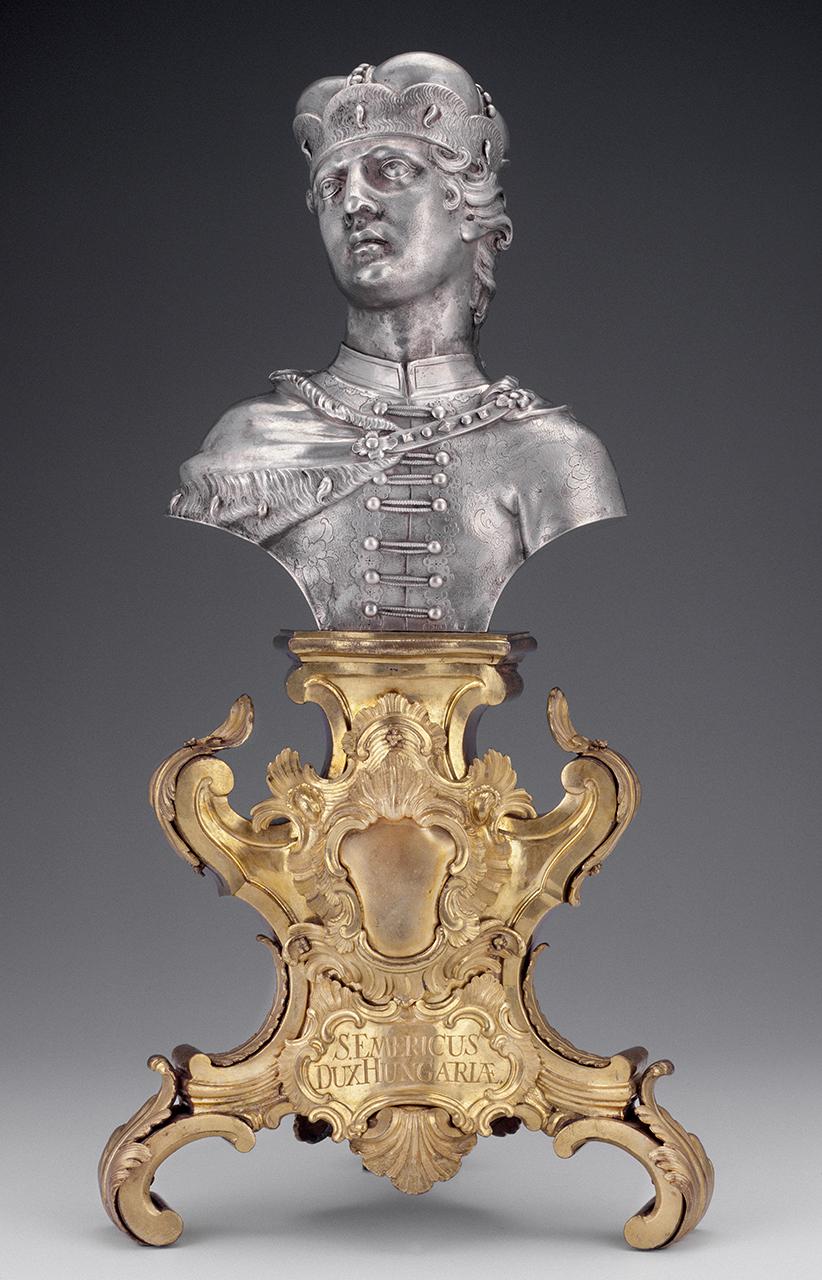
Several series of reliquaries were commissioned by Maria Theresa for the Imperial Ecclesiastical Treasury from the 1750s onwards. Among them were reliquaries for the saints of the Árpád dynasty. The relics were placed inside the pedestals of the portrait-like silver busts of Saint Stephen, Prince Ladislaus and Prince Emeric. The objects were produced in the workshop of Joseph Moser, the finest Viennese master of the period, who was originally from Brno. Several of the silver busts from the reliquaries were removed from the imperial treasury during the 19th century. The silver bust of Saint Emeric had been missing since the mid-20th century, but was purchased by the National Museum from the Vienna art market in 2002. (Joseph Moser circle, Vienna, c. 1760. The pedestal is probably from Vienna, late 19th century, silver, cast, engraved, punched, chiseled; the pedestal is gilded bronze)
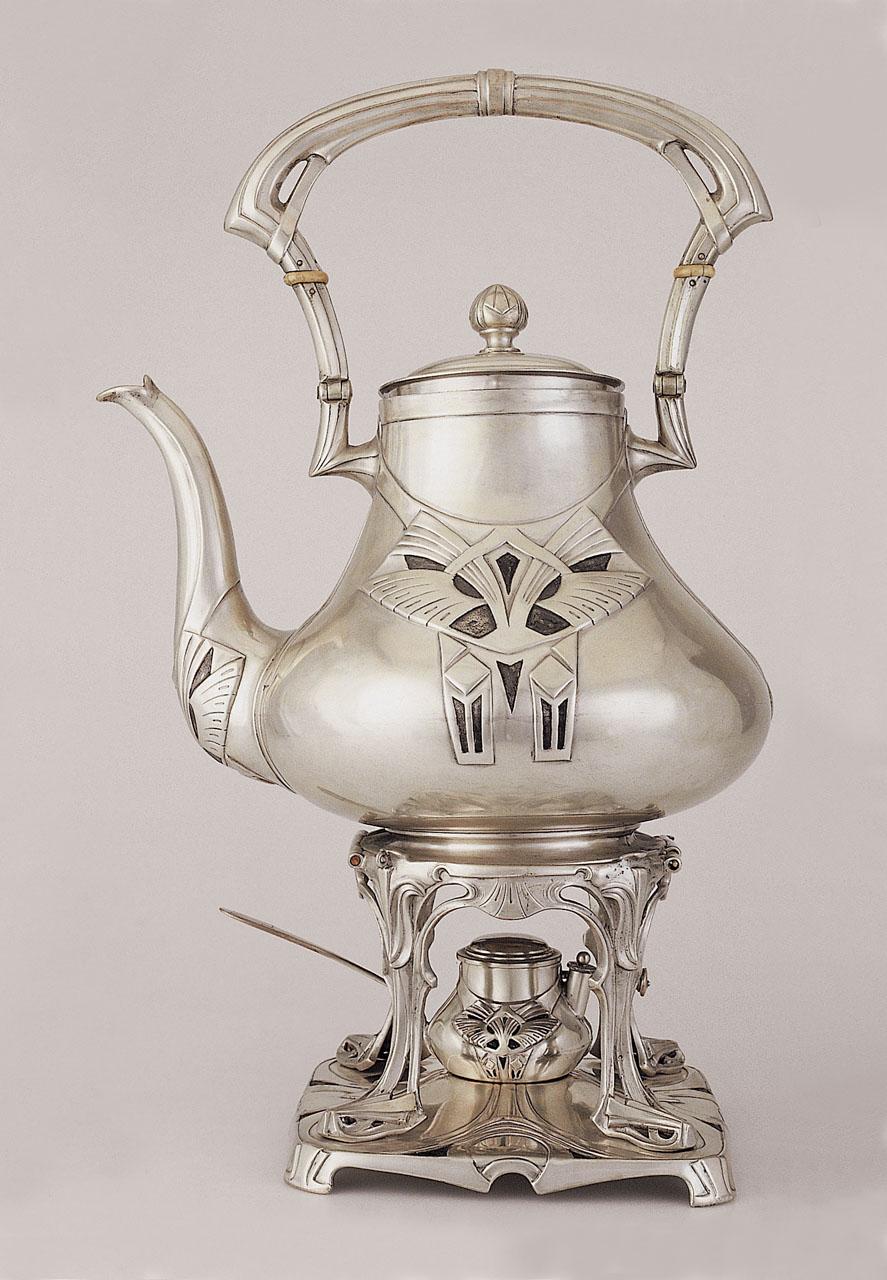
Tea drinking has been an important social event since the 18th century. The utensils used to prepare the drink are therefore not only practical, but also serve a representative function. The large kettle used to boil the water for tea was placed on a spirit lamp, and the fresh brew was prepared in a separate jug. The work of a Viennese master, it features decorations characteristic of the German version of Art Nouveau. (Master-mark: KO, silver, hammered, pressed, chiseled)
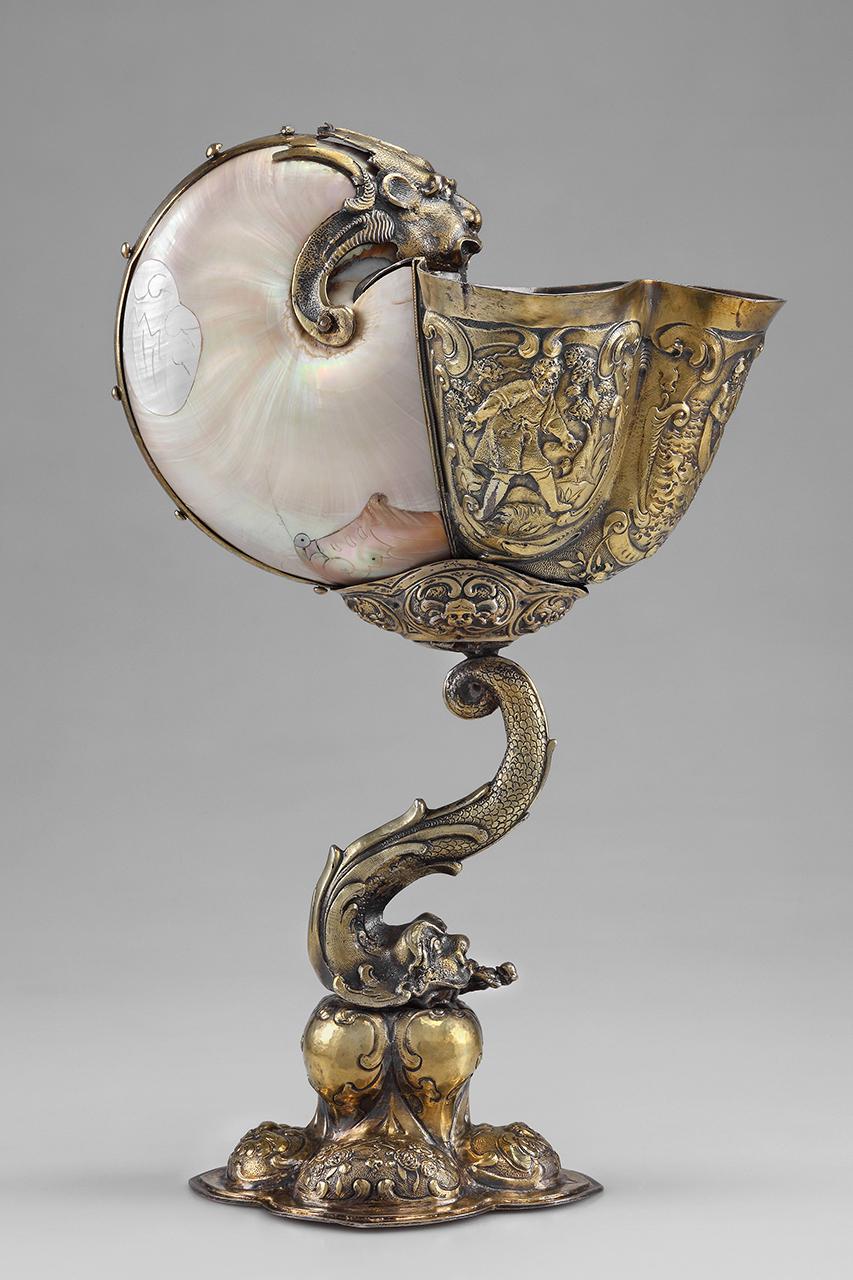
Gold- and silversmith's works featuring shells, snails, and nautilus shells mounted in gilded silver were particularly popular in early modern Europe. Objects made of exotic materials almost always depict scenes and images related to water. This goblet, probably made in Transylvania, was decorated with scenes from the Old Testament story of Jonah by the goldsmith, whose only monogram (NK) is known. It belonged to the goldsmith's collection of the distinguished art collector Lipót Mór Herzog (1869–1934).
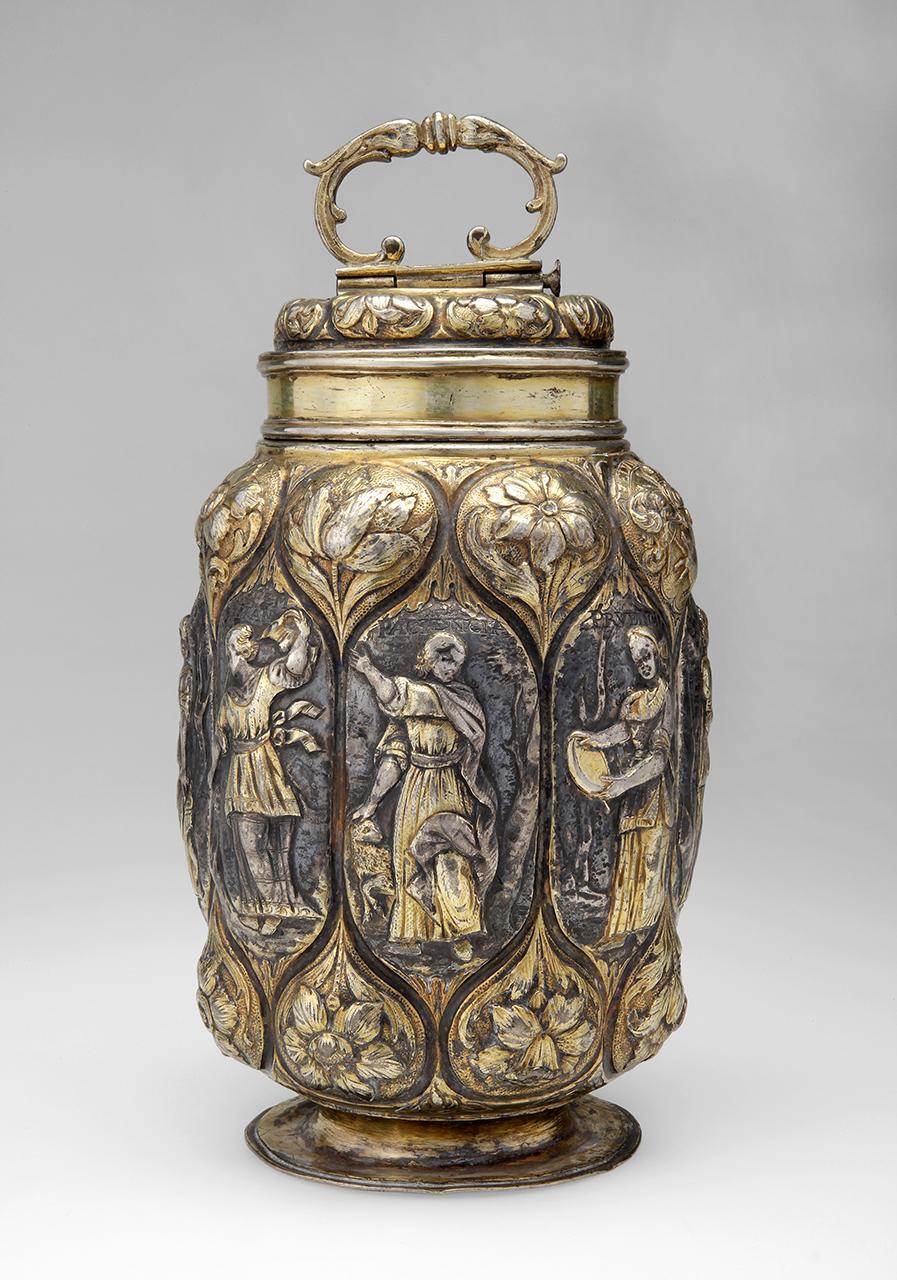
Bottles belonged to the group of secular vessels of the early modern aristocracy. They were used primarily for storing spirits and wine. In Protestant areas, however, they were often used among the vessels for Holy Communion. This bottle from southern Transylvania, decorated with allegorical figures representing Christian virtues, came into the possession of the Reformed congregation of Székelykeresztúr in the 18th century. After World War I, the congregation was forced to sell the goldsmith's work, which entered the collection of the National Museum at the end of the 20th century. (Master marked Sh: Sebestyén Hann?, probably Nagyszeben, last third of the 17th century, gilded silver, hammered, embossed, chiseled, punched, engraved)
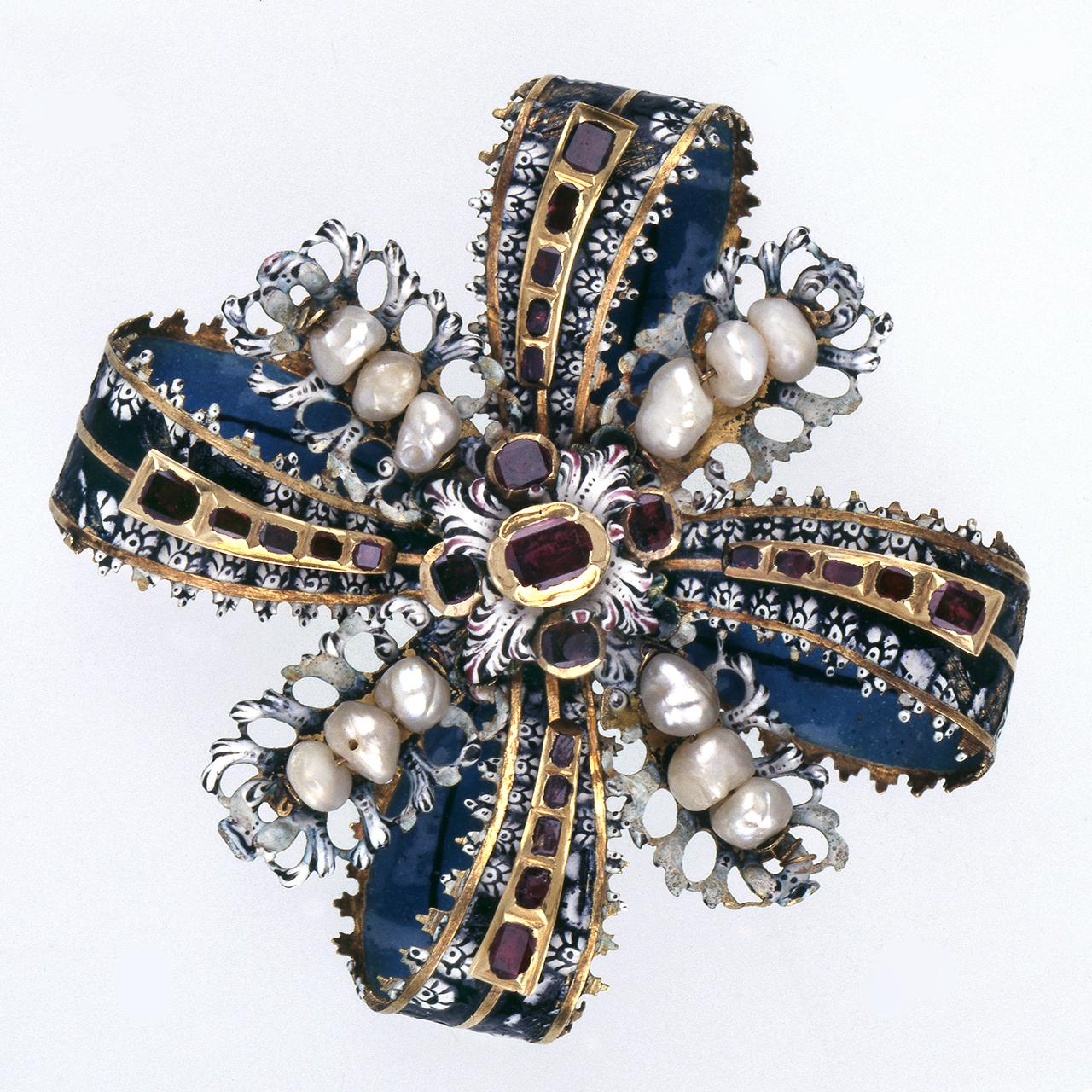
In the mid-17th century, it became very popular in French court fashion to wear bow clusters of various sizes on almost every part of the clothing, for both men and women. In addition to ribbons made of fabric, goldsmith-made jewelry bow clusters also appeared. Mostly aristocratic ladies of Royal Hungary were the primary owners of these ribbons and bows. They were worn in many different styles and sizes. Among Hungarian artfacts, bows made from stiff ribbon stems are more common, while Western examples are generally reminiscent of loosely tied bow clusters.
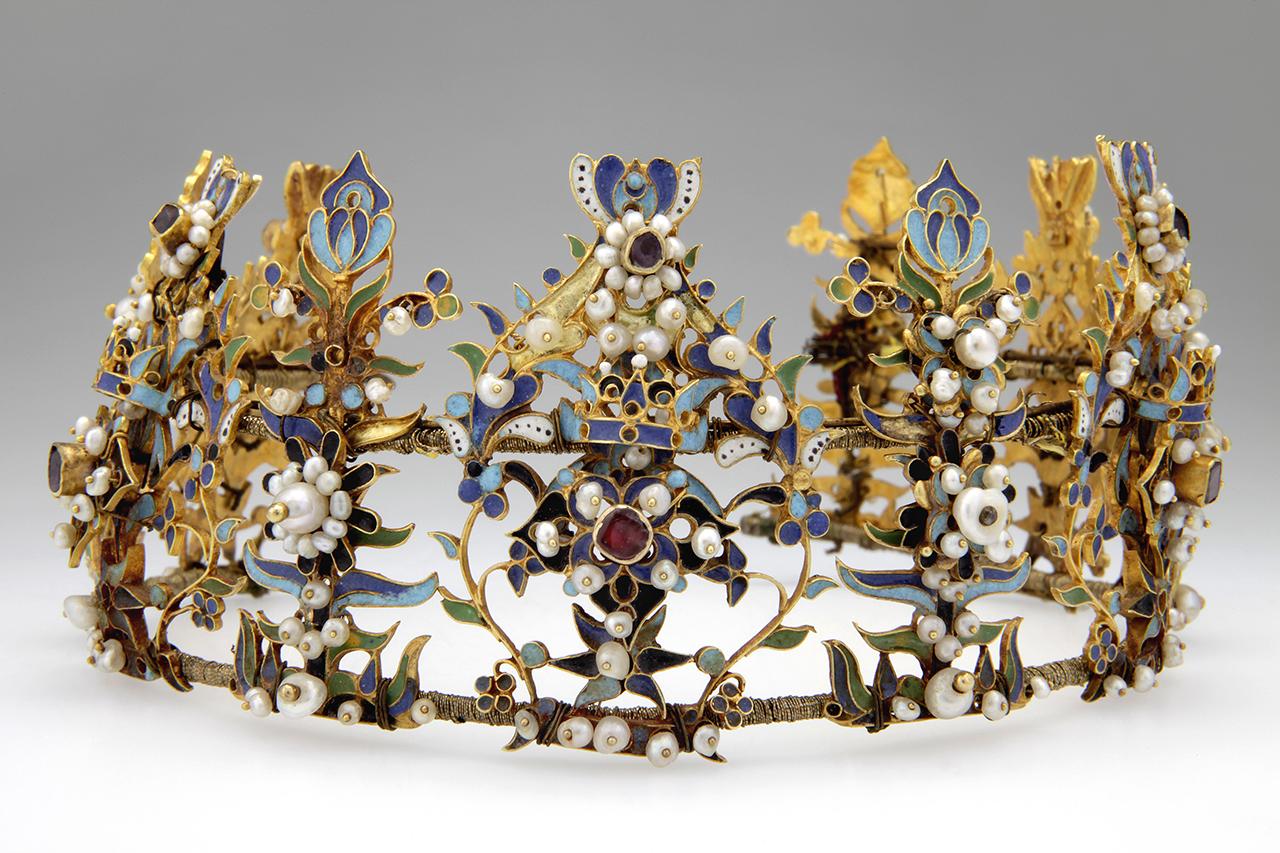
The clasps or brooches made at the end of the 16th century, in Transylvania were once used to decorate maidens' or other headdresses. The jewelry acquired its current form in the mid-19th century, when the delicate clasps were strung onto two straps. From that time on, the female members of the Ugron family wore them on special occasions, such as their weddings, until the 1970s. The jewelry entered the collection of the National Museum as a donation of Mária Bánffy, wife of István Ugron.
Jewel decorated with painted enamel and table-cut garnets from the mid-17th century. The pieces resembling bird feathers and equipped with pins were probably once worn on hats and caps by both men and women.
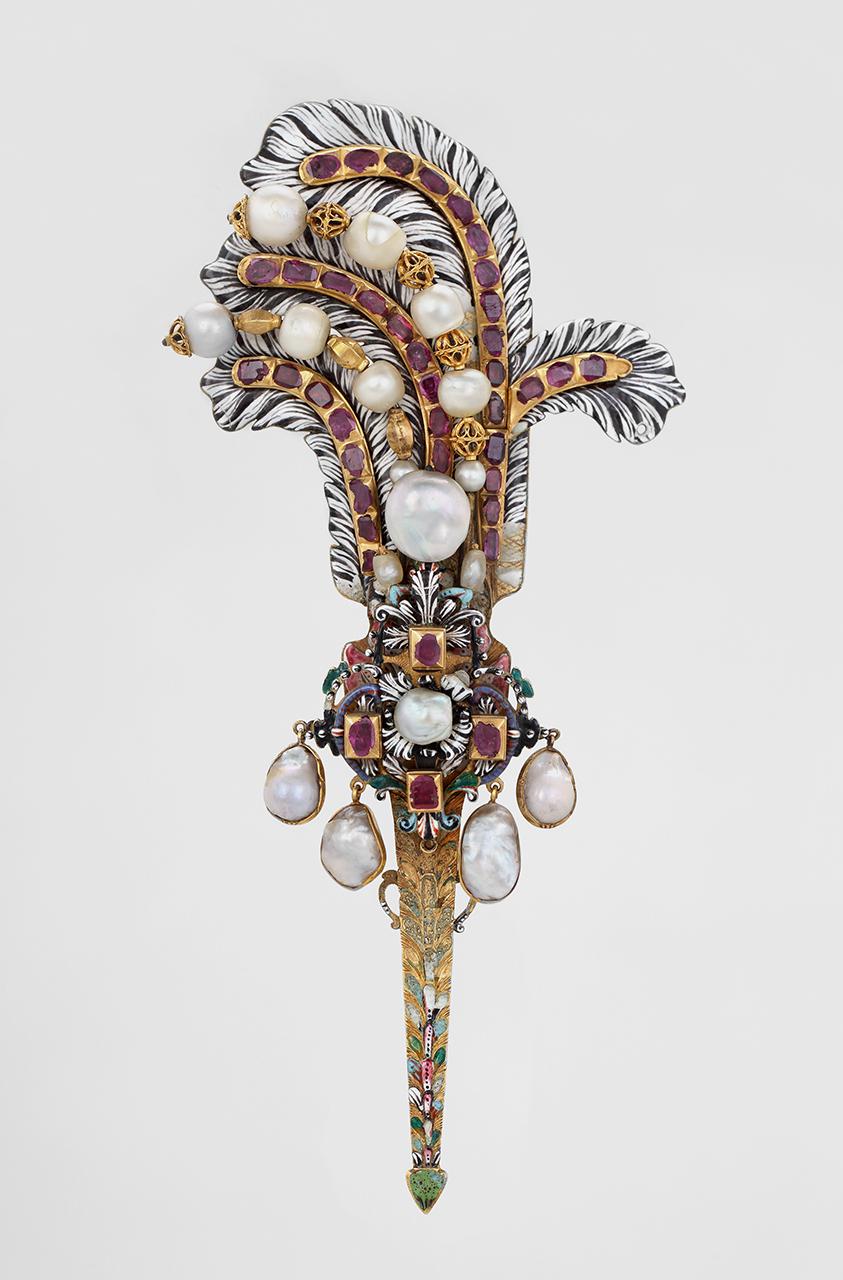
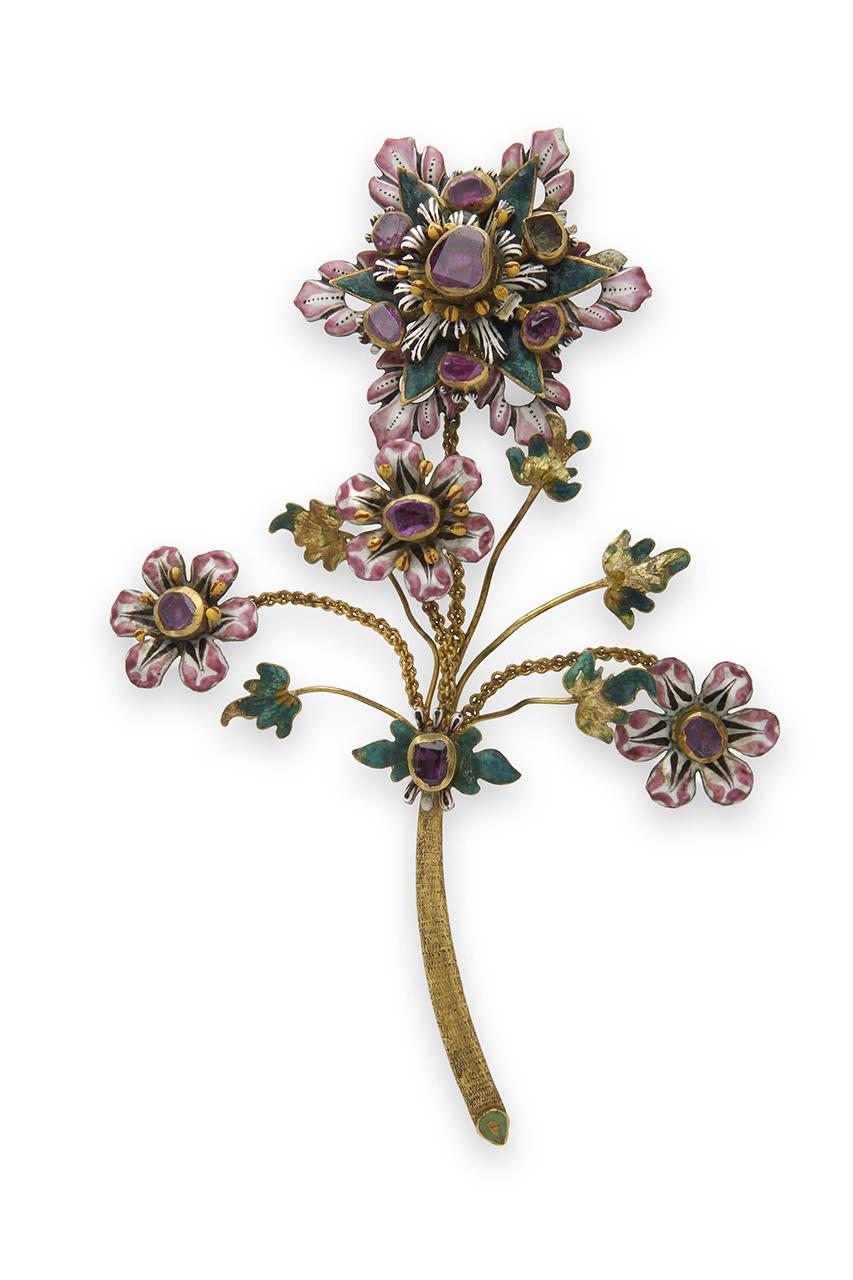
Among the jewelry worn by noblewomen in the 17th century, hairpins of various types and sizes were very popular. They were worn as decorations, pinned into the hair or veil. The individual elements of the composition, often in the shape of flowers or bouquets, were attached with small springs so that they vibrated gently when the person wearing them moved. This is where this type of jewelry acquired its name: trembler pin, which was widespread in the 16th and 17th centuries.