The Department of Modern History's glass, porcelain, and ceramic objects, as well as a smaller collection of apothecary jars, are housed in the Kubinyi Room on the first floor. Such prestigious objects began to enter the museum as early as in the first half of the 19th century, but due to reorganizations and losses resulting from the reclassification of artworks, the first pieces in the current collection were not inventoried until the end of the 19th century. The Hungarian National Museum's historical and cultural profile determines the criteria for expanding the collection. Former personal belongings of famous historical figures (e.g., Prince Ferenc II Rákóczi, Lajos Kossuth, Lajos Batthyány, Ferenc Deák, Queen Elizabeth) are among the most cherished treasures of our museum's collections.
Contact: Dr. Anna Ridovics, ridovics.anna@hnm.hu
Composition of the collection
The history of glassmaking and ceramics production in Hungary from the 17th to the 21st century is represented by pieces made from various materials and representing different types of objects. Most of the artifacts are associated with the aristocracy, nobility, and bourgeoisie, while there are fewer examples of ceramics and glassware used in popular culture in the collection. Guild artifacts, pottery from peasant culture, and high-quality collections have been preserved thanks to the renewed interest in folk art that began in the mid-19th century and continued into the early 20th century. These pieces found their way into significant private collections and from there into the museum, reflecting the development of Hungarian collecting history itself. From an industrial history perspective, the works of Hungarian factories, workshops, and artists are particularly important. However, the collection also includes beautiful pieces of Viennese and Meissen porcelain, which were popular among the upper classes in the 19th and 20th centuries, as well as products from other foreign workshops, such as Czech, Austrian, Dutch, French, and English ones.
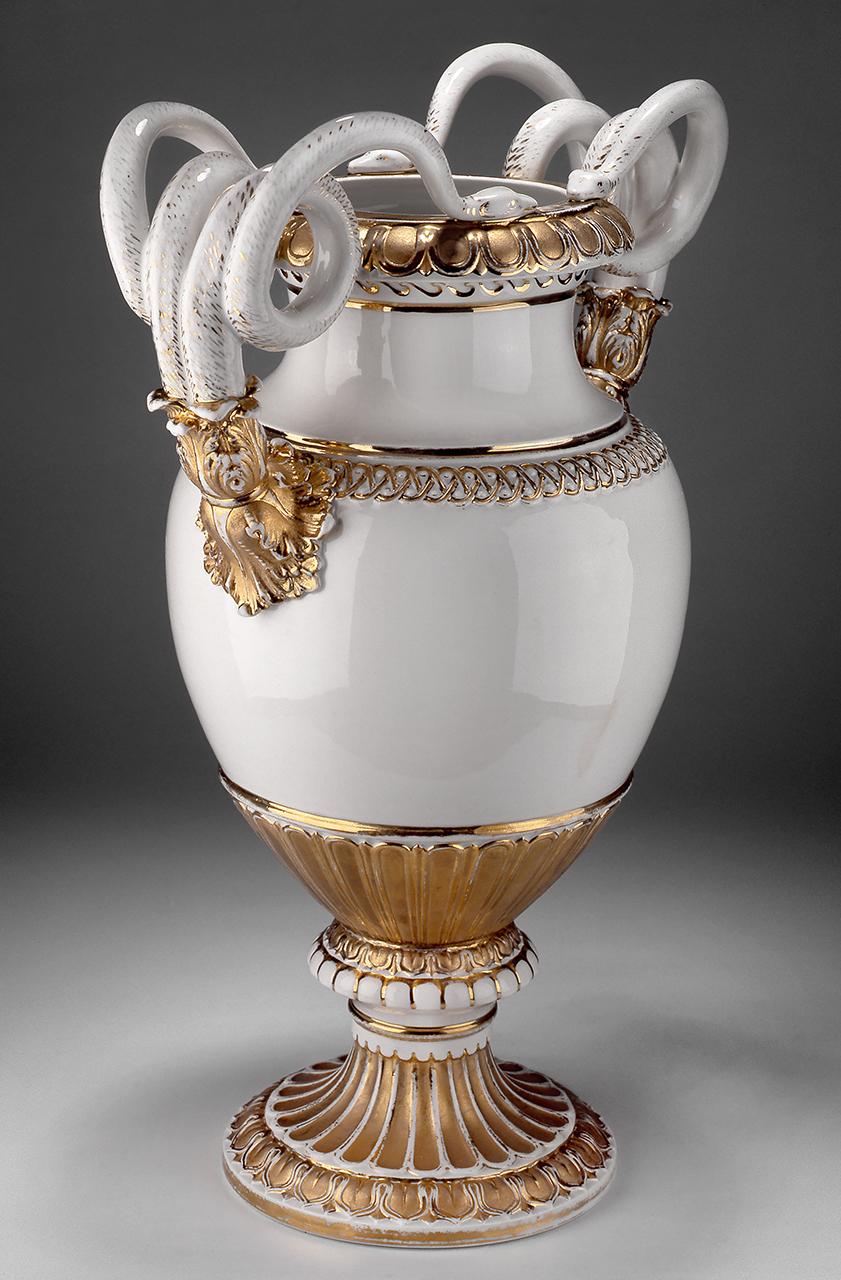
Large (48 cm), amphora-shaped snow-white porcelain vase with rich gold decoration. There are two of them, they came in pairs. Delicate, double twisted snake-shaped handles render the pieces special. The blue crossed swords painted under the glaze on the base suggest it was manufactured in Meissen at the Royal Porcelain Manufactory. The form was designed by Ernst August Leuteritz in the 1850s. According to tradition, the decorative vases once belonged to Queen Elisabeth, who gave them as a gift to her reader, Ida Ferenczy. In 2001, Elemér Hantos, heir to Karolin Wolfner-Hantos's famous porcelain collection, bequeathed the two vases to the National Museum in his will.
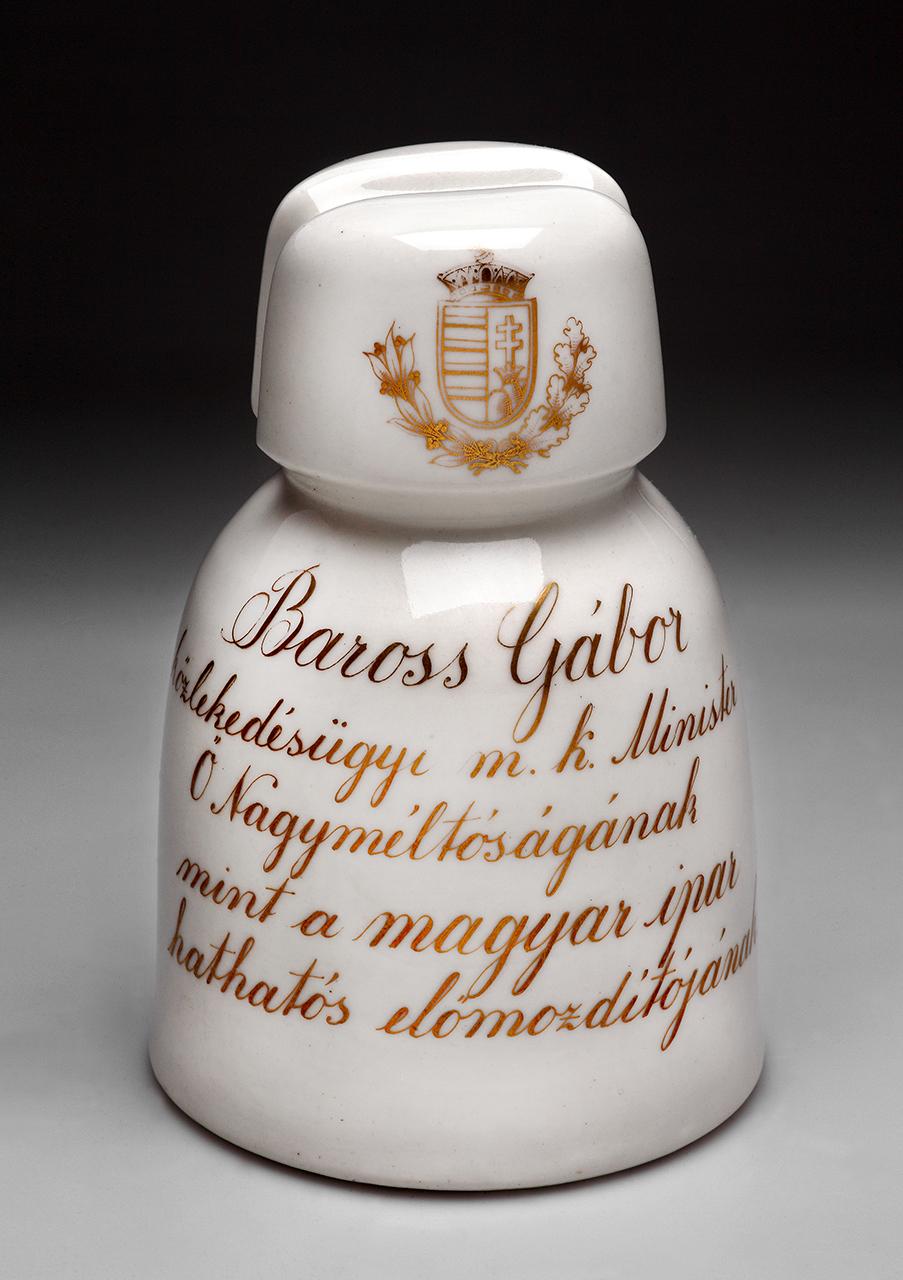
Vilmos Zsolnay's factory in Pécs became world famous for its high-quality decorative items and the new materials created during experiments, such as porcelain faience, pyrogranite building ceramics, and, above all, the special iridescent glaze known as eosin. Zsolnay was not only an excellent creator, but also a brilliant businessman. The production of industrial porcelain, which he began in 1882, provided an important financial basis for the development of his artistic designs. In 1888, he managed to sign a contract for the exclusive supply of the Hungarian railways and postal service. A highlight of industrial history is the white porcelain insulating spool bearing the Hungarian coat of arms, and a gilded inscription referring to the agreement: "To His Excellency Gábor Baross, Minister of Transport, as an effective promoter of Hungarian industry." "Porcelain insulator made of Hungarian material from the Zsolnay factory in Pécs, 1888."
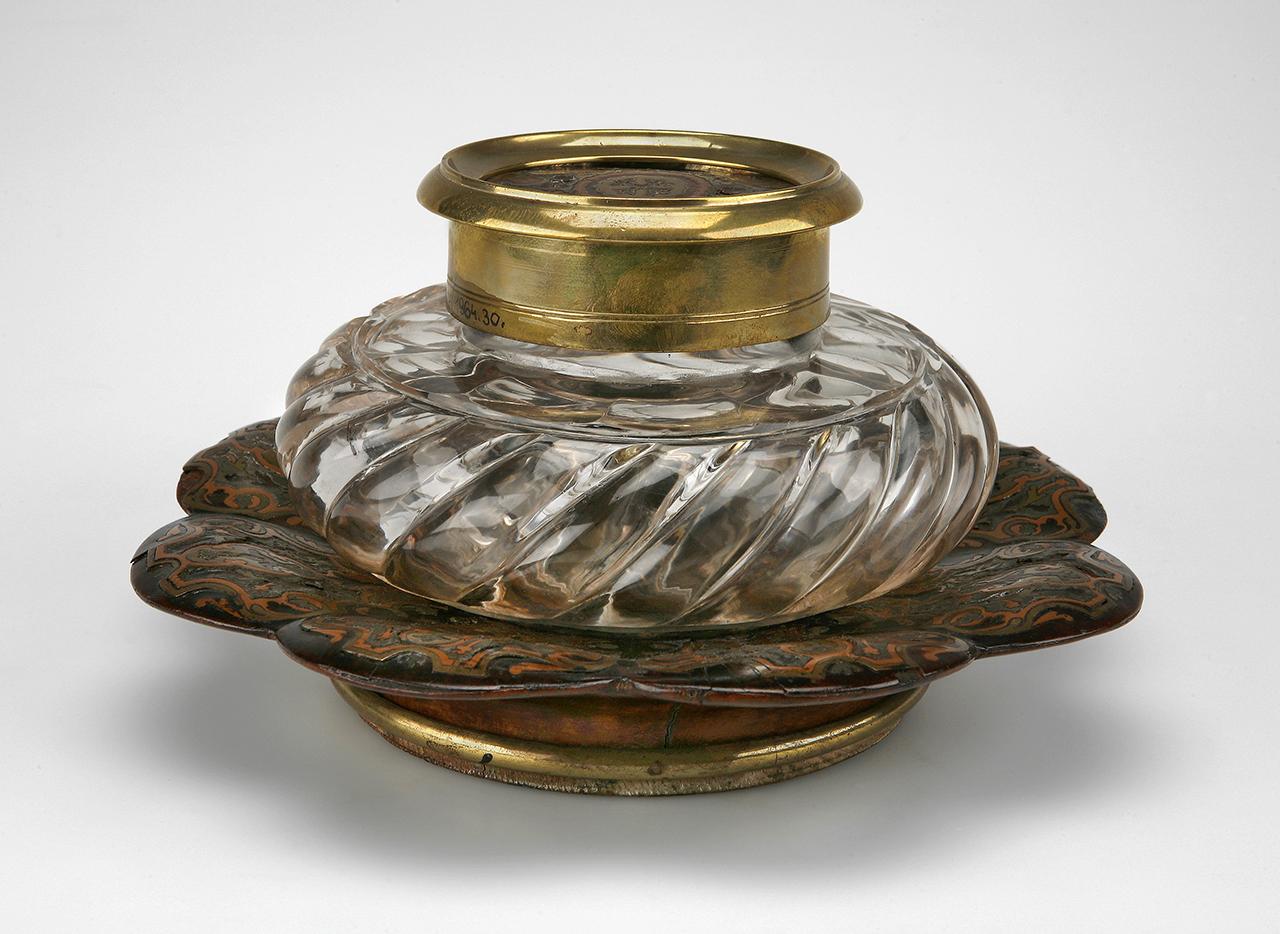
The Hungarian National Museum respectfully preserves several relics of Count Lajos Batthyány, the martyred prime minister of the first independent Hungarian government. In 1964, a ribbed glass inkwell with a metal cap, placed on a painted wooden tray, was added to the collection. Before his execution, the count wrote a farewell letter to his wife, Antónia Zichy. He asked his doctor, Dr. Ferenc Hauszmann, to deliver the tragic message. As a token of gratitude, he gave him this object, which was kept as a treasured relic by the Hauszmann family for a century.
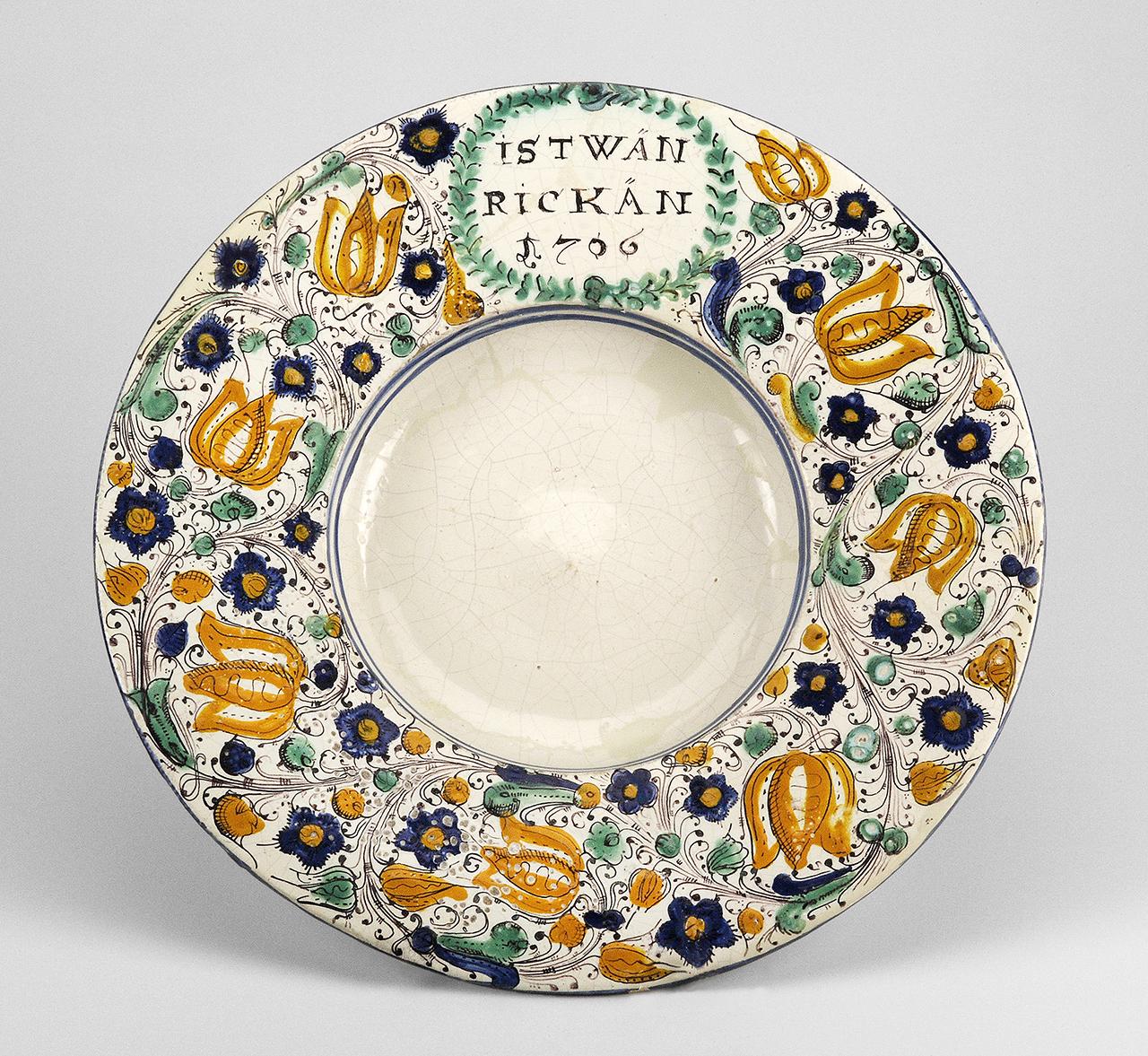
The brightly colored tin-glazed ceramics of the German-speaking Hutterite masters, who were followers of the Anabaptist faith, are unique examples of 17th- and 18th-century Hungarian art. The fashionable "bianchi da Faenza" majolica, German faience, and Turkish-Persian tulip and carnation patterns of the late Renaissance style had a great influence on their work. The bowls and plates popular during this period delighted their distinguished owners and enchanted their guests as decorations on glass stands or as spectacular pieces of tableware. The wide rim of this deep white bowl is completely covered with decoration: a light manganese brown pattern, densely intertwined green leaves with blue flowers, and large yellow tulips outlined with a brush. Enclosed in a wreath of green leaves is the name of the owner: ISTWAN RICKÁN 1706. Acquired from the collection of Lajos Ernst.
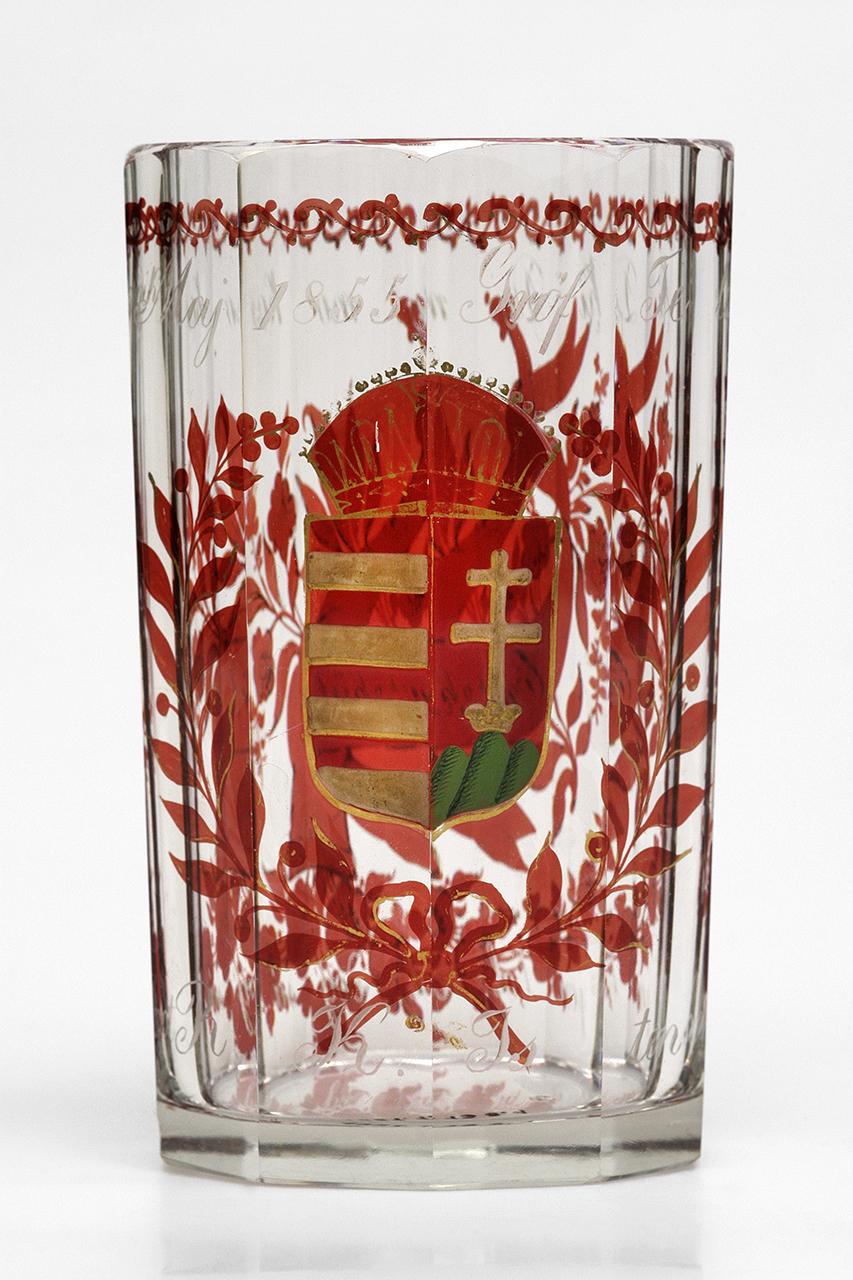
The faceted, polygonal, blown, colorless glass cup is decorated with a ruby-colored image on the front. Surrounded by laurel branches tied with a ribbon, it bears the Hungarian crowned coat of arms, with the triple mound painted green and the cuts and double cross protruding from the crown emphasized with gilding. Under the wavy decoration on the rim of the glass is an engraved inscription: "Count Domokos Teleki 29 May 1855." At the bottom is a greeting: "May God grant you happiness. R. K." The commemorative glass was given to the 45-year-old renowned Transylvanian politician and distinguished historian Count Domokos Széki Teleki, who became a member of the Board of Directors of the Hungarian Academy of Sciences that year.
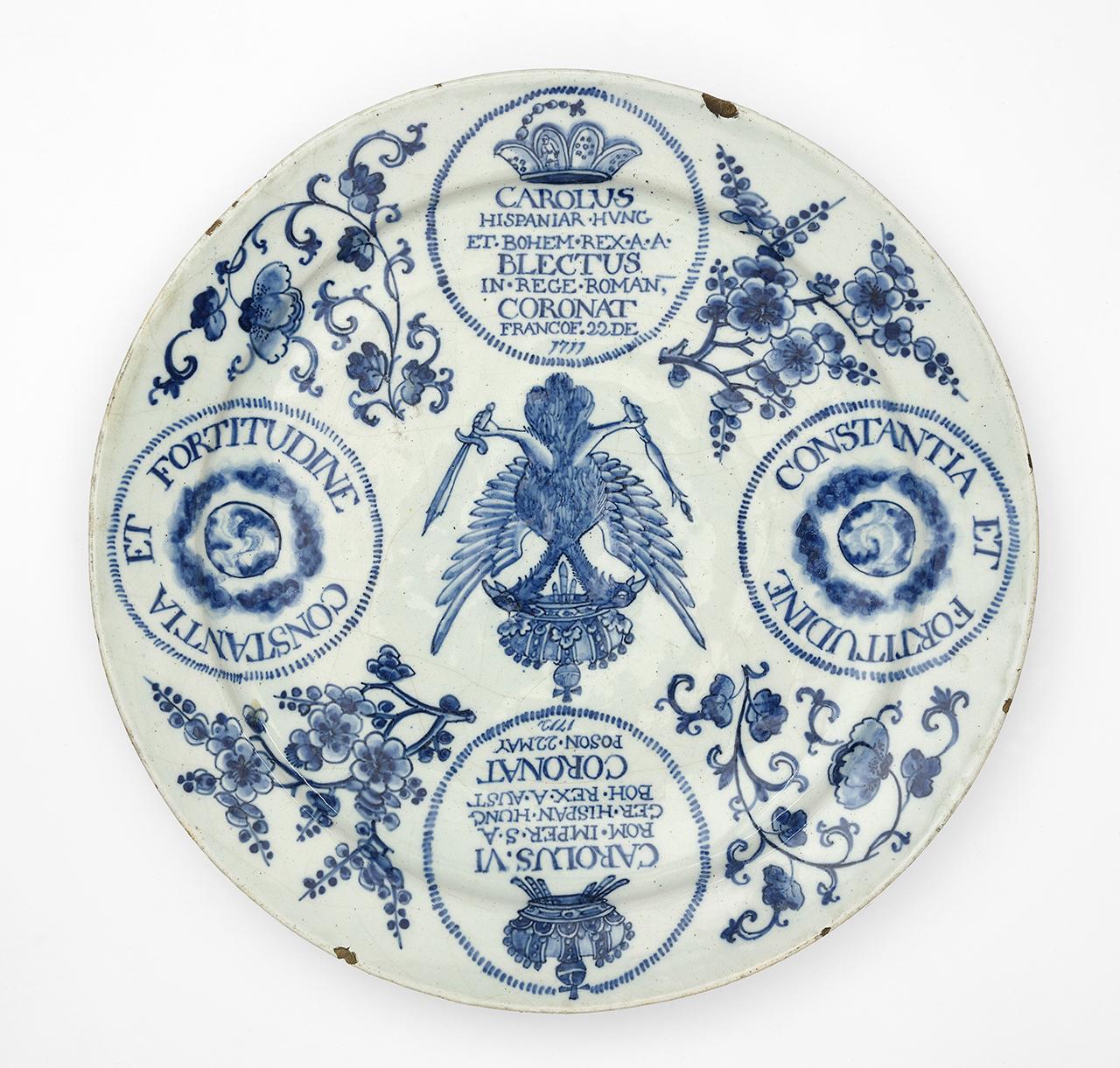
The decoration of this narrow-rimmed, deep bowl is a camieau blue pattern painted in two shades of blue on a white tin-glazed base. In the center of the bowl is a crowned, double-headed eagle with outstretched wings, holding a scepter in one claw and a sword in the other. Surrounding it are four medallions depicting Emperor Charles VI (1685–1740) – King Charles III of Hungary – and the front and back of his Hungarian royal coronation tokens and German-Roman imperial coronation tokens from Pozsony and Frankfurt. Between the medallions are oriental floral decorations: bluebells and cherry blossoms. The inscriptions on the medallions decorating the rim of the plate read: Under the Hungarian crown: CAROLUS∙ VI / ROM: IMPER∙ S∙ A / GER∙ HISPAN∙ HUNG / BOH∙ REX∙A∙AUST / CORONAT / POSON∙ 22 MAY / 1712. Under the German-Roman imperial crown (incorrectly): CAROLUS / HISPANIAR∙ HVNG / ET∙BOHEM / REX∙A∙AUST / CORONAT / POSON∙ 22 MAY / 1712. Under the German-Roman imperial crown (incorrectly): CAROLUS / HISPANIAR∙ HVNG / ET∙BOHEM∙ REX∙A∙ A / BLECTUS / IN∙ REGE∙ ROMAN. / CORONAT / FRANCOF. 22 DE / 1711. Next to the two wings of the eagle, two medallions show the same reverse side of the tokens, with a globe surrounded by clouds and the motto of Charles VI: CONSTANTIA ET FORTITUDINE. (With perseverance and courage).
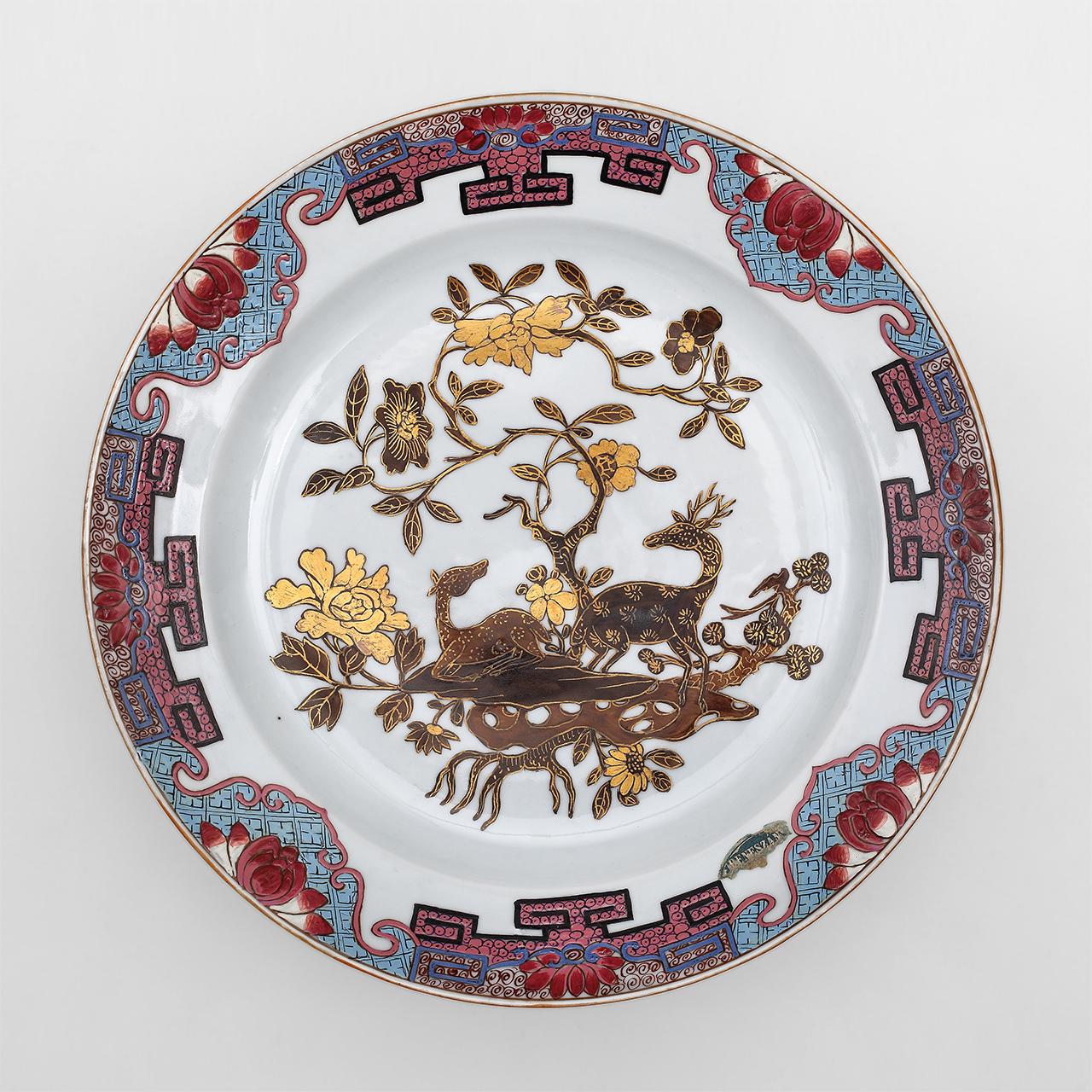
Mór Fischer took over the management of the Herend porcelain factory in 1839. He achieved great success with his high-quality works presented at the First Hungarian Industrial Exhibition in 1842, which, according to Lajos Kossuth, would have been suitable for "even a princely table." The forms and patterns of Far Eastern porcelain and Eastern motifs were applied with great sensitivity and transformed into Herend style. Their first international success came in 1851 at the World Exhibition in London with the Victoria pattern, which was of Chinese origin and later named after the Queen of England.
On the porcelain plates, a pair of brown deer with golden spots rest among monumental, richly gilded brown flowering branches. They turn back and look at each other. This pattern is a real rarity. Its prototype may be the mythical Chinese spotted deer, popular as a symbol of good luck, which was the animal of Shouxing, the Chinese star god of Long Life. On the rim of the plate are four lotus flowers in four different frames and colours. On the back rim are stylized flowers painted linearly. The plates may have belonged to Archboshop János Scitovszky's tableware, which also included 12 flat plates decorated with golden deer. A similar example with the same central motif but a different coloured frame can be found in the Museum of Applied Arts. (Mór Fischer's Herend factory, 1860)
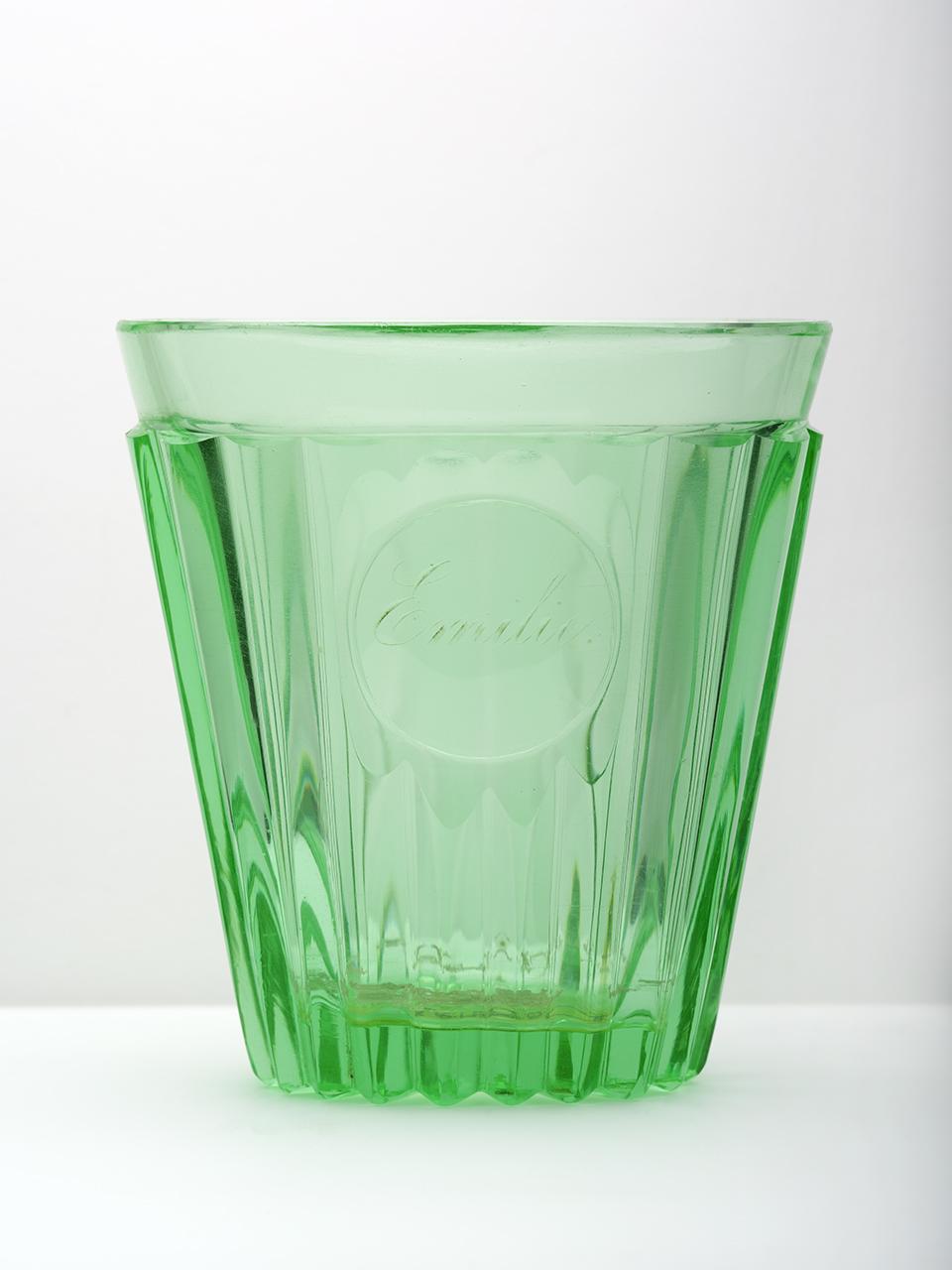
The name of the owner, Emilie, is engraved on the medallion of this flat, oval-bottomed, embossed uranium glass drinking glass. Emília Mácsai Csernovics (1819–1909) was the wife of János Damjanich, the heroic general of the 1848–49 War of Independence who was martyred in Arad. They married in 1847, but were only able to enjoy two years together. The young widow never remarried. She led an active life, cherishing the memory of the martyrs of Arad and organizing charity events to help widows and orphans. In 1861, she founded the Hungarian Farmers' Wives Association.
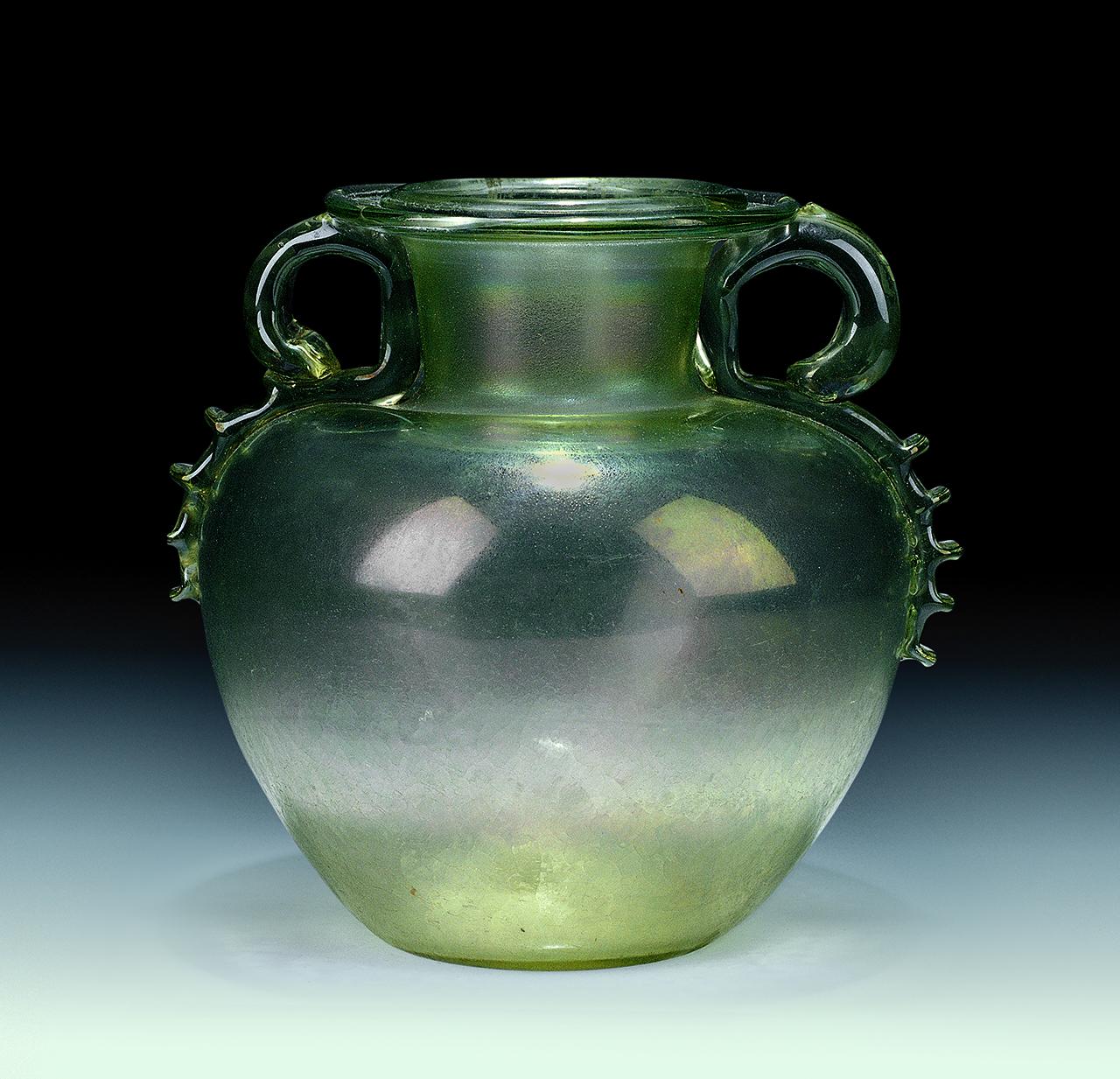
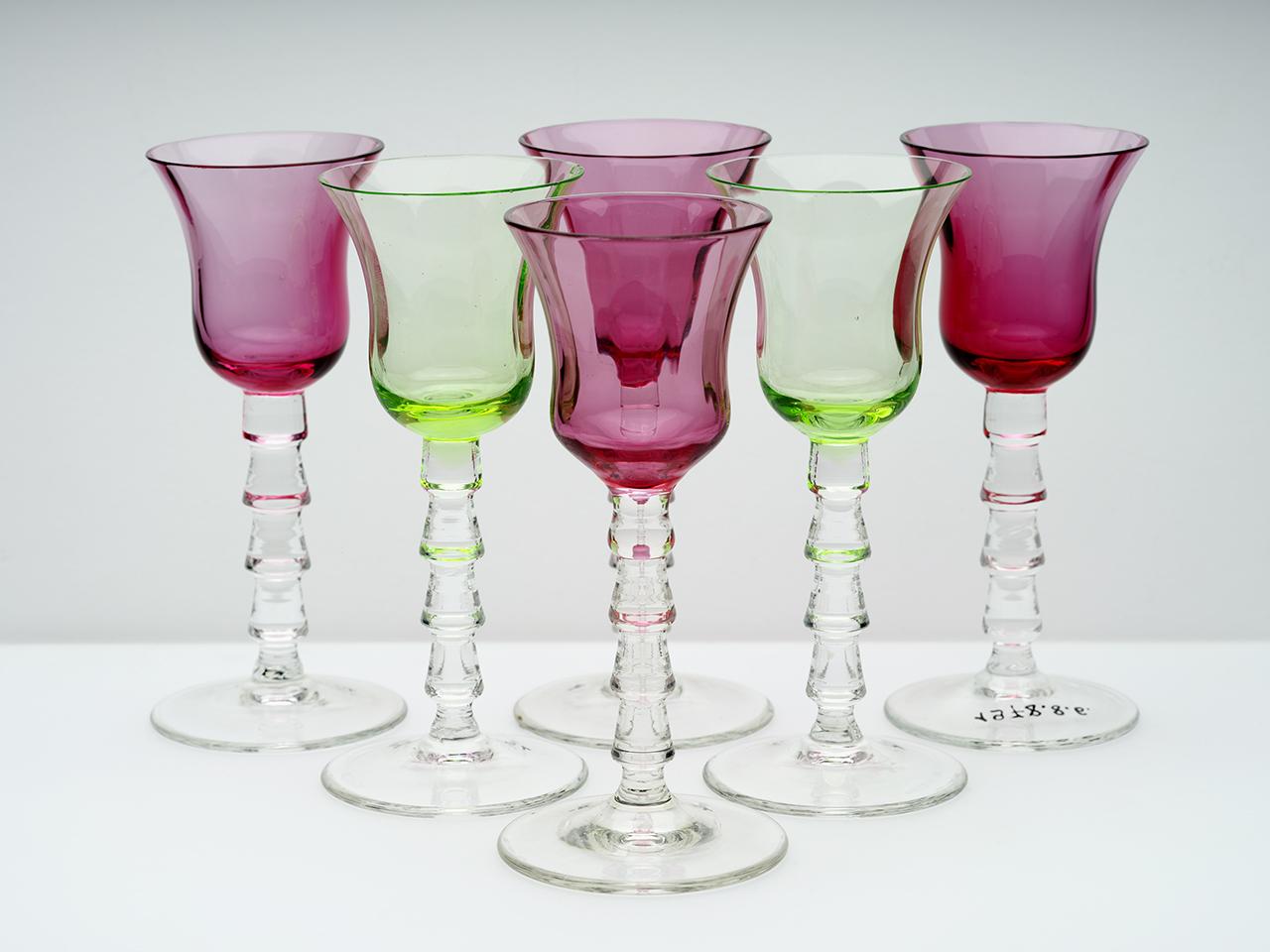
The elegance and design of Austrian Art Nouveau glass art characterize the liqueur glasses that play with colors, which are products of the early 20th century. The bell-shaped goblets sitting on a circularly articulated stem are green or purple in hue. The liqueur set came to the Hungarian National Museum with the legacy of Vilmos Vázsonyi (born Vilmos Weiszfeld) (1868–1926), lawyer, journalist, and politician, one of the founders of the Civic Democratic Party in 1900. He was elected as a member of parliament for Terézváros in Budapest on several occasions, and was Minister of Justice of Hungary in 1917 and 1918.
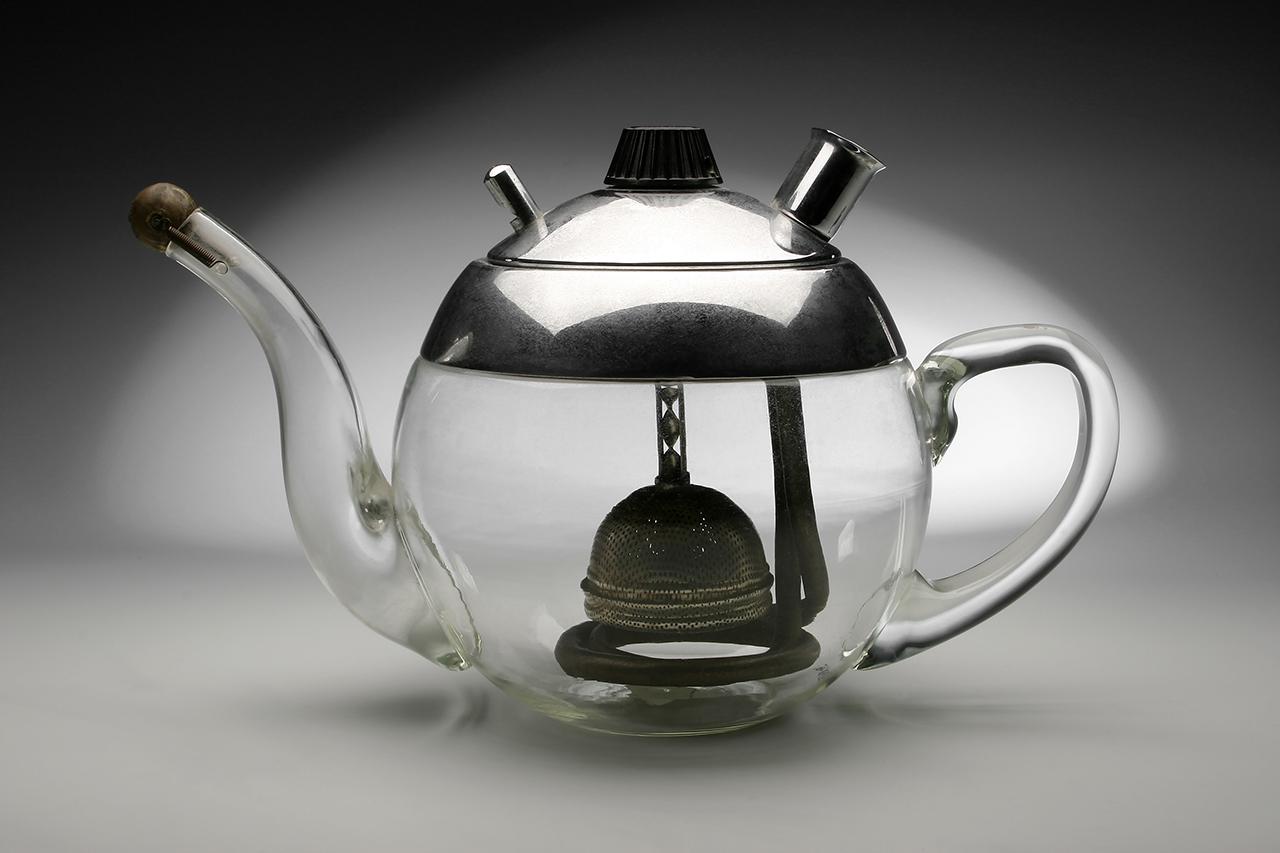
Innovations that revolutionized the world of 20th-century kitchens date back to the end of the 19th century. In 1889, the first electric teapot model was introduced in Berlin, and it was also in Germany that “Jena glass”, i.e. heat-resistant borosilicate glass was also invented under the direction of Otto Schott in Jena. In 1920, the Magyar Elekthermax joint-stock company was founded, which was among the first to manufacture electrical household appliances in Hungary. In 1948, during the nationalization, the “Columbus” coffee maker and “Mandarin” teapot of the Agrolux company, among the companies attached to Elekthermax, further expanded the product range. The design of the teapot, named after the popular Mandarin Chinese tea, is characterized by the harmony of practicality and aesthetic sophistication. The glass body is a harmonious spherical shape, extending from it are the curved handle and the spout closed with a spring-loaded wooden ball. The metal spiral kettle fits into the nickel-plated metal top, which closes with a bayonet joint. The screw-on bakelite knob on the top can be used to regulate the lowering and raising of the filter insert holding the tea leaves along a metal axis. A whistle of the top valve indicated when the water came to a boil. The teapot is a witty electric development of Wilhelm Wagenfeld's heat-resistant glass jug (Jenaer Glasswerke) designed around 1930, and shows the influence of the German Bauhaus school's art of design, representing its order and functionalism reduced to pure basic forms among the products of domestic industry.
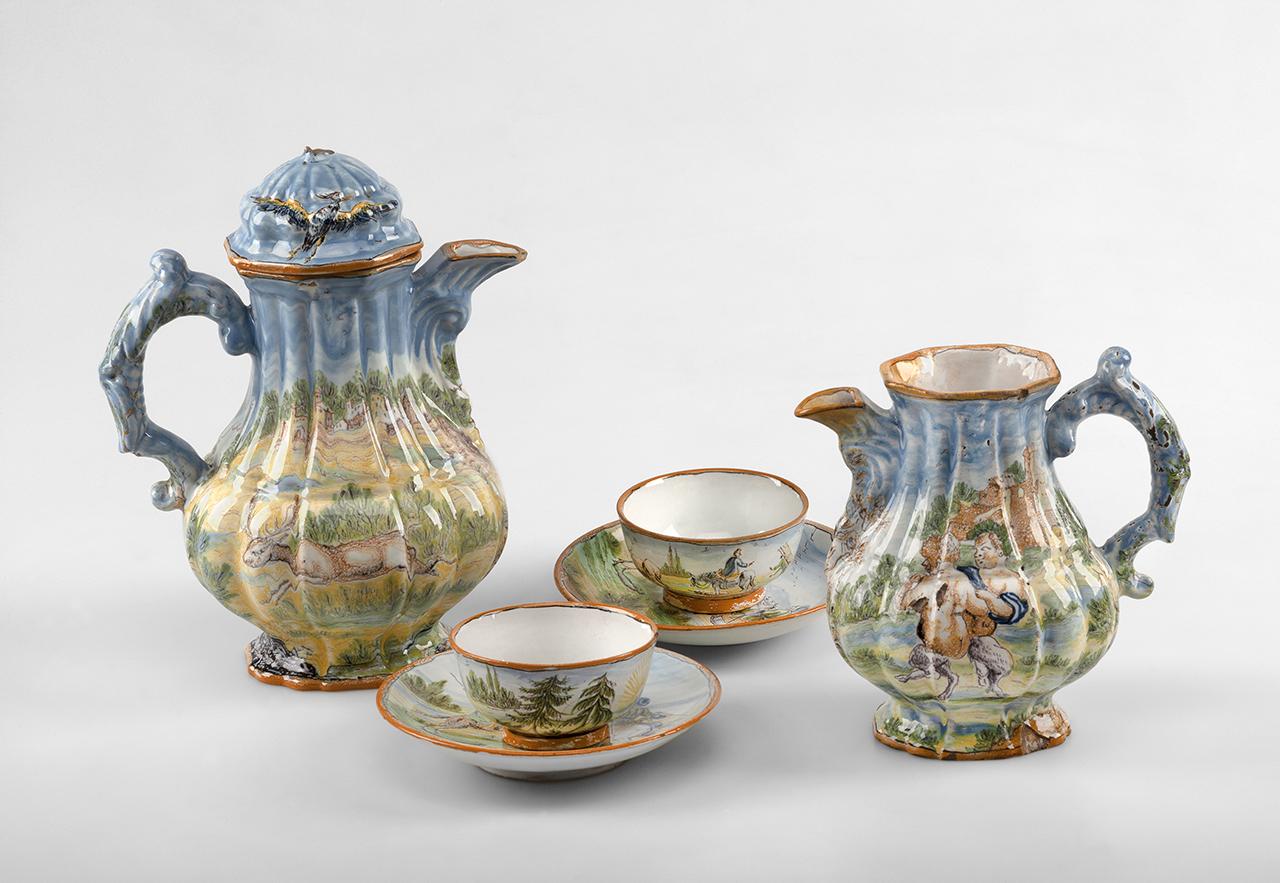
The European standard of the first Hungarian faience manufactory was represented by the majolicas of the Ernst Collection from Holic. Hungarian Queen and Austrian Empress Maria Theresa's husband, Francis I of Lorraine, Grand Duke of Tuscany, later Holy Roman Emperor, founded the first Hungarian faience manufactory on his estate in Holics (today Holič, Slovakia) in 1743. In addition to the works of the early period that point towards German and French Baroque, an Italian memorial group stands out. This includes the special coffee set (2 pots, four cups with saucers), which the museum purchased from Lajos Ernst's art collection in 1939. The outer surface of the objects is covered with genre scenes placed in a landscape. The pear-shaped, grooved body of the pots has a question mark-shaped handle decorated with scukptured acanthus leaves. The knob of the domed lid of the coffee pot is missing. On the body, a hunter on horseback chases a deer with his spear, in the background of the landscape there are houses, and on the lid there are two birds flying. On the milk pot, two fauns dance in a grove, another carries a child on his shoulder. Two of the hemispherical, handleless cups are almost identical. Their outer decoration depicts animals in a landscape, and on the inside of both there is a fly and in the other a mosquito with a full belly. Two saucers show soldiers fighting, one a chamois standing on a cliff top, and one grazing goats. The sophisticated colour scheme is characterized by blue in addition to ochre, manganese and green. Italian researchers have identified the master of the series as Antonio Terchi, a member of the Sienese majolica family. He was active in Holics between 1766 and 1779.
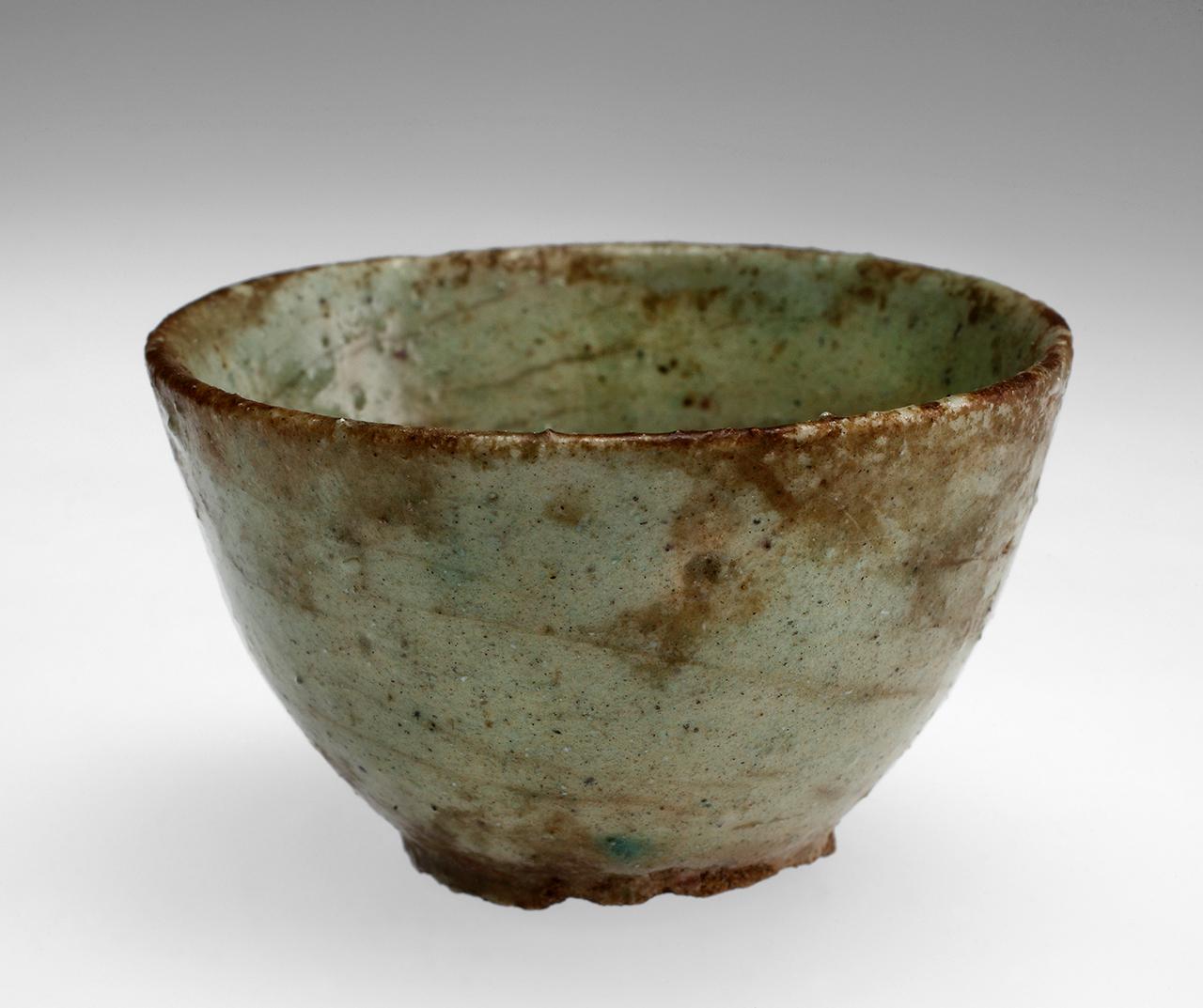
After the defeat of the War of Independence (1704–1711) led by Rákóczi against Habsburg absolutism, the prince was forced to emigrate with his followers, and the Ottoman Empire received them. In 1903, historian Lajos Szádeczky searched for traces of the Kurucs in hiding in Turkey. In Rodosto, he visited Rákóczi's house and chapel, where a glass and two small glazed coffee cups were kept with respect honouring his memory. The Hungarian National Museum purchased the Rákóczi relics brought home in 1904. A light green glazed coffee cup and a blown, engraved drinking glass have survived to this day. The fictitious letters of Mikes Kelemen report on the daily lives of the exiles: “At six o’clock they beat the drums, and then the prince dresses, then he goes to the chapel and listens to mass; after mass he goes to the dining room, where we drink coffee and smoke.” (Letters from Turkey, letter No. 37)