The collection consists of finds from settlements and cemeteries dating from the 9th to 17th centuries, which have been regularly excavated since 1951 in several sites on the outskirts of the village of Zalavár. The medieval centre of Zalavár-Vársziget was surrounded by a dense network of villages. The finds thus reflect the chronological changes in the material culture of a micro-region. In a given period, it also characterises the living conditions of the different ranks of the settlement network. Most of the settlements finds are ceramic. The cemeteries have yielded a large and varied assemblage of objects related to clothing (9th century spurs, pendants, buttons and rings, 11th-13th century bracelets and beads).
The Zalavár Collection is unique in that it contains the largest and most varied collection of 9th-century artefacts in Hungary, including the most important Hungarian relics of the period, which are unique in Europe: pottery fragments with Glagolitic inscriptions, painted glass fragments and the mould of a bell.
Contact: Dr. Ágnes Ritoók, (Árpád and late medieval collections) ritook.agnes@hnm.hu, phone: +36 1 327 7700 / 424 and Katalin Gergely, (Carolingian collections) gergely.katalin@hnm.hu, phone: +36 1 327 7700 / 238
.
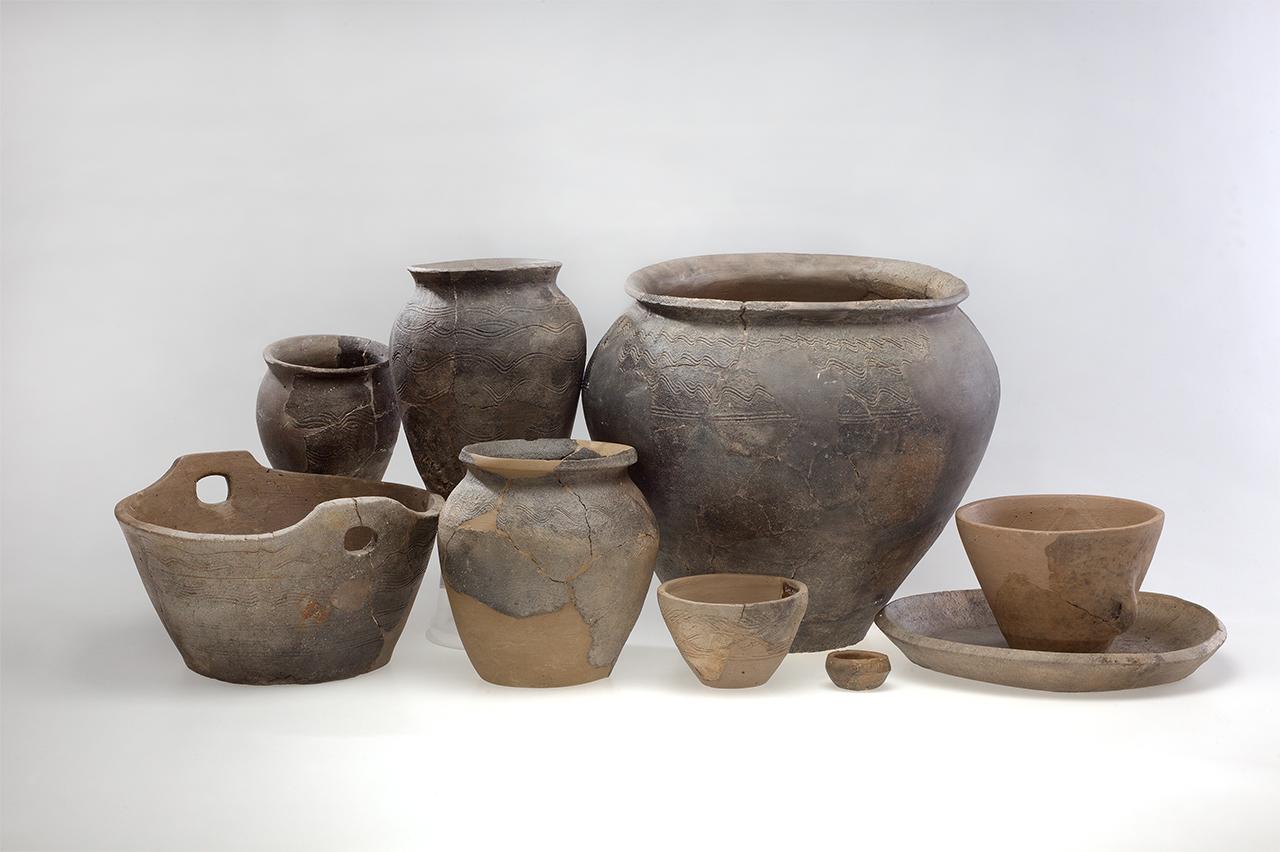
Around half a million ceramic fragments have so far been recovered from the settlement sites of Zalavár-Vársziget. The large masses of domestic pottery were made on manual pottery-wheel, and decorated almost without exception with incised horizontal and wavy line stacks and oblique incisions. The majority of them are small to large wide-mouthed, strong-shouldered, ovoid or rounded pots used for cooking and storage. In addition to these, the tableware of the lower classes included deep and flat bowls, loop-handled mugs, cups, the so-called chafing dish, and large ember covers and/or cooking bells.
The windows in the area around the sanctuary and the corridor of Hadrian's pilgrimage church were covered with glass panels made up of tiles of lead interlocked with tiles of painted saintly figures and inscriptions in sea blue, blue-green, blue, emerald green, olive green, brownish purple and yellow. The master glassmaker melted the glass mass, which he brought with him from one of the glass manufactories in the Rhineland, in a workshop behind the church's corridor crypt, and then coloured or painted it.

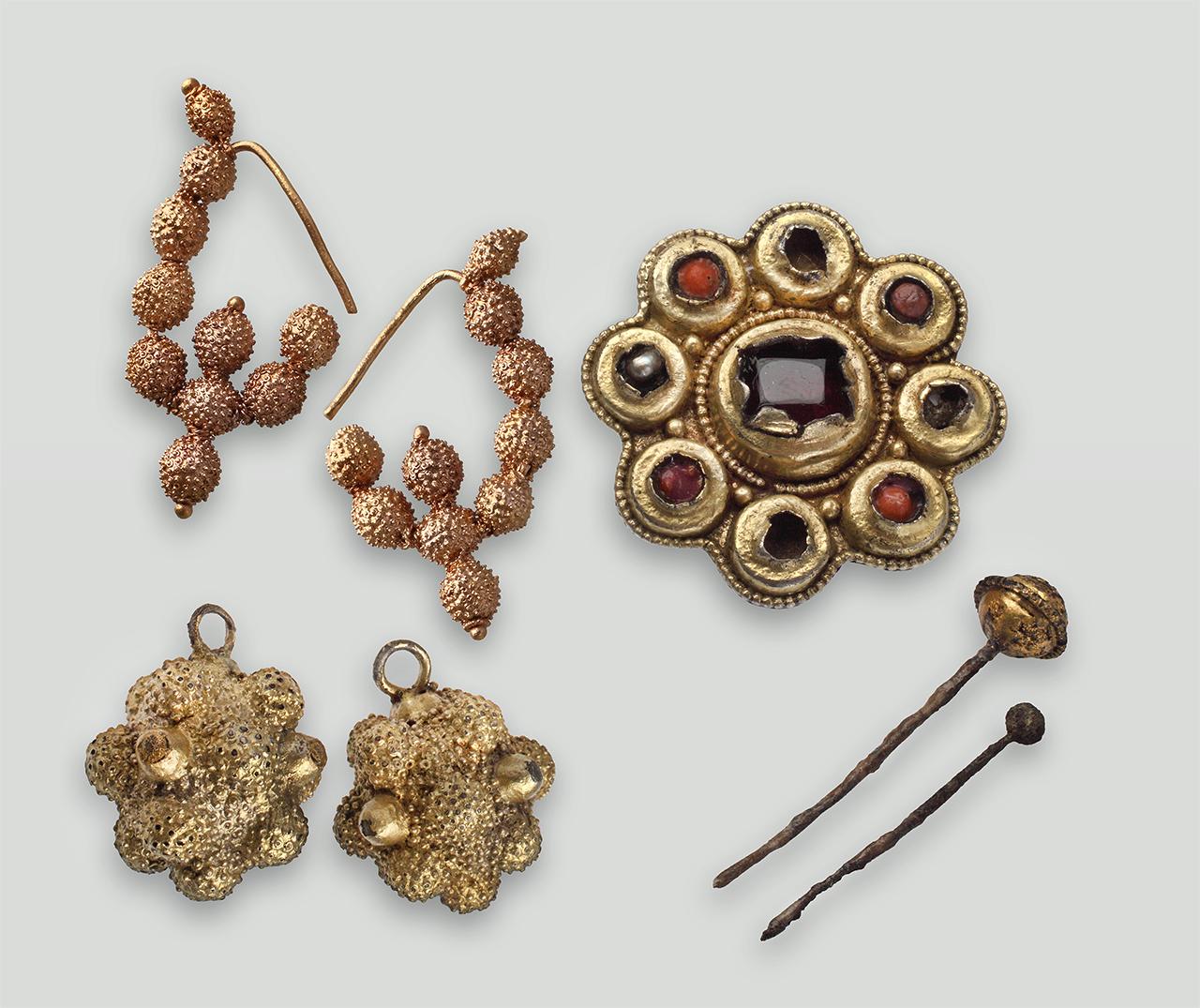
In Zalavár-Várszigt, the corridor crypt of the Hadrian pilgrimage church was deepened outside the sanctuary, so that the faithful hoping for a better fate and a miraculous healing could have direct contact with the "intact body" of the Hadrian martyr buried under the altar, and for the same reason the most noble families also sought to be buried here. A young girl lay in one of the crypts adjoining the corridor crypt, her veil fixed by gilded bronze hairpins. Also a pair of gold plated earrings with granular ornamentation near her ears, a pair of gilded silver disc studs with bulging ornamentation on her shoulders, and a gilded silver disc fibula with almandine, coral and shell on her breast were recovered from there. (Zalavár-Vársziget, Hadrian's pilgrimage church cemetery, grave No. 120/89., gold, gilded silver, gilded bronze, almandine, coral and shell inlaid)
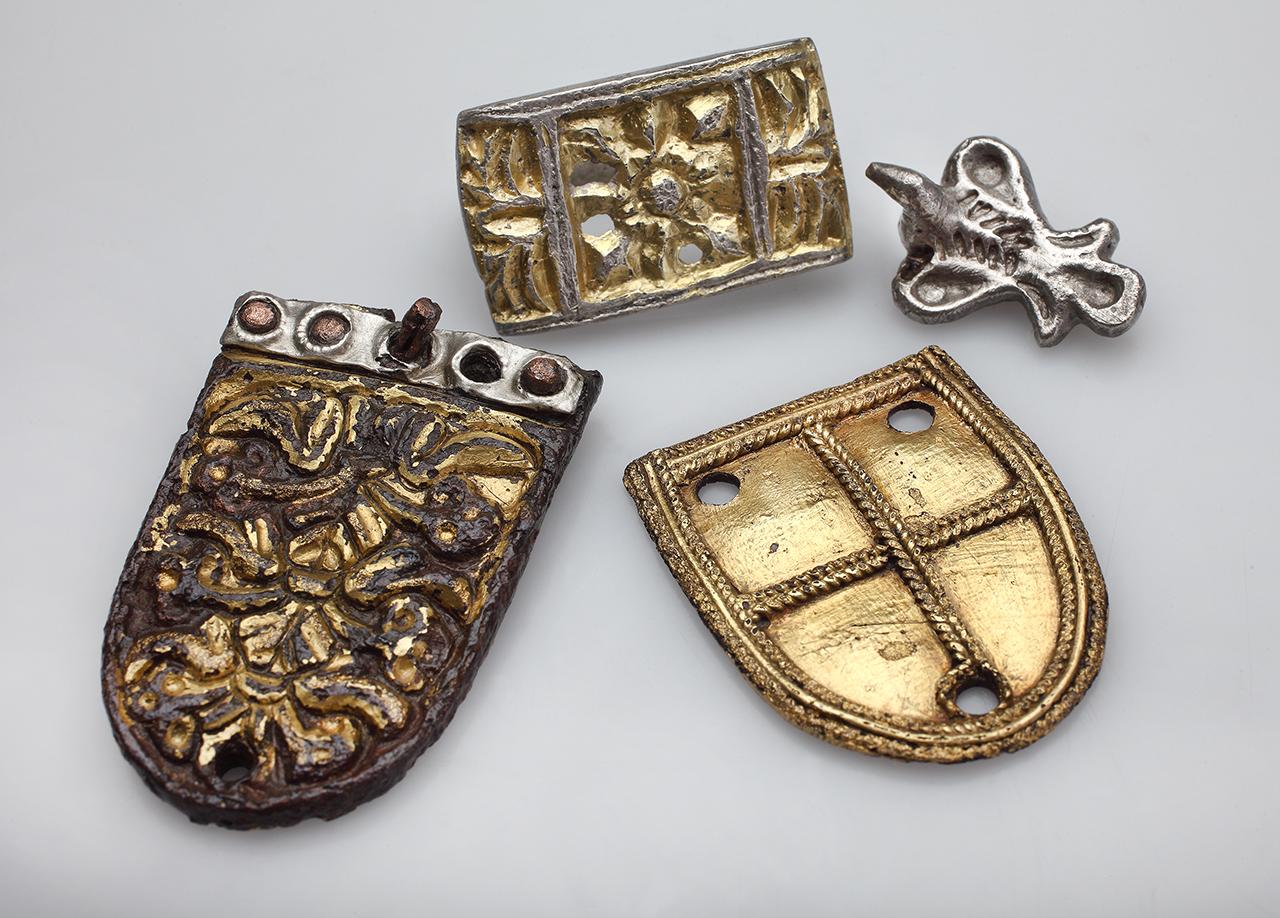
The graves of the members of the noble retinue discovered near the churches of Zalavár/Mosaburg contain a completely different material than those of the armed retinue of the late Avar period. Weapons and ornate composite belts are missing from these graves. The clothing of nobles follows the fashion of the Carolingian Empire. Belt buckles are rare, and belt tips cast in gilded bronze or even silver are even rarer.
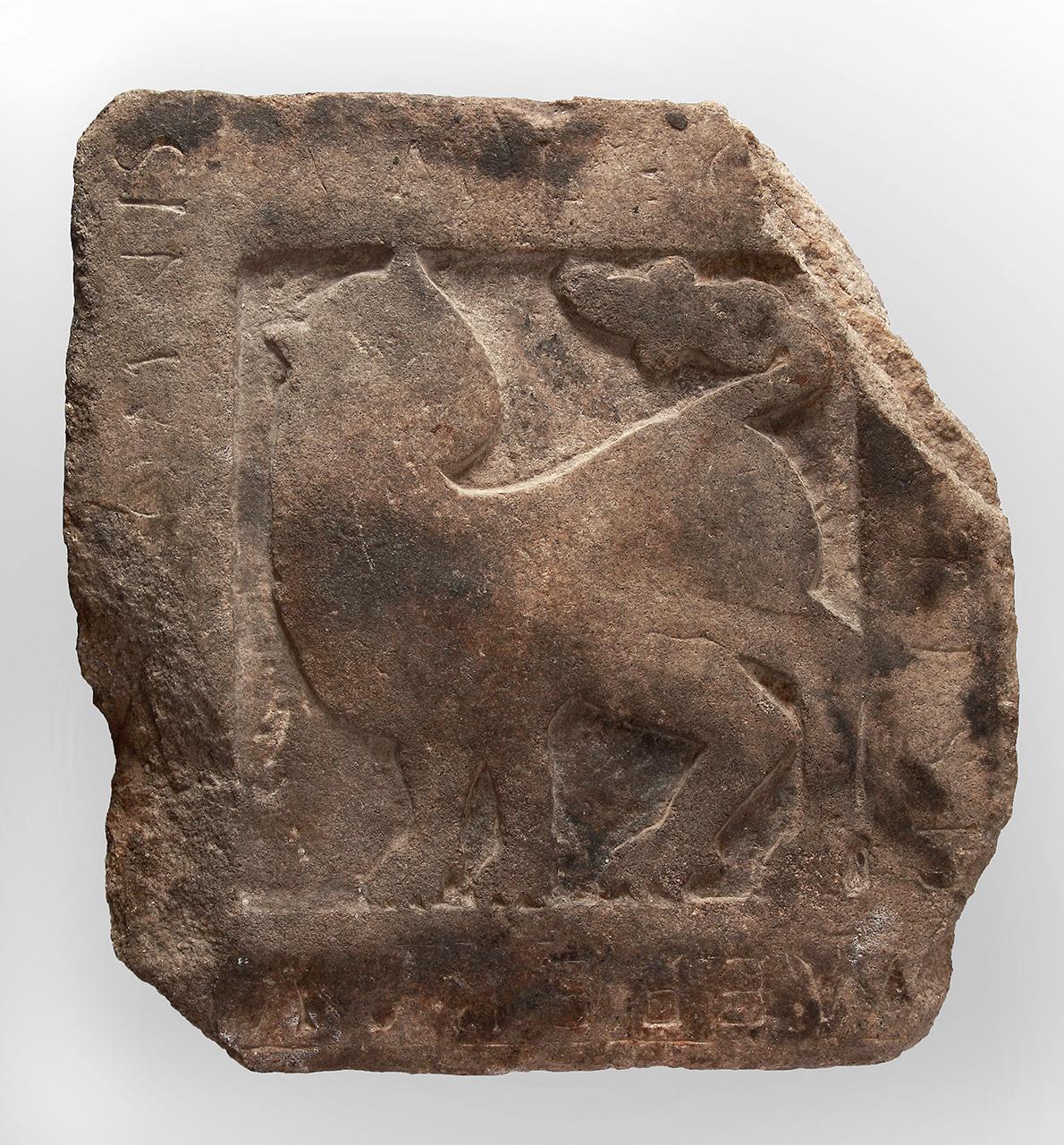
The heavily worn square floor tile shows a standing lion facing left. Its tail ends in a three-pronged tassel. The wide circular inscription is only partially legible: [S]VMLEO .../...TISD/.MEFER.V./...OMNIS. The floor tile belonged to the interior decoration of the monastery of St Adorján of Zalavár, founded in 1019, and its original location within the find is not known. Similar pieces were mostly placed in the section of the nave of the church leading to the sanctuary.