The Roman Collection is Hungary's oldest and only collection of Roman artefacts which, thanks to its Carpathian Basin scope of collection, provides a comprehensive historical and archaeological picture of not only the provinces of Pannonia but also Dacia. The collection was established at the same time with the Hungarian National Museum in 1802, and since 1927 it has been an independent unit of the Department of Archaeology. Today, the collection houses more than 70,000 inventoried artefacts, and its staff are preserving, managing and developing one of the most significant and most complete assemblage of Roman objects in Europe. Our finds come mainly from the major military, urban and cultural centres of Pannonia, especially Brigetio (Komárom-Szőny), Intercisa (Dunaújváros) and Aquincum (Budapest-Óbuda).
Contact: Zsolt Mráv mrav.zsolt@mnm.hu and Tamás Szabadváry szabadvary.tamas@mnm.hu
History of the collection
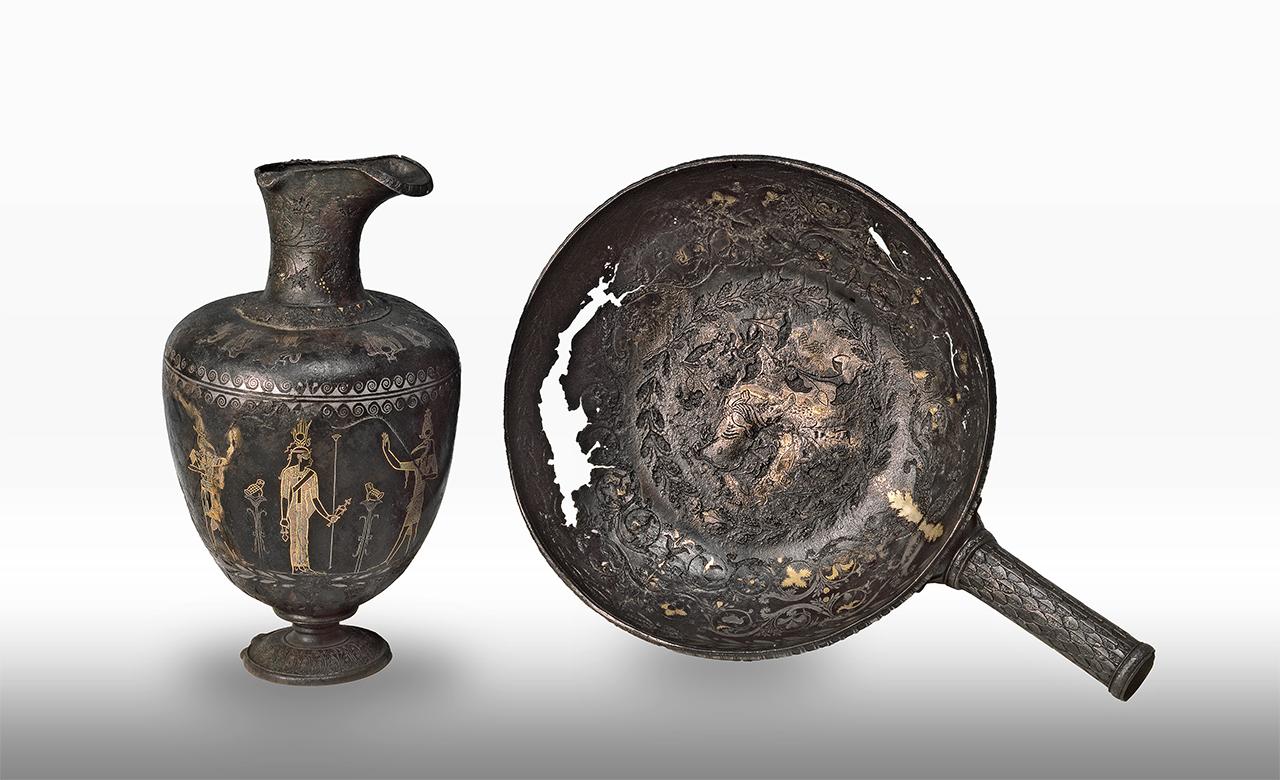
The growth of the collection was enhanced, besides the conscious collecting work, donations motivated by cultural and patriotic commitment. As a result, a number of unparalleled works of art were acquired by the museum of the nation. Among them, a folding silver stand found on Kőszárhegy near Polgárdi, a hand-washing set of gold and silver-encrusted vessels decorated with Egyptian gods and Nile scenes found at Egyed, or a Savarian (Szombathely) ivory statue of the personified figure of Autumn are unique finds to this day. The stone-carved mythological reliefs on the tombs in the Lapidarium depict heroes and stories from Greek and Roman mythology. The Roman Collection also houses the most important collection of imperial chariot tombs, recently enriched with three recently excavated tombs (Budakeszi, Budaörs tomb 162, Sárisáp). The custom of burying the carts – and often the harnessed riding horses and hunting dogs wtih them – necessary for the journey to the afterlife was cultivated by the local indigenous elite, who, in Roman times, still adhered to their ancient belief in the other world.
Enriching the collection
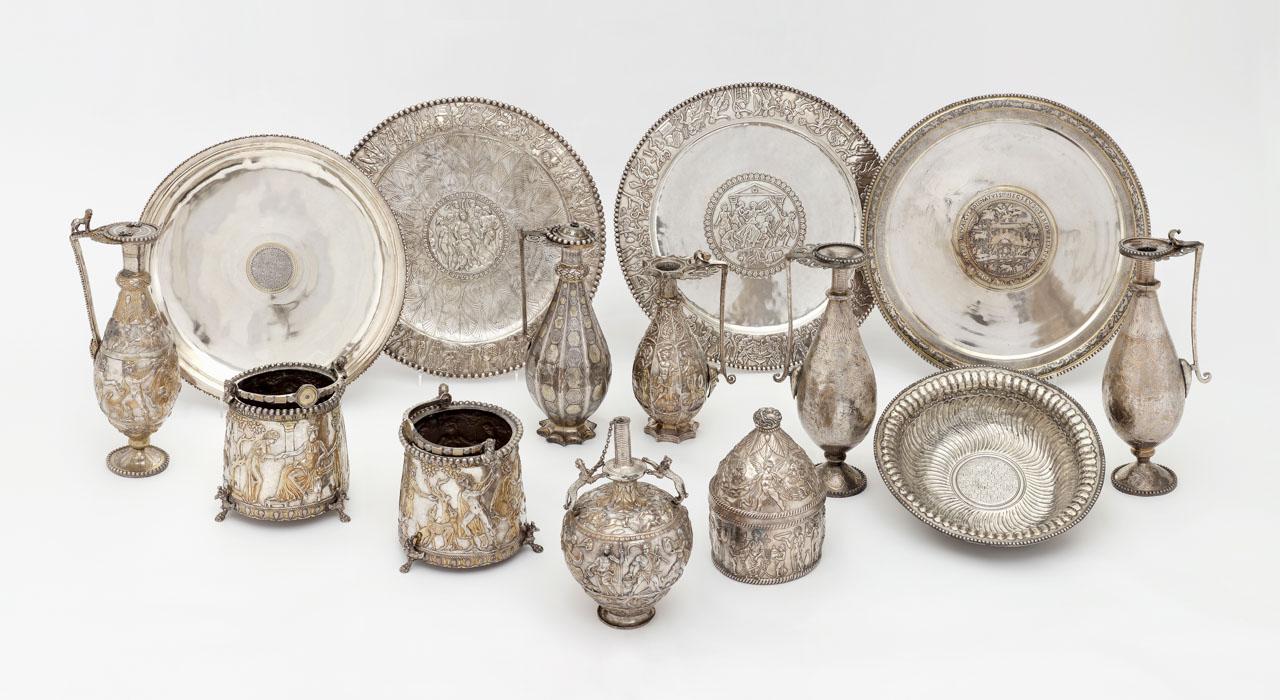
Excavations are another major source of growth for the collection. For decades, the staff of the Roman Collection have been researching the sites of major academic interest in Pannonia. There is a long tradition of archaeological research of the limes and the late Roman inner fortresses (Ságvár, Heténypuszta, Környe), which have revealed a series of finds and buildings of outstanding importance. An unprecedented increase of artefacts of The Roman Collection to date took place in 2014 and 2017, when the collection welcomed 15 of the currently known objects of the Seuso treasure. The silver vessels of the Late Roman Treasure Collection are among the most outstanding works of art in universal art history, providing an insight into the classical culture and sumptuous feasts of the late imperial Pannonian elite.
The Seuso treasure is a treasure trove from the late Roman Imperial period (4–5th century). It takes its name from Seuso, the owner of the so-called hunter's or Seuso platter, named on the inscription. Its pieces are typical accessories of a ceremonial feast set, including vessels used for cleaning and beautification. Its owner may have hidden it in the last decades of the 4th century or early 5th century, presumably to escape a war conflict. The 4th century ensemble as we know it today consists of 14 large silver vessels and a copper cauldron in which the silver vessels were hidden. The total weight of the silver vessels in the hoard is 68.5 kg. The Seuso treasure was discovered in the 1970s. Since then it has been through many vicissitudes and hidden from the public for several decades. After years of successful negotiations, the Hungarian state recovered the currently known 15 pieces of the treasure in 2014 and 2017, which are now on display in the permanent Seuso exhibition at the Hungarian National Museum.
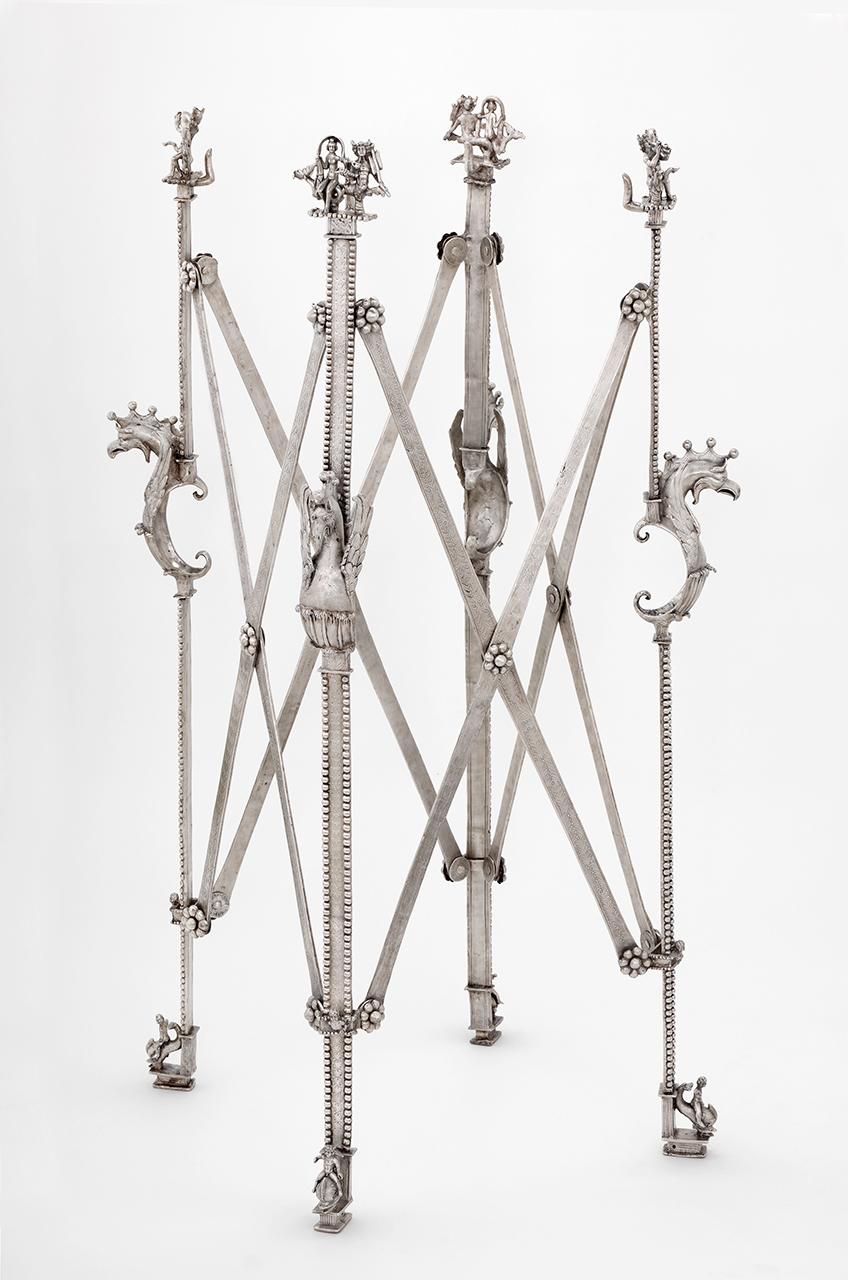
A special silver stand, fragments of which were found in 1878 on Kőszárhegy, north-east of Lake Balaton, is linked to the known pieces of the Seuso treasure. It must have been the heaviest and therefore the most valuable piece in his collection. It is still the only known late Roman silver stand, and its ornamentation makes it stand out among similar finds. The four-legged stand is decorated with sea nymphs sitting on the backs of sea centaurs at the top of the legs, with (sea) griffin heads in the centre and with child Eros figures riding dolphins at the bottom. The rims of the legs are decorated with a string of beads and leaf motifs. The stand was originally designed to hold wash basins, but could also be used for holding serving platters of various sizes.
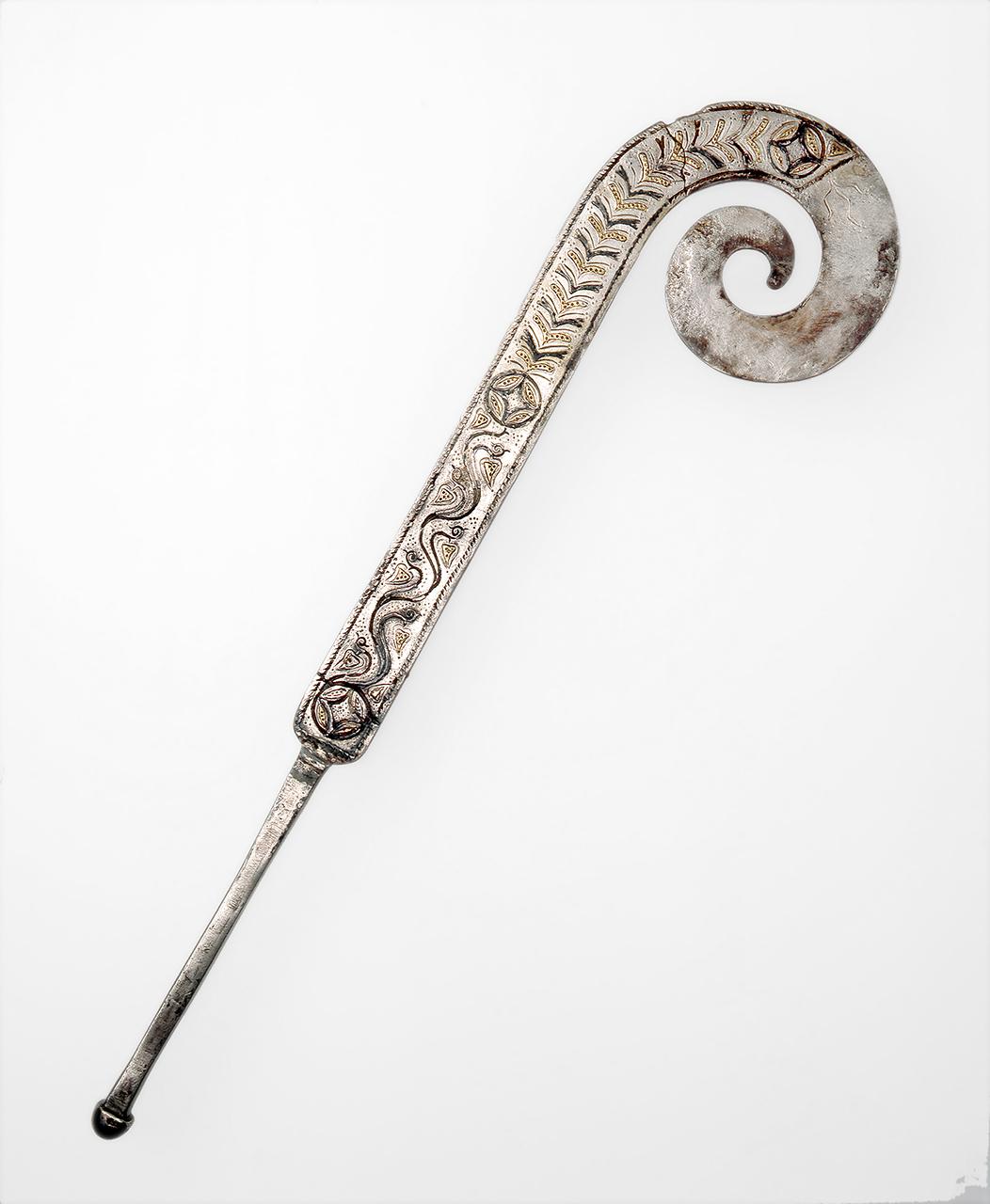
The silver staff, found in a stone sarcophagus south of the military camp of Brigetio (Komárom-Szőny), is unique among the finds from the Roman Empire. The augurs, or oracles, used a similar staff for divination and to mark the location of temples. The priest's staff is thought to have been placed in the sarcophagus as a grave marker because the deceased man may have been the last augur of the city. The 33 cm long spiral-ended augur stick is richly decorated on both sides with dark-coloured niello (silver sulphide) and gold inlaid tendril, leaf and geometric motifs. They may have formed a set with an onion-shaped fibula (clothespin), also gilded and decorated with niello, found at the right shoulder of the deceased, with fragments of cloth attached.
The vessels were found in 1831 during excavations on the estate of Count Vince Festetics in Egyed. The owner was curious to know if they were made of gold, so he took them to a goldsmith in nearby Pápa, who soaked them in acid. The process destroyed almost all the metal decoration on the vessel. The hand-washing set consists of a ewer for pouring water and a bowl with a handle for holding it. The vessels found at Egyed were made of a special metal alloy and decorated to a high standard with artistic care. The special appearance and the technique used were based on the copper alloy material, which was patinated to a matt black, and on the rich silver and gold plating on the surface. Sources refer to objects made in this way as "Corinthian bronze". The two pots found at Egyed are significant in that they are the only known pair to date that represent this technique. The inside of the bowl depicts a scene on the river Nile with a fight between a crocodile and a hippopotamus in the centre. The ewer, decorated with Egyptian gods, shows a synthesis of Egyptian and Greek art and could therefore have been made in the Greek capital of Egypt and one of the centres of ancient metalworking, Alexandria.
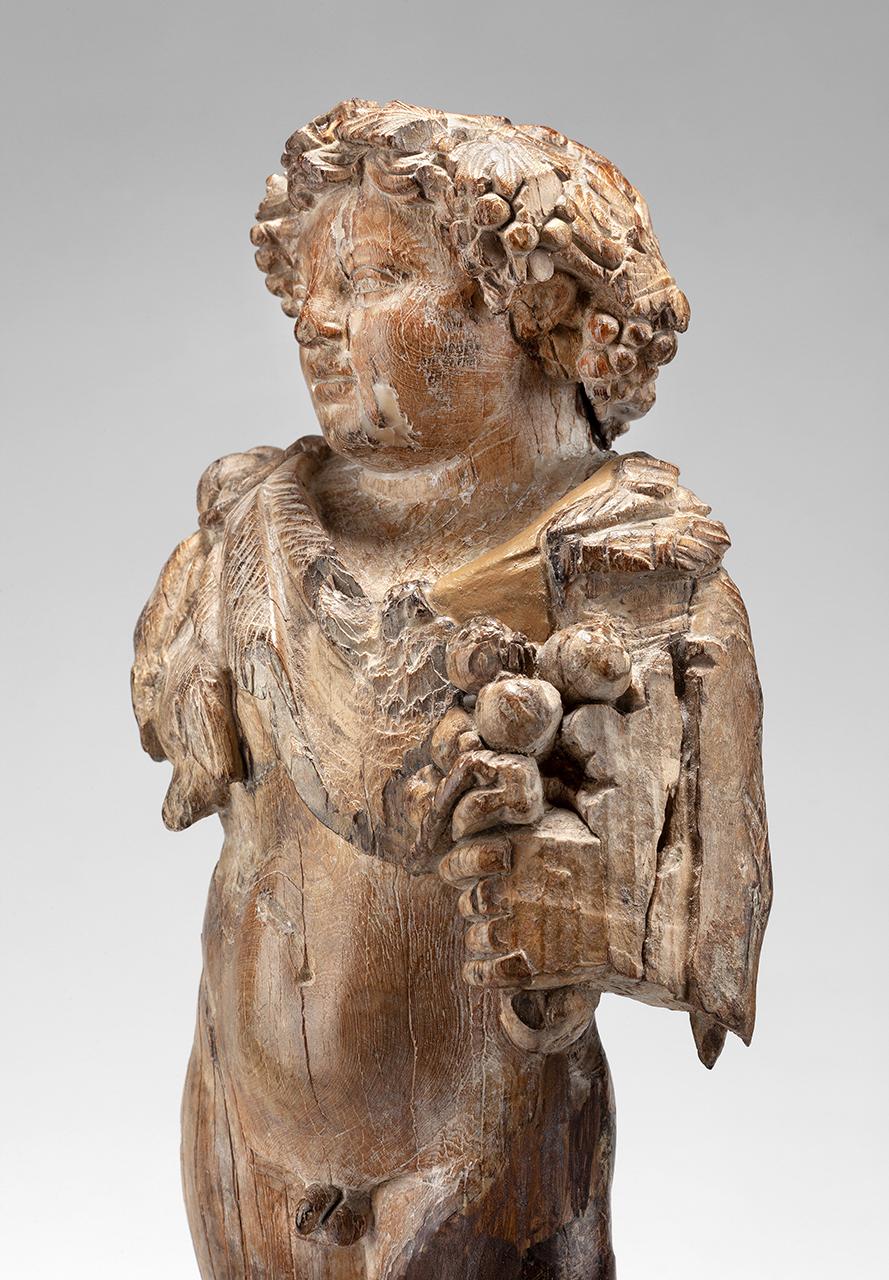
This ivory statue found in Szombathely (Savaria) in 1882, is an outstanding find in the region of Pannonia province not only for its artistic quality but also for its size. Ivory is an easily splitting, flaky material, so it was mostly used to make small objects and reliefs in Roman times, but the original height of the statue discovered in Savaria was more than 20 cm. Although it was previously considerd to be a representation of the infant Bacchus, it is in fact a personification of autumn, Autumnus. This is suggested by the wreath of grapes on the boy's head and the apples gathered in his cloak, evoking harvest, as well as the cloak itself, made of dog skin, a reference to autumn hunts. The sculpture was probably part of a composition that included sculptures of the other three seasons.