The Prehistoric Collection officially became an independent unit within the Hungarian National Museum only in 1926, despite the fact that prehistoric items had been kept and managed separately since the mid-19th century. At that time the Archaeology Department was detached from the previous Medal and Antiquities Collection, and the collection became a separate unit of the Department with storage and records of its own. Today, within the Archaeology Department, the Prehistoric Collection keeps hundreds of thousands of unique archaeological objects, divided into Neolithic, Copper Age, Bronze Age and Iron Age Collections supervised by archaeologists specialised in the respective periods. The artefacts in the collection cover a vast length of time from the emergence of food production in the Carpathian Basin to the beginning of the Roman period (late 1st century BC). Thanks to its growth during the Austria–Hungary period the collection houses important archaeological finds not only from the territory of present-day Hungary, but also from the entire Carpathian Basin. While during the 19th century the collection was enriched with fine objects mainly through gifts and purchases, from the turn of the century onwards finds from archaeological sites and excavations of settlements and cemeteries poured in an ever greater number. Today, the Prehistoric Collection's growth is ensured largely by excavation finds and planned scientific excavations.
Contact: Dr. András Füzesi fuzesi.andras@hnm.hu Prehistoric Collection, Neolithic Section
Contact: Zsuzsa Hegedűs, hegedus.zsuzsa@hnm.hu Prehistoric Collection, Copper Age Section
Contact: Dr János Gábor Tarbay, tarbay.gabor@hnm.hu Prehistoric Collection, Bronze Age Section
Contact: Bence Soós, soos.bence@hnm.hu Prehistoric Collection, Iron Age Section
Contact: Dr. Zsuzsanna Tóth, toth.zsuzsanna@mnm.hu Prehistoric Collection, bone tools
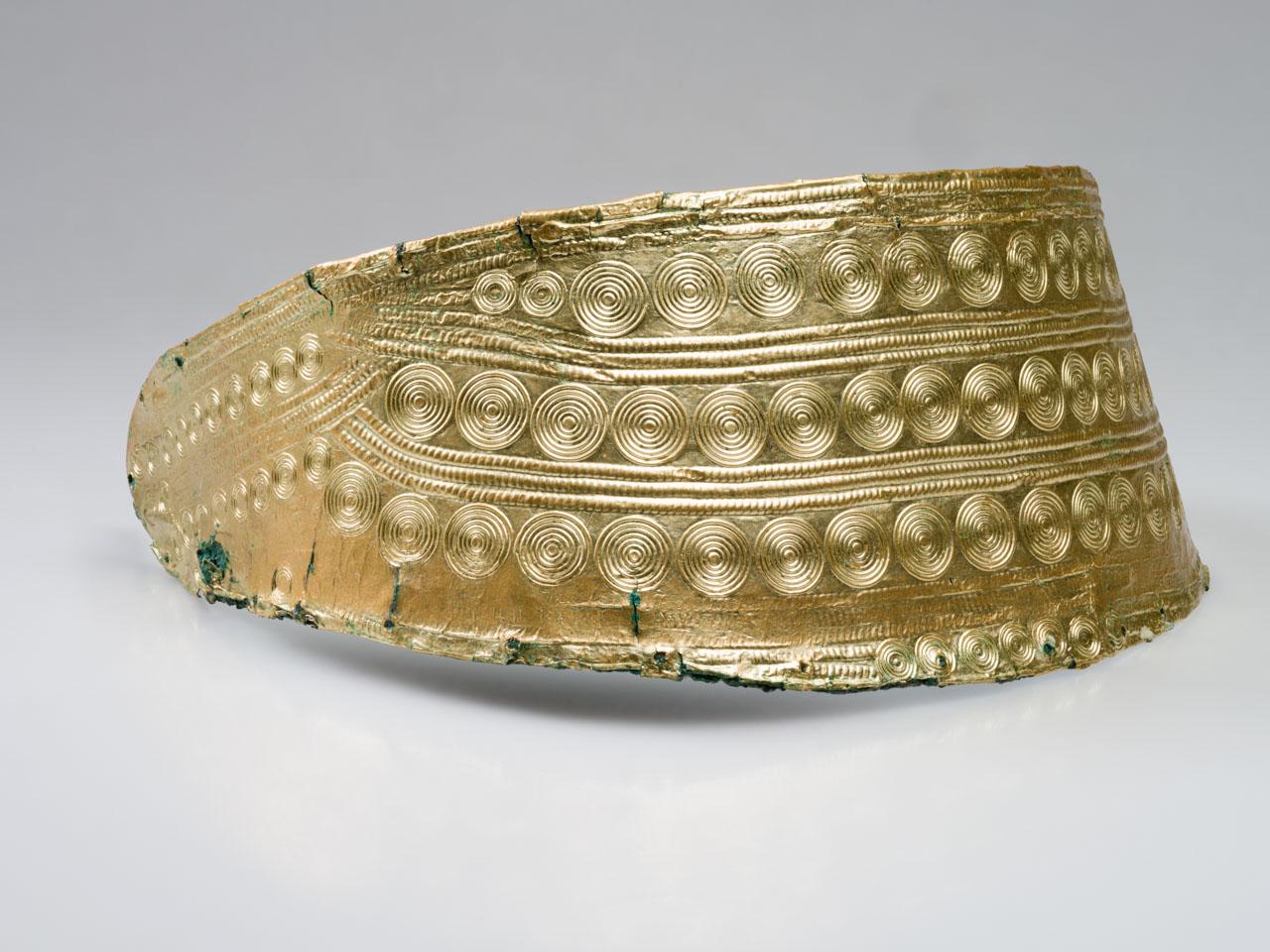
The ornate bronze necklace decorated with gold foil discovered in 2024 on Mount Somló, in the 7th ritual treasure trove, is one of the most outstanding artefacts found at the site so far. Parallels to the style of this masterpiece can be found in the urn-field culture of the Transdanubian region, the Alps and northern Europe. Based on the objects and style parallels found in the assemblage, this important piece of jewellery can be dated to the very end of the Late Bronze Age, between 900 and 800 BC.
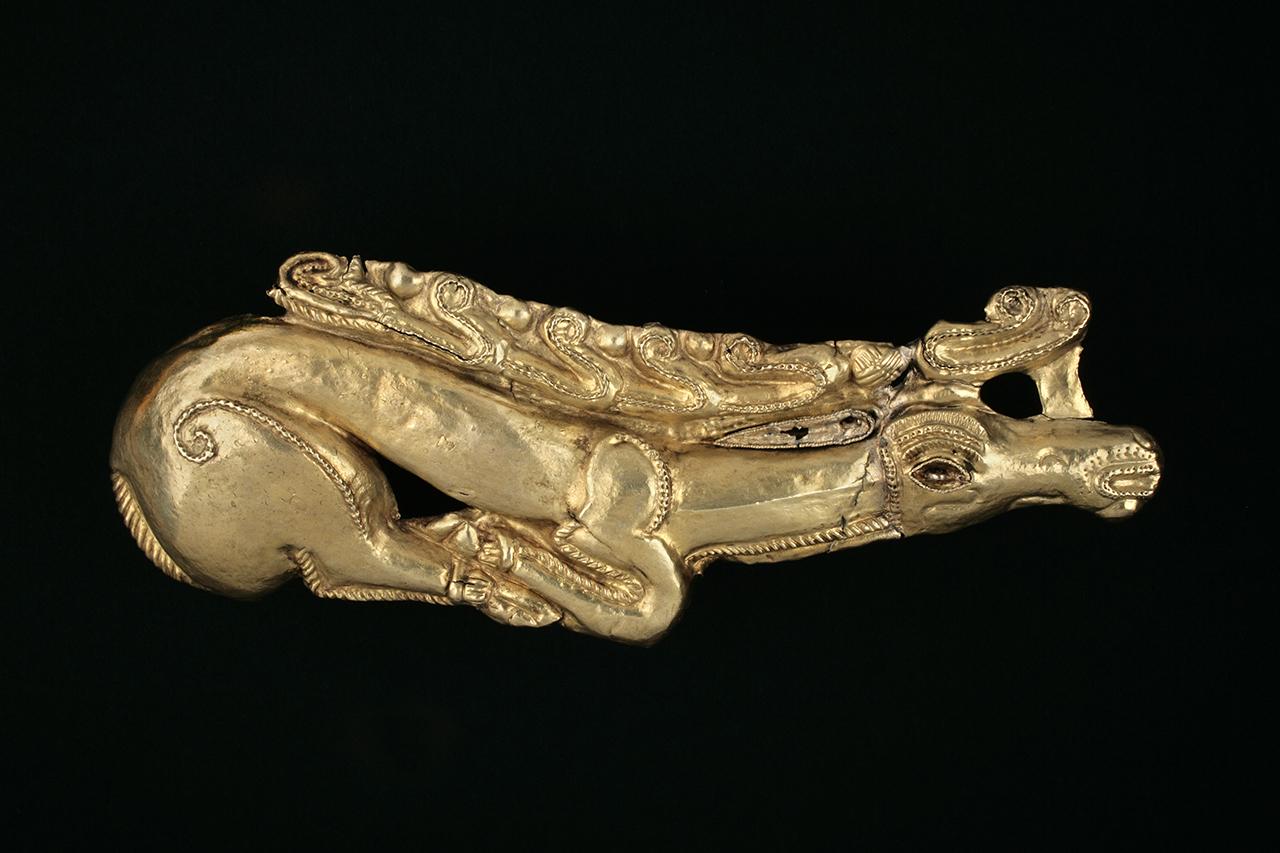
The stag figure of Tápiószentmárton, made of electrum (an alloy of gold and silver), may also have belonged to one of the most powerful people of the 6th century BC. The object, probably originally used as a quiver ornament, was cylindrically folded when it was found. Similar to the Zöldhalompuszta stag, it was made in the Scythian animal style, and it may have been crafted by a master silversmith active on the Northern shores of the Black Sea.
A gold bangle with cast bull's head terminals from an unknown site, probably from Transylvania. Unlike its counterpart from Târgu Mures, its horns are missing. The representative gold object may have been an object of prestige. The date of this scattered find, without archaeological context, is uncertain, some researchers dating it to the Middle Bronze Age, others to the Early Iron Age (site unknown, "Transylvania")
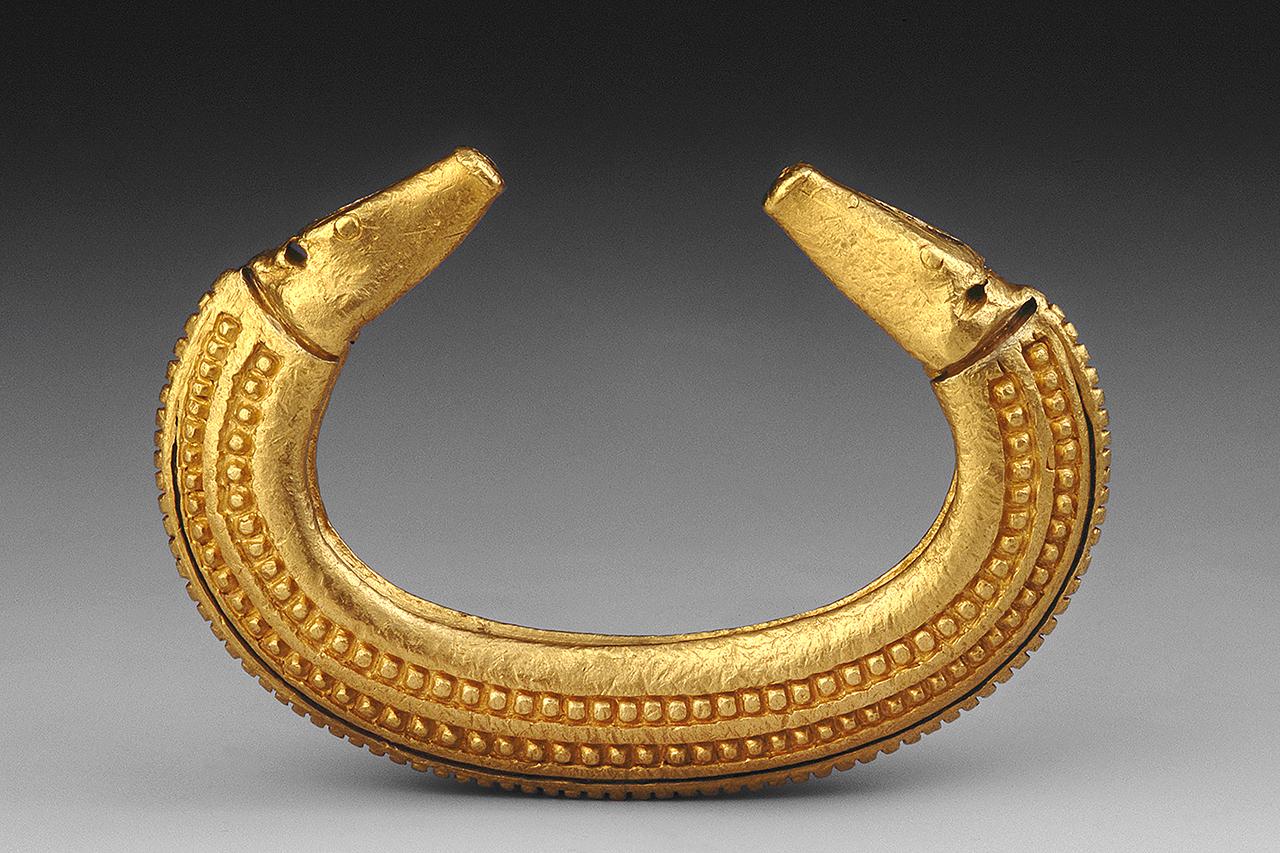
Gold bracelet with scattered mooncrowned ends from Dunavecse, Danube Valley. The surface of this representative piece of jewellery, probably worn by the elite of the time, shows delicately punched patterns and celestial bodies. Exact parallels of the object are known, the closest stylistic links between its designs can be observed on decorated hair rings and gold bracelets from Tápióbicske and Bellye. Bronze Age research, following Tibor Kovács, dates the find to the end of the Middle Bronze Age, 1600–1450 BC.
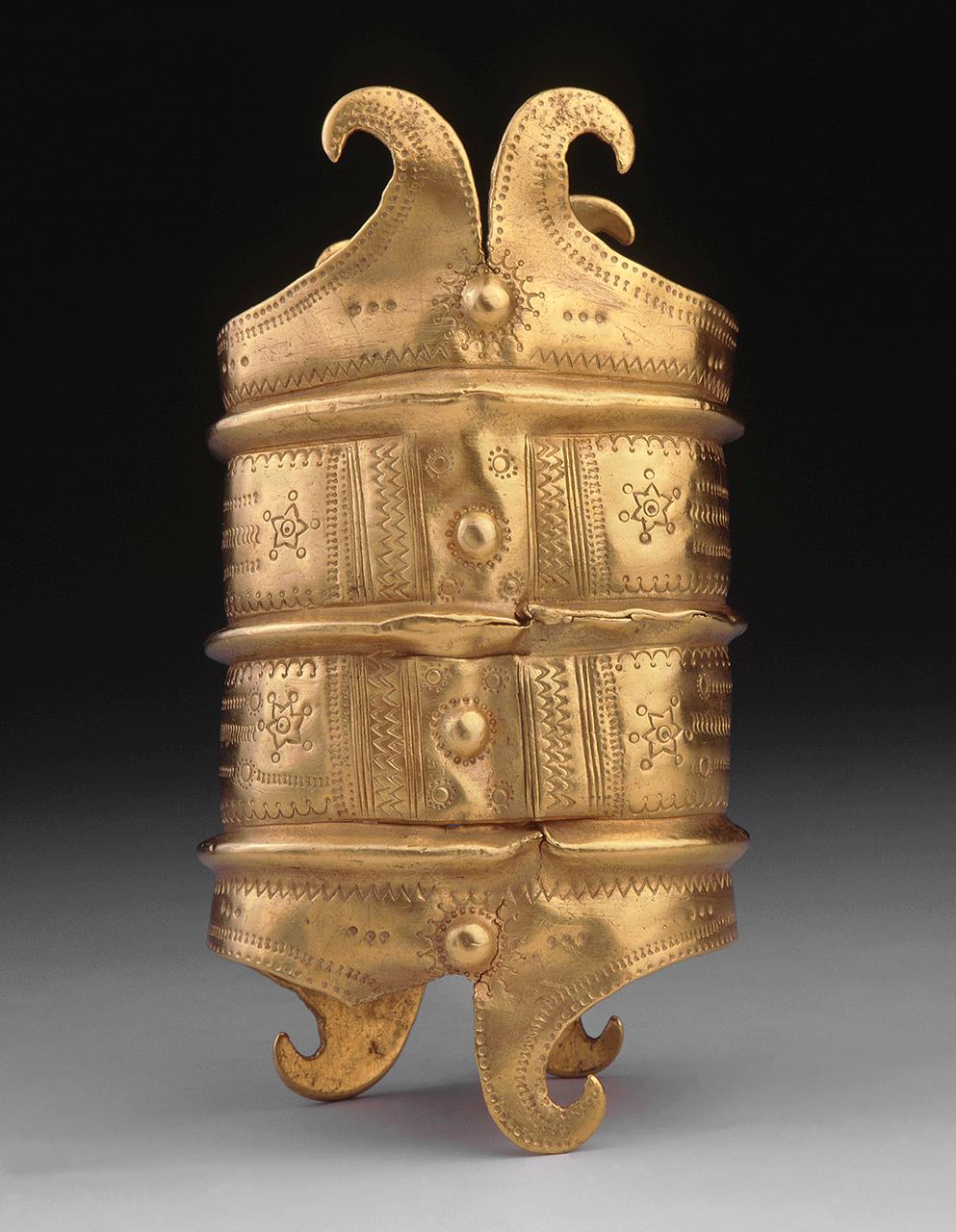
The Late Bronze Age (1400–1300 BC) find, weighing several kilograms, was discovered in 1847 by the son of the lord's "Gipsy-smith" while herding cows not far from a pear tree. The artefacts were looted by the local population and the site was vandalised, prompting the local authorities to seize it. The Hungarian National Museum preserves part of this representative jewellery ensemble, which consists of five large and three smaller pendants, 64 gold beads, 2 gold bangles and 86 gold chained rings. The rest of the treasure trove is lost, and a smaller part of it (7 gold pendants, 3 gold rings, 239 gold beads) was in the possession of the Mihályi family of Marmaros for a long time until it was purchased by the Museum of National History of Romania (Muzeul Național de Istorie a României)in 2016.
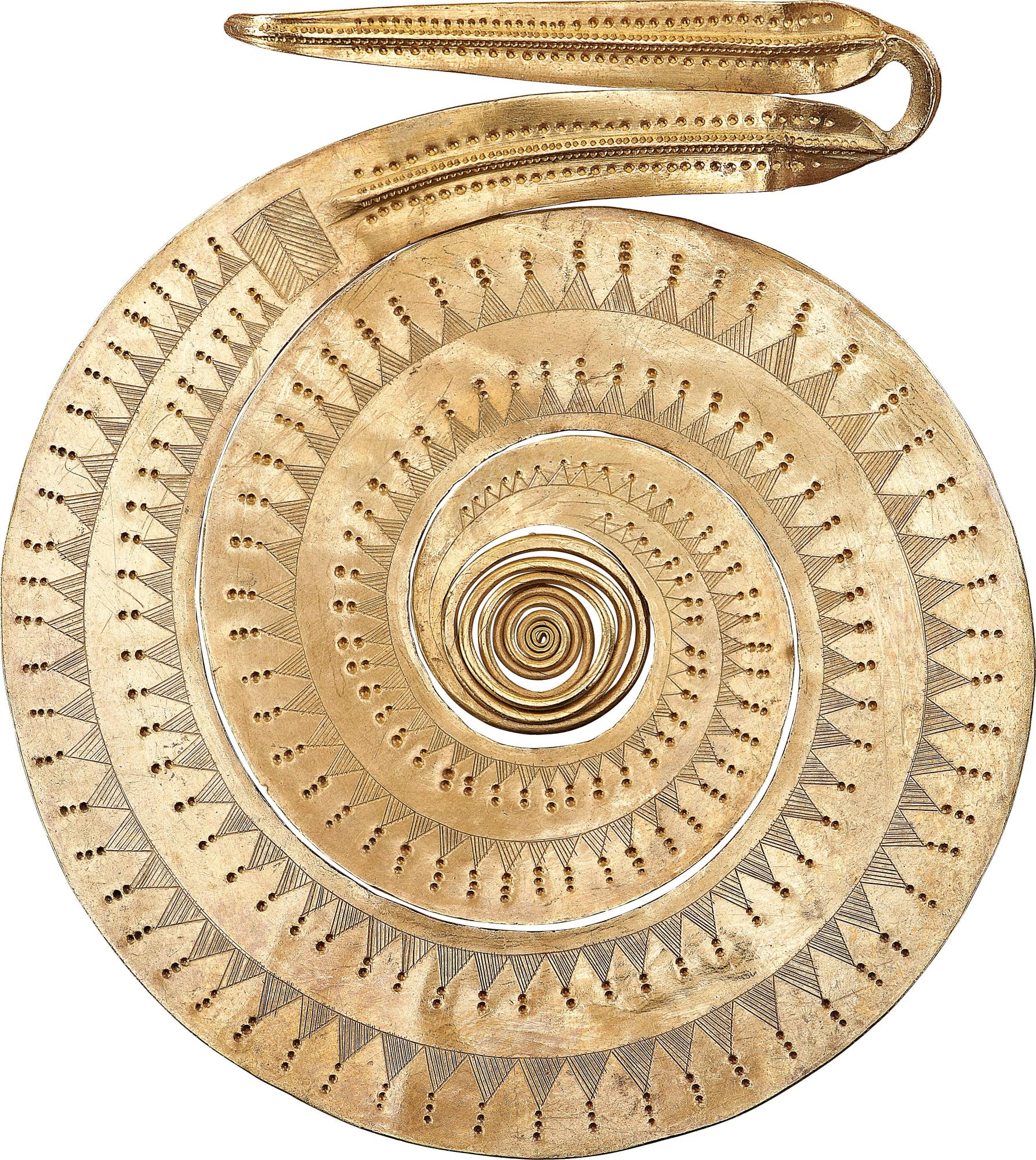
A ritual vessel of the Middle Bronze Age (1900–1700 BC) from the cemetery of Tiszafüred-Majoroshalma, in the Füzesabony style, is a so-called askos. The vessel depicts a mixed creature with the body of a bird and a human head.
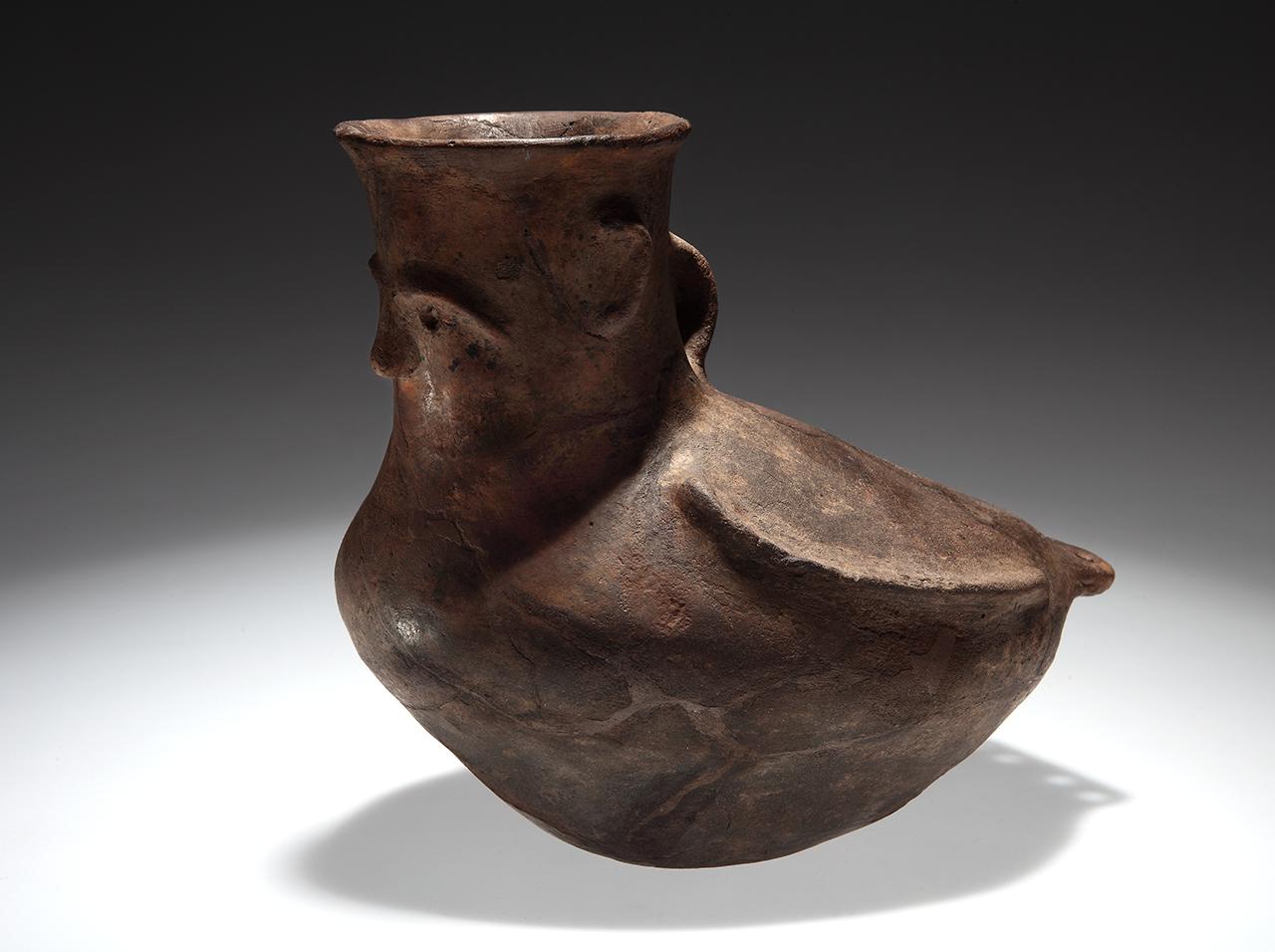
Stylized bronze waterfowl figurines made by wax casting. Their bodies show ornamentation of plastic ribs and grooves. The back of the unknown find (left) has suspension ears, the head of the other one, from Csicser (right) has horns. The scientific analysis of the bird figurine recovered from Liptovský Hrádok suggests that these objects may have been grease lamps (Csicser and unknown site, 1050–800 BC)
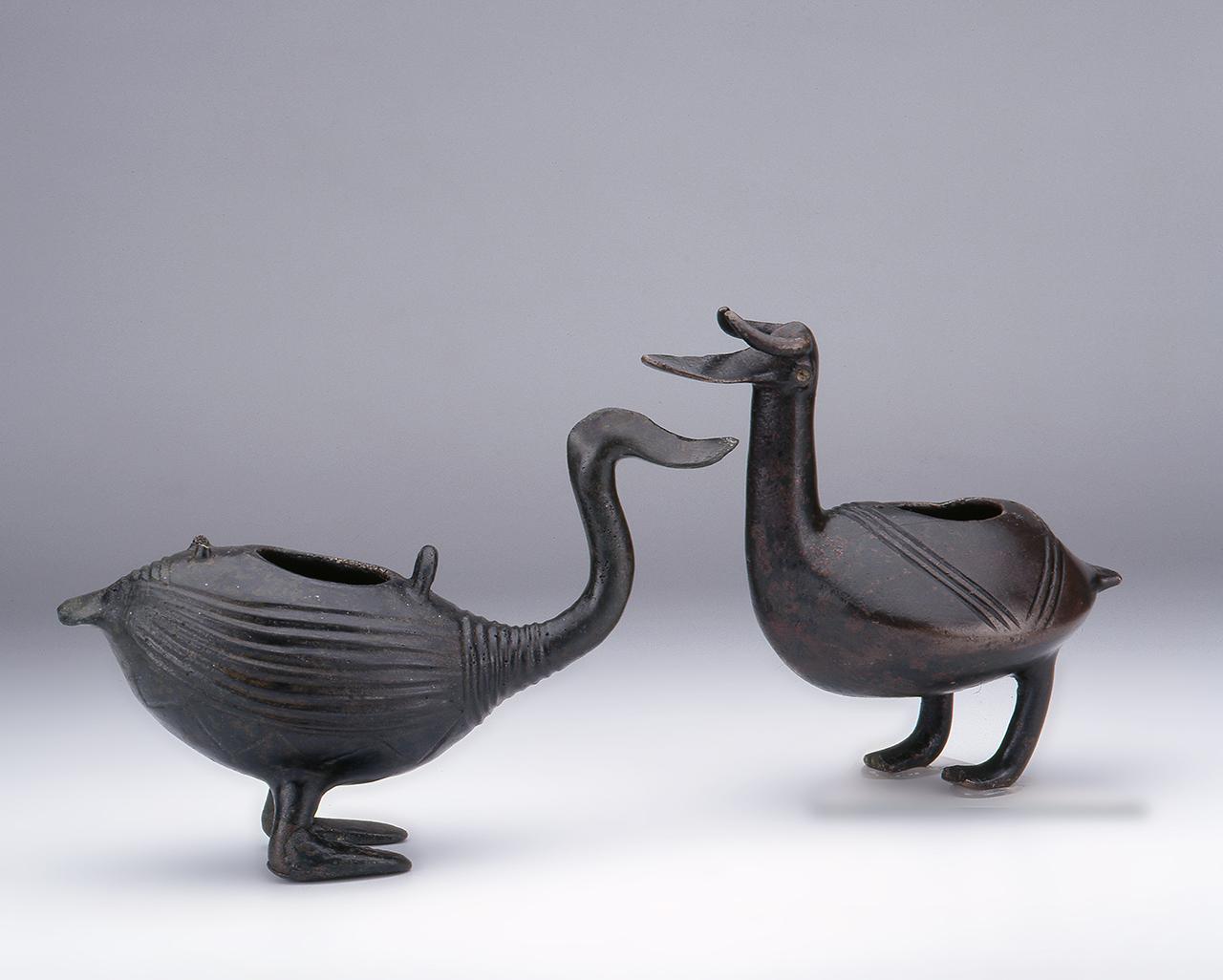
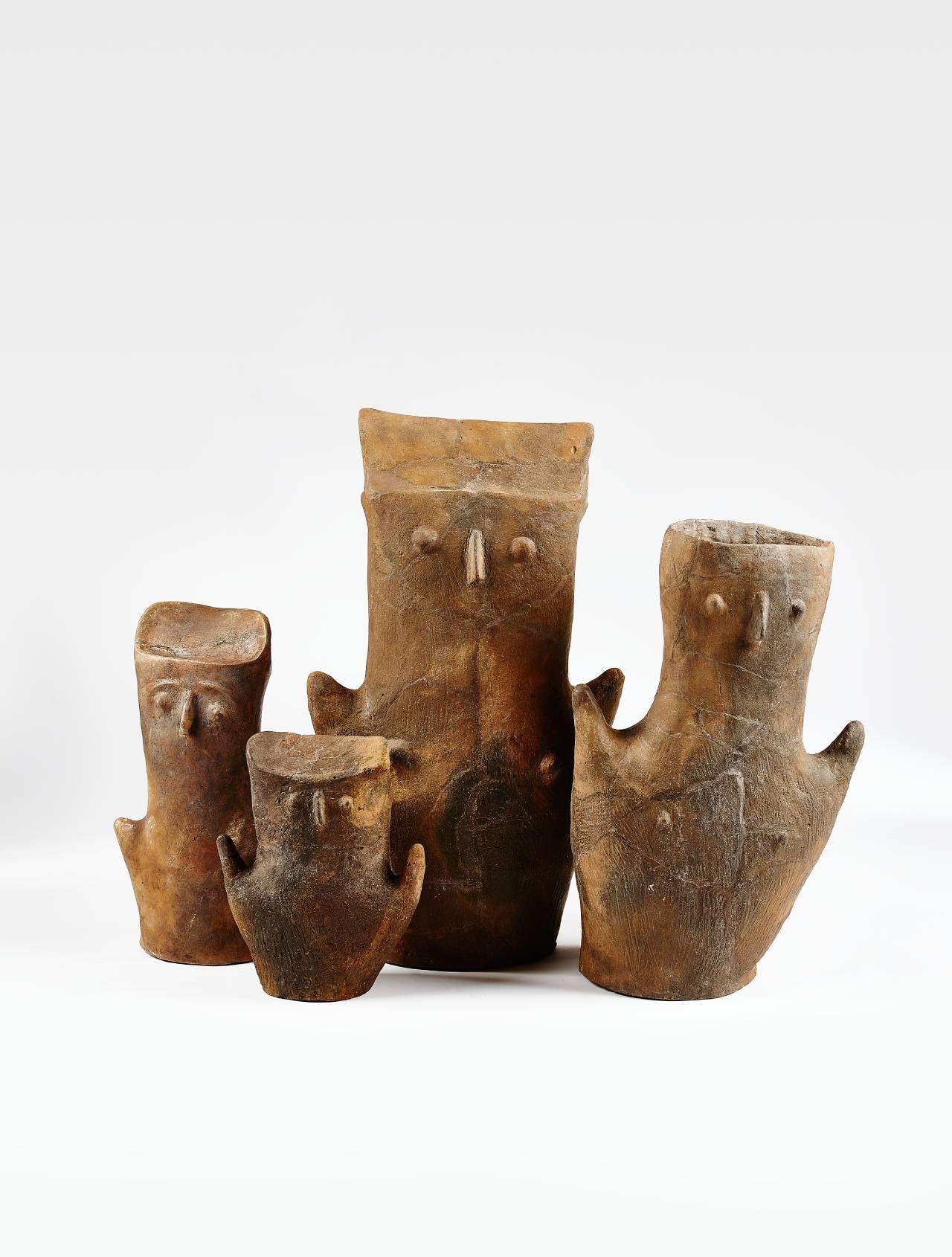
The anthropomorphic urns were found at the Ózd-Center site in 1958, in a stone-lined burial pit. The objects are related to the late Bronze Age Baden culture (3300–2800 BC), a group of people, mainly from the Sajó Valley, who in mostly placed the ashes of the deceased in human-shaped urns. Although the urns are highly schematic in their representation, they were designed in different ways, which suggests personalised manufacturing. Examination of the ashes recovered from the three urns revealed that the largest one preserved the remains of a middle-aged woman, while the two smaller ones held those of two children (Late Bronze Age, Baden culture)
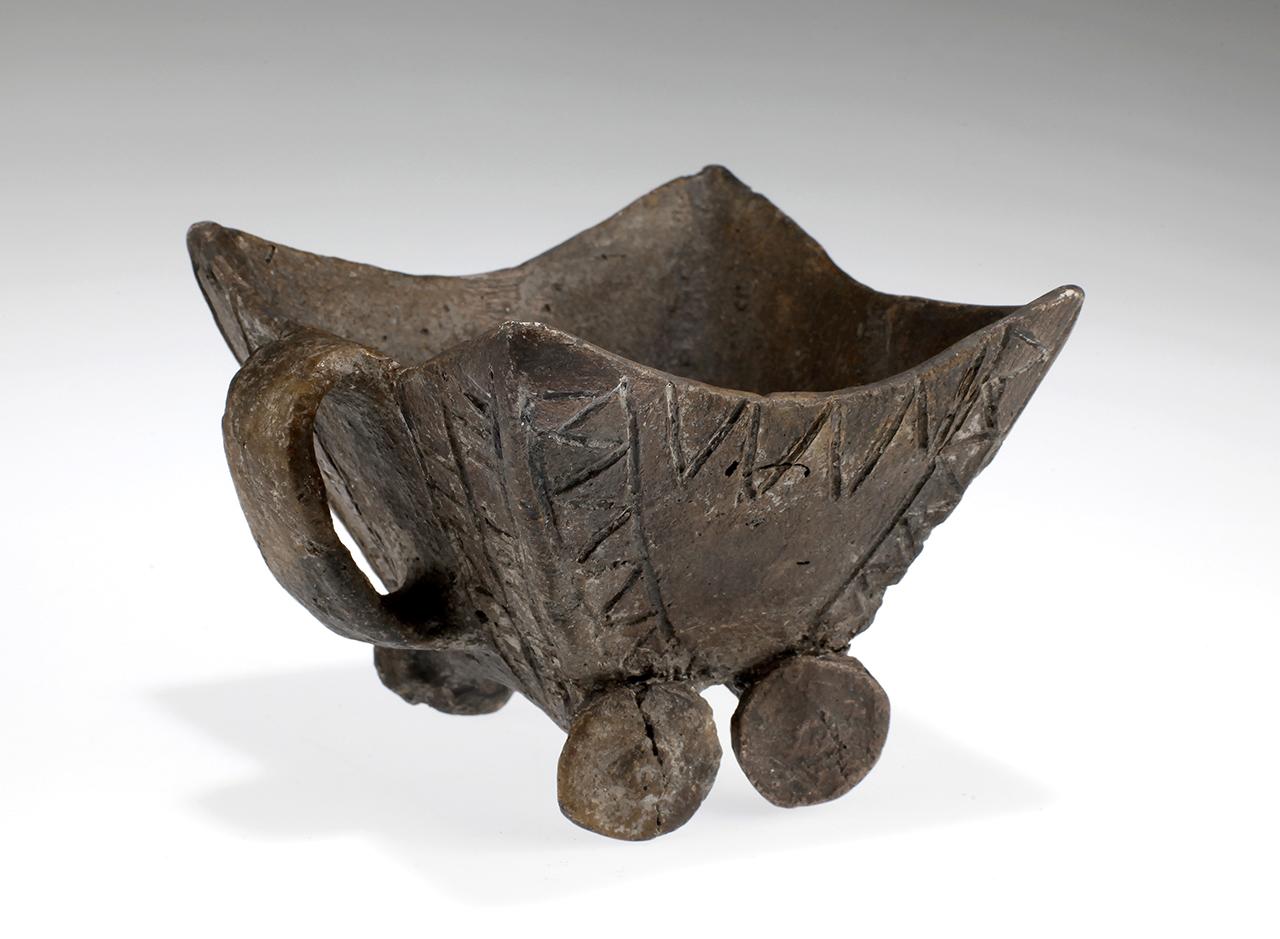
The model, an eared, cart-shaped vessel, was discovered in 1972 in Szigetszentmárton from a grave dating to the late Bronze Age Baden culture (3300–2800 BC). At the bottom of the ornate model, the round, roller-like wheels are connected by cylindrical shafts. Carts appeared in the middle of the 4th millennium BC, interestingly over a vast area at the same time: there are early finds of them from the Alps to the Caucasus, from northern Germany to Mesopotamia. Even today, research is still unable to delineate the core area of the emergence of these vehicles, presumably because the technological knowledge of how to assemble and use them spread rapidly. In addition to their practical function, i.e. in facilitating transport, they also had an important prestige function, making their owners more mobile. Thus, the models that represented carts in funerals may also have been important markers of the prominent social role of the dead.
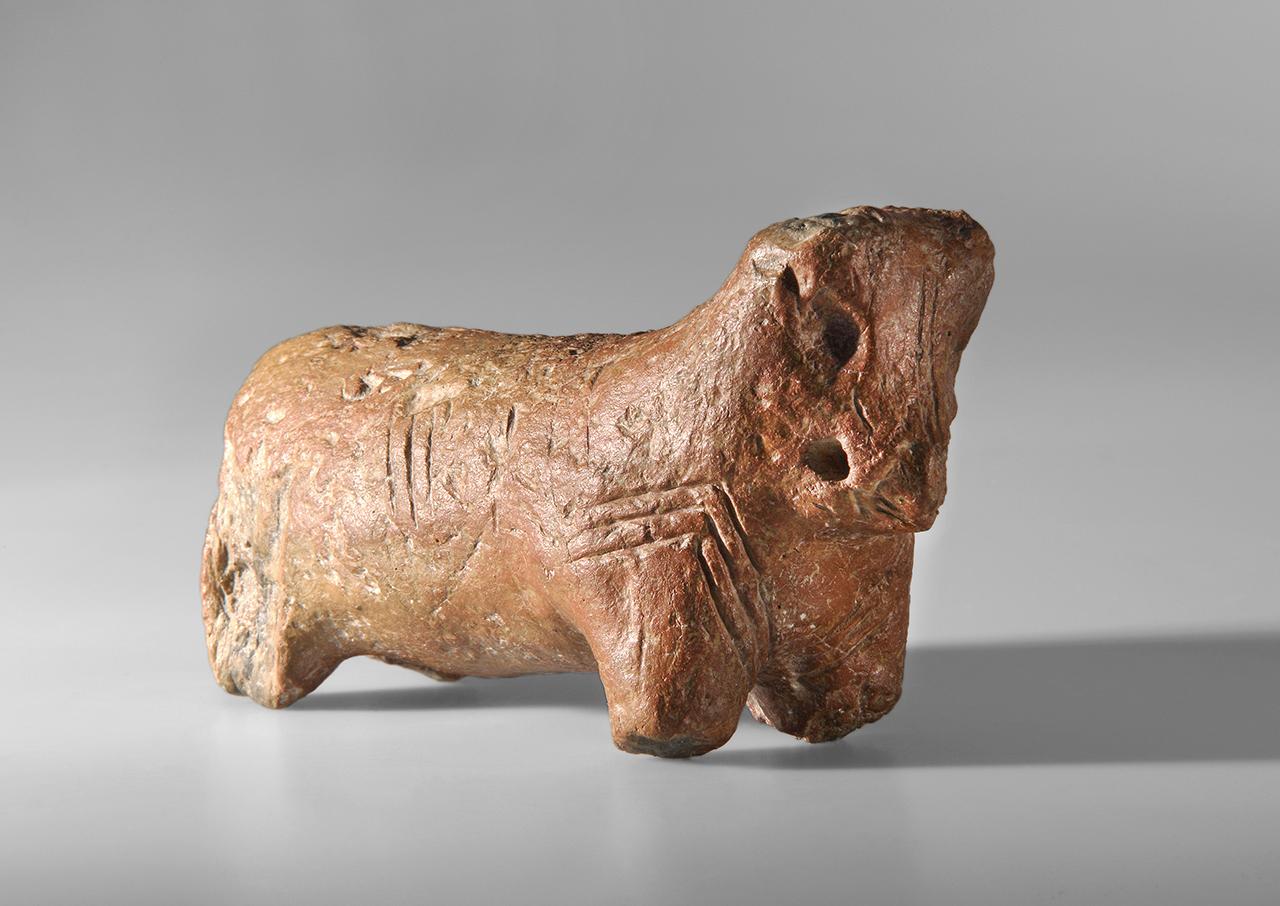
The site of Szentgyörgyvölgy-Pityerdomb was one of the earliest settlements of a food-producing community in the Southwest Transdanubian region. The small cattle figurine attests to the importance of animal husbandry and specifically to the species depicted. At the same time, it also draws our attention to the fact that in these early egalitarian societies, rituals and ritual tools, pictorial representations of symbolic significance were of great importance in expressing, reinforcing and transmitting community values.
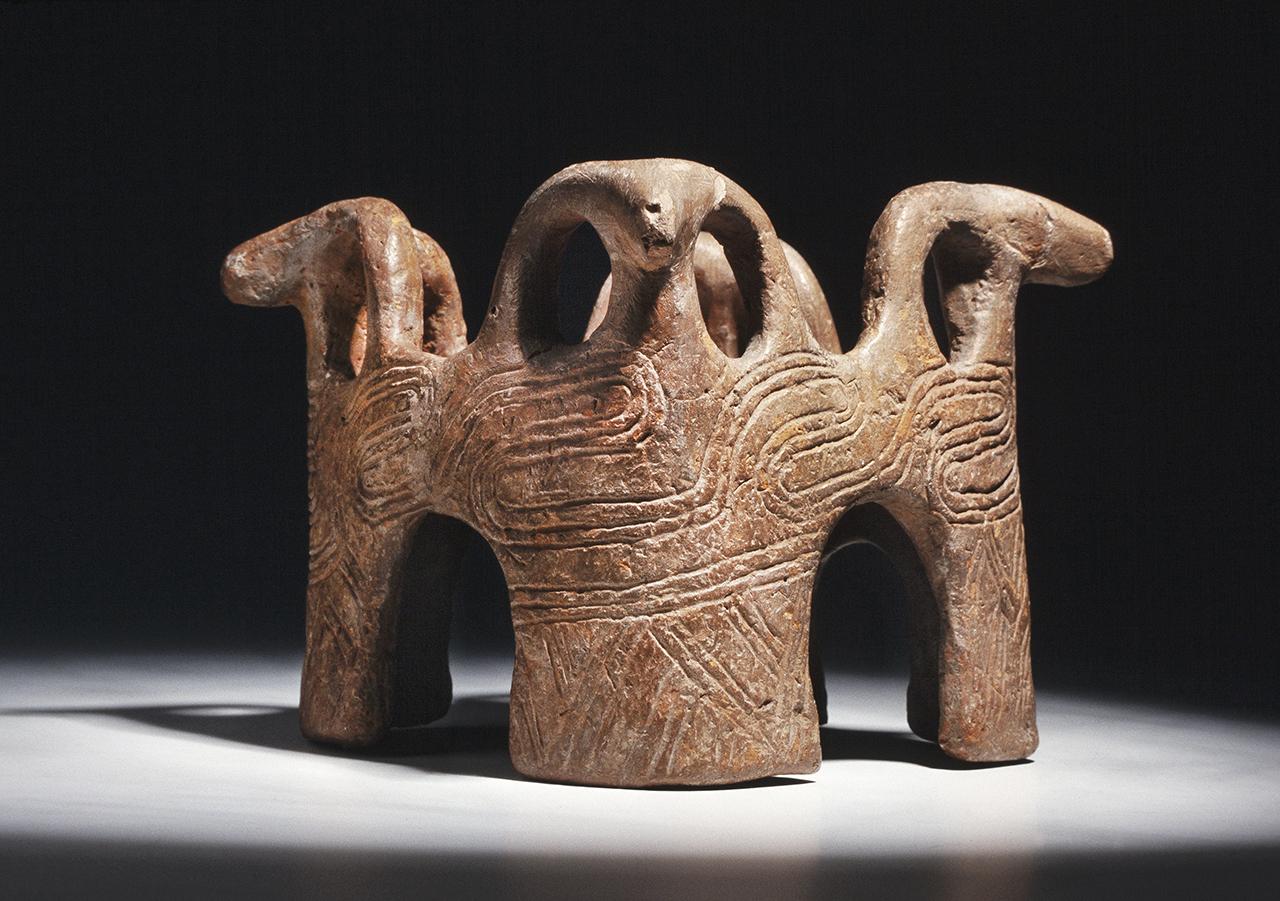
It was in the Southern Great Plain region that early settlements of farmers first appeared, bringing with them a new landscape of plants and animals. These species acquired a symbolic meaning in their material culture, as can be seen in the sculpture of a ram or goat's head on the four corners of a clay altar from the Szeged area. The small triangular or rectangular clay altars were a dominant object type in the material and spiritual culture of many aspects of South-eastern Europe, where this type of object was used in rituals within the household.
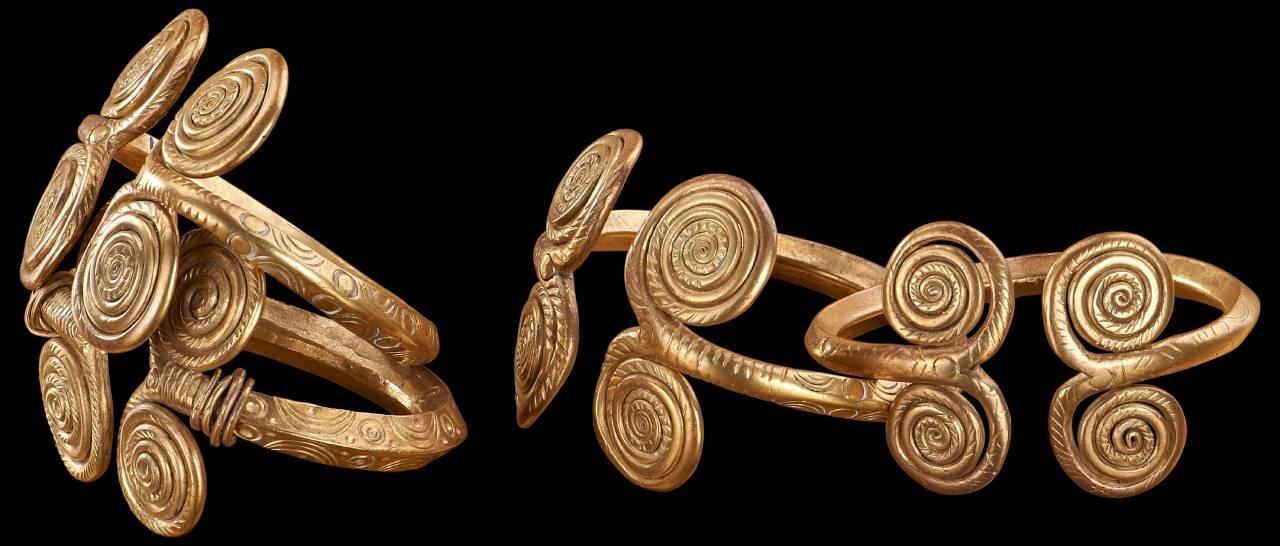
The four spiral-ornamented gold bangles were found as part of the Besenyszög-Fokorúpuszta treasure discovered in 1878. The find is a relic from the turbulent transition period between the Late Bronze Age and the Early Iron Age (9th to 8th centuries BC), an era of mixed tradition and innovation, in which gold bangles represent the tastes of the Late Bronze Age elite.
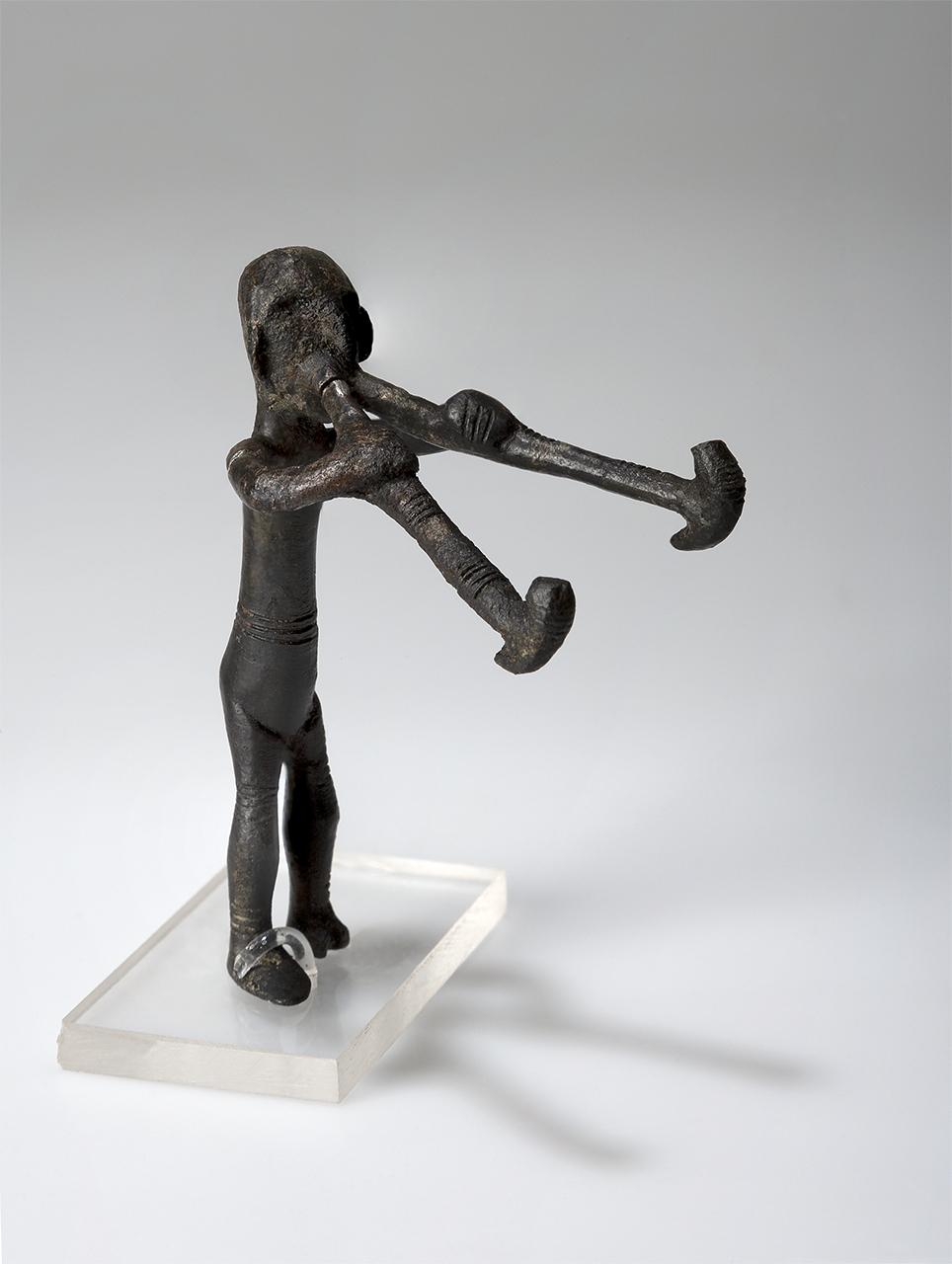
The bronze statuette was found in Százhalombatta, one of the most famous sites of the early Iron Age in Transdanubia. The holes in the feet of the figure playing the two-stringed flute (aulos), suggest it was part of a larger composition, perhaps a group of statues depicting a festive procession, probably placed on an object similar to the famous Strettweg chariot.
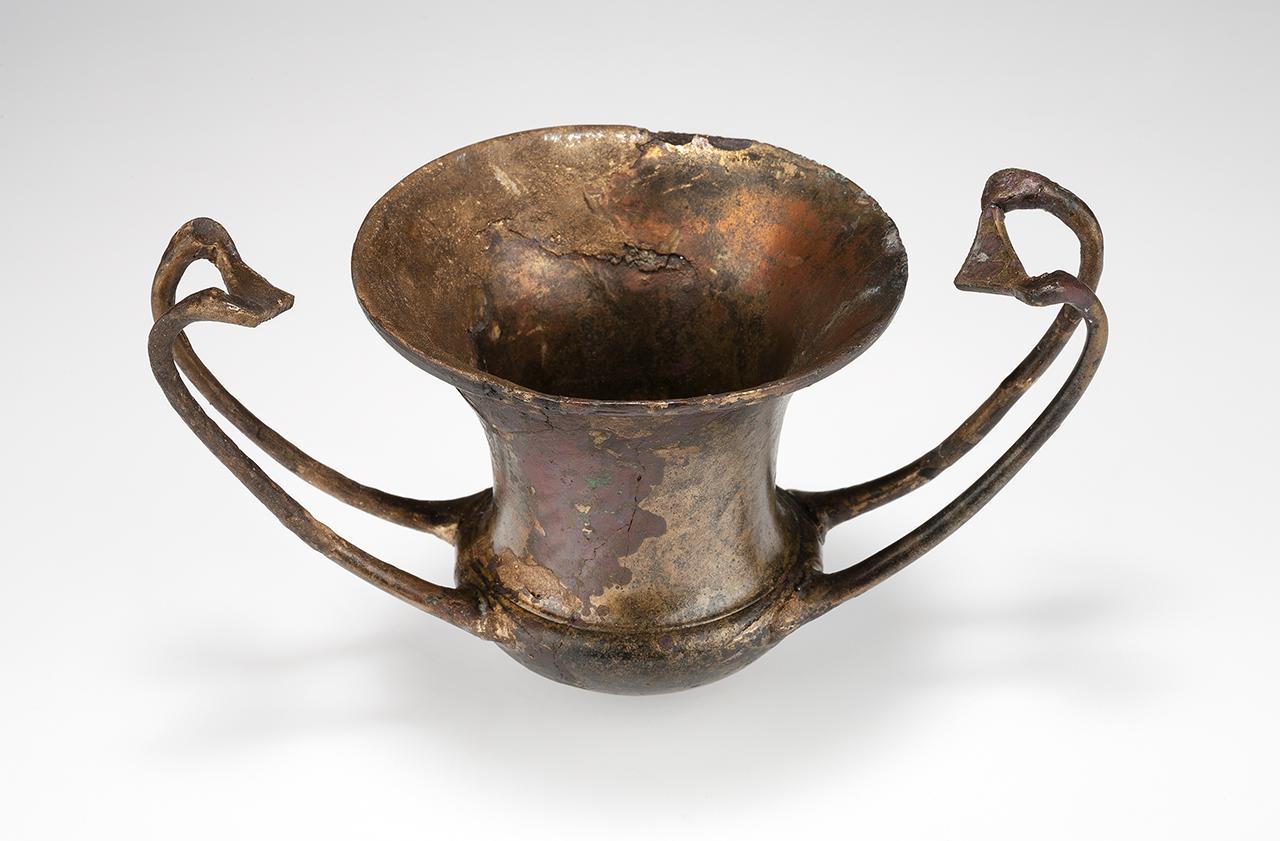
The small bronze vessel was found in a Celtic tomb on the outskirts of Szob in 1935. It was probably made in a Greek workshop in the late 4th century BC or early 3rd century BC. It is not clear whether it was brought to the Carpathian Basin by trade or as booty during the Celtic campaigns.