The basic aim of founding the collection was to collect archaeological objects from the period of the Turkish occupation of Hungary (1526–1699). However, its composition is richer than this, as it includes artefacts of Turkish origin, mainly metal objects, dating from the 16th to 18th centuries, acquired from the ground, from archaeological excavations and through purchases and donations. Internationally, the Balkan-Turkish silver cups and the seal and signet ring material are also outstanding. Because collecting began as early as in the second half of the 19th century and the fact that a significant number of objects originated from the territory of historic Hungary, especially from the southern region, the collection of copper and bronze vessels and utensils of Turkish origin, as well as the group of jewellery from the Balkan, have become of national importance.
Artefacts of Ottoman-Turkish origin are also preserved in several other collections of the Hungarian National Museum, notably in the Armoury, the Coins Collection and the Textile Collection.
Contact: Dr. Zsuzsa Pető peto.zsuzsa@hnm.hu, phone: +36 30 799 0852
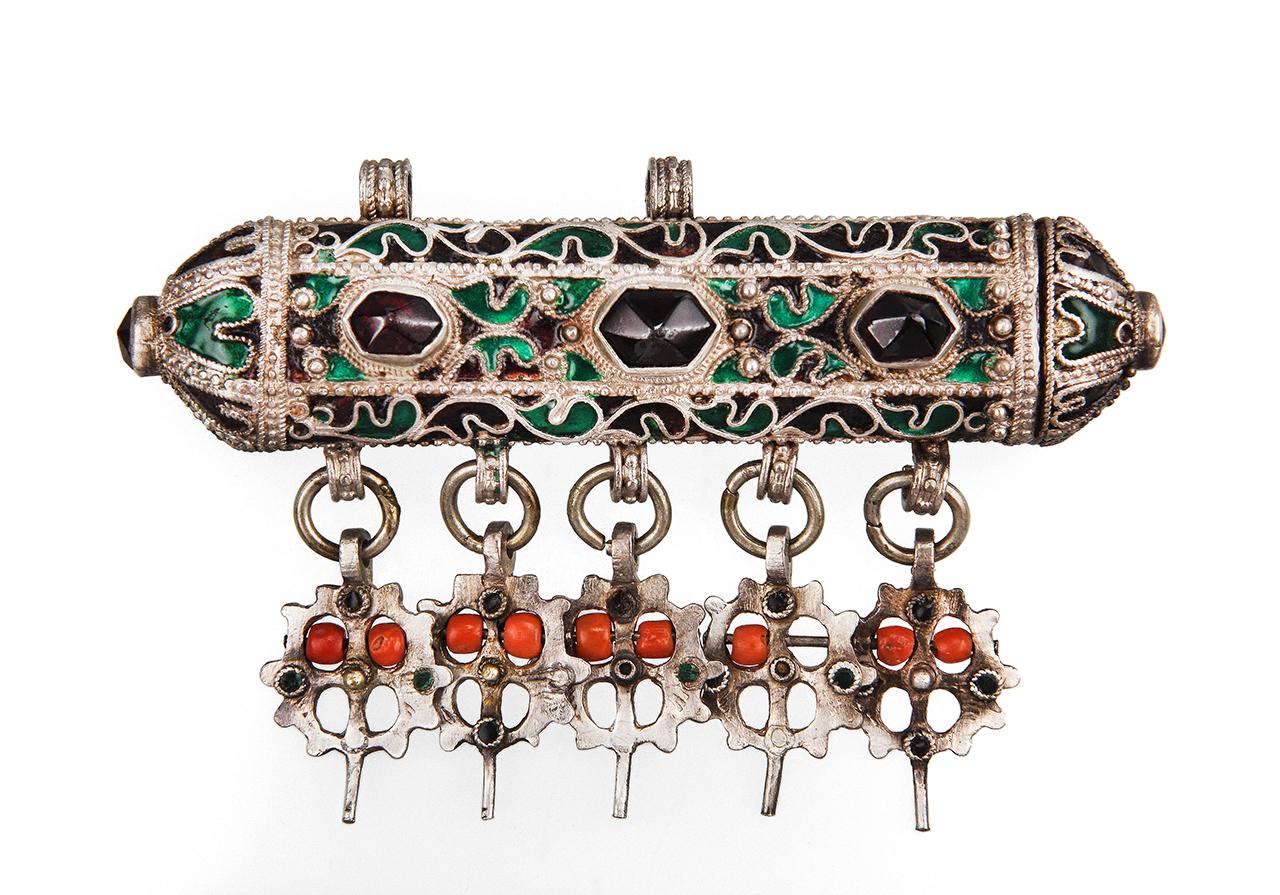
According to the inventory book entry, the object comes from Ragusa (today Dubrovnik), and was transferred to the Hungarian National Museum from the collection of Miklós Jankovich. The filigree case, presumably worn around the neck, was originally used to hold a document or amulet. This type of object is also well known from the finds of the Hungarian occupation.
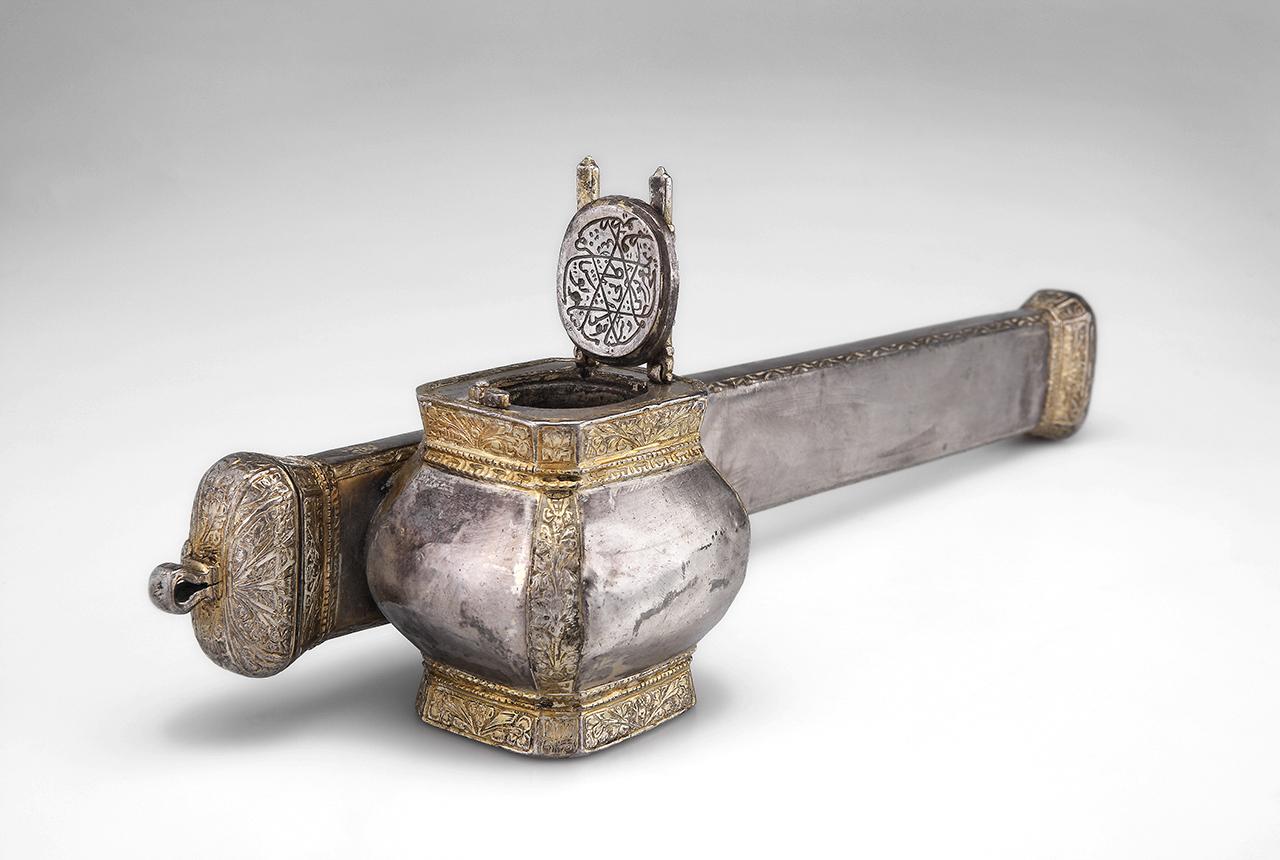
The Hungarian National Museum acquired the set from the collection of Sámuel Teleki. Both the case, which holds the pen stems, and the inkwell jar are decorated with embossed floral elements with vines and leaves engraved on a gilded ground. The object is dated by the Sultan's tugra stamped on the bottom of the jar.
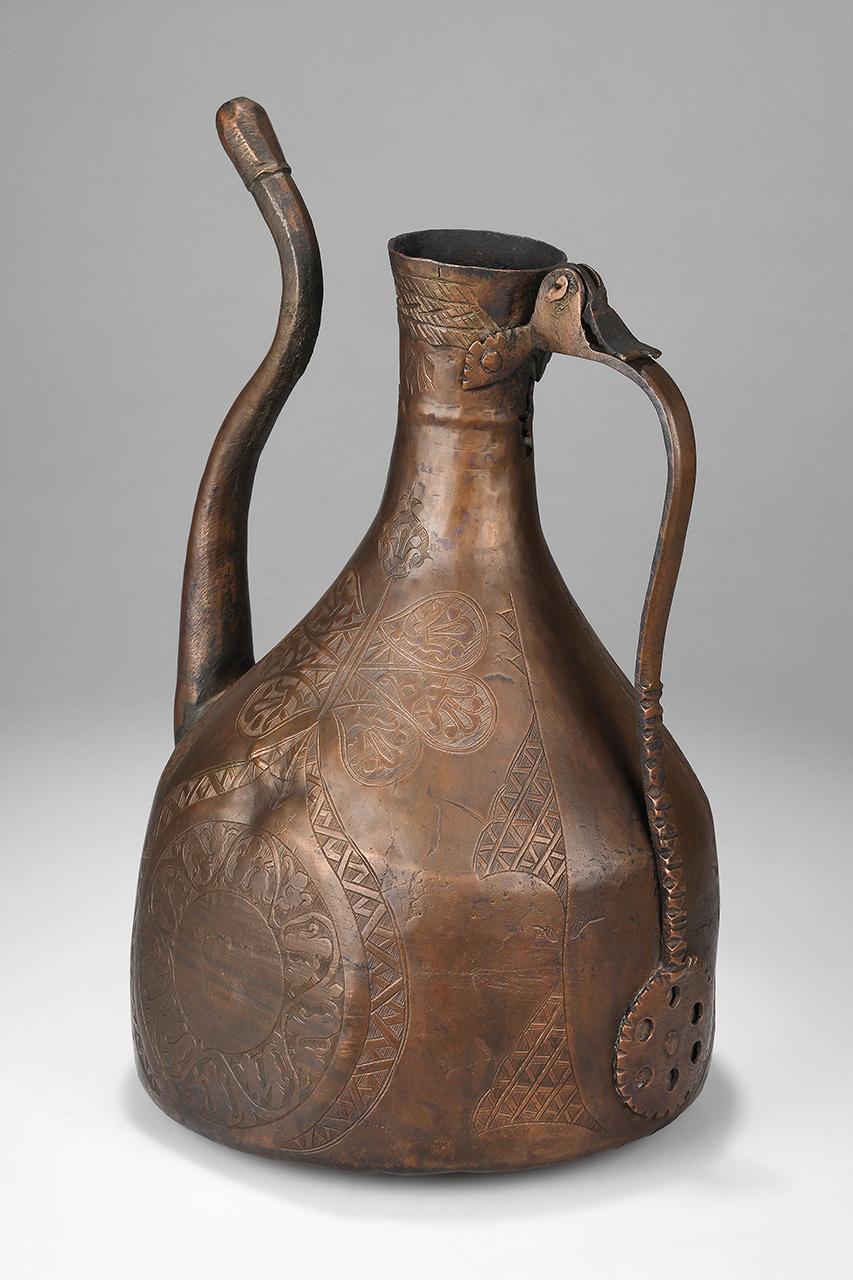
It is a typical Turkish vessel; it belongs to the so-called spouted jugs (ibrik) type. The body is decorated with carved, stylised, floral and geometric motifs.
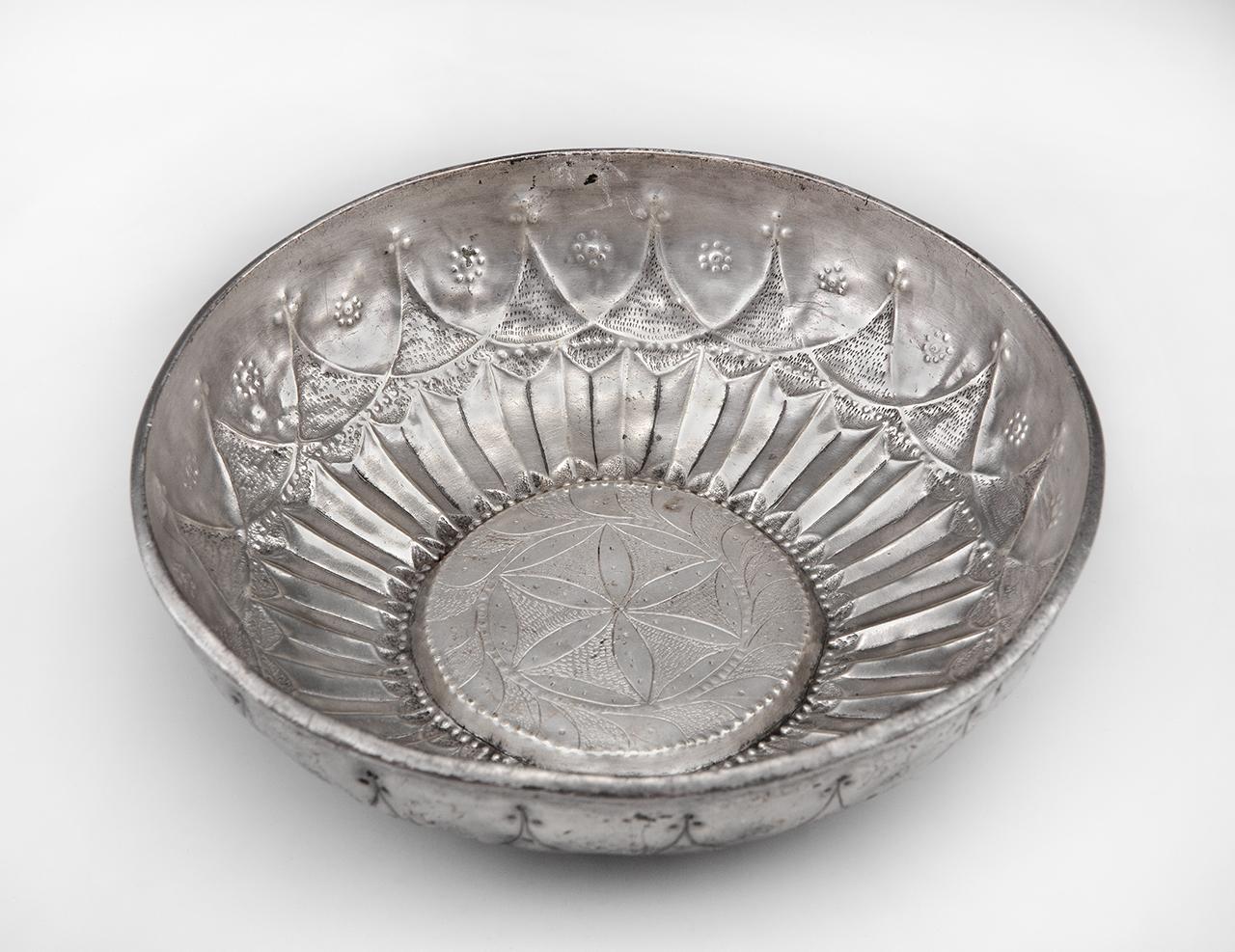
This vessel is a typical piece of the so-called Balkan drinking cups, known in both religious and secular use. The inner side of the cup is covered with an engraved, embossed geometric decoration.
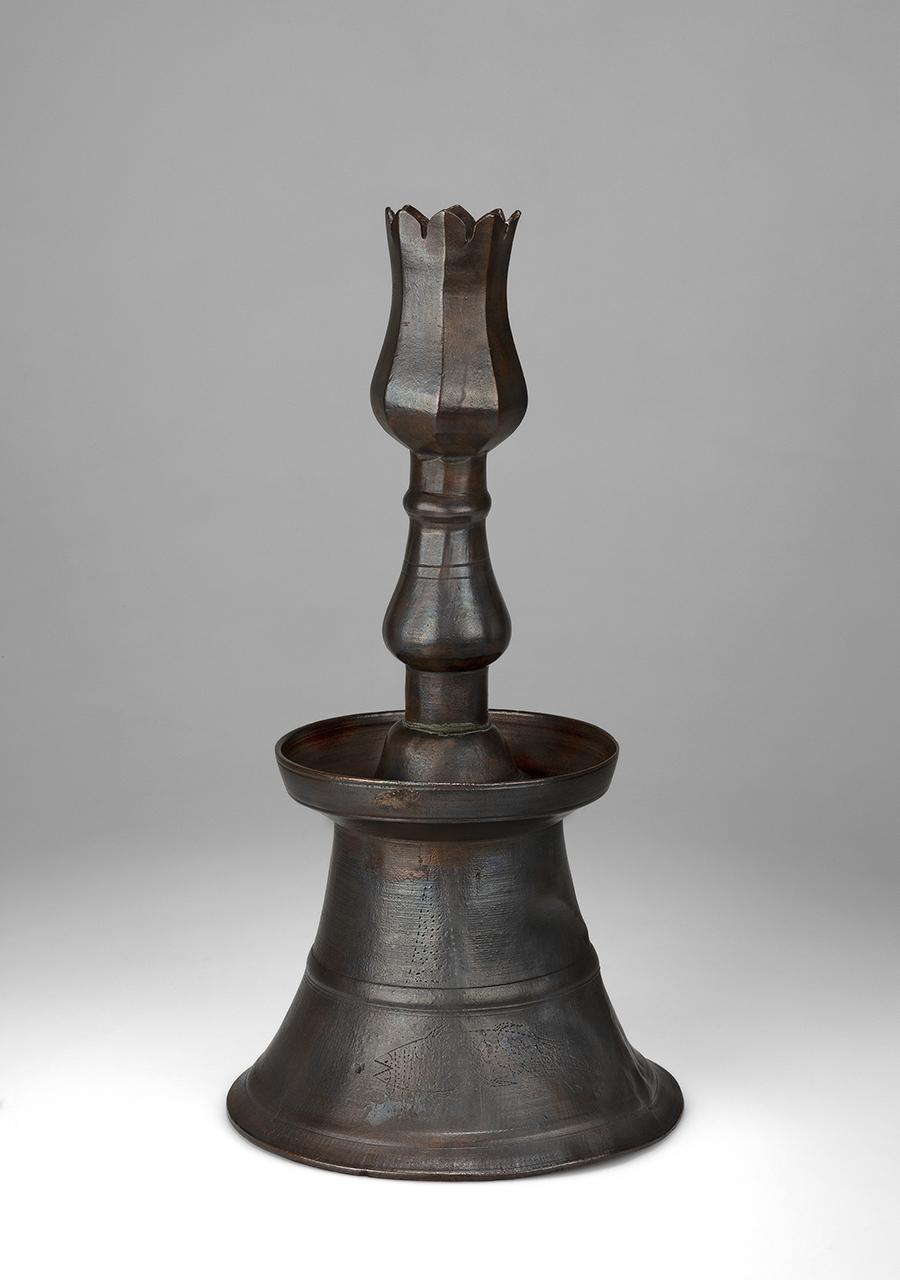
The object, originally in Turkish use, was transferred from the Roman Catholic Church of Liptószentandrás to the Hungarian National Museum. The stylized tulip-shaped candleholder part is supported by a truncated conical base. The latter bears a subsequently engraved fish motif.
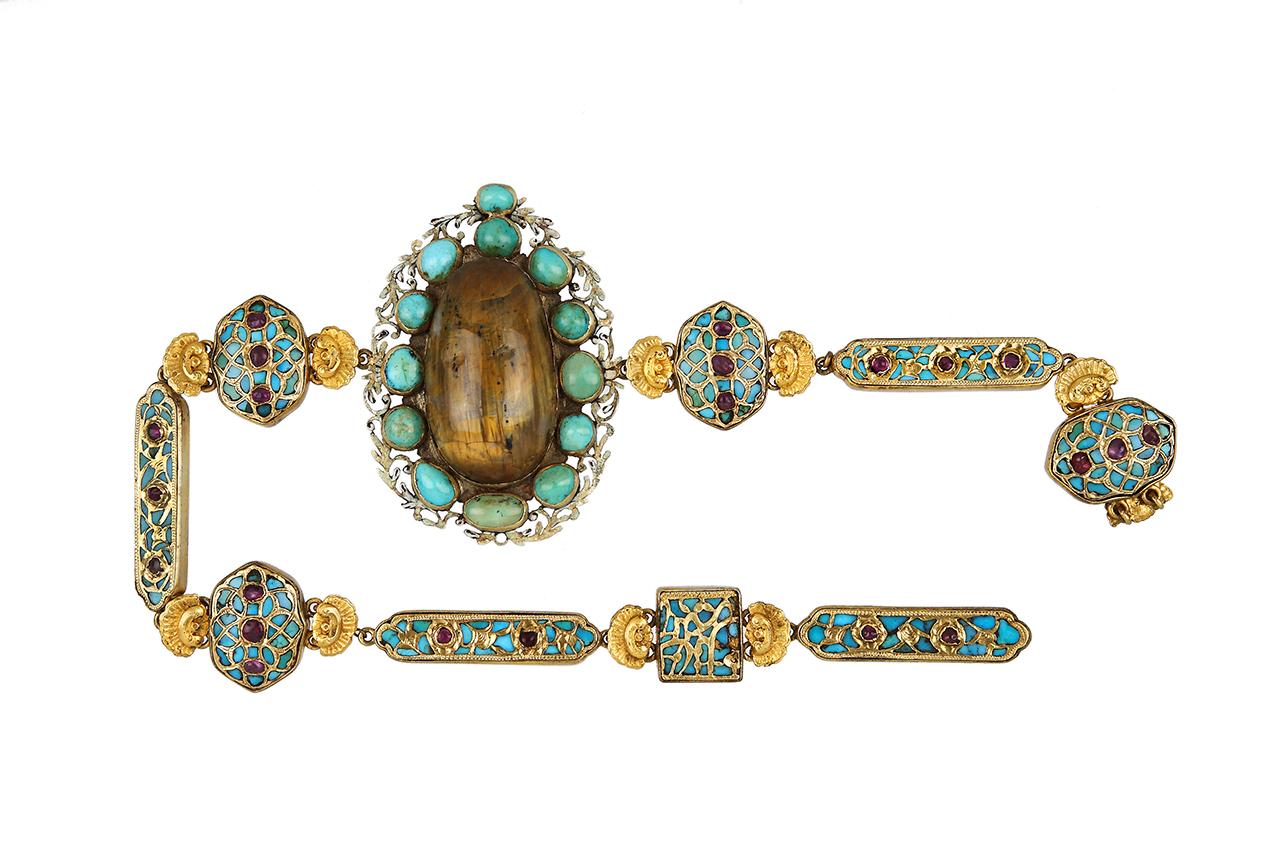
Gilded silver, turquoise, wood opal, garnet. It came from the property of Pál Esterházy to the Hungarian National Museum. Its metalwork is partly Turkish, partly Transylvanian.