The Migration Period Collection of the Hungarian National Museum is the largest early medieval archaeological material in the Carpathian Basin, comprising several very significant artefacts. It contains more than 100,000 objects, including about 2,000 pieces of gold ones, from the beginning of the Hun period until the arrival of our conquering ancestors: from the turmoil of the Hun peoples through the later period dominated by the Germanic tribes to the Avar Empire.
Contact: Dr. Gergely Szenthe, szenthe.gergely@hnm.hu, Zsófia Básti, basti.zsofia@hnm.hu, Zsuzsanna Hajnal, hajnal.zsuzsa@hnm.hu, phone: + 36 1 327 7700 / 446 and 414
History of the collection
The first inventory book of the museum, written in 1837, already included gold objects dating back to the Migration Period, and in the late 19th and early 20th centuries the museum grew with a number of significant archaeological finds from this period donated from private collections. From 1857 onwards, artefacts, revealed from disrupted soil due to construction and excavation work, were added, followed by the results of regular, systematic excavations from the 1880s. In 1926, the museum was divided into collections: that marked birth of the Migration Period Collection. The unit, which at that time included the Scythian material and that of the Roman Imperial Barbaricum, took on its present profile through a lengthy purification process from 1951 to 1994.
In addition to individual objects and artefact assemblages of outstanding beauty and considerable academic value, such as the Hun diadem from Csorna, the Hun cauldron from Törtel, and the unique Germanic treasure trove from Szilágysomlyó, the princely artefacts from Bócsa, Kunágota and Ozora, the collection is largely made up of grave goods from small and large public cemeteries and the remains of settlements indicative of the everyday life of the contemporary population. Through the publication and analytical processing of archaeological remains, the collection's museologists have contributed to the understanding of the historical picture and material culture of the Carpathian Basin in the 5th-9th centuries, and to answering archaeological questions.
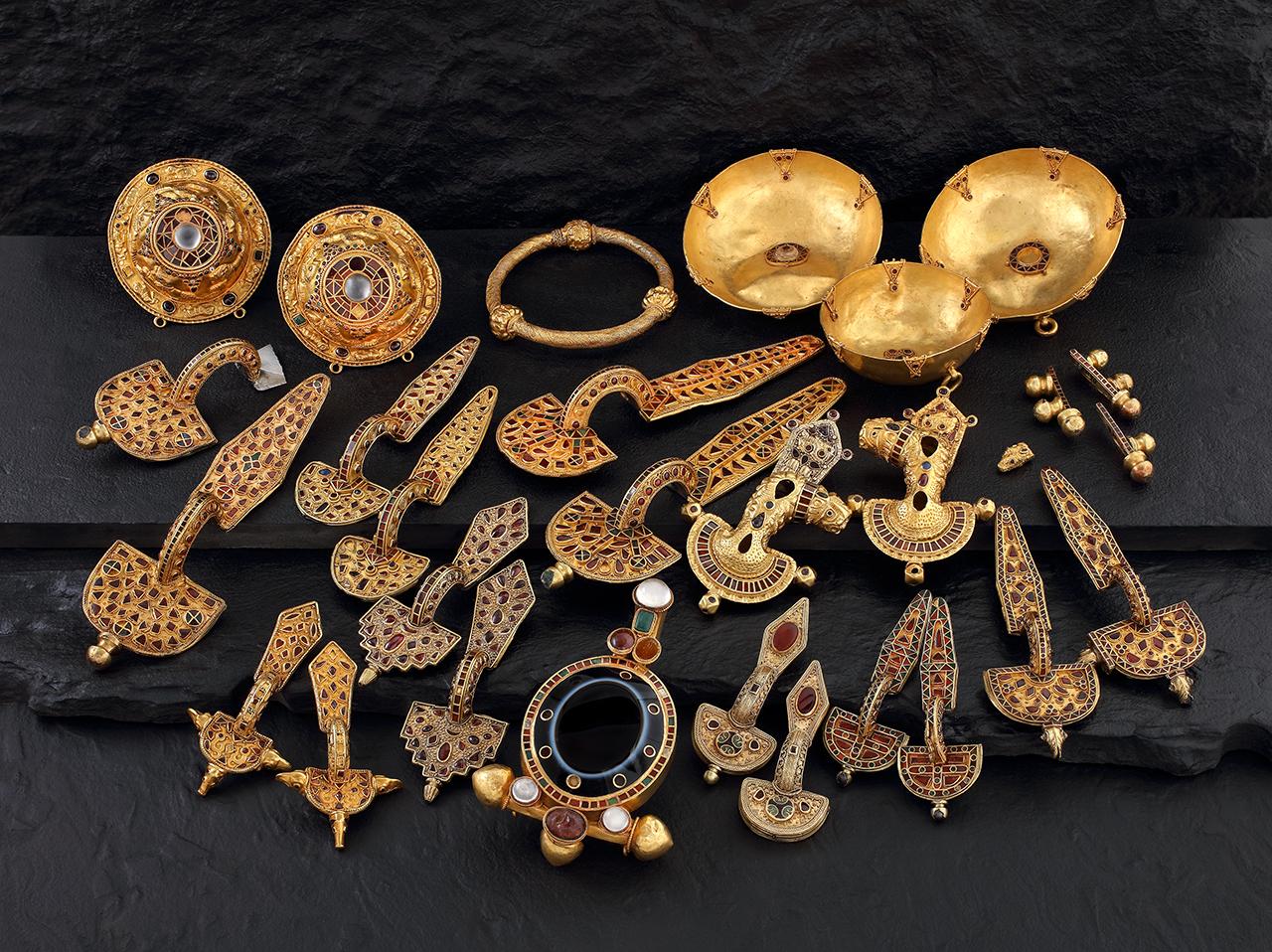
One of the most important treasure troves of the Early Migration Period of the Carpathian Basin, discovered in two parts, almost a 100 years apart: the first set of objects buried side by side was taken to the Kunsthistorisches Museum in Vienna (Roman medallions turned into pendants, chains decorated with miniature tools), while the second set, discovered in 1889, was taken to the Hungarian National Museum. This latter find included a unique onyx decorated fibula worn exclusively by Roman emperors, 10 pairs of female dress-clothing pins, 3 characteristically Hunnic style gold cups, and a votive bracelet, which played a major role in Germanic religious ceremonies, jurisdiction and lawmaking. The artefacts were accumulated over a long period from the 370s to the mid-5th century, probably hidden around the time of the collapse of the Hun Empire. The wearers of the fibulae may have been the most prestigious members of the Germanic elite.
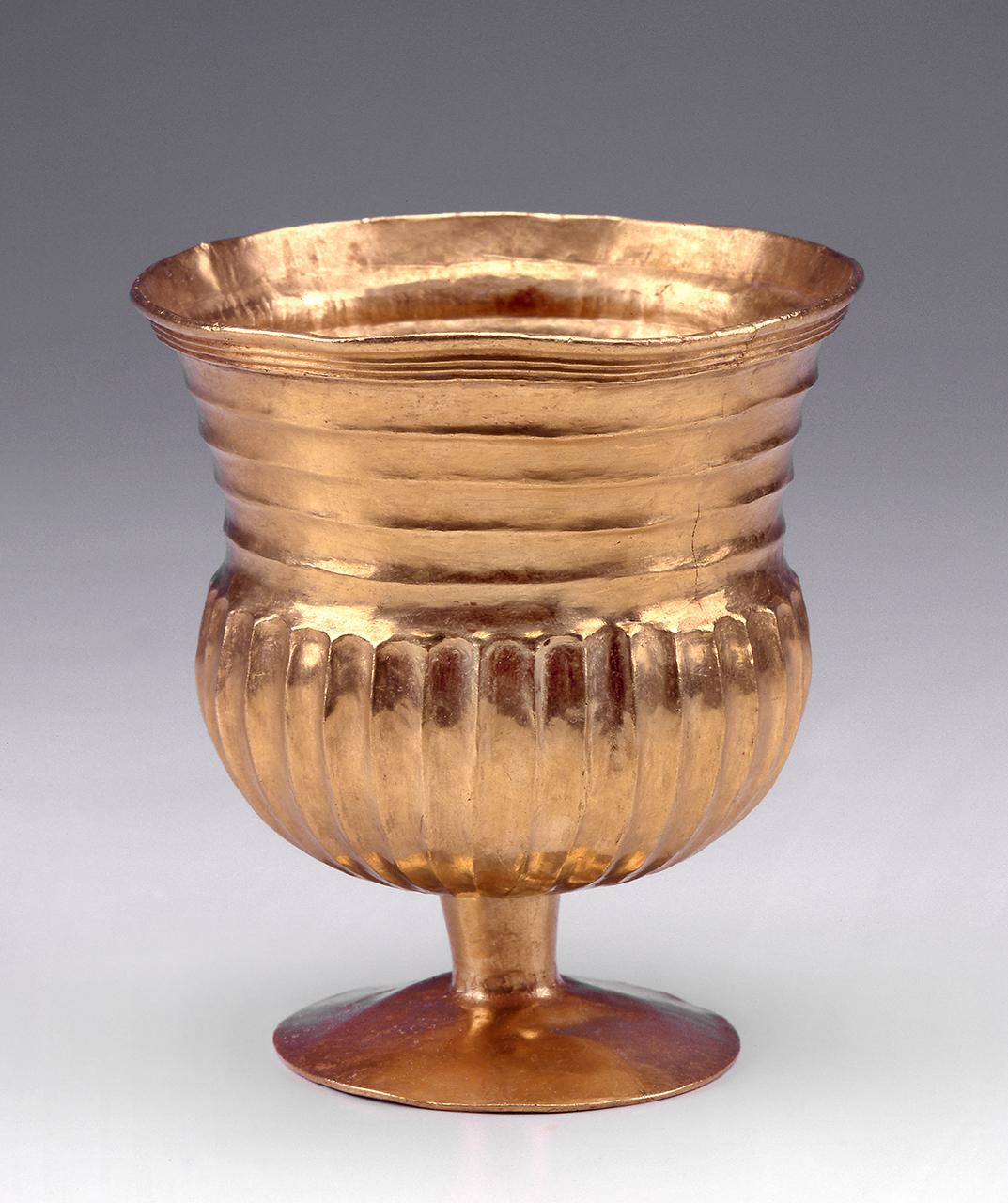
In 1935, a grave discovered in the Danube–Tisza interfluve was the burial place of a high ranking official who was presumably indirectly under the Kagan himself. His rank is indicated not only by the solitary burial, but also by the high quality and value of the objects buried with him: earrings, rings, Byzantine-style belts decorated with disc-shaped beads and chinstraps, a gold-plated sword, a quiver, a silver jug, a gold goblet and a drinking horn. Precious-metal funnel-mouthed drinking vessels with a funnel-shaped mouth, such as the gold chalice with grooved decoration, or flat spherical stemmed cups and larger oval-shaped jugs with handles were part of the drinking sets of the 7th century Avar nobility. These pieces, presumably crafted locally in the Carpathian Basin, indicate an authentic style, are evidence of the high level of Avar craftsmanship. (Bócsa, first half of the 7th century)
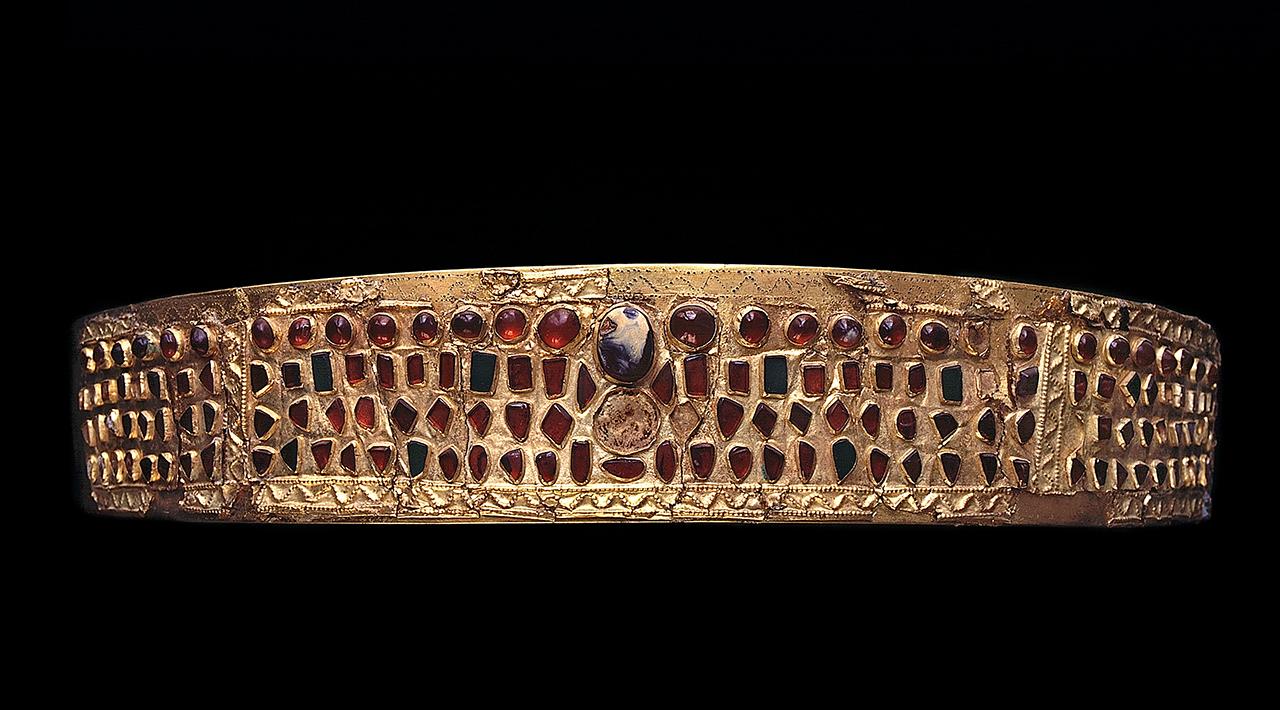
The only Hun tiara from the Carpathian Basin was found in a female grave with an artificially deformed skull. It is made of gold plate bent on a bronze base, decorated with four rows of round, triangular and rhombioid stone inlays in separate cells, framed by a zigzag pattern. Some 20 similar pieces of jewellery are known to have belonged to the eastern style attire of Hun women of noble birth and were found almost exclusively in the eastern regions of their empire, the most western occurrence being at Csorna (Csorna, first half of the 5th century)
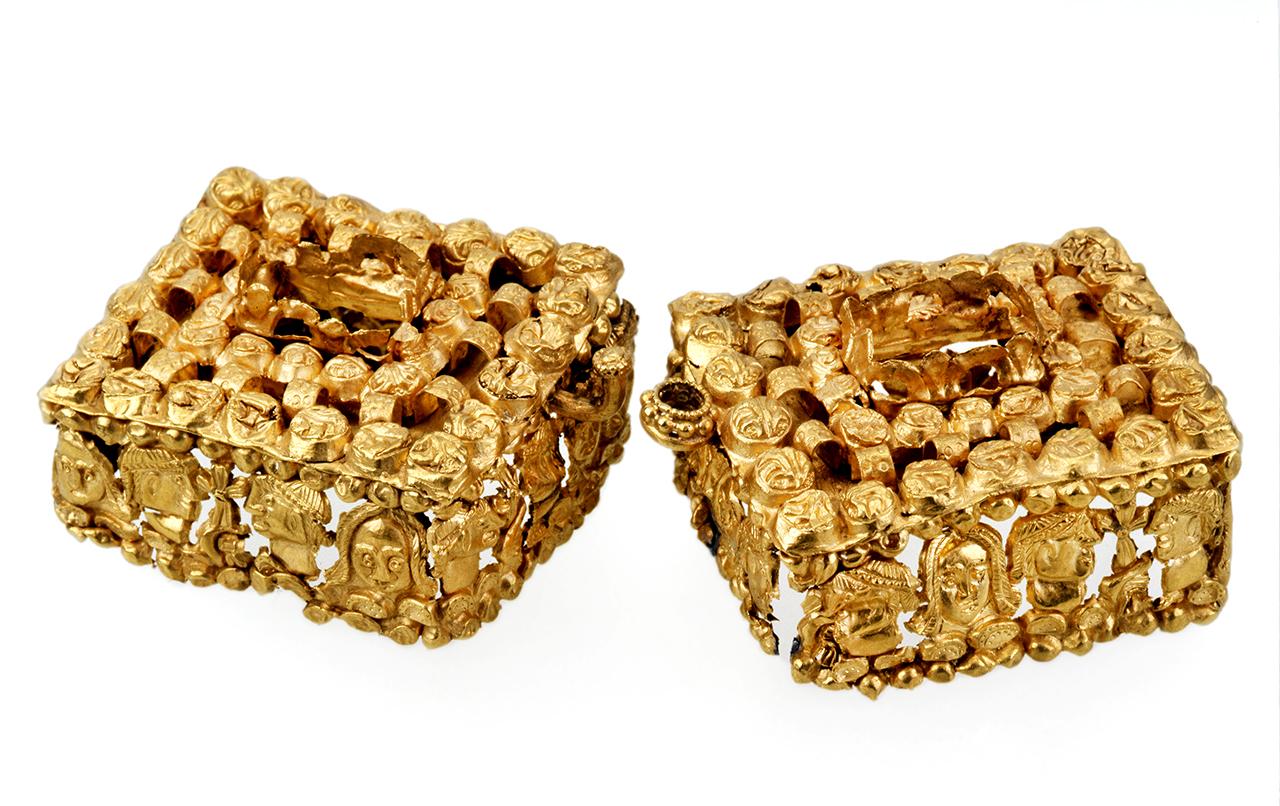
In the Carpathian Basin, several variations of breast-pins were used to bind women's outer garments or cloaks in the late Avar period. This piece, presumably purchased for the museum from the Dunapataj area, is a forerunner of the so-called box type. This piece of jewellery was probably made by a Byzantine goldsmith and passed to the Avars. This is indicated not only by its high quality, but also by the Byzantine jewellery techniques: the design of the central mounting for holding a stone, the gold ribbon bundles on the cover plate holding a string of pearls, the long-haired figures of men holding a cross in the framing frieze. The depiction of a man holding a cross may be linked to Christianity, but it does not directly refer to the religion of the Avars. (Dunapataj, late 7th century, first third of the 8th century)
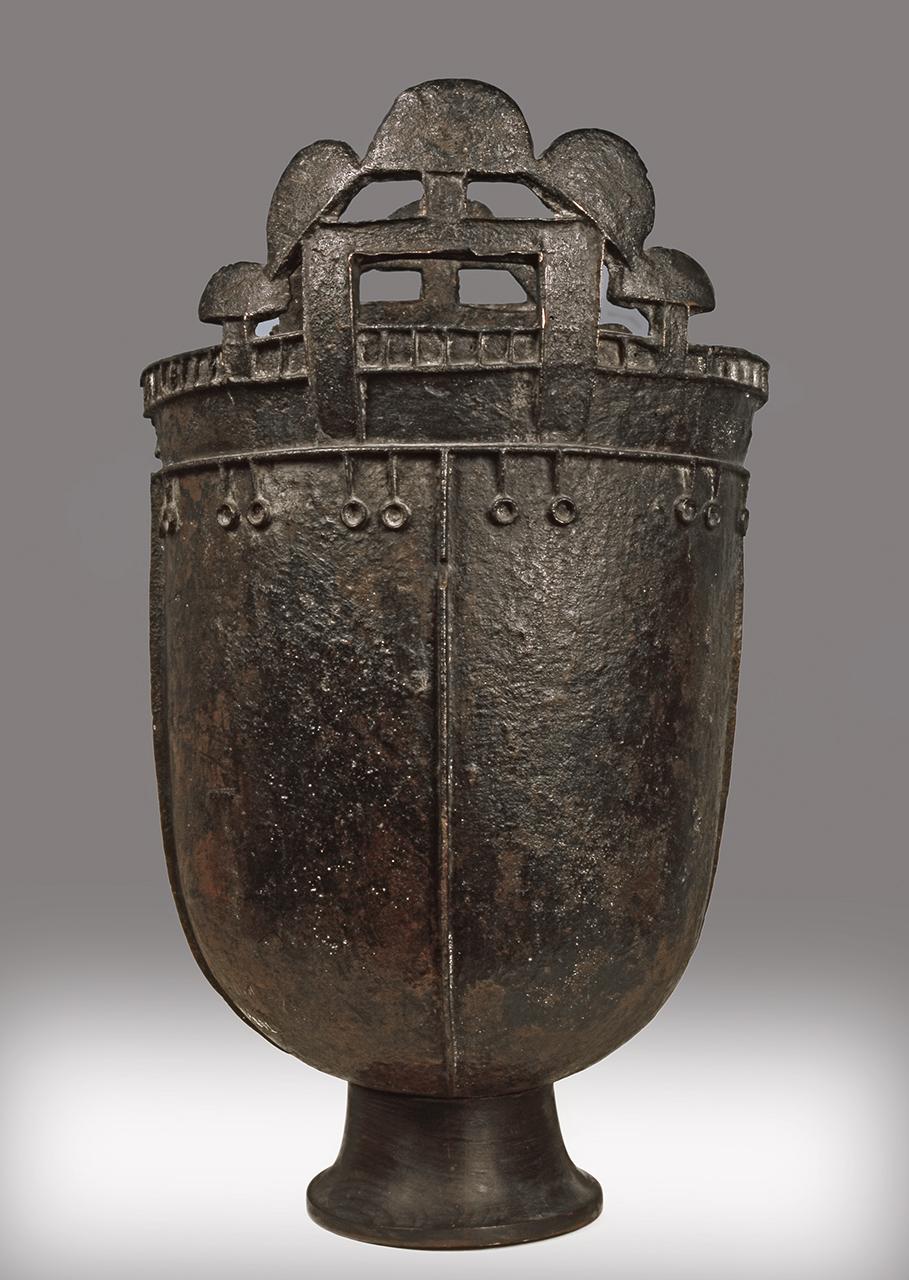
The bronze cauldrons were probably put into shallow pits in the ground during a religious ceremony. The similar cylindrical-bodied, ascending cauldrons with integrally molded handles of varying sizes can be traced back to Inner Asia, and their distribution marks the most likely route of the Hun movement. All the pieces recovered were damaged and burnt. The Törtel piece is the largest known example (Törtel, first half of the 5th century)
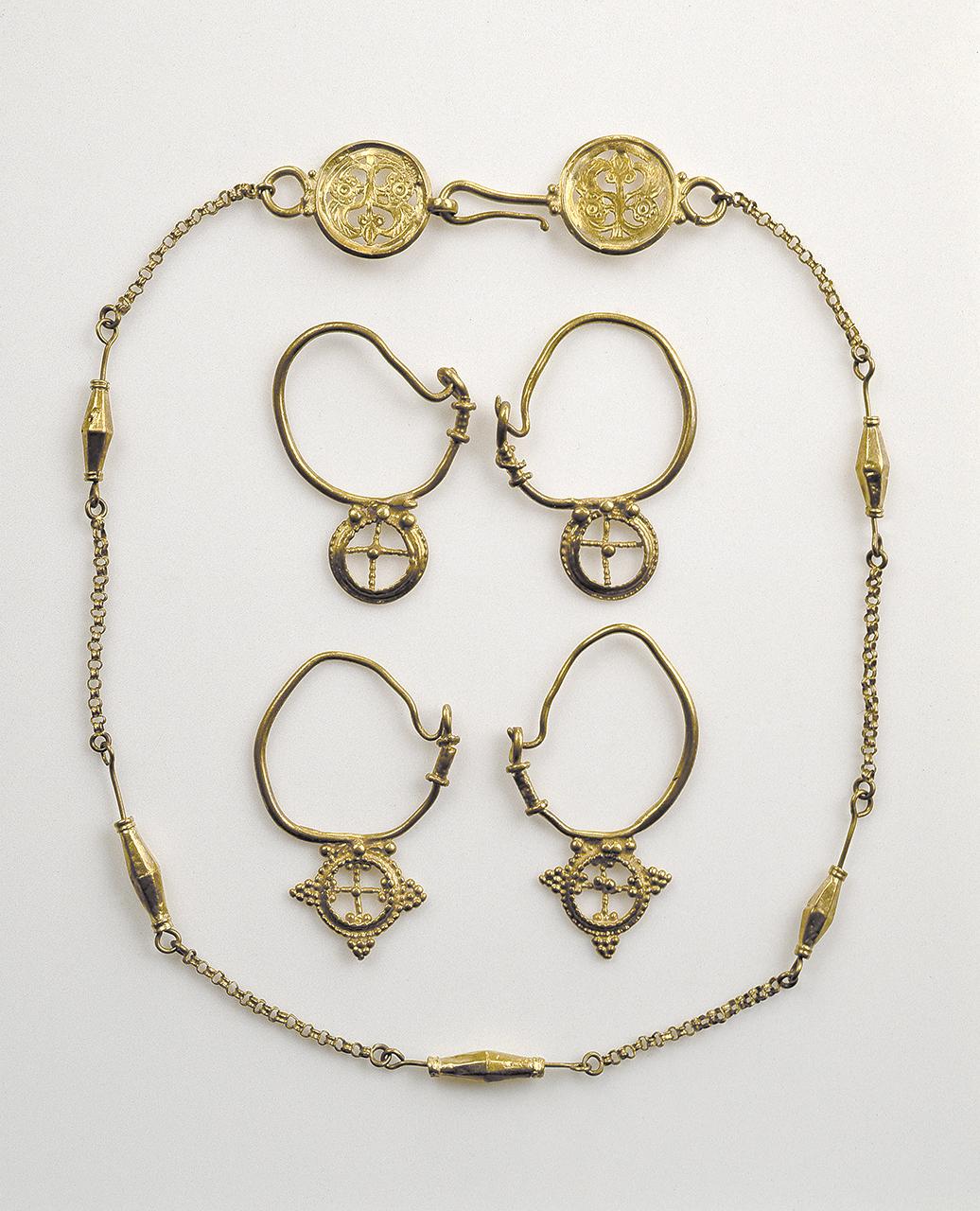
The necklace and two pairs of earrings, which came to the Hungarian National Museum as an isolated find, possibly part of a treasure trove, are the masterpieces of a Byzantine workshop. The medallions of the gold plate, engraved and embossed on the disc-shaped clasp of the necklace, depict a palmette and a tree of life, and the earrings, decorated with gold beads in granular technique, were brought to the Avar nobility from the Byzantine Empire (Gács, late 6th - 7th century)
.
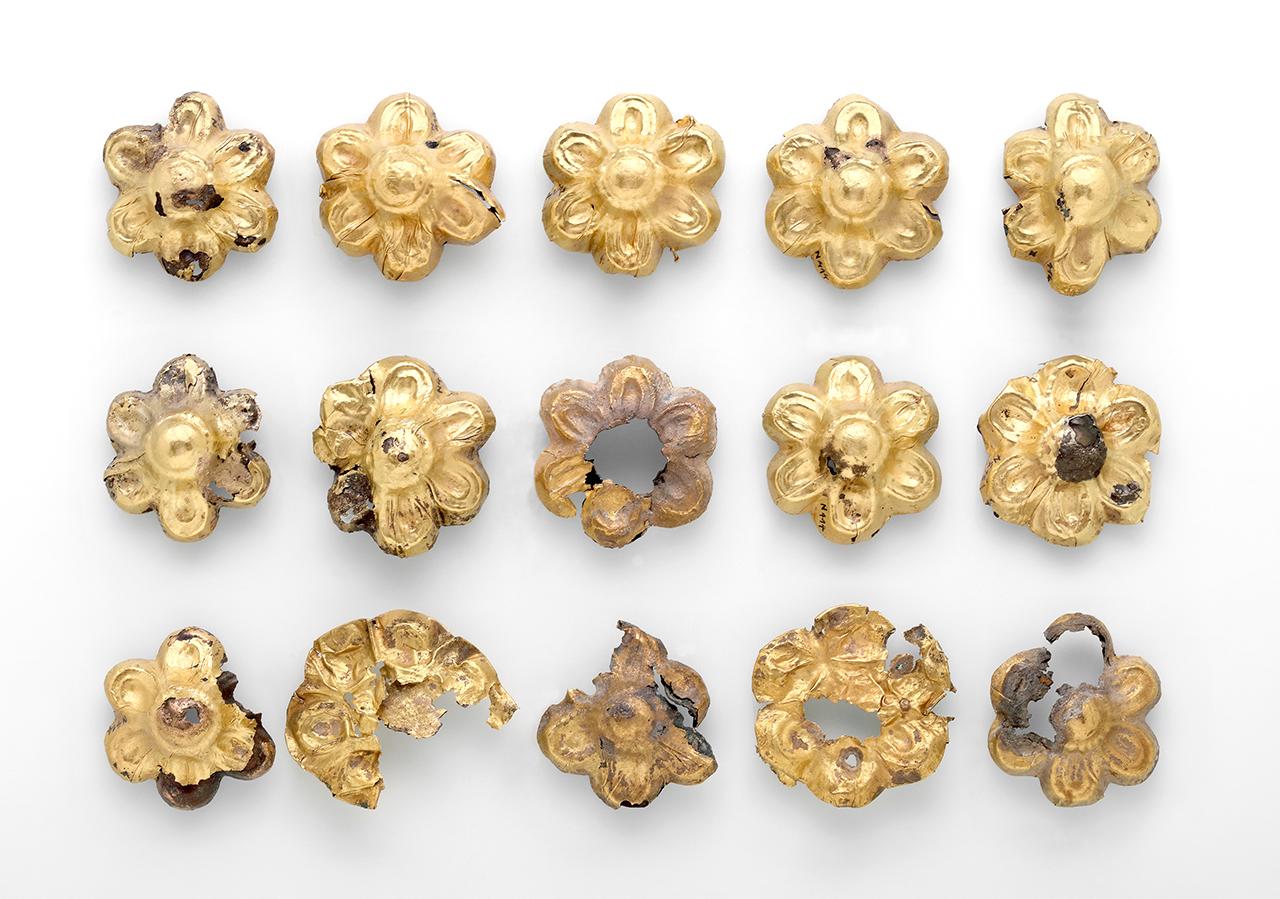
The gold-plated harness mounts found in what is now Croatia belong to the category of pressed rosette mounts, to the group of flowerpetal mounts. The mounts decorated the bridle on the horse's head of a noble rider. (Vörösmart, last third of the 7th century - early 8th century)