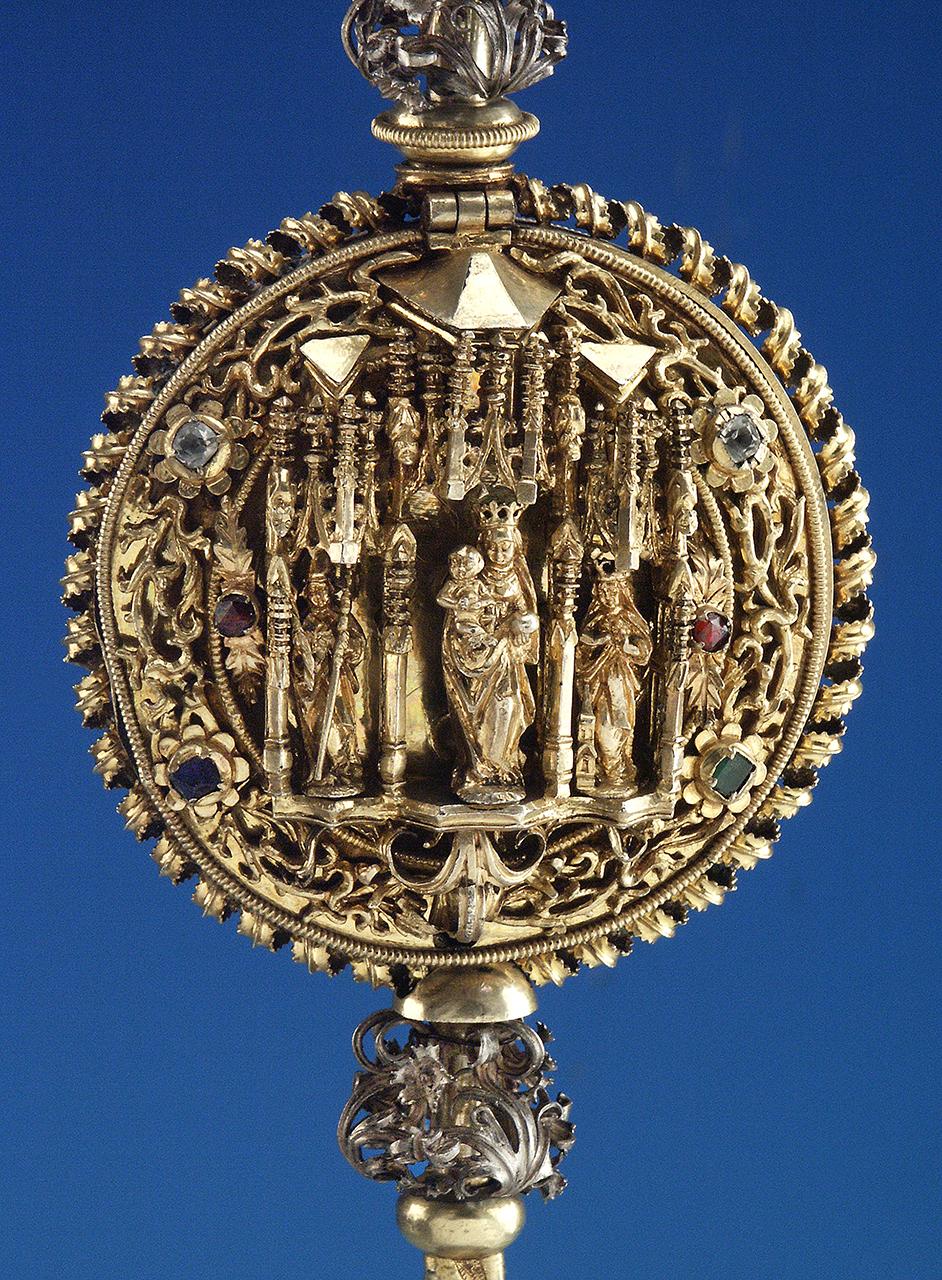
The Medieval Goldsmith Collection houses the National Museum's gold- and silvermith artefacts from the 11th century to 1526, together with some other metal objects. These originate mostly from the medieval Kingdom of Hungary, acquired by purchase, donation or as part of bequests. The collection includes important artefacts from the Antiquities Collection, which has existed since the museum's foundation, and its most important pieces can be viewed in the permanent historical exhibition. A number of memorabilia relating to the Kingdom of Hungary, often found in burials or as treasure troves, are the highlights of the collection. Ornate medieval jewellery is also a significant part of the collection, the most important group of which dates from the late Árpádian period. Medieval Hungarian liturgical jewellery also belong here, including the first Byzantine-style silver holy water font, excavated in Beszterec, and late medieval Hungarian chalices and other religious objects, the largest collection of which in Hungary and worldwide. A section of the collection is a late-medieval beaten copper bowl ensemble from Nuremberg, which bears some traces of world war destruction, and a very diverse ring collection of around 1,000 items, the context of which is not known.
Contact: Dr. Etele Kiss, kiss.etele@hnm.hu
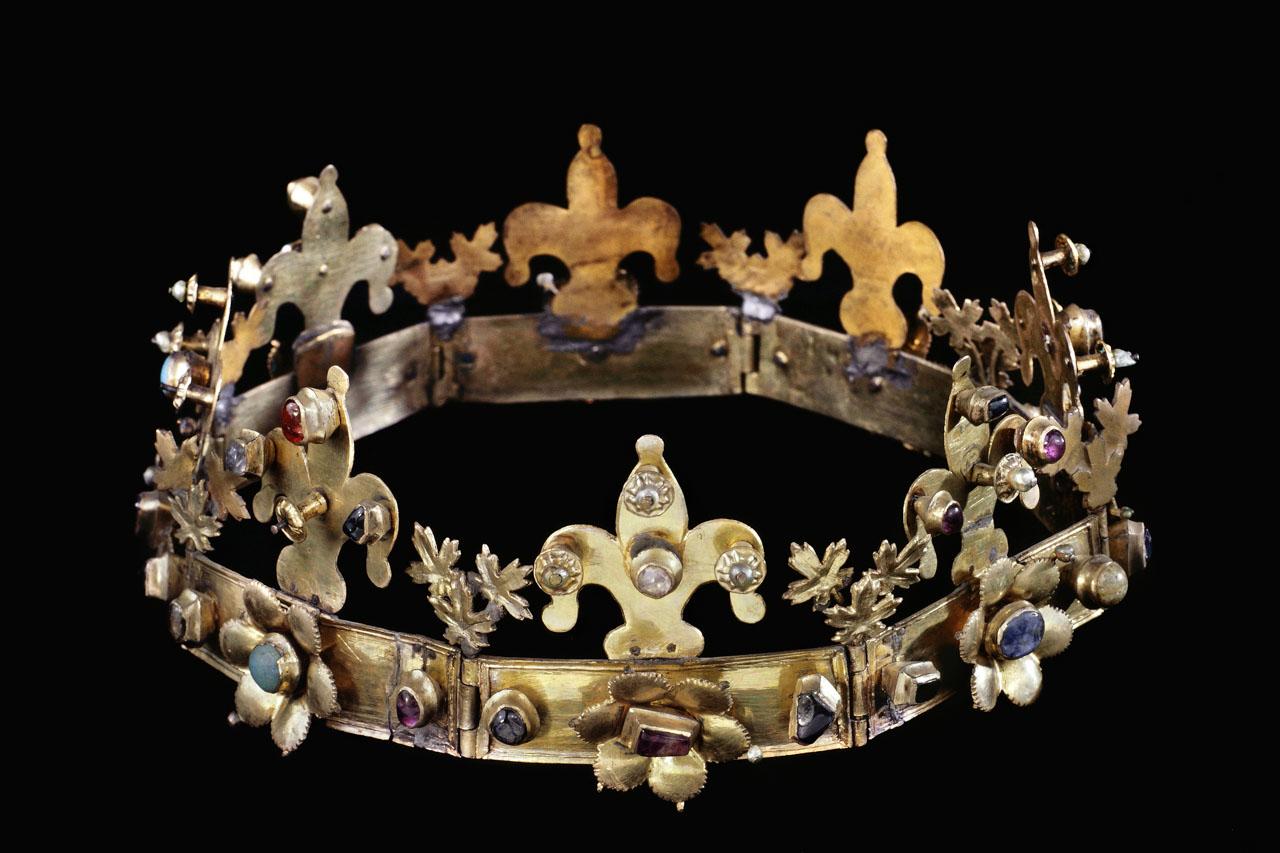
The lily and rosette ornamented crown was found in 1838 in a royal tomb of a Dominican monastery on Margaret Island – perhaps the tomb of King Stephen V. It may have been crafted in the second half of the 13th century, influenced by French classical Gothic style.
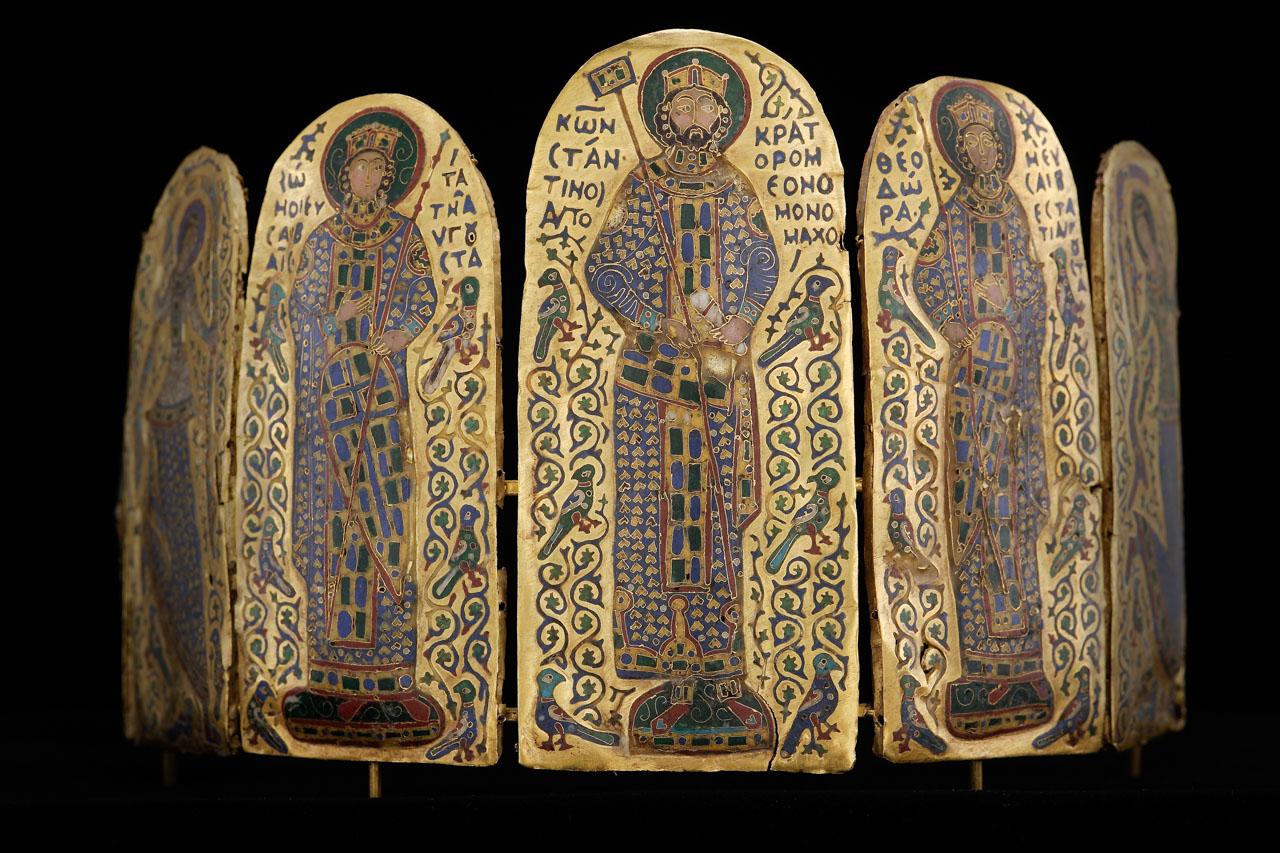
The seven semi-circular gold plates of the Byzantine cloisonné ensemble, discovered in 1861 in Nyitraivánka (today: Ivanka pri Nitre, Slovakia), depict the "Roman" Emperor Monomachus IX Constantine (r. 1042–1055) and six standing female figures, while two medallions show the bust of apostolic brothers, Saint Andrew and Saint Peter. The plates decreasing in size in pairs, depict female figures, the last descendants of the Macedonian dynasty, Zoë (d. 1050) and her sister, the Empress Theodora (d. 1056), two dancing women and two figures of the Virtues, Truth and Humility, surrounded by a vine scroll of birds and a pair of cypresses (the Virtues) respectively. The plates may originally have been mounted on a cap and their universal peace programme could be interpreted in a Sasanid, Islamic, ancient and Old Testament context, while the two apostles, which were included in this ensemble for secondary use, referred to Rome and Constantinople, the scene of their activities, and the Latin and Greek churches they led respectively.
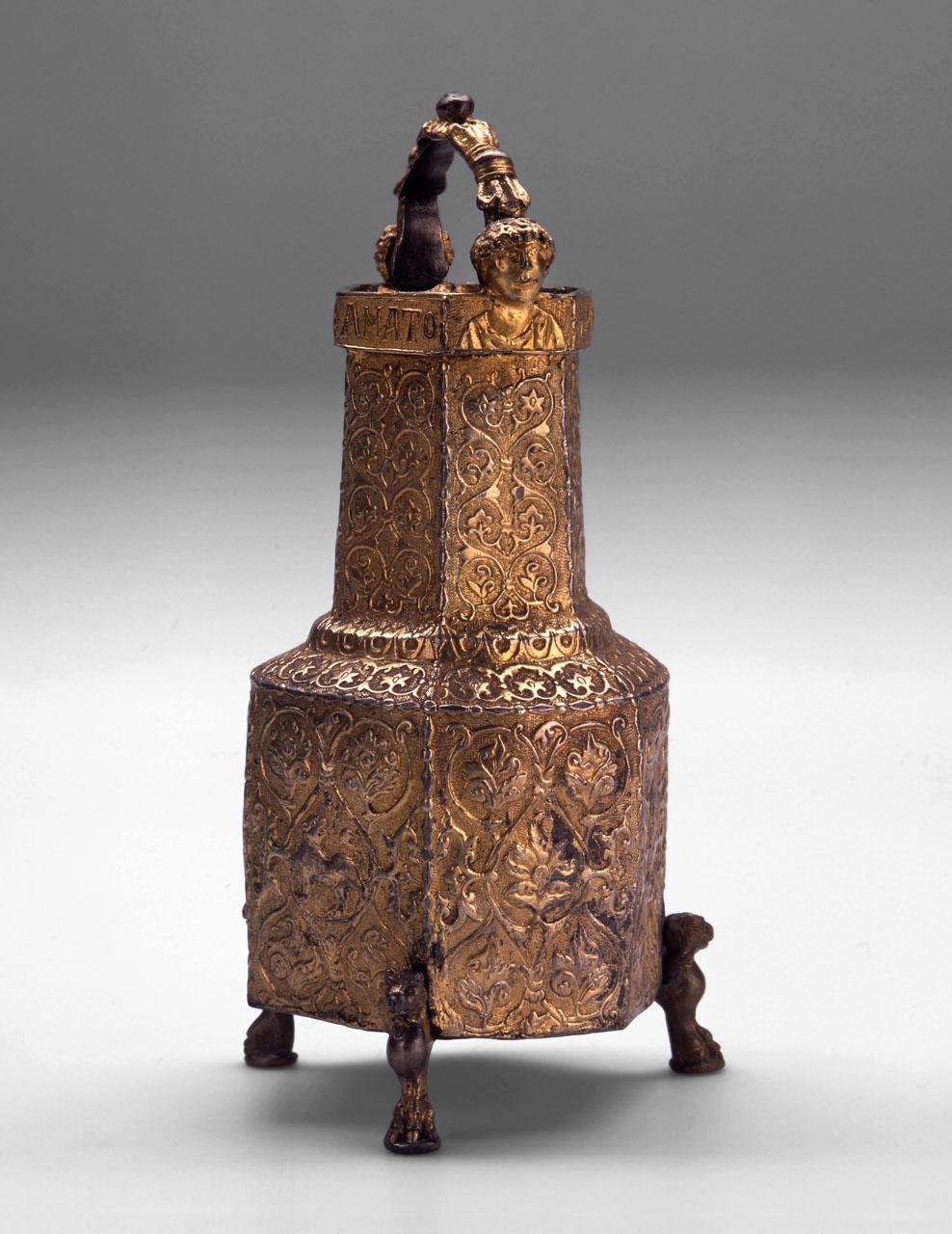
The Byzantine, gilded silver holy water font inscribed in Greek is supported by three – partially reconstructed – lion and griffin ornamented legs, its body a hexagonal form, the wider base is connected to the narrower upper part by a stepped, sloping section. Its movable upper handle is joined to the vessel at the bust of two youths, and above, at the level of the youths' busts, is the corrupted Greek inscription, the current interpretation of which is: "Christ, the living fountain of healings". The palmette vines covering the vessel are set against a circular punched background, with three palmettes alternating with three mythological beasts in the lower almond-shaped space of the vines. The palmettes are an early example of the so-called flower-leaf ornamentation renewed at the Byzantine imperial court in the mid-10th century, based on Chinese designs.
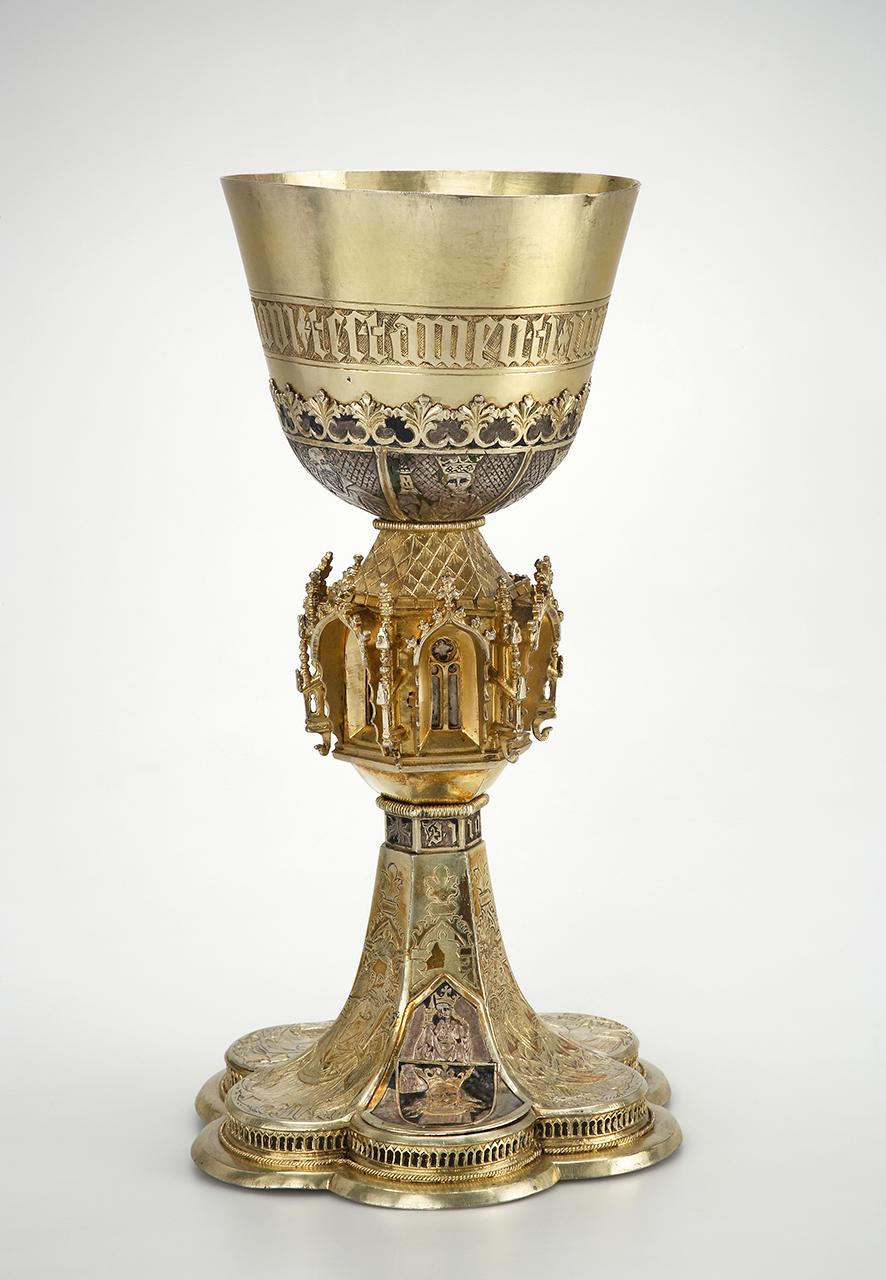
Originally an enamel chalice decorated with engraved images of Hungarian holy kings (Stephen, Imre, László) and other saints, the chalice was donated by Pál Besenyő, former Slavonic ban of Özdöge, together with a patena decorated with the image of Vir dolorum ("Christ in Pain"), to the parish church of Torna (now Turna nad Bodvou, Slovakia), which stood on his estate. The depiction of the queen in the coat of arms and of Saint Borbála (Barbara) suggests that the chalice was initially associated with Queen Borbála Cillei, wife of Sigismund of Luxembourg, although this cannot be proved.
The pax tablet (osculatorium) was commissioned by Balázs Besztercei in 1500, and bears his coat of arms and the city of Beszterce and the date on its base. The mother-of-pearl relief of the largely ruined Saint George, stretched out to be kissed, as well as the medallion on the front depicting a Gothic church with statues of saints, appearing on the clasps of contemporary liturgical mantles (pluviale), are of Nuremberg origin, together with the other elements, but their use was so widespread in contemporary Hungary that both areas could be considered as places of manufacture.