The Medieval Core Collection is the result of the merger of three smaller collections – the Medieval Iron Collection, the Medieval Pottery Collection and the Medieval Mixed Collection – which are registered by material groups and exclusively preserve medieval and early modern archaeological finds collected before the Second World War. The collection consists of donated objects, iron artefacts (agricultural, kitchen and other utensils) from the first archaeological excavations in the medieval urban, village and ecclesiastical environment, ceramics (floor tiles, stove tiles, various vessels), objects related to clothing and simple jewellery from graves in the cemeteries around the medieval churches.
Contact: Dr. Erika Simonyi, simonyi.erika@hnm.hu, phone: +36 1 327 7738
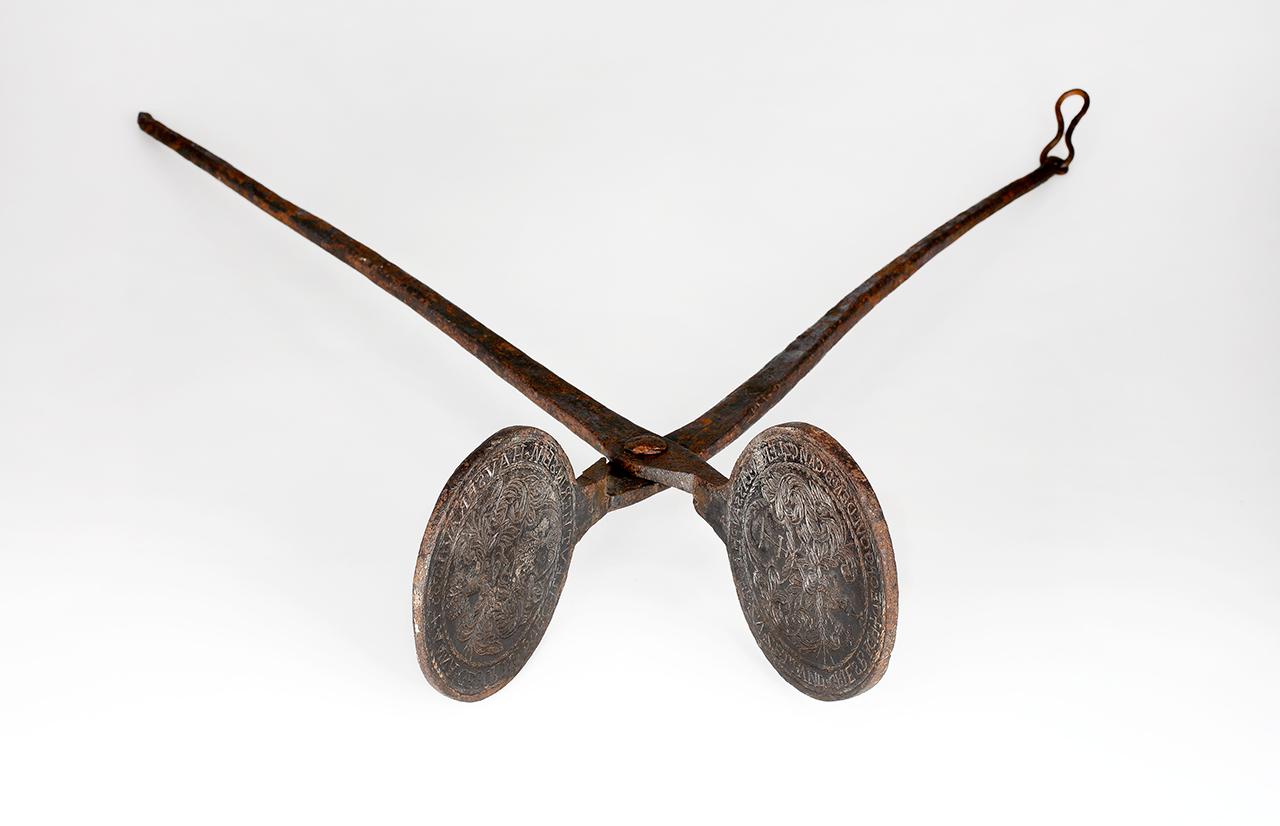
Wrought iron waffle iron with the date 1565, engraved design on the surface: coat of arms shield, floral ornaments and a fruit tree around it, and a circular inscription that appeared on the surface of the waffle as a positive relief. There are records of waffle irons from as early as the 13th century, and an unadorned example was found among the belongings of a village house burnt down in the Mongol invasion of 1241–1242. From the 16th and 17th centuries, they were found in inventories of church equipment, but also in the equipment of urban guilds and households.
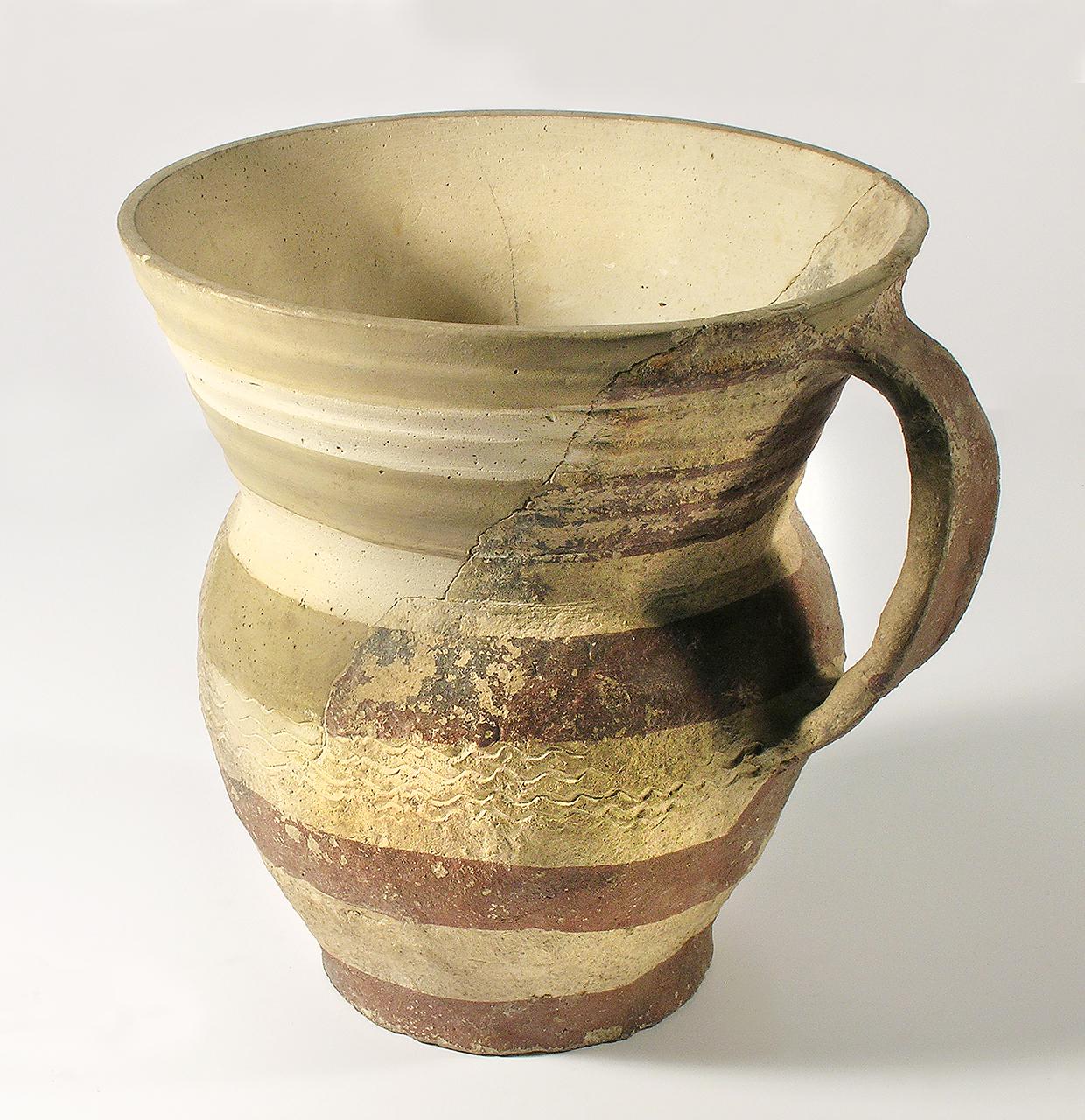
The wide-mouthed jug with a handle, moulded on a manual pottery wheel, is a unique shaped piece discovered in Piliny . Dating to the turn of the 13th and 14th centuries, the vessel is made of white-firing clay and is one of the earliest red-painted pieces in the collection. The bottom is stamped with a cross within a circle (Celtic cross).
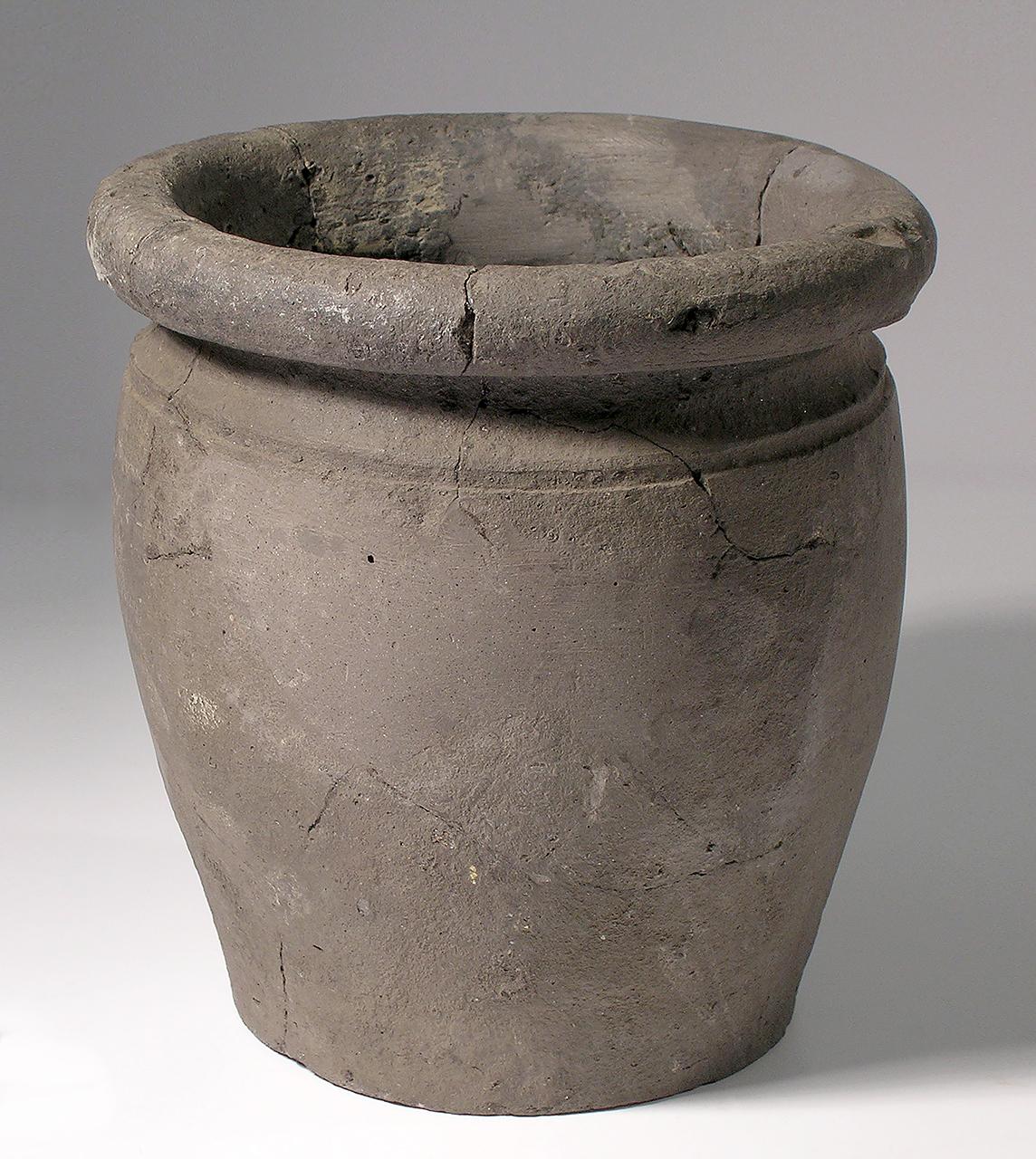
In 1949, during an excavation in Mohács-Cselepatak, this grey graphitic clay "Viennese" pot with a collar-like hanging rim, was found in the filling of a storage pit excavated near a 15th century house. Most of these pots have a stamp on the rim indicating their place of origin. As they are widespread along the river Danube, it is likely that not only the finished products were imported, but also the raw materials and the production techniques were adopted by local potters.
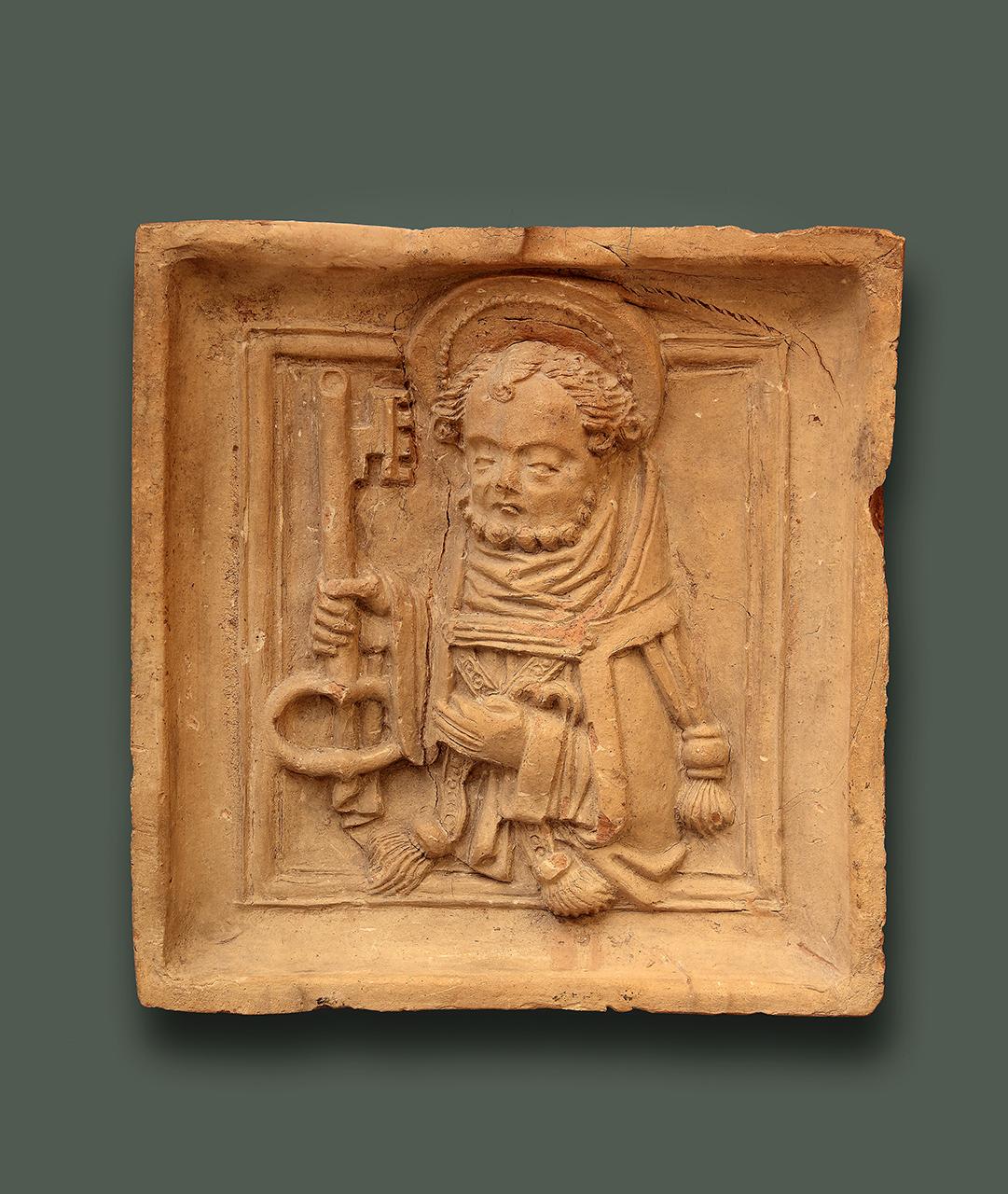
The so-called Bothár workshop in Besztercebánya (today: Banská Bystrica, Slovakia) produced high-quality glazed tiles with figural decoration, mostly depicting saints, at the end of the 15th century. Some half-finished, ruined tiles have been preserved, six of which have been transferred to the Hungarian National Museum. The article in the picture depicts the haloed Saint Peter holding the keys of heaven.
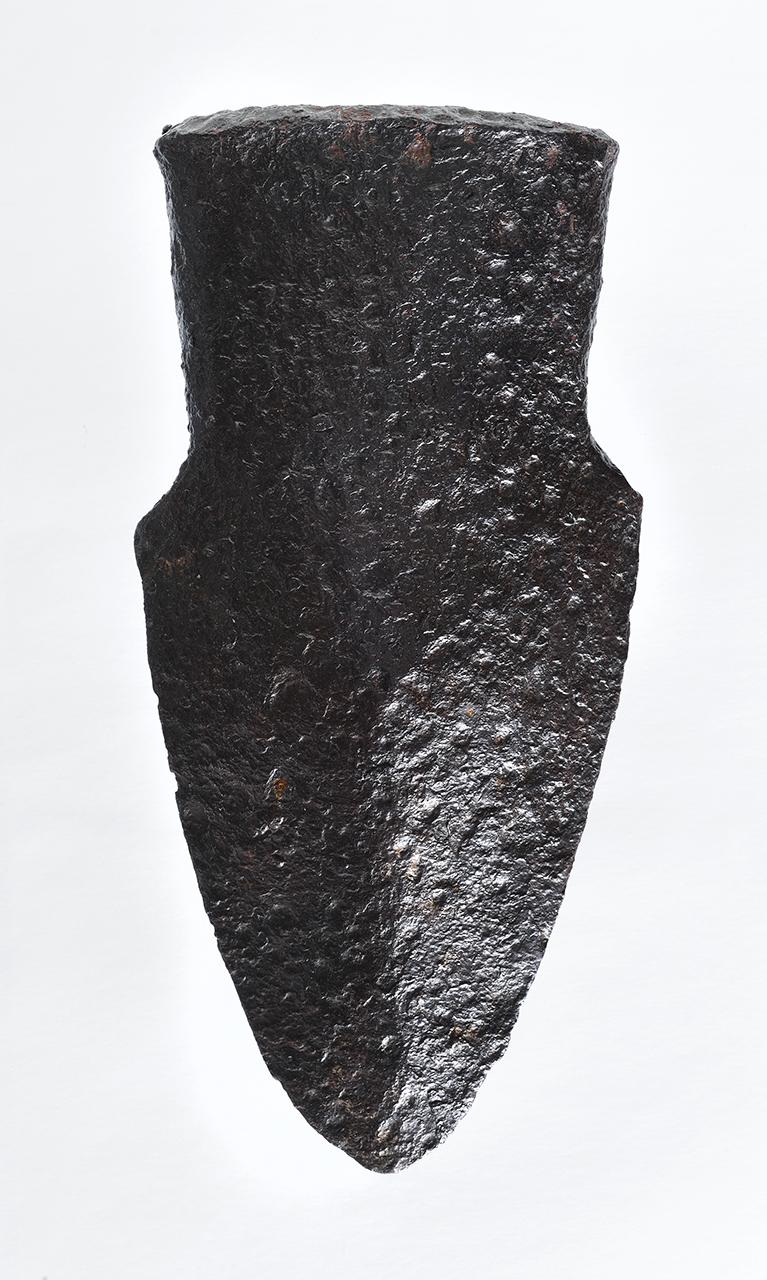
The cornerstones of economy in the Árpádian period were the villages, with agriculture and animal husbandry as the main activities. The iron tools used in agriculture (sickles, short scythes, ploughshares) were of great value, so they were recycled and reforged. In the Árpád period, the land was ploughed with wooden ploughs, which were equipped with small symmetrical ploughshares, such as the one shown here, found in Tard, slightly worn asymmetrically during use.