The Collection of the Hungarian Conquest Period is one of the oldest, and at the same time the youngest collections of the Hungarian National Museum. This apparent contradiction lies in the fact that, although its first items were registered in 1846, the artefacts of the period were kept and registered together with other objects in the Collection of Coins and Antiquities until 1909, and then, after the Coins Collection had became independent, they were kept in the Antiquities Collection until 1926. For almost three decades afterwards, the Migration Period Collection also housed the burial objects of the 10th and 11th centuries. It was only since the establishment of the Medieval Department in September 1953 that the collection has been listed as a separate collection unit with its own inventory.
Contact: Réka Fülöp, fulop.reka@mnm.hu
Composition of the collection
The collection is made up of cemetery and grave goods from the 10th and 11th centuries, with 4,042 items totalling 12,642 objects. Its composition has changed significantly over the last decades. Until the last third of the 19th century, when no other public collection existed, the National Museum was housing all the finds from the Conquest period that were excavated from the ground. The situation changed radically when the newly established museums and museum associations in the countryside accepted more and more artefacts that would previously have been sent to Budapest. Until 1945, however, a considerable part of the significant or spectacular finds continued to enrich the National Museum through purchases and donations.
After 1926, compared to the previous decades, the number of sealed finds from fully or partially excavated cemeteries increased dramatically, providing much greater opportunities for scientific analysis. This trend became even more characteristic after the emergence of the Migration Period Collection, with scattered material hardly being added to the collection after 1953. However, this also meant that the now independent collection was slow to grow with the addition of truly spectacular individual objects, "starring" in various exhibitions.
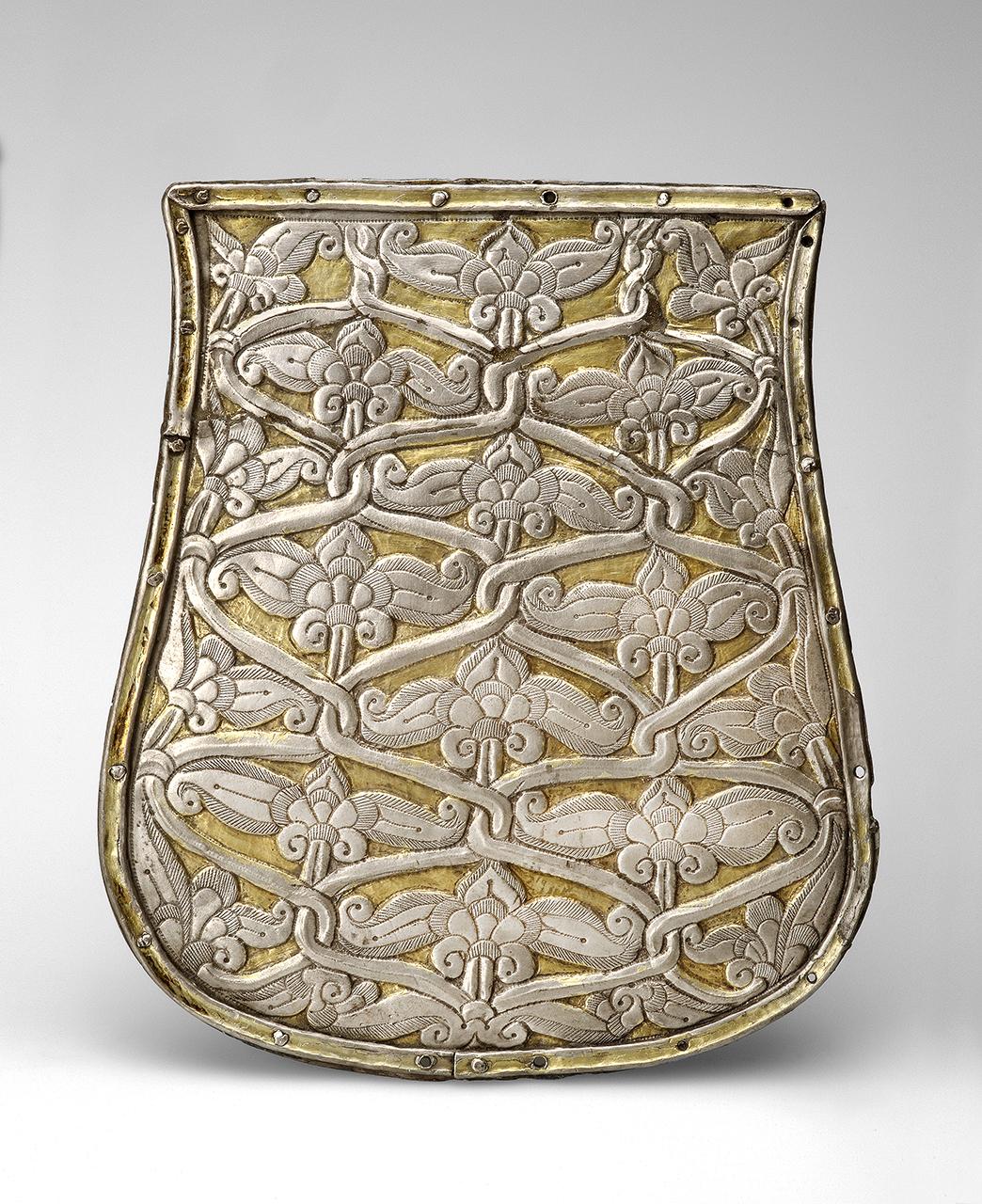
The palmette motif of the Galgóc sabretache plate, woven into an endless net, is reminiscent of oriental textiles or frescoes in Sogdian cities. The Hungarians were introduced to this pattern in their eastern settlements. A man's grave unearthed in 1868 is recorded to have contained horse bones, a choker, a pair of earrings and an Arabic silver dirham. The pierced coin was minted by the emir of Samarkand Nasribn Ahmed (914–943), issued in Samarkand in 918–919, and its last owner may have worn it sewn onto his clothes or harness at the end of the first third of the 10th century.
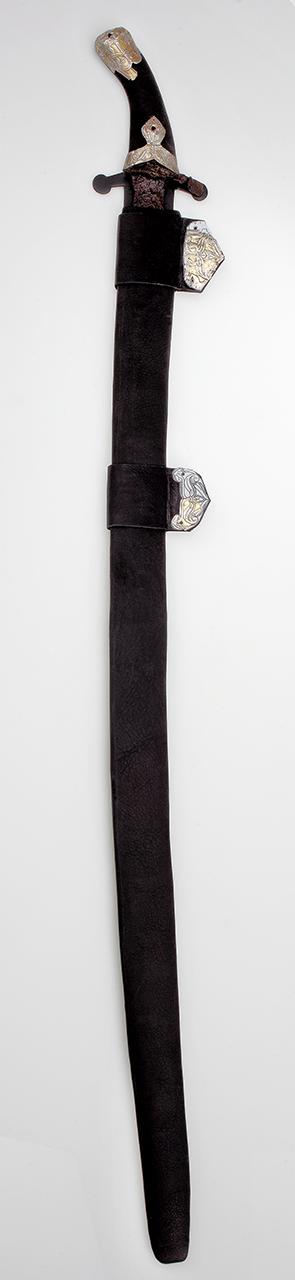
The slightly curved blade of the sabre was a characteristic weapon of the conquering Hungarians. Sabres, considered as insignia, were mounted with gold or gilded silver and decorated with a palmette pattern. Their small number suggests that only the highest ranking leaders of society possessed such magnificent weapons.
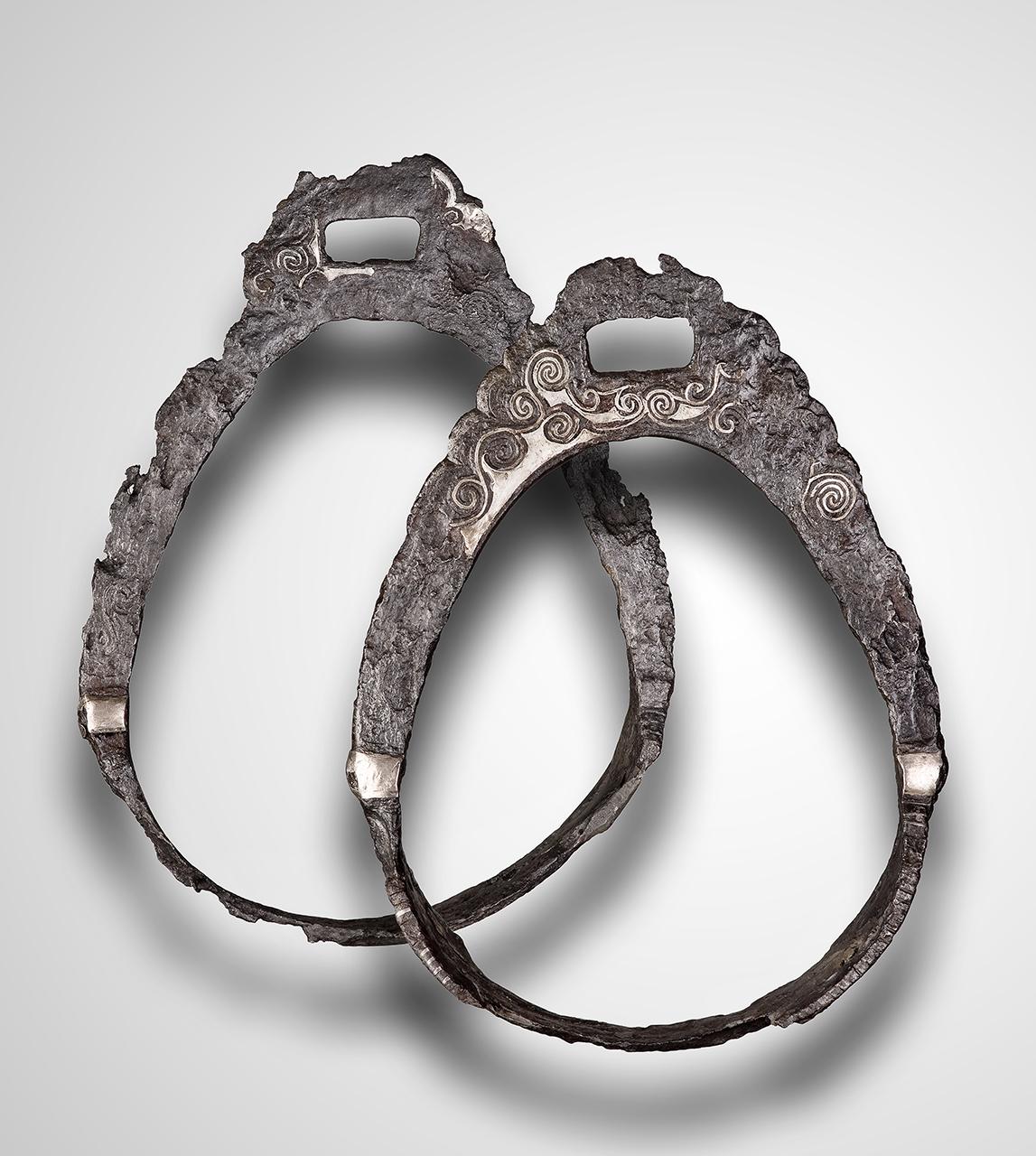
The stirrups of the Hungarian Conquest Period had a concave sole and were therefore suitable for soft-soled boots. The handles and stems of the pair of stirrups from Beregszász were decorated with silver inlay. The owner, buried with his horse, his weapons, and gilded silver mounted belt, must have belonged to the tribal-national aristocracy of the first half of the 10th century.
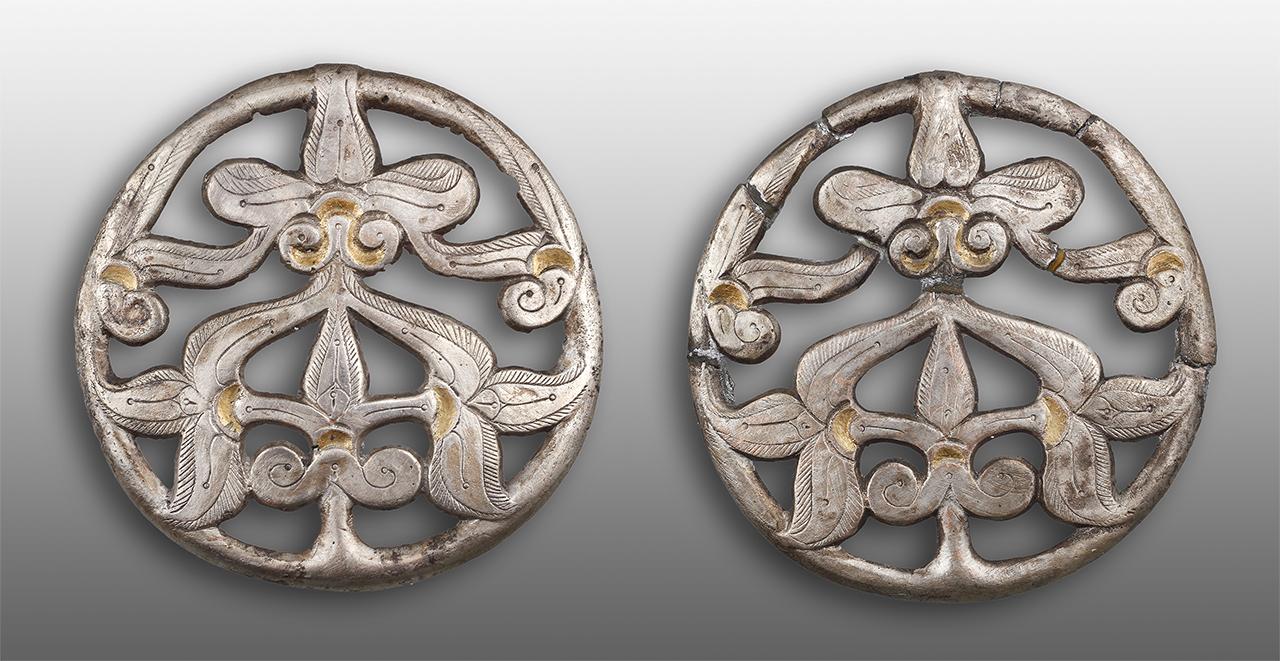
The most distinctive jewellery for women's wear was hair braid discs. Many girls and women braided their hair with leather or silk ribbons. These ribbons were studded with round or diamond-shaped mounts, and the disc was attached to the end of the braid, at about breast height. These discs (usually found in pairs) may have been crafted with moulding, openwork or pressing techniques. Most dominantly they use floral motifs, trees of life, palmettes, and, less frequently, mythical animal figures. With the exception of the Zemplén chieftain's grave, hair braid discs were exclusively part of women's costume. Hair braid discs are an archaic element of Hungarian costume, brought from the East.
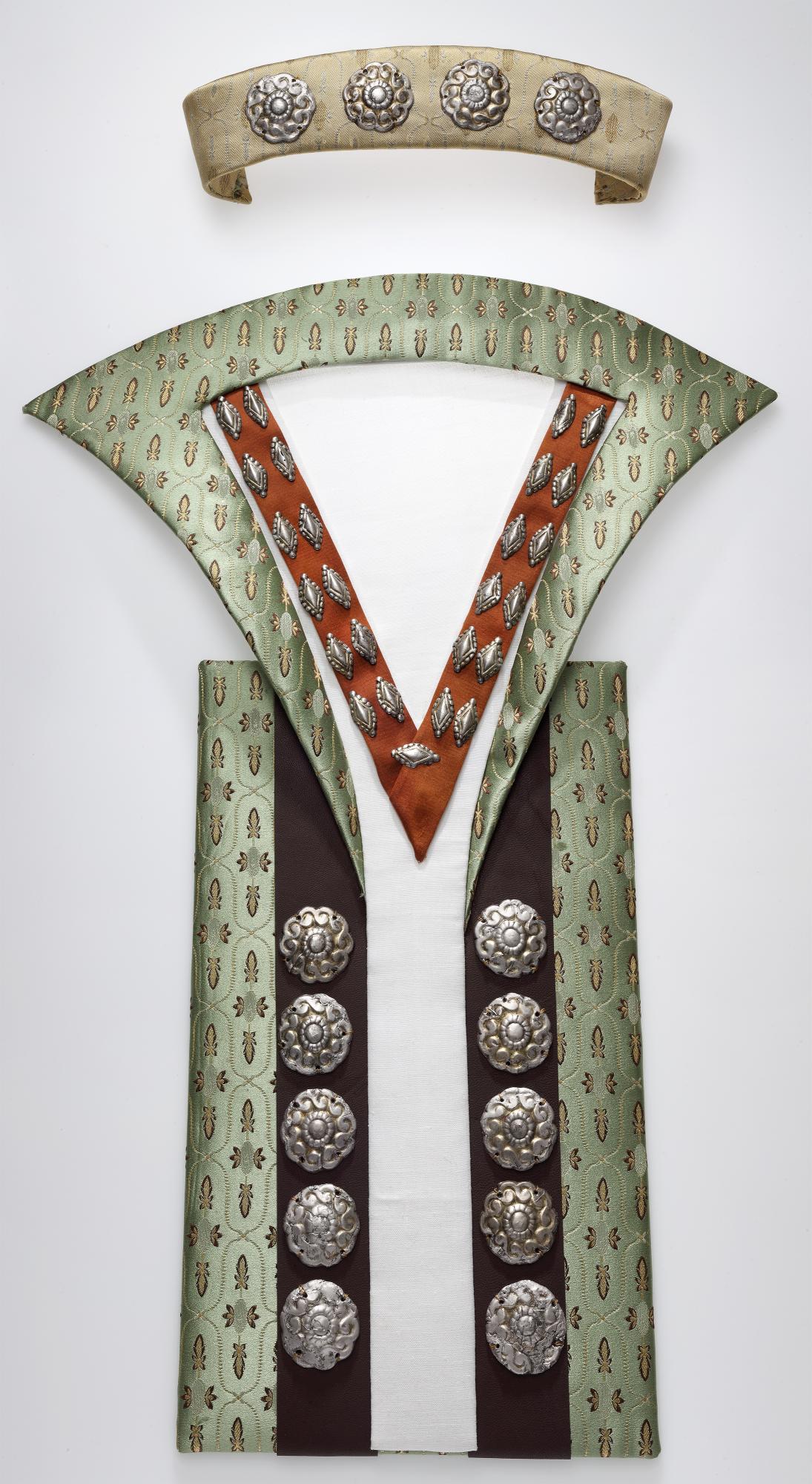
Rich women's costume is characterised by precious metal ornaments. Very little is known about the maiden headdresses and bonnets. We do not know their shape, only that they were often decorated with diamond-shaped mounts, hanging mounts or pressed round rosettes. Cast or pressed, diamond-shaped or two-piece silver and gold-plated mounts decorated the hem of the V-shaped cut-out of their shirts, the tails of which were folded over each other or buttoned at the left shoulder. As many as thirty or forty of these shirt ornaments can be seen in a set. Mounts were attached to a leather or textile ribbon and sold at fairs by the old-time ruffians. The caftan ornaments also include thin rosettes made of pressed silver and, very rarely, gold plate in the shape of a round.