The majority of the collection of a few hundred artefacts consists of gravestones and gravestone fragments. A smaller number of architectural monuments also belong here, the most significant of which are the carvings from the buildings of the Virgin Mary Provostry of Székesfehérvár, founded by King Saint Stephen. They are also early witnesses of the art-historical-archaeological interest in the material relics of the country's past: they come from the collection of the bishopric founded in 1777 and from the excavation of Imre Henszlmann in 1862. Some architectural fragments from Buda Castle are also preserved in the museum, while other items of the collection highlight the most outstanding moments in the history of medieval architecture.
Contact: Dr. Etele Kiss, kiss.etele@hnm.hu
The composition of the collection
The many wars that have hit Hungary, and especially the 150 years of Turkish rule, have not only ruined medieval buildings and churches, but also destroyed tombs in and near them. This is why many fragments of gravestones and fewer intact gravestones have been brought to the museum as archaeological finds or from building demolitions – as wall-building material. The importance of the collection lies in the fact that, in addition to the most numerous, well-known fragments of gravestones of Buda origin, the National Museum also houses gravestone fragments from other parts of the country, consequently the most important types of gravestones between the 13th–18th centuries can be studied in the collection.
The collection was considerably larger until the second half of the 1930s, when, as a result of the law defining the scope of museum collections and an agreement with the capital, most of the carvings were transferred to the Museum of Fine Arts and the capital's stone memorial collection. Today, most of the important remaining carvings can be seen in the museum's permanent historical exhibition and in the lapidarium.
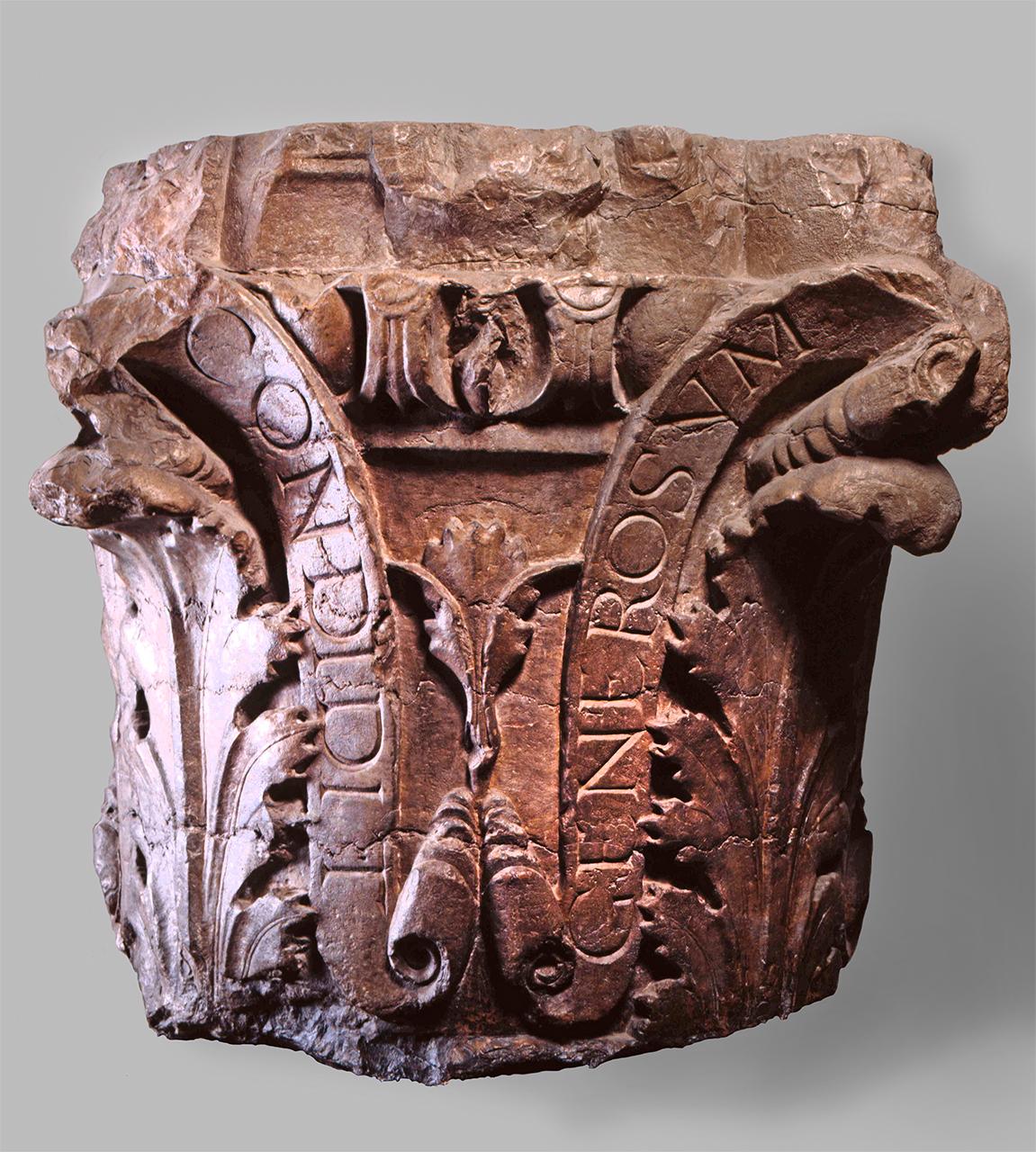
The Renaissance red marble capital from Buda Town Hall is a unique composite work: in addition to the Corinthian acanthus leaves and the row of Ionic eggs, the volute was replaced by the upper end of the ribbon, while the upper part with the abacus is only fragmentary. The inscription on the banderole reads: MATHIAS PRINC[EPS I]NVICTUS INGEN[II V]OLUPTATI HOC OPUS CONDIDIT GENEROSUM – Matthias, the invincible prince, founded this noble work for the joy of talent), and it has been suggested that it was one of the pillar stones of Matthias' library. Its original function is unknown.
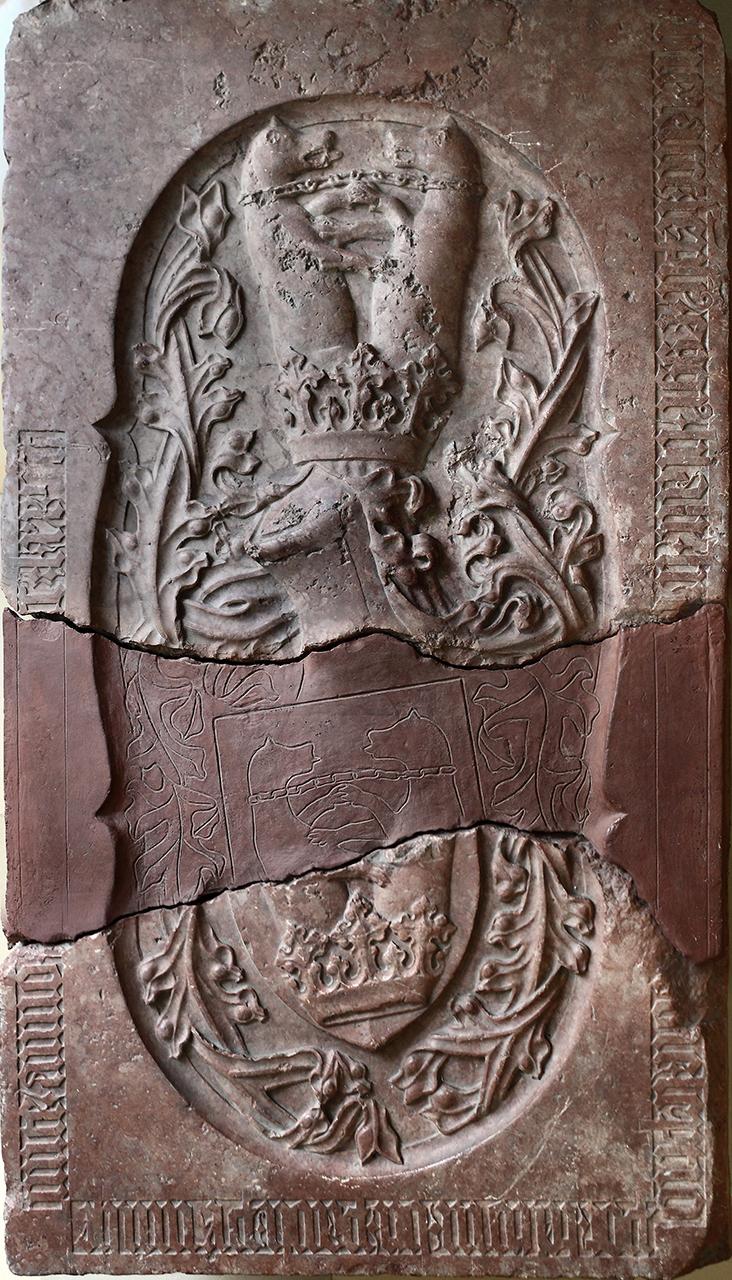
Balázs Keszi (Blasius litteratus) as a retainer of the Hunyadi family belonged to the inner circle of King Matthias; we know of a poem by Janus Pannonius addressed to him. He was a great supporter of the Pauline Order. The tombstone from the Jankovics collection was transferred to the National Museum after his death.
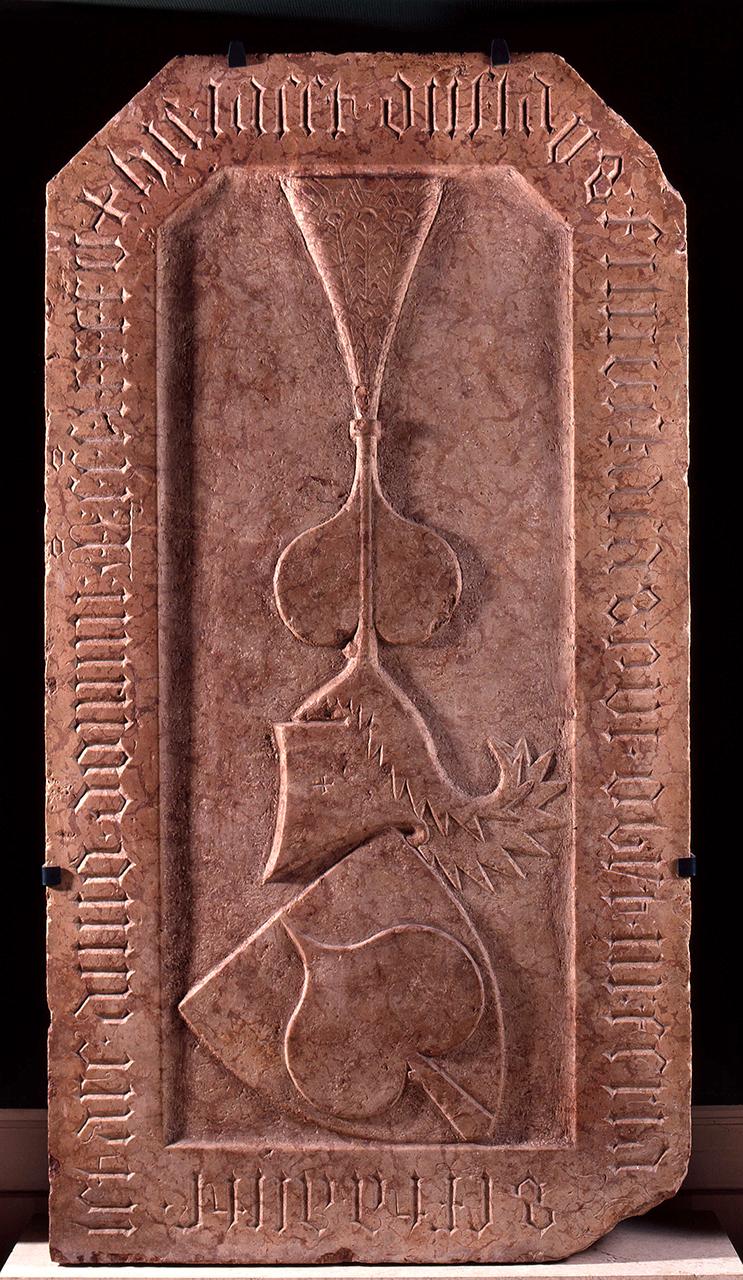
The tombstone from Serke (Širkovce, Slovakia) in Gömör County, has a recessed field with a relief decoration of the lime-leaf coat of arms of the Rátót family in a slanting shield, crowned by a knight's helmet with a helmet cap and a helmet ornament with lime-leaf and egret feathers. According to the Latin inscription (hic iacet d[omi]n[u]s la[disla]us filiius kacas qui obiit in feria sexta ante letare anno domini M CCC LXXXXV), László Kakas Kazai died on 19 March 1395. The knight from the Pásztó branch of the Rátót family was court steward to Queen Mary, who also died the same year, and later served as castellan of (Sáros)Patak and later of Árva, and his tombstone was probably originally in Sajókaza.