The Árpádian Period Collection, with its more than 30,000 items, became a self-contained unit in the museum in 1953. Besides 11th-13th century jewellery and liturgical objects donated and purchased, archaeological finds from the excavations increased the collection in an ever greater number from the 1950s. The backbone of the collection is formed mainly by everyday artefacts from the villages of the period, which are complemented by finds from excavations of early centres, comitatus and private landowner castles.
Contact: Dr. Erika Simonyi, simonyi.erika@hnm.hu, phone: +36 1 327 7738
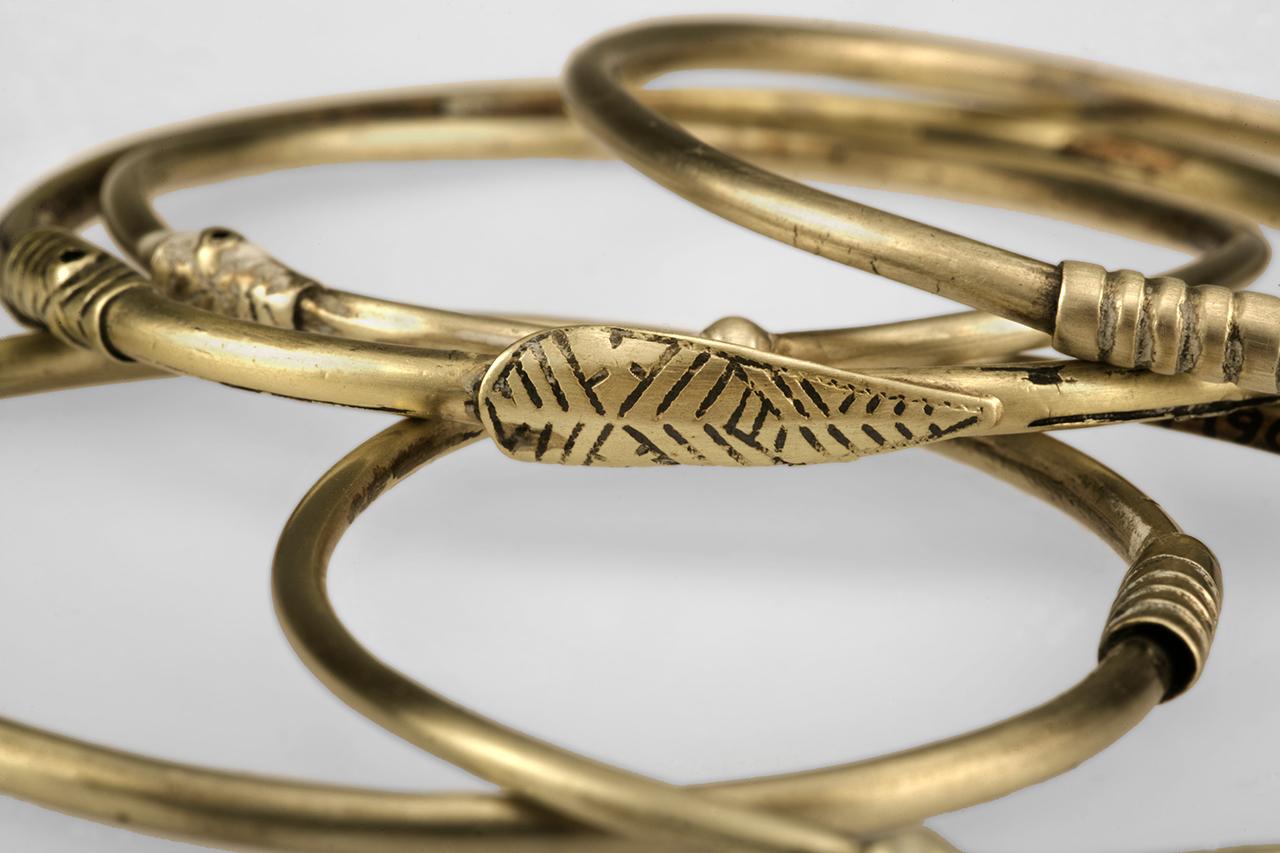
In 1903, a treasure trove was found hidden in a clay pot under the roots of a walnut tree on the outskirts of Oros, while digging. The six ferrules made of electron may have been a small family fortune hidden by its former owner during the Mongol invasion of 1241. Ferrule rings are typical only to the Carpathian Basin, and the jewellery ending in a stylized animal head or a flaring leaf ornament, was originally worn by women on both sides of the head, originally laced in a sash.
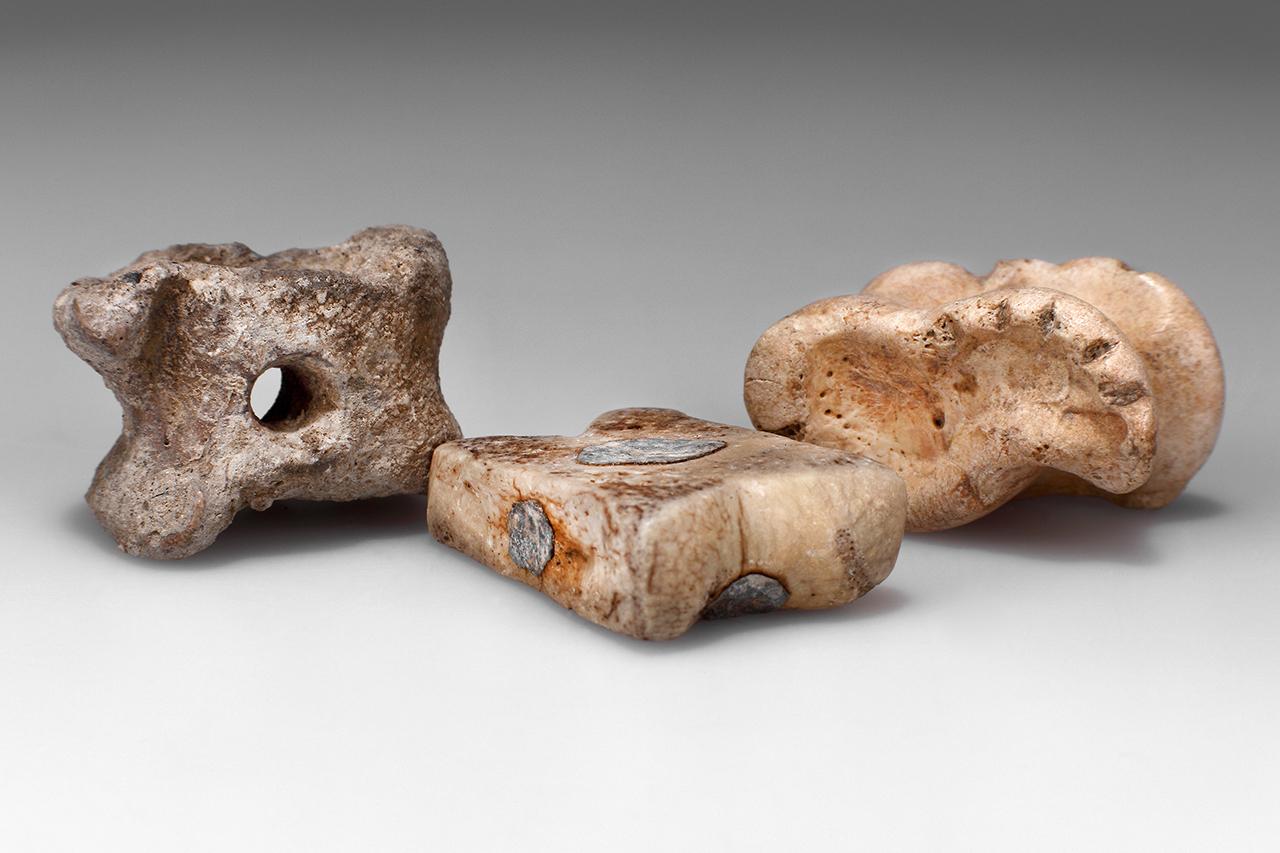
A common toy in our prehistoric villages is the frequently found so-called astragalus cube, made from the heel bone of a sheep. It was used in a similar way to the six-sided dice: several bones were thrown at once and each side of the dice had a different value. It was also used for divination and a protective role was attributed to it. More recent research suggests that certain astragali, made of lead or lead alloy, may have been used as weights in the exchange of money.
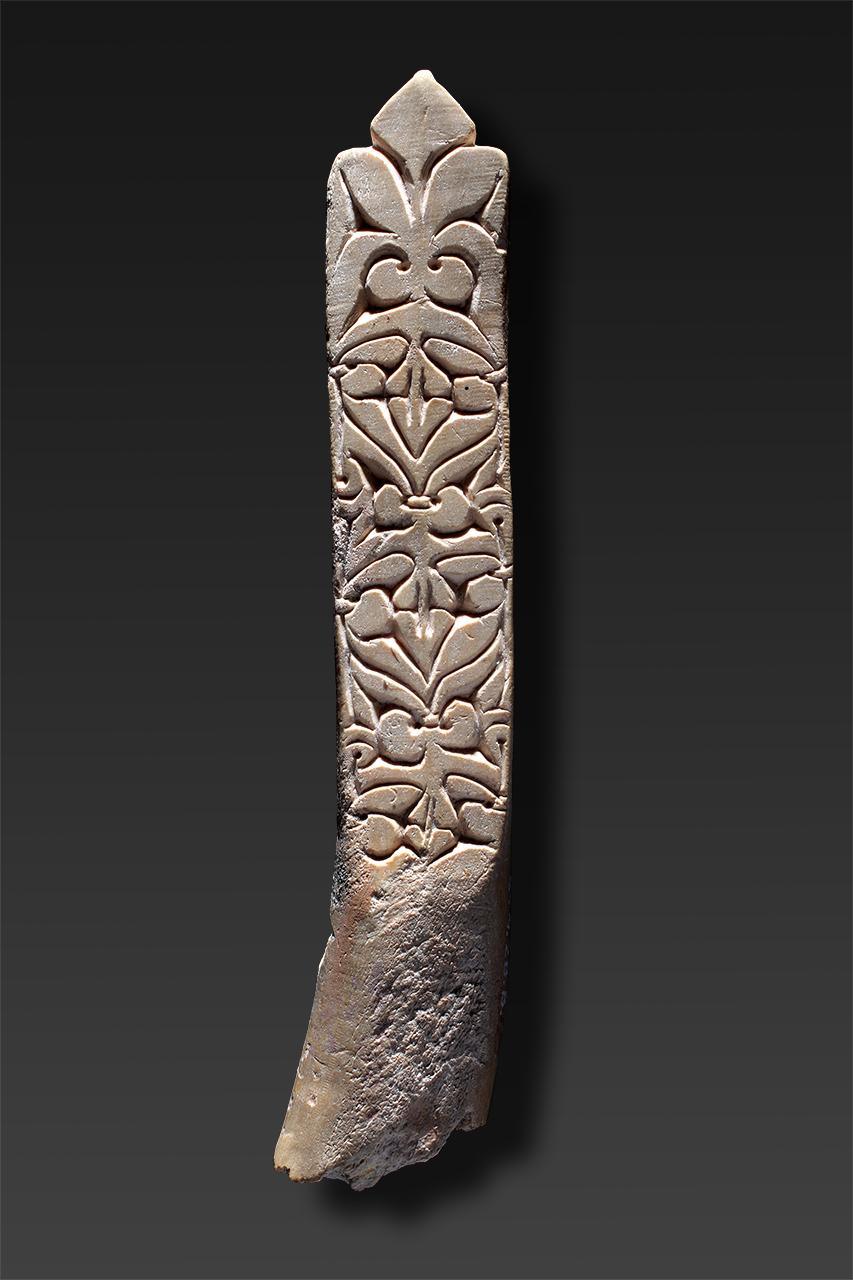
The village of Sály, at the foot of the Bükk Mountains, was owned by the Örsúr clan in the early Árpádian period. The earliest, 9th-10th centuries layers of the village have yielded a cheek piece of a bit carved from a deer antler. The palmette decorated cheek piece, typical of the legacy of the conquering Hungarians, may have been broken during its making and was probably never used. A similar fragment of an ornate cheek piece was found in a house in a 10th-century hillfort in Borsod.
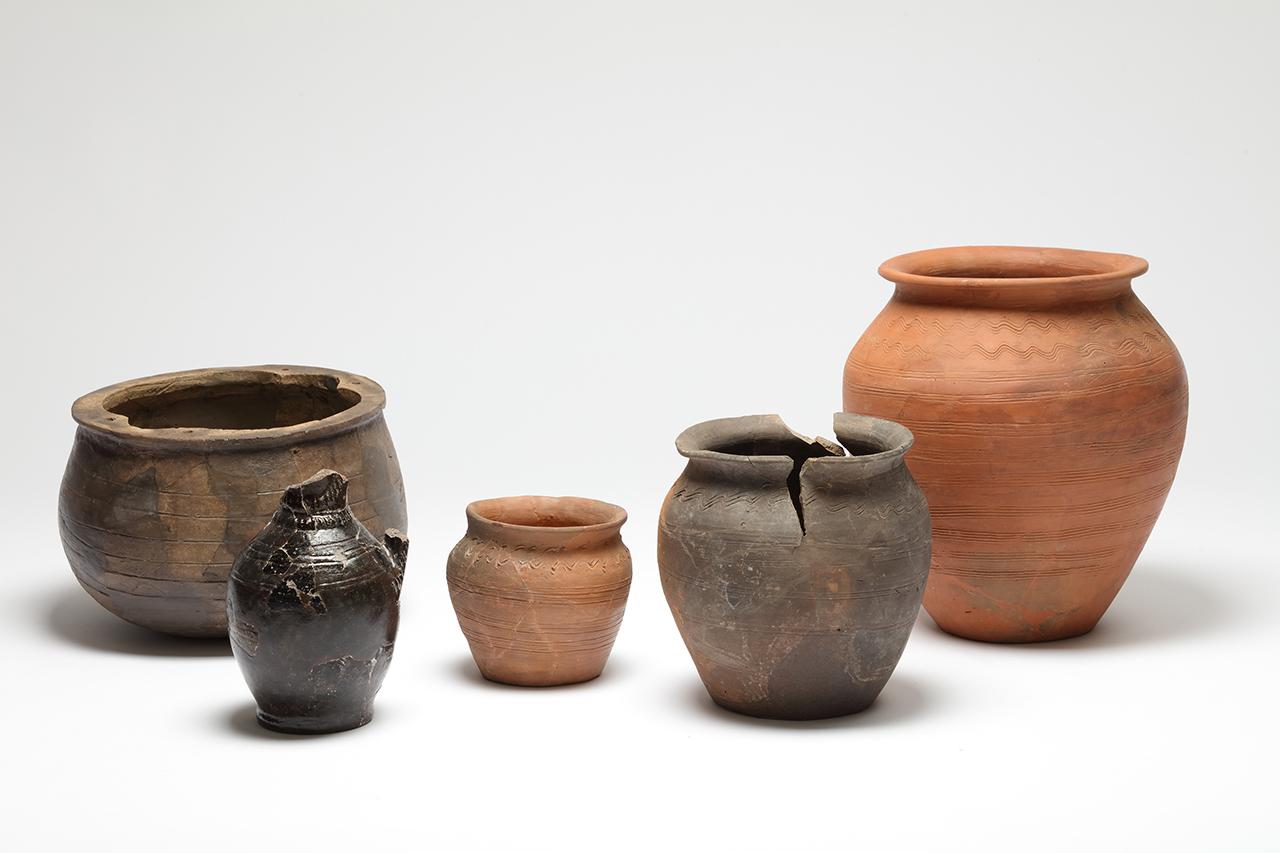
Tiszabő, situated along the salt route, was first mentioned in 1077 in charters. The rich artefacts excavated in 2006 have yielded typical vessels of the period: earthenware pots, small and large pots, and a rare imported jar with a glazed cord decoration. King Béla III's (1172–1196) coin dates a pot-burning kiln with a grate the firing chamber of which revealed spoiled pottery items cracked by the high heat. In the Carpathian Basin we know of barely a dozen similar kilns from the Árpádian period.
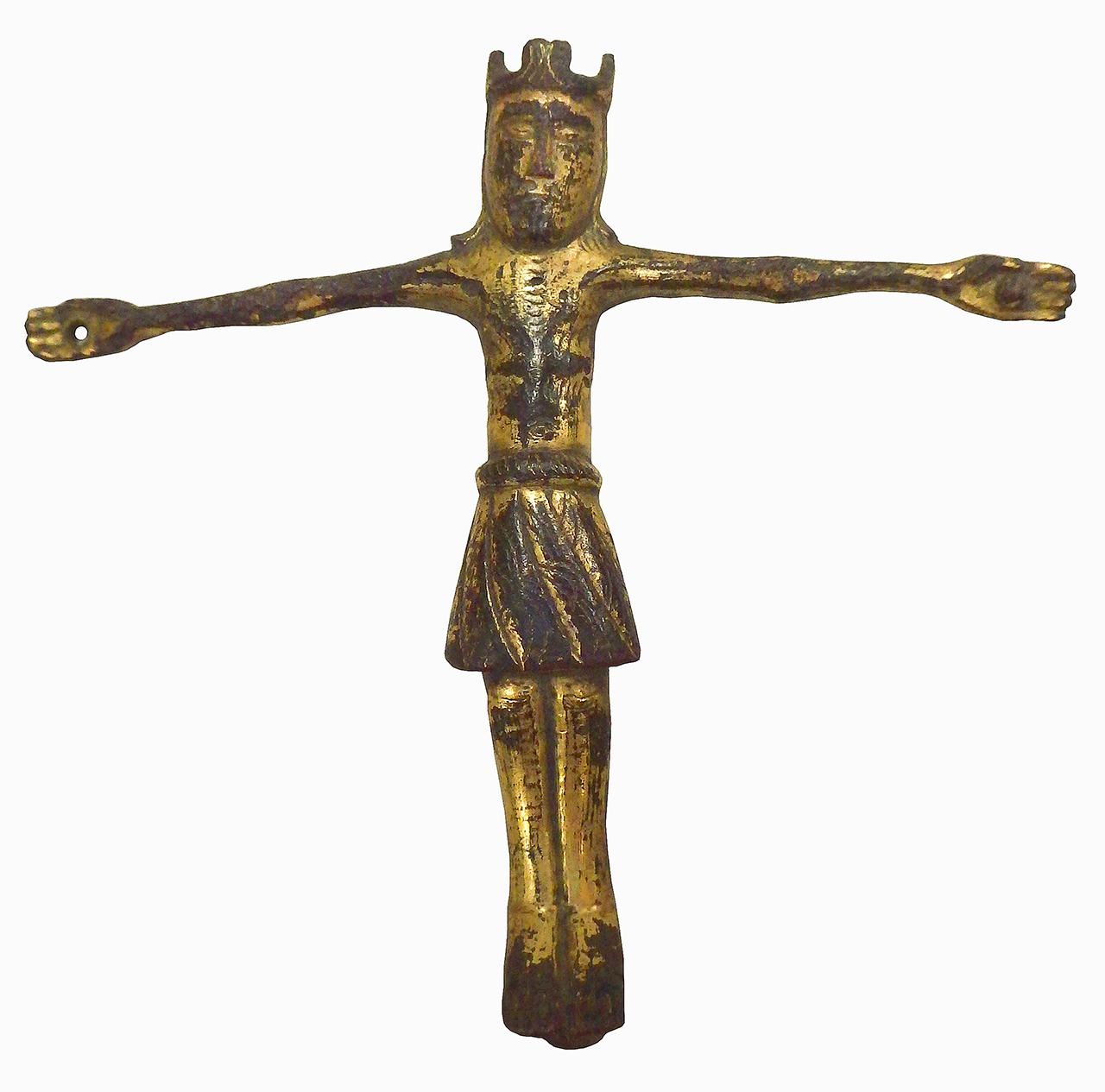
Around the 1220s, a monastery workshop in Hungary made the gilded bronze corpus that was brought to the National Museum from Zsámbék, the site of the Premonastic Monastery of the Premonstratensian Order, in 1935. The craftman has copied the style of Limoges corpora with enamel decoration, popular throughout Europe at the time, replacing the enamelling with engraved decoration. The crown on Christ's head, the figure's firm, upright posture still preserves the triumphant Christs of Romanesque corpora, but the closed-eyed, slightly bowed head of Jesus represents a transition to the Gothic depiction of the suffering Christ (vir dolorum).
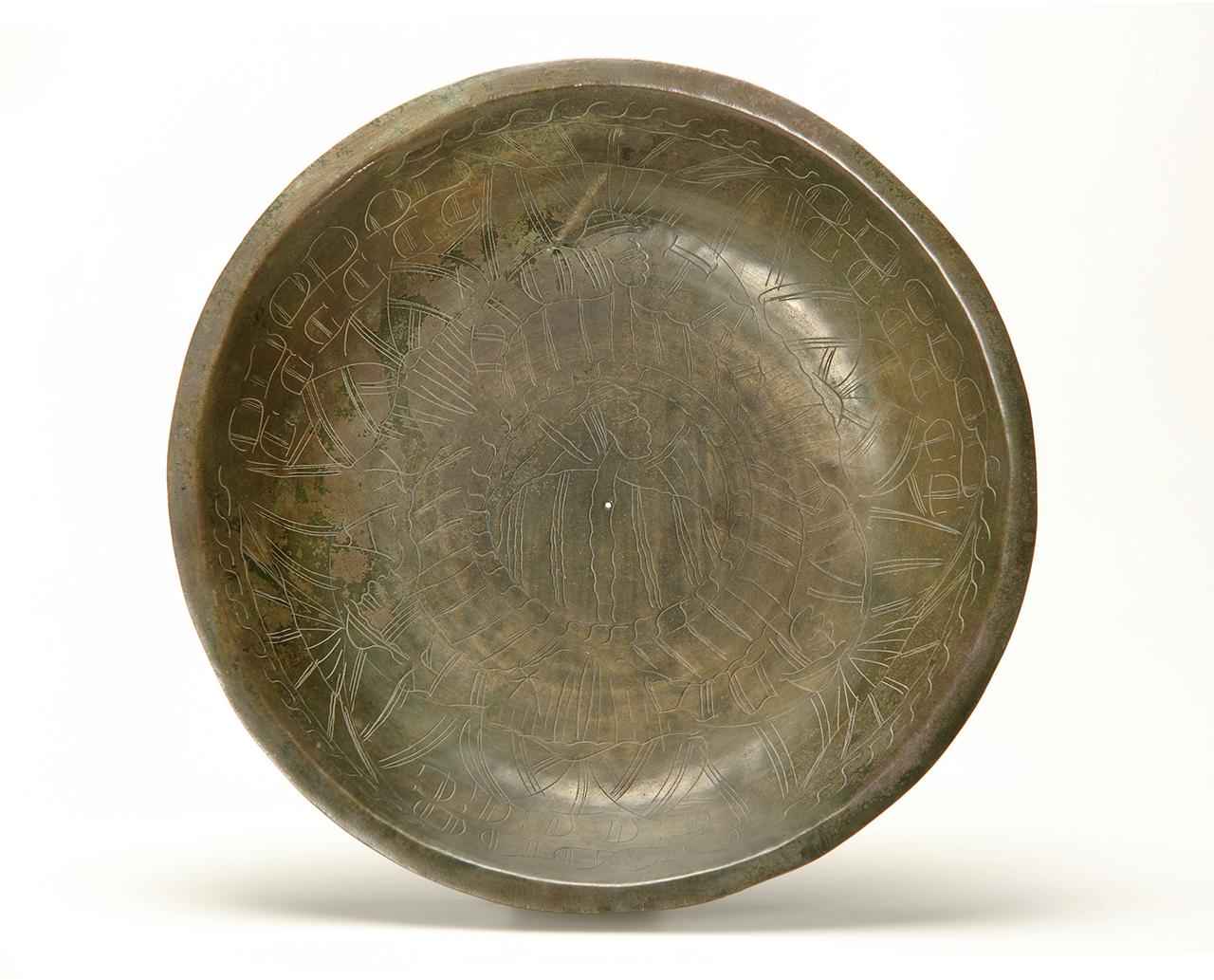
This bronze bowl with engraved decoration from Pusztavasad (Pest county) is probably one of the treasures hidden because of the Mongol invasion. The bowl belongs to the category of the so-called virtue and sin bowls. The stylised man in a hat depicted in the middle symbolises pride, origin of all sins in medieval teaching.
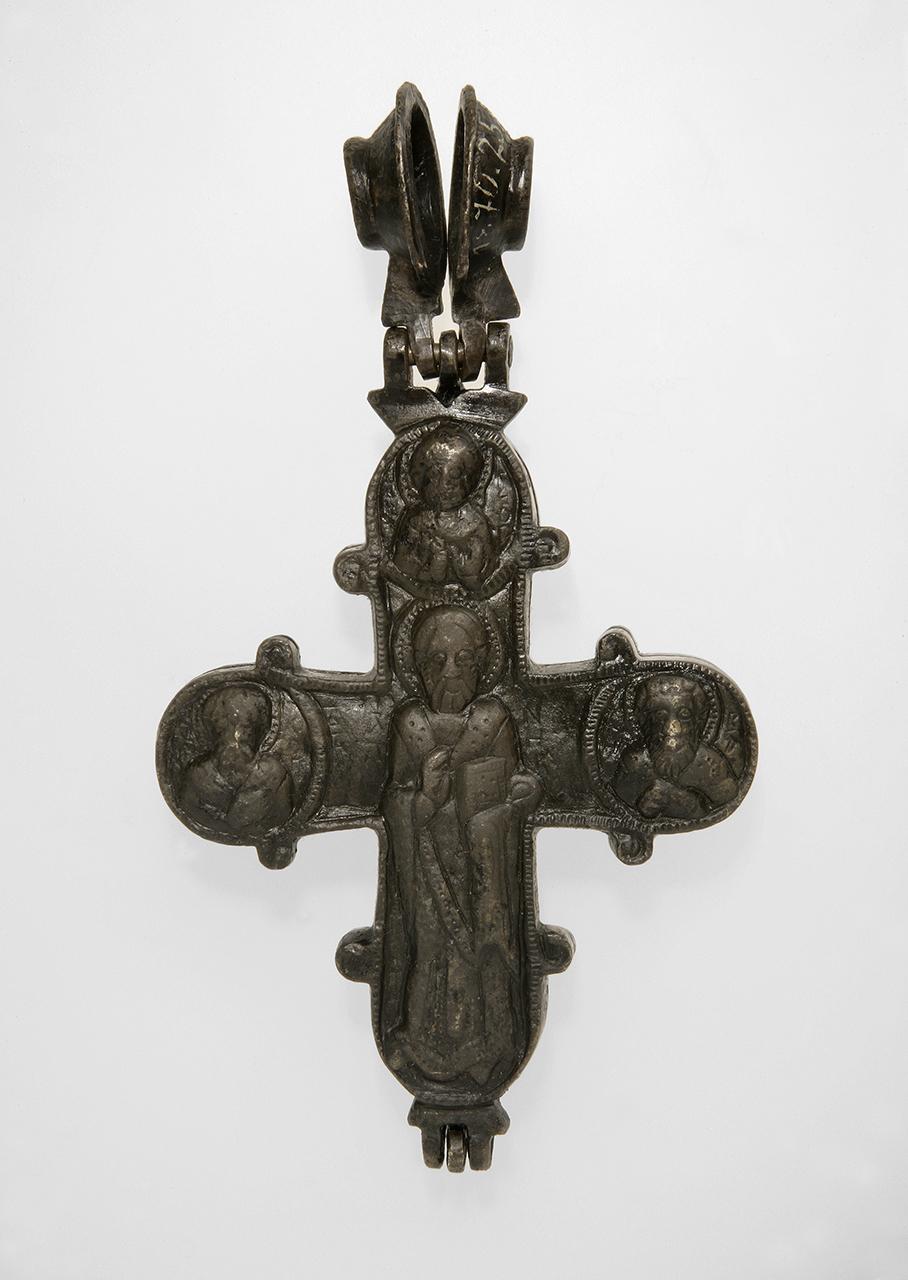
The reliquary cross may have been a gift of people fleeing Kiev from the Mongols to Dunaszentmiklós. The reliquary pectoral cross depicts Christ in the centre, the Virgin Mary and St. John the Baptist on either side, with an archangel above and below Christ. It was hidden among the treasures of the church of Dunaszentmiklós in the winter of 1242, along with another Kiev-type reliquary cross, a gilded crucifix and two processional crucifixes.