
Room 17 / Hungary under the Treaty of Trianon: from the election of the regent to the last year of peace before World War II (1920–1938)
In this room visitors may get acquainted with the recovery and revisionist aspirations of the truncated country during the period named after Regent Miklós Horthy. The results of the economic, social and cultural consolidation associated with Prime Minister István Bethlen were destroyed by the Great Depression that began in 1929. With the crisis extremist radical movements grew stronger, and Hungary, left defenceless against all the great-power dominance after the Treaty of Trianon, slowly but steadily came under the influence of the rising Nazi Germany of Hitler. The events of the Double Jubilee Year of 1938 were the last large-scale demonstrations of the regime's political elite to distance itself from the extreme right and Nazi Germany.
Fun facts:
- Lord Rothermere, the English media tycoon, launched a sympathy movement for a revision of the unjust Treaty of Trianon that has burdened the country. His action made him so popular in Hungary that it was suggested that his son should be crowned Hungarian king. Relics of Rothermere's campaign are exhibited in this room.
• At the invitation of Kuno Klebelsberg, Minister of Culture, Professor Albert Szent-Györgyi came to Szeged, where he discovered vita min C. A high-facsimile of his Nobel Prize for Medicine, which he received in 1937 for his groundbreaking discovery, is also on dis play.
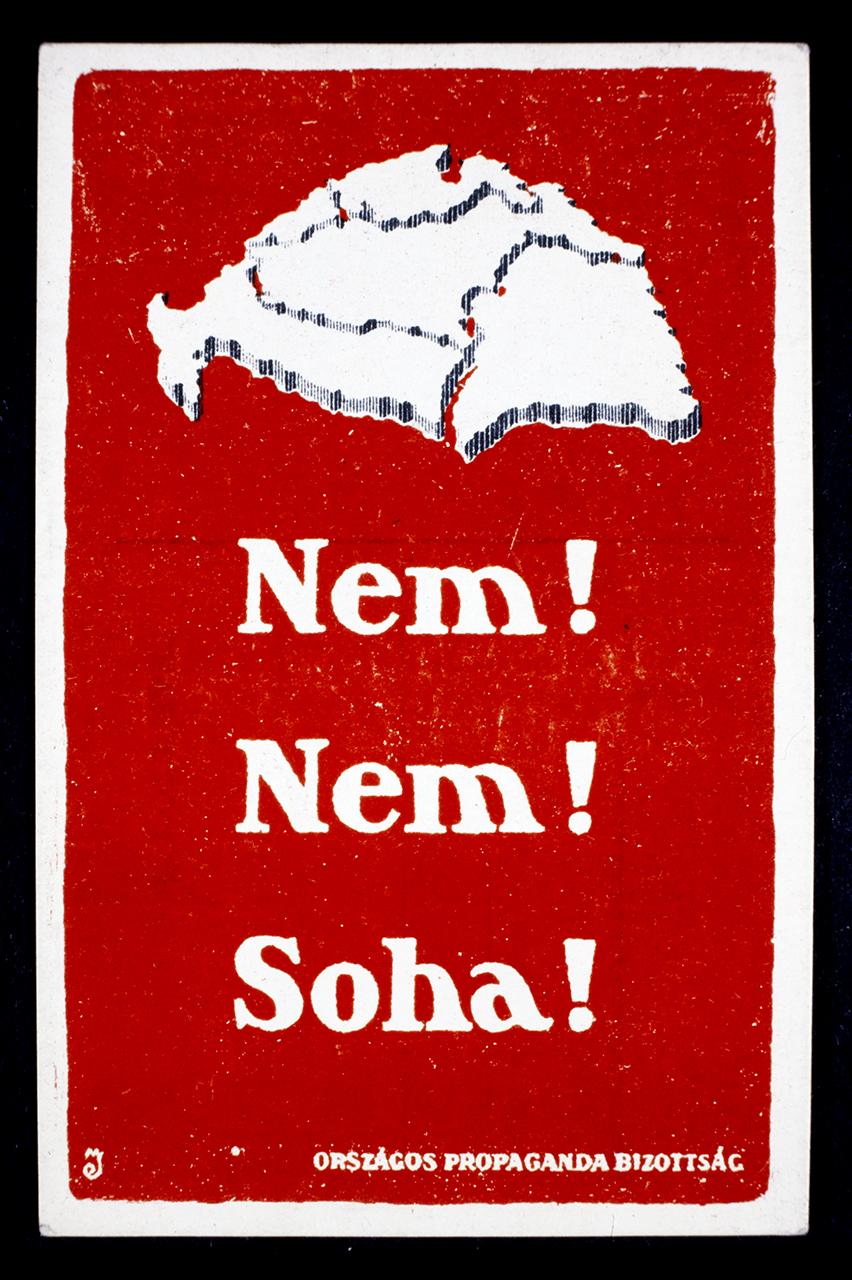
The Treaty of Trianon, which concluded the First World War, dismembered Hungary under humiliating conditions. Ernő Jeges's protest poster gives expression to this incomprehensible and indigestible trauma for the country's population using simple means.
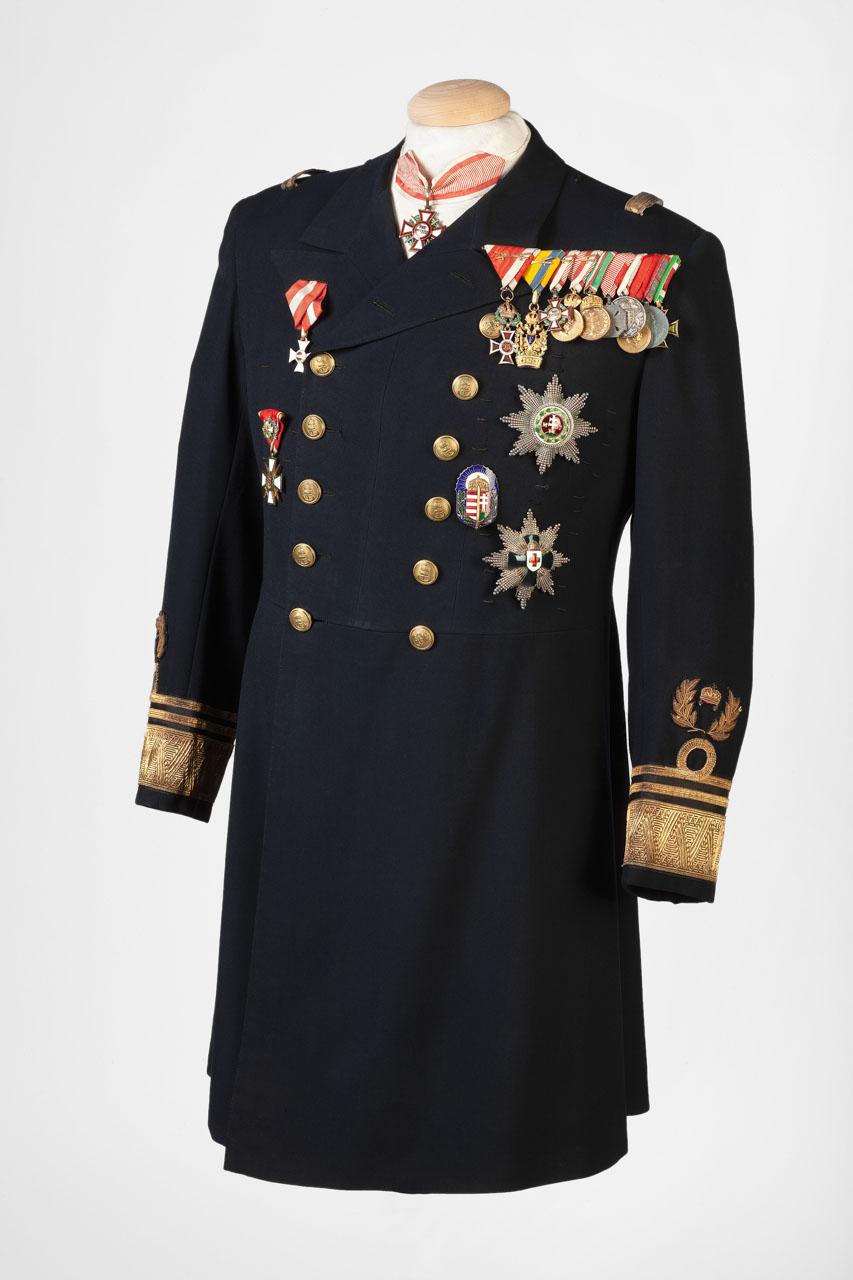
Miklós Horthy, the last commander of the Austro-Hungarian Monarchy's navy became the regent of truncated Hungary. Horthy also preferred to wear his naval uniform even as regent. He carried it with him when he was arrested by the Germans occupying Hungary at the end of World War II. The uniform on display was brought back to Hungary from Horthy's emigration in Portugal.
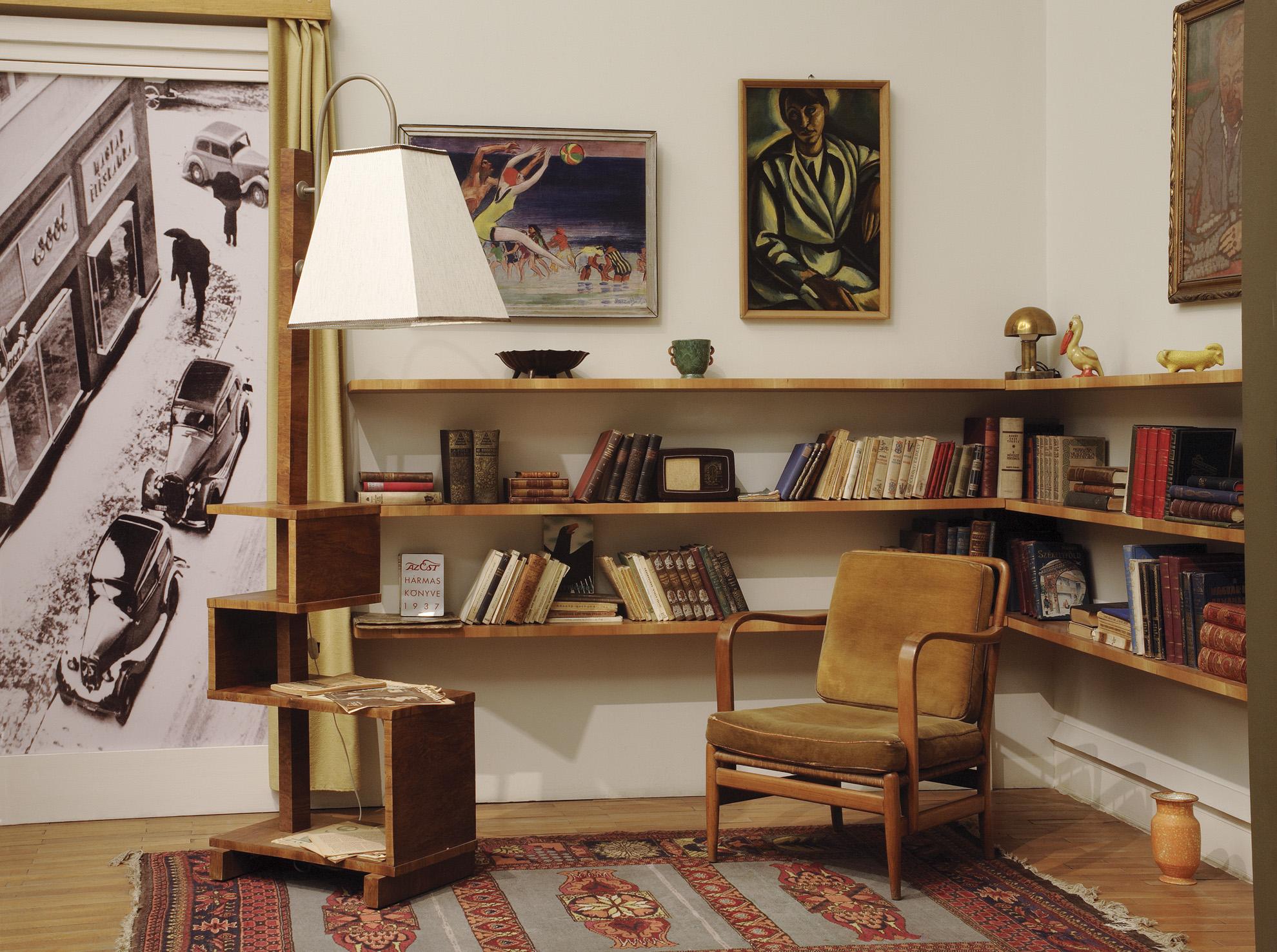
A counterpoint to the Neo-baroque-style: a reading corner in a modern, metropolitan apartment of intellectuals.
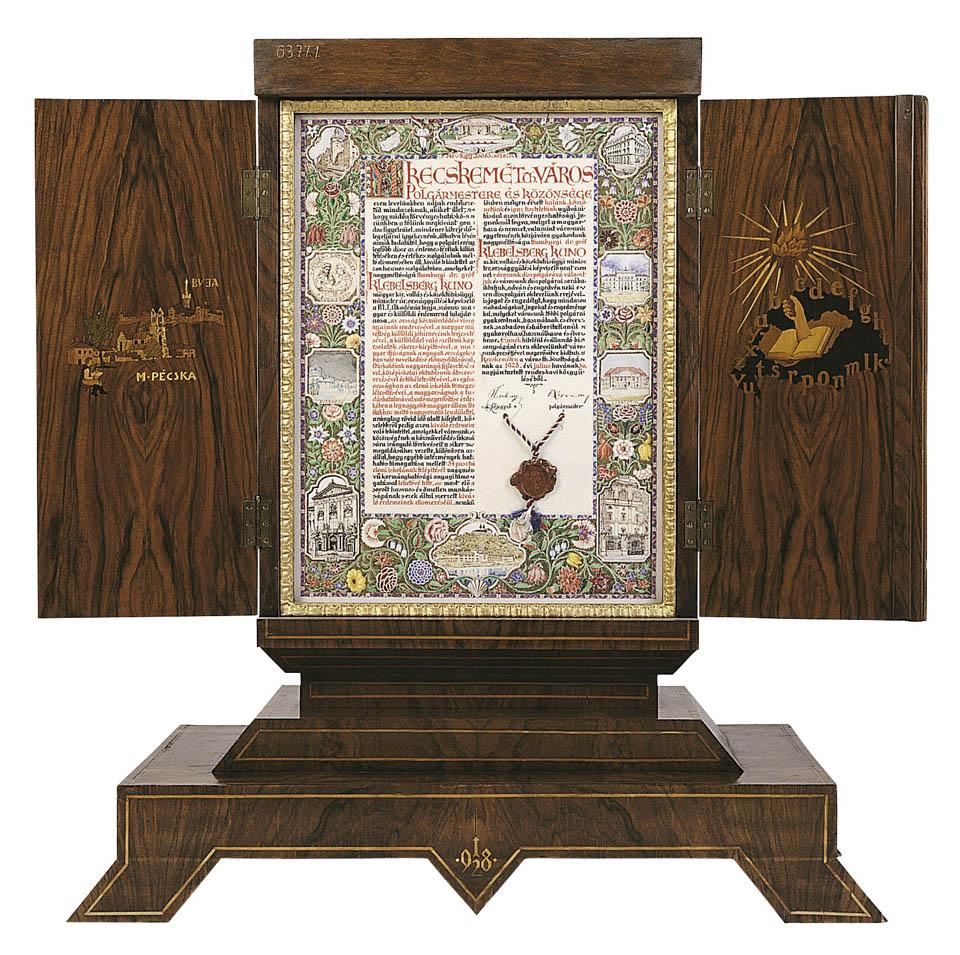
In 1928, Count Kunó Klebelsberg received a special honorary citizen's certificate from the city of Kecskemét, built into a wooden cabinet decorated with inlays. The small pictures on the certificate show the most important achievements of the century's outstanding cultural policymaker.
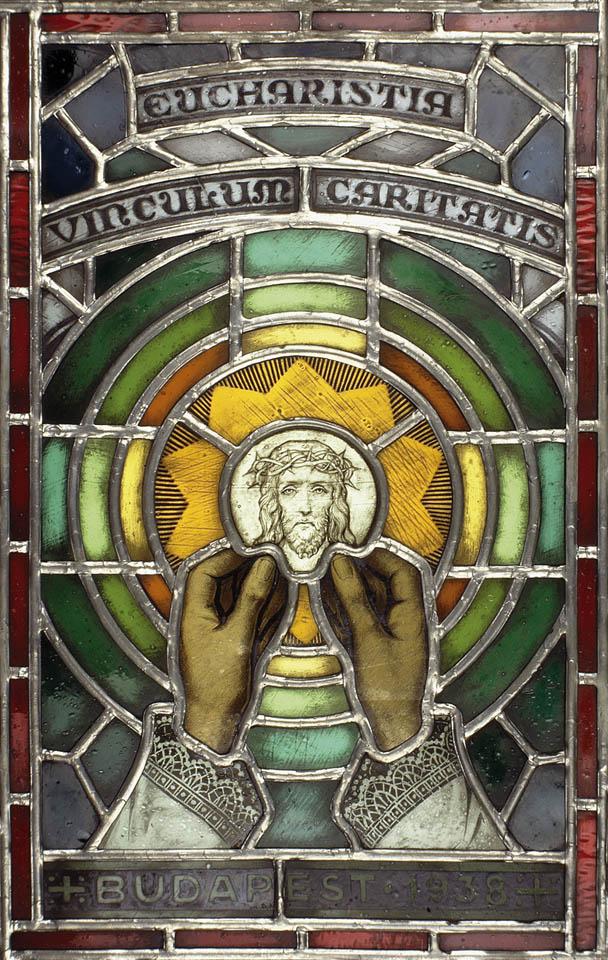
In 1938, Hungary hosted the International Eucharistic Congress and commemorated the 900th anniversary of King Saint Stephen's death. Events of the Double Jubilee Year also marked the regime's distancing itself from the ideology of Nazi Germany.
It was Count István Bethlen's achievment that Hungary, which had been destroyed by the Treaty of Trianon, began the process of economic recovery and political consolidation.
