The collection is responsible for the photographs made from August 1, 1919 until the end of the fights in the Second World War. Excellent photographs capture the economic life of the period, political events and actors in and out of parliament, everyday life on the streets, and village festivities and work. Images of cultural, ecclesiastical and sport events are also represented in the collection. There is an abundance pictures reflecting the country's international relations. A large number of images are related to the fronts of the Second World War, military events and life in the home front, as well as to the Holocaust.
Some of the pictures were taken by professional photojournalists or amateurs who took professional photographs, such as Gyula Jelfy, Oszkár Kallós, Rudolf Balogh, Sándor Bojár, Károly Escher, Ernő Vadas, Kálmán Szöllősy, Imre Kinszki, Judit Kárász and Márton Munkácsi.
Contact: Lajos Sóti, soti.lajos@hnm.hu, Tel.: +36 1 327-7784
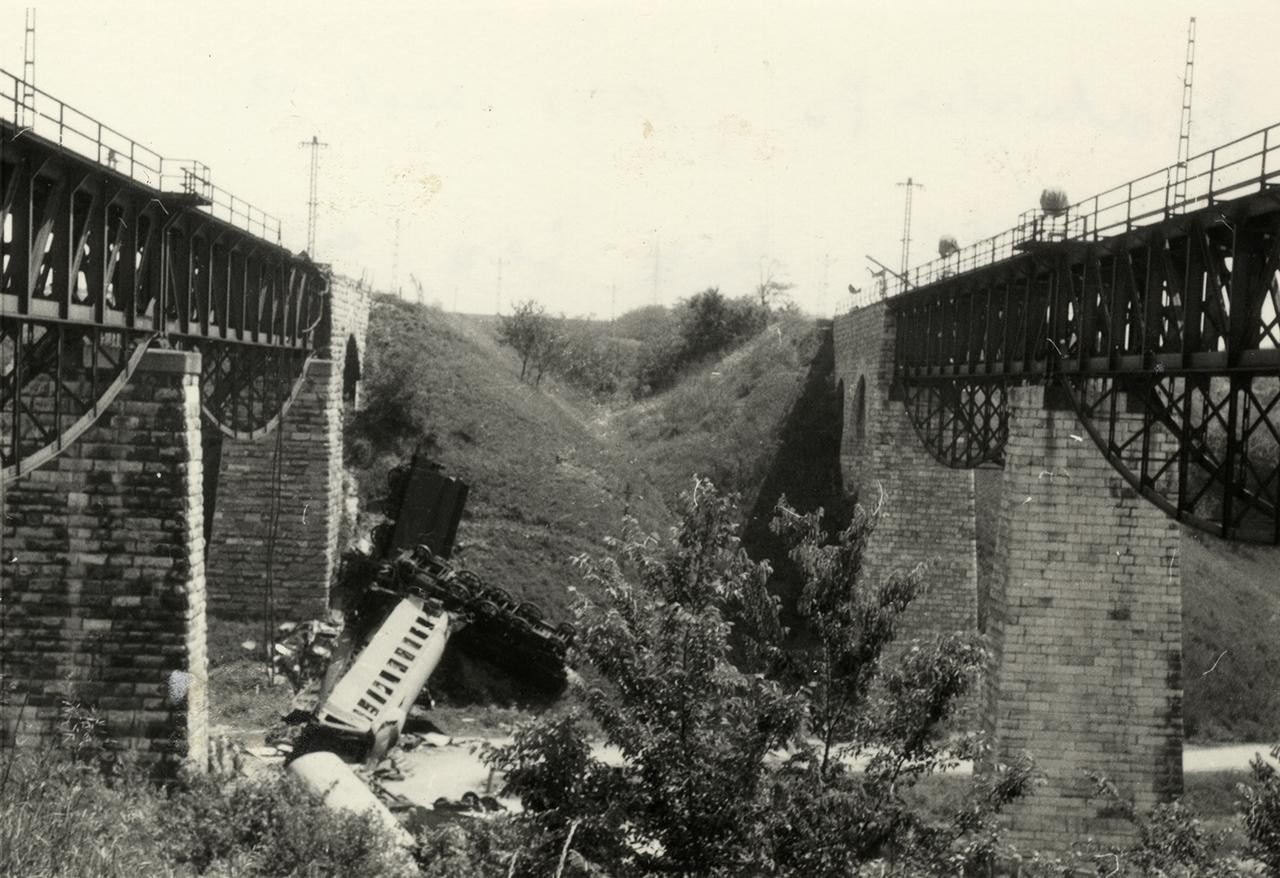
Shortly after midnight on 13 September 1931, an explosion occurred at the Biatorbágy viaduct. 22 passengers on the Vienna–Budapest express train died in the bombing. The assassin was Szilveszter Matuska, who lived in the Austrian capital and whose motives are still unknown today. Matuska was sentenced by the Austrian authorities to 6 years in prison, then to life imprisonment in Hungary, which he served in Vác prison until 1944, when he escaped in the chaos of the Red Army's advance and then disappeared.
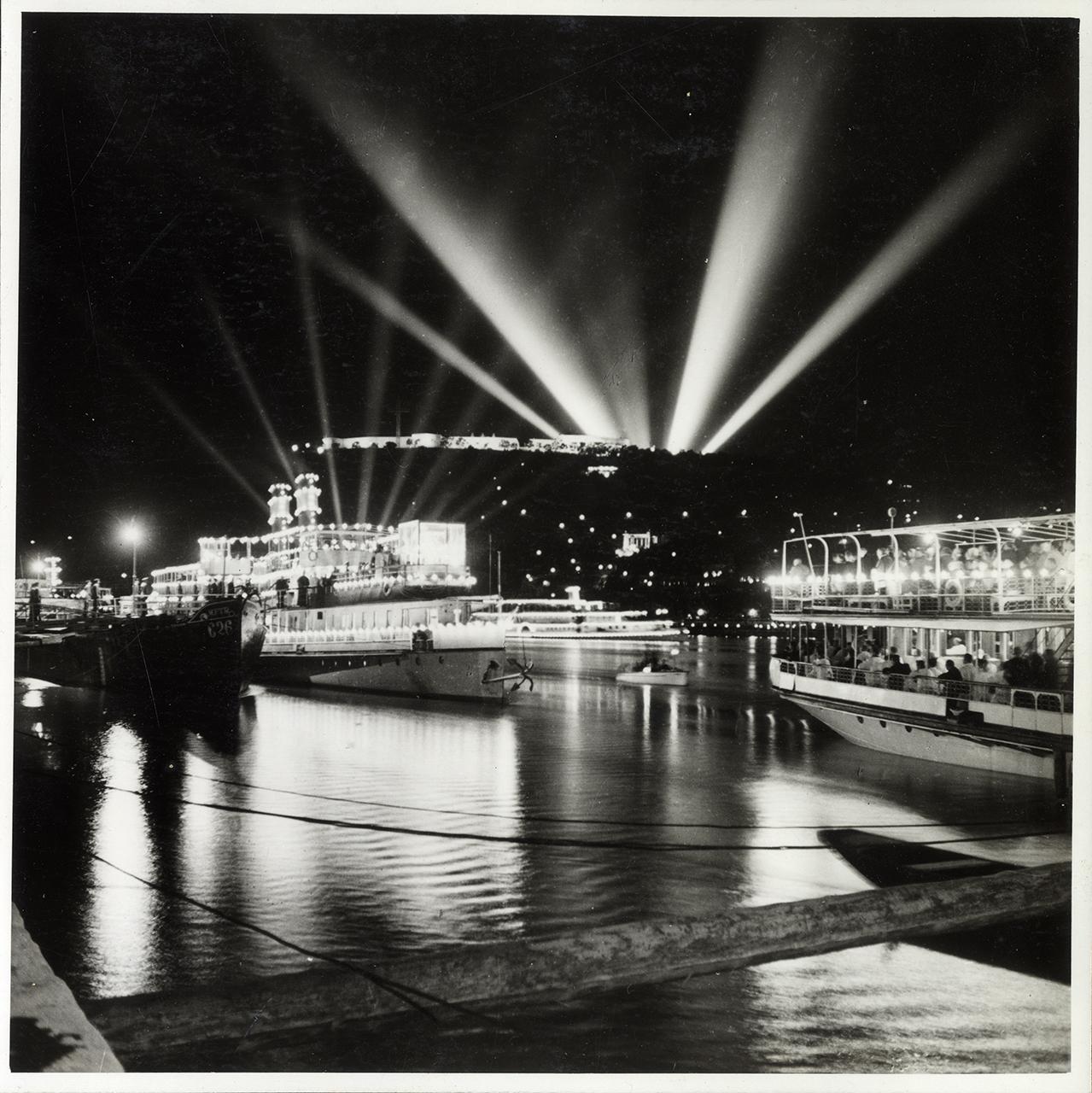
The World Eucharistic Congress held in Budapest in May 1938 was an important event in the history of Hungary during the Horthy era. One of the highlights was the procession of the water, with boats carrying the Blessed Sacrament, accompanied by the Hungarian high priests and Cardinal Eugenio Pacelli, later Pope Pius XII, while Budapest was adorned by festive illumination and a light show on Gellért Hill,
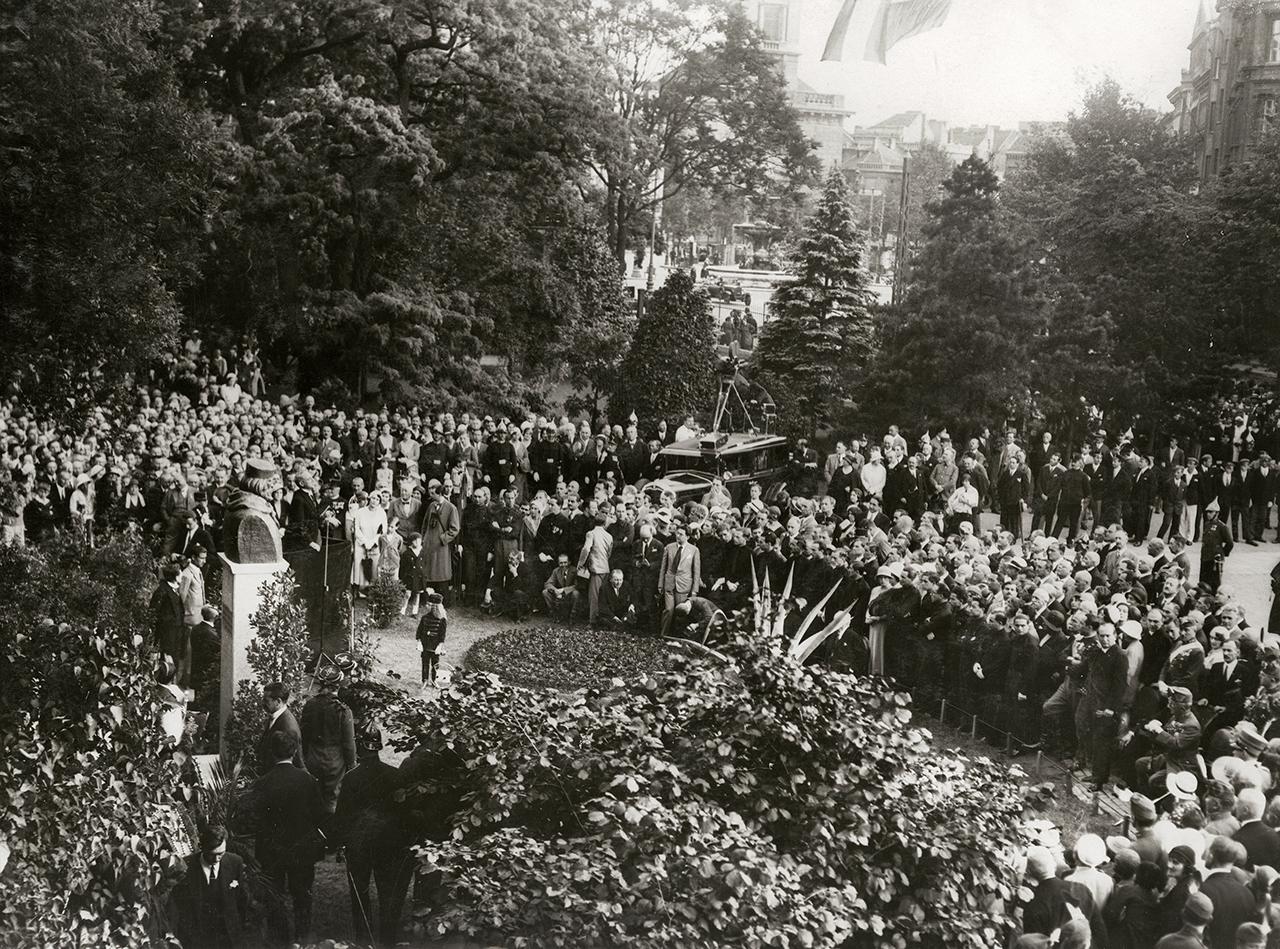
In the period between the two world wars, a number of public artworks were added to the garden of the Hungarian National Museum, including a statue of Giuseppe Garibaldi (by Lívia Kuzmik). The importance of the event is shown by the fact that the Hungarian Film Office's broadcast van is also there amidst the large audience.
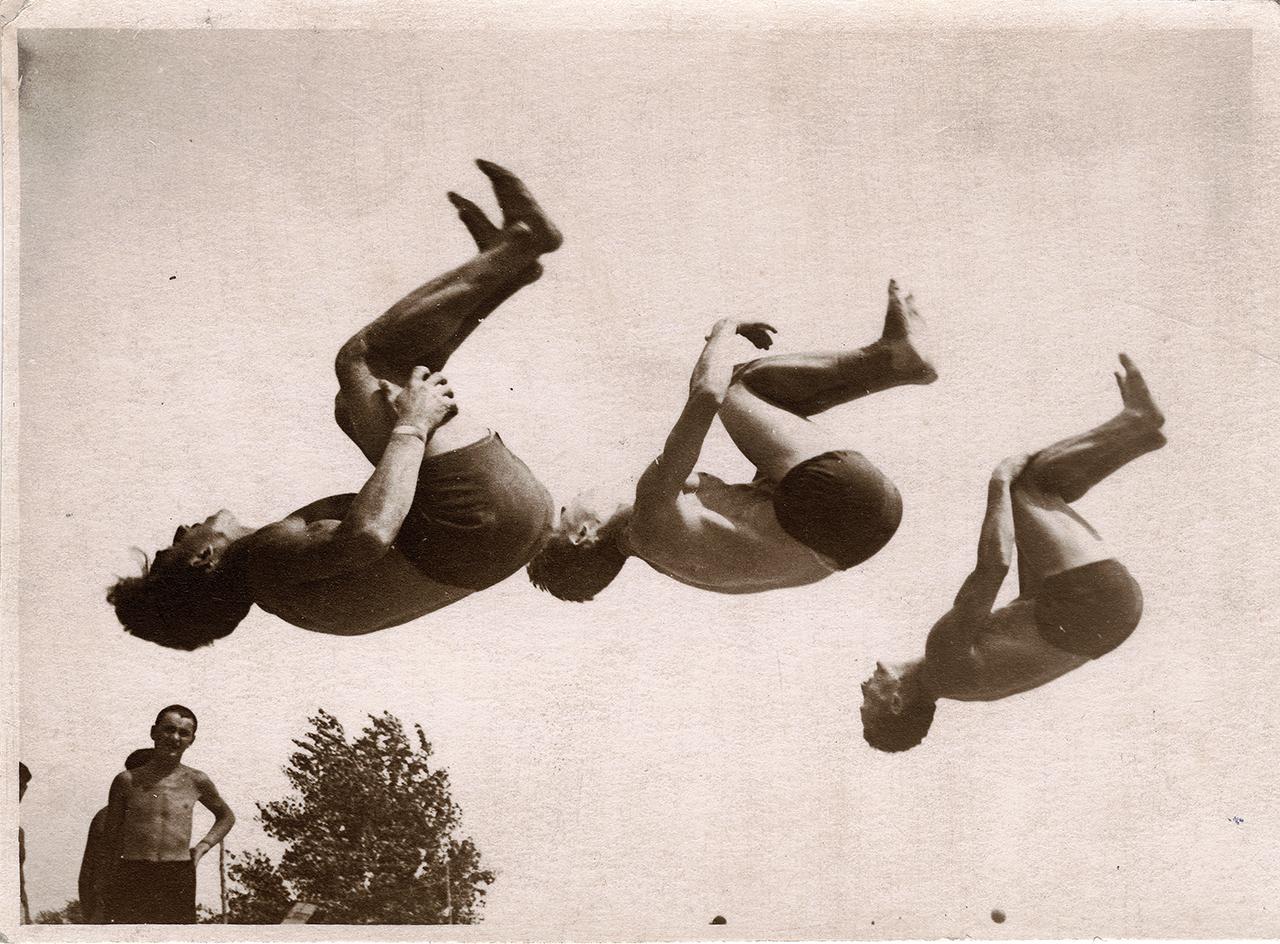
From the very beginning, one of the main profiles of the MTE (Workers' Physical Training Association), founded in 1908, was gymnastics. In the mid-1920s, the association built the sport facility Gödi Fészek (Nest) on the lot they had purchased in Göd, which also hosted a number of cultural and sporting events, including this gymnastics show, of which this triple somersault is a well-captured moment.
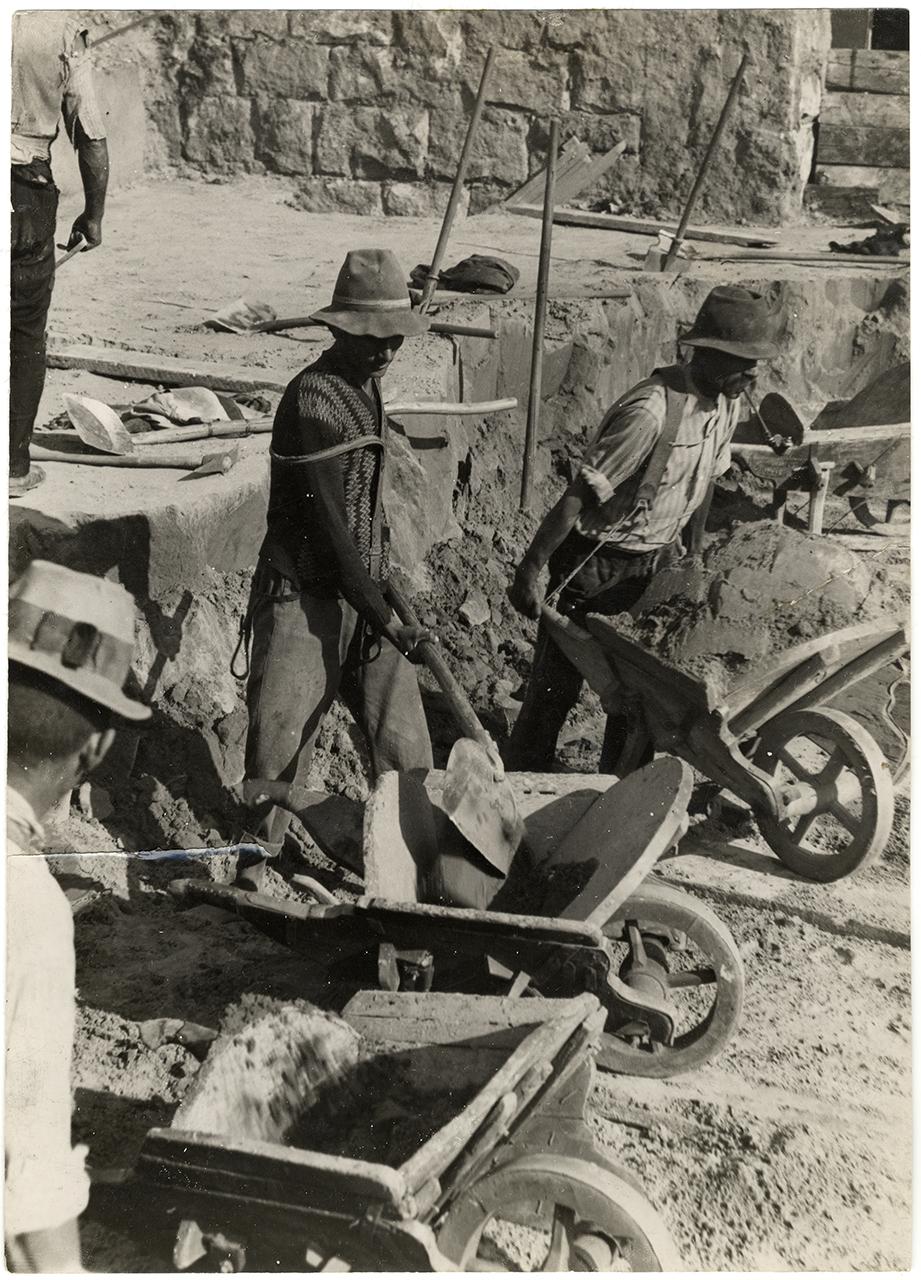
Before the great industrialisation, one of the most important tasks in construction was carried out by the navvies, who carried earth to railway embankment foundations and roadworks. Their name in Hungarian, "kubikos" derives from the German Kubikmeter, as they were paid by the amount of earth they moved.