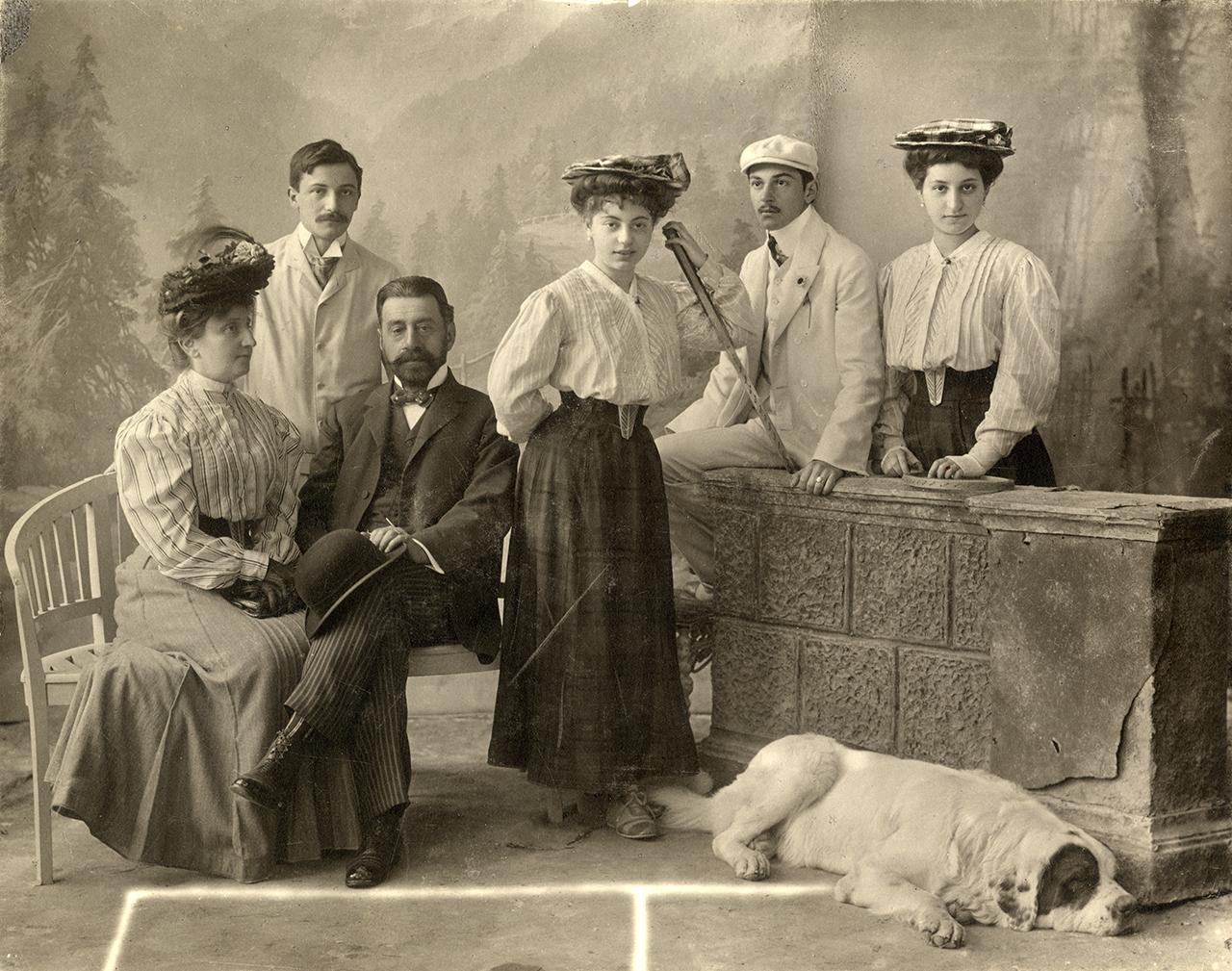
The collection includes photographs of unknown people, or people who are identified by name but do not play a significant role in public life, dressed in clothes typical of their age, social status or current life situation. The earliest of these are daguerreotypes of unknown people. Most of the photographs preserved here are studio shots taken by identifiable, professional photographers, which allow us to trace the activity of a particular photographer and studio, and the variety of fashionable settings, photographic forms and backdrops that changed from time to time.
Contact Katalin Bognár, bognar.katalin@hnm.hu Tel: +36 1 327-7784
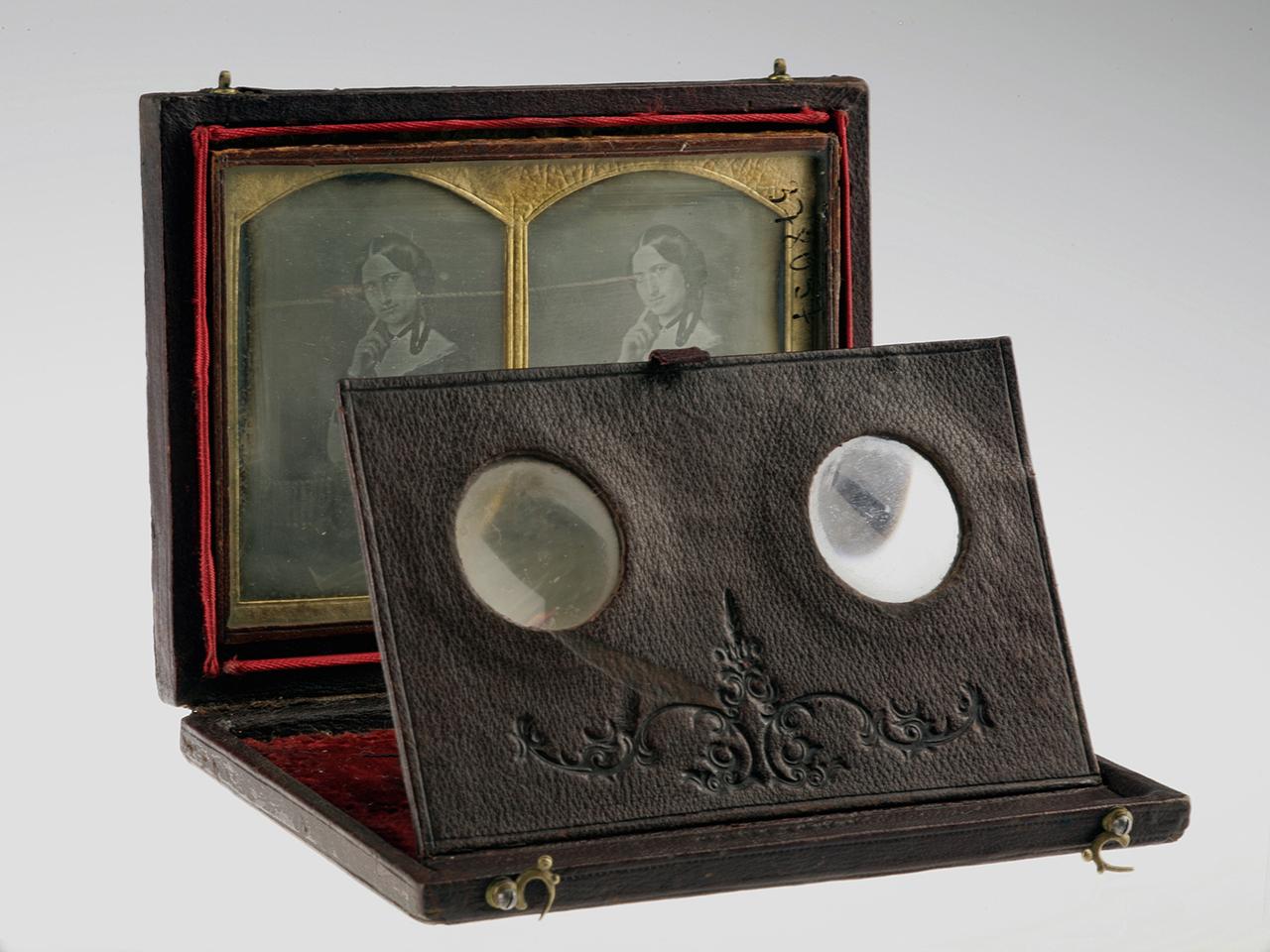
Stereophotograph is a special type of photography, a pair of images, which, when viewed through a stereoscopic device, produces a three-dimensional, spatial effect for the viewer. Lipót Strelisky's stereodagerrotype is the first and so far the only clearly identified such photograph in Hungary. The photographer who operated his studio in Pest in 1843, incorporated a stereo viewer attachment into the leather case protecting the daguerreotype.
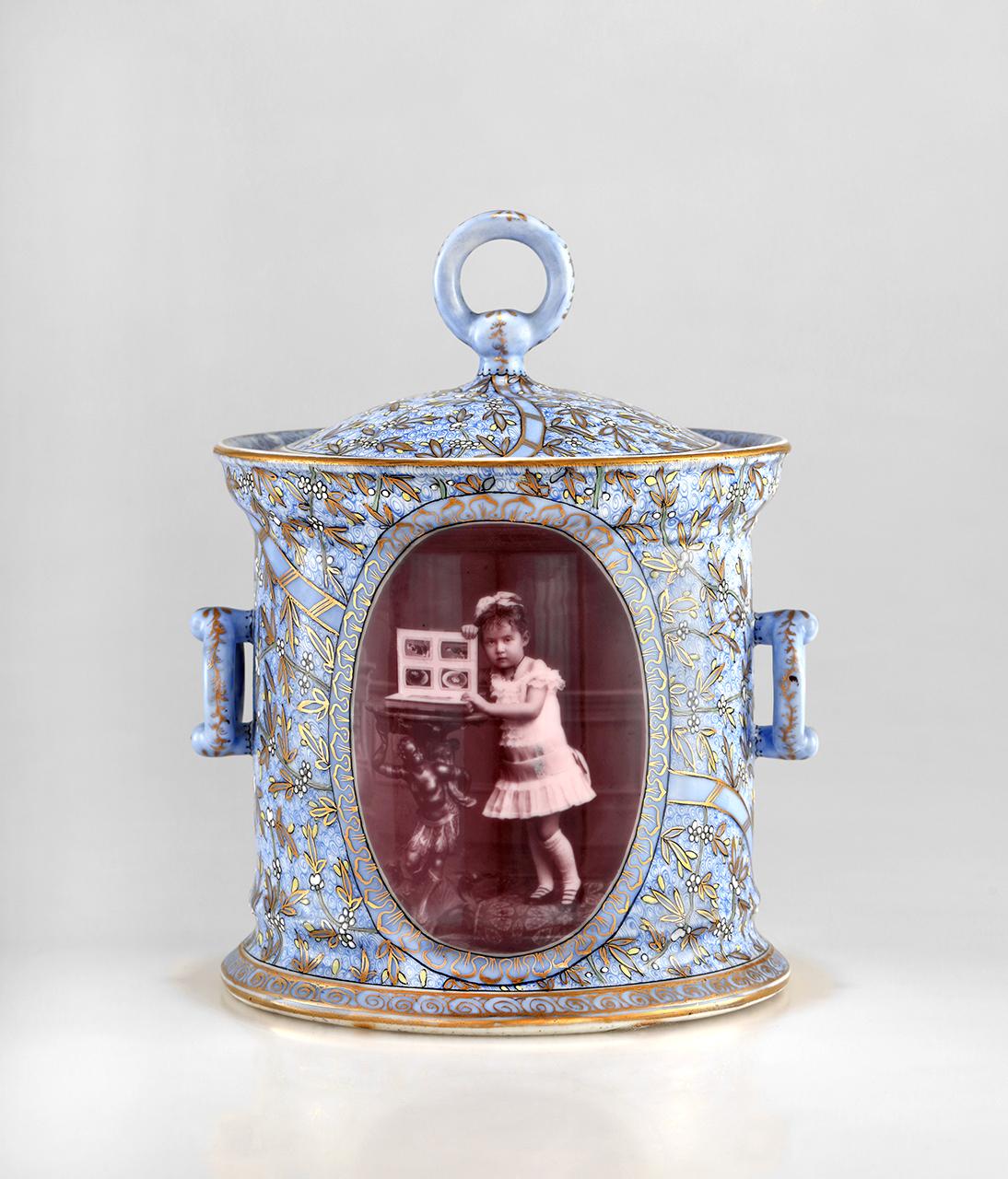
Photoceramic – photography fired onto the surface of porcelain, stone tile or glass – is one of the few photographic techniques that has made photography an inalienable part of the object, and in a sense three-dimensional. The most outstanding master of the photoceramic genre in Hungary was Ferenc Veress (1832–1916) from Kolozsvár. In one of the photographs of the tobacco container shown here, a charming little girl holds an open photo album on a table. On the base of the object, a burnt-in seal with the inscription VERESS F. FÉNYKÉPMŰTERMIBŐL KOLOZSVÁRT and the photographer's initials in the center indicate the maker.
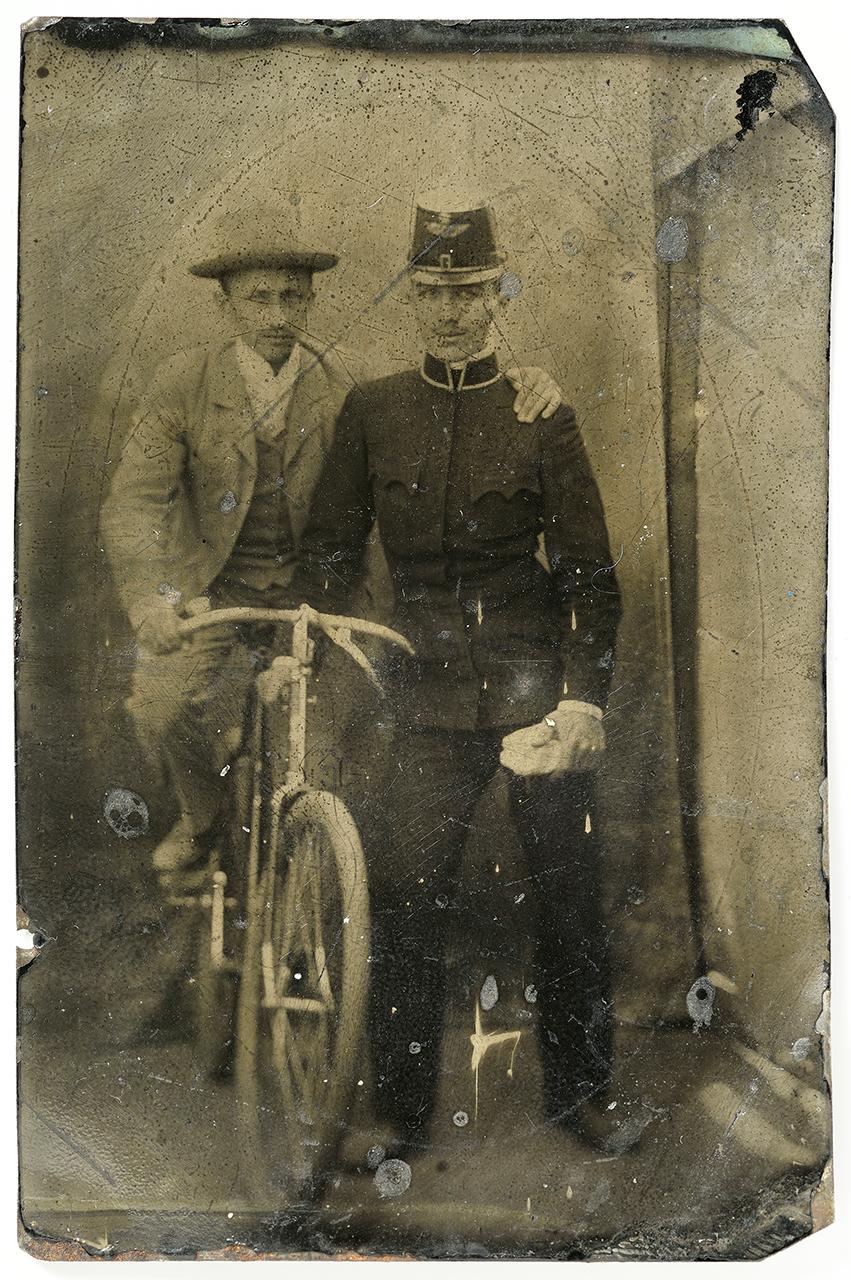
100–150 years ago, photographs were not only made on paper, but also on iron plates. From the Latin name for iron, these photographs were called ferrotypes. The bicycle in the photographs, jokingly called an iron horse, may have been the photographer's own, but in many cases it was part of the studio photographer's equipment.
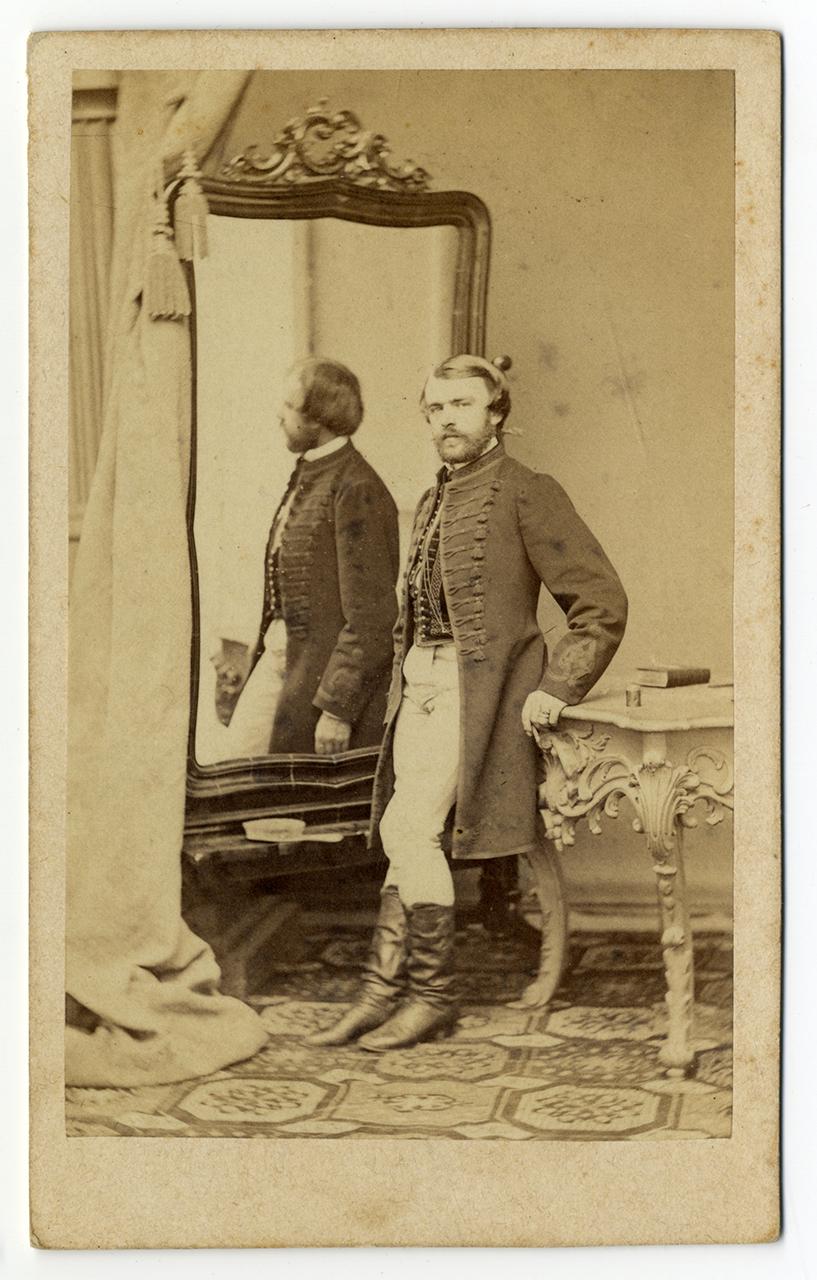
Albumen paper prints, approximately 6 × 9 cm in size, mounted on cardboardi.e. water-card photographs, became prevalent in Hungary in the 1860s as "carte de visit"-s. The photographer János Tiedge (1819–1888) placed a mirror behind his model for his studio portrait, that way both the Hungarian-style attire and hairstyle of the man could be seen from both sides.
Borszék, in Harghita County, Transylvania, was a popular destination for holidaymakers in the early twentieth century. Famous for its medicinal waters and mud baths, the settlement also offered an alpine climate and crystal-clear air for those seeking a cure. The spa had a permanent photographic studio, so this photo of a party of six was most probably taken in the studio of György Heiter. On the back of the photo, the participants wrote an entry "We will never forget the beautiful days we spent together! Borszék on August 16, 1906".