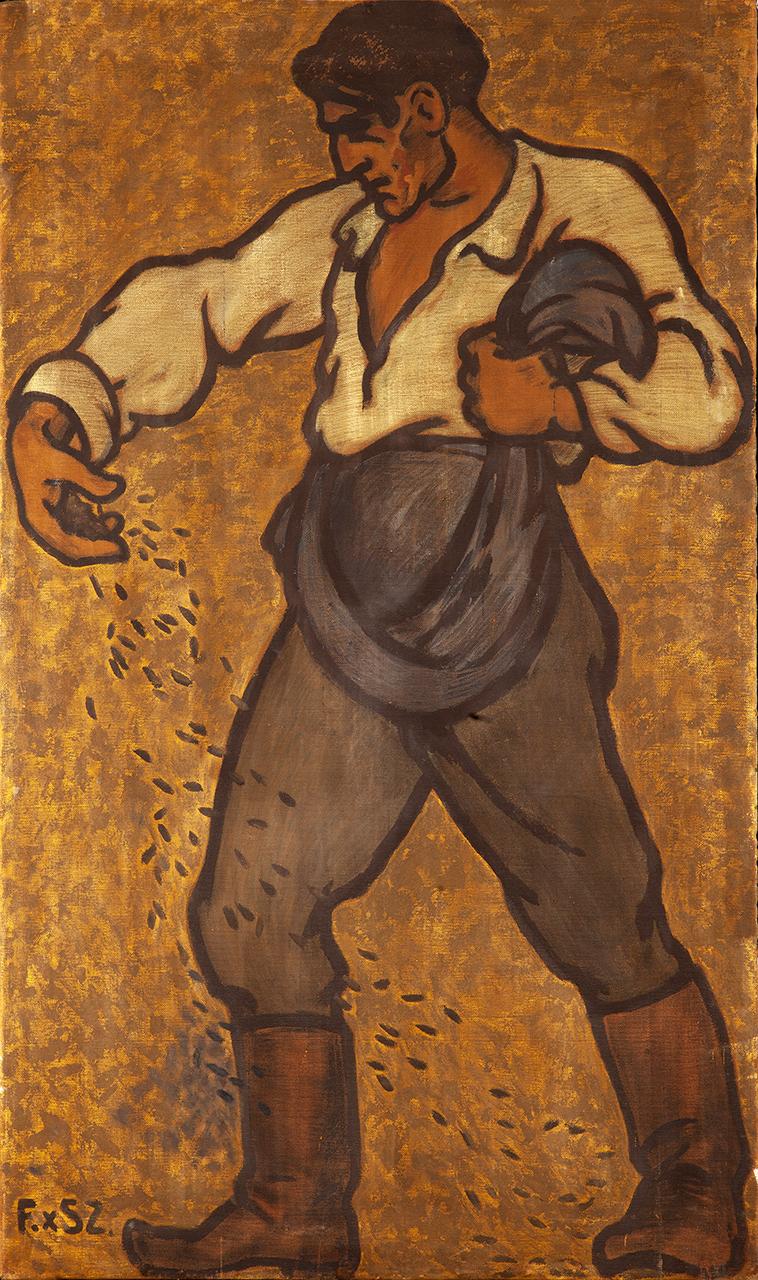
The Contemporary Art Collection, with approximately 12,000 items, was first a separate unit of the Museum of Contemporary History, established in 1957, then from 1966 of the Hungarian Museum of the Labour Movement, which after the political transition of 1990 was merged into the structure of the Historical Gallery of the National Museum. The primary task of the diverse collection was to collect paintings, prints, sculptures, medals and textiles related to the labour movement and workers' life. The collection includes works by leading figures of 20th century Hungarian fine and applied art as Sándor Bortnyik, Gyula Derkovits, Aladár Farkas and Zsigmond Strobl Kisfaludi. It also houses a considerable number of prints of prisoners of war and labour camps, including series by Imre Holló, Gitta Gyenes and Ágnes Lukács, which deal with memories of the ghettos and death camps.
Contact Orsolya Szerdahelyi, szerdahelyi.orsolya@mnm.hu Tel.: +36 1 327 7700/252
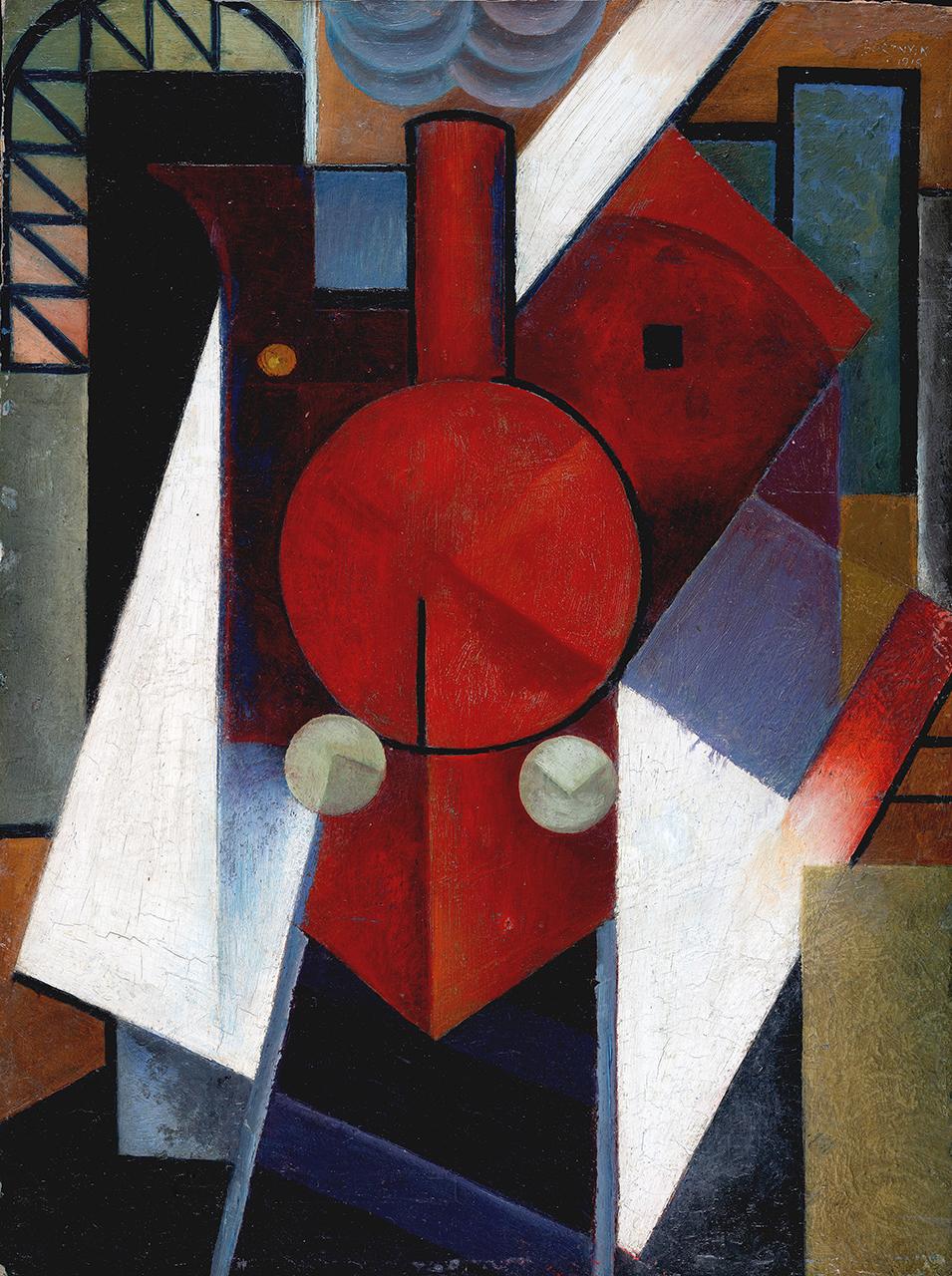
Sándor Bortnyik (1883–1976), oil on cardboard
The Red Locomotive is an emblematic work of the Hungarian avant-garde, evoking both the technical achievements of the Industrial Revolution and the dynamism of the modern world. The red colour of the stylized, highly geometric forms of the locomotive leaves no doubt about the socialist ideals that inspired the painting.
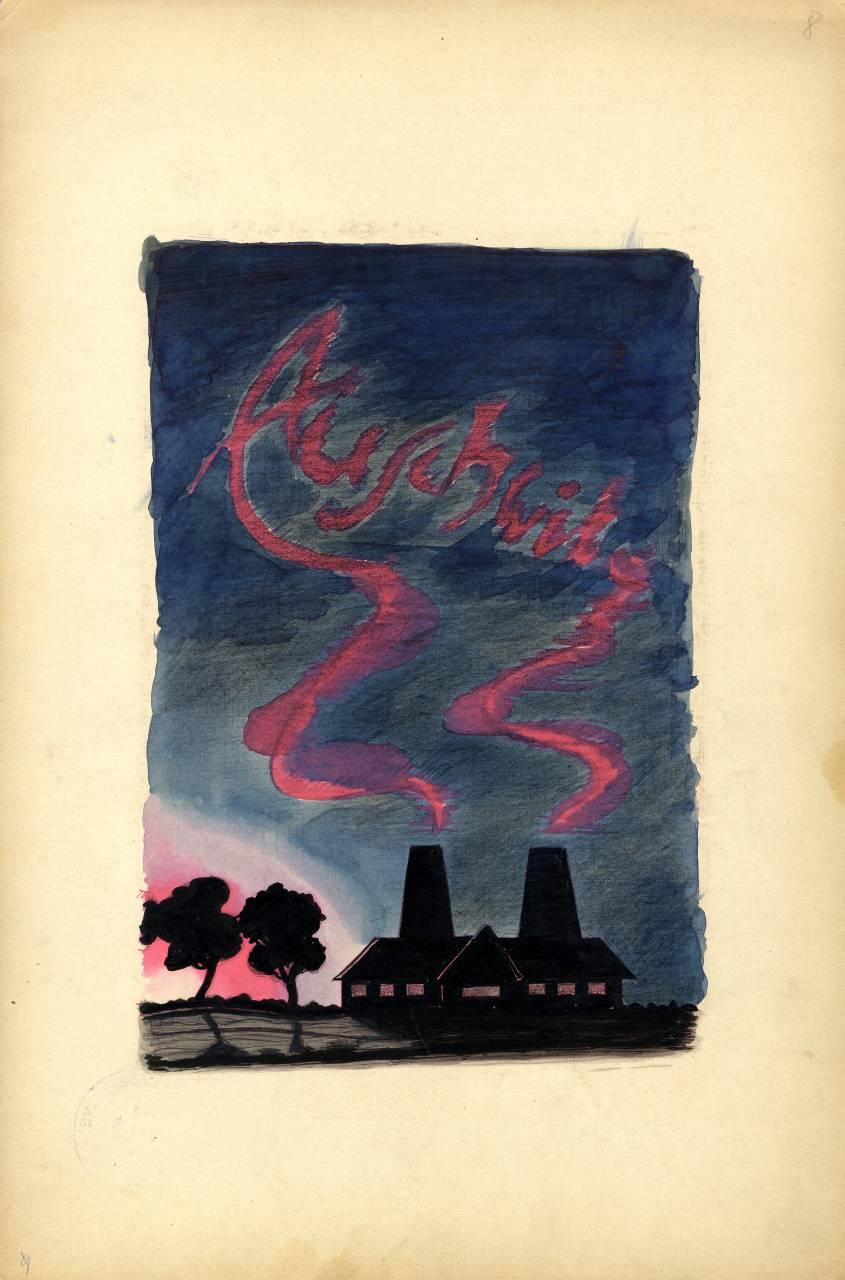
Imre Holló (1898–1964), ink on paper
Imre Holló, a dentist from Sátoraljaújhely, was deported to Auschwitz on 2 June 1944, and a few days later to the labour camp in Dörnhau, where he made a series of shocking drawings about everyday life in the camp.
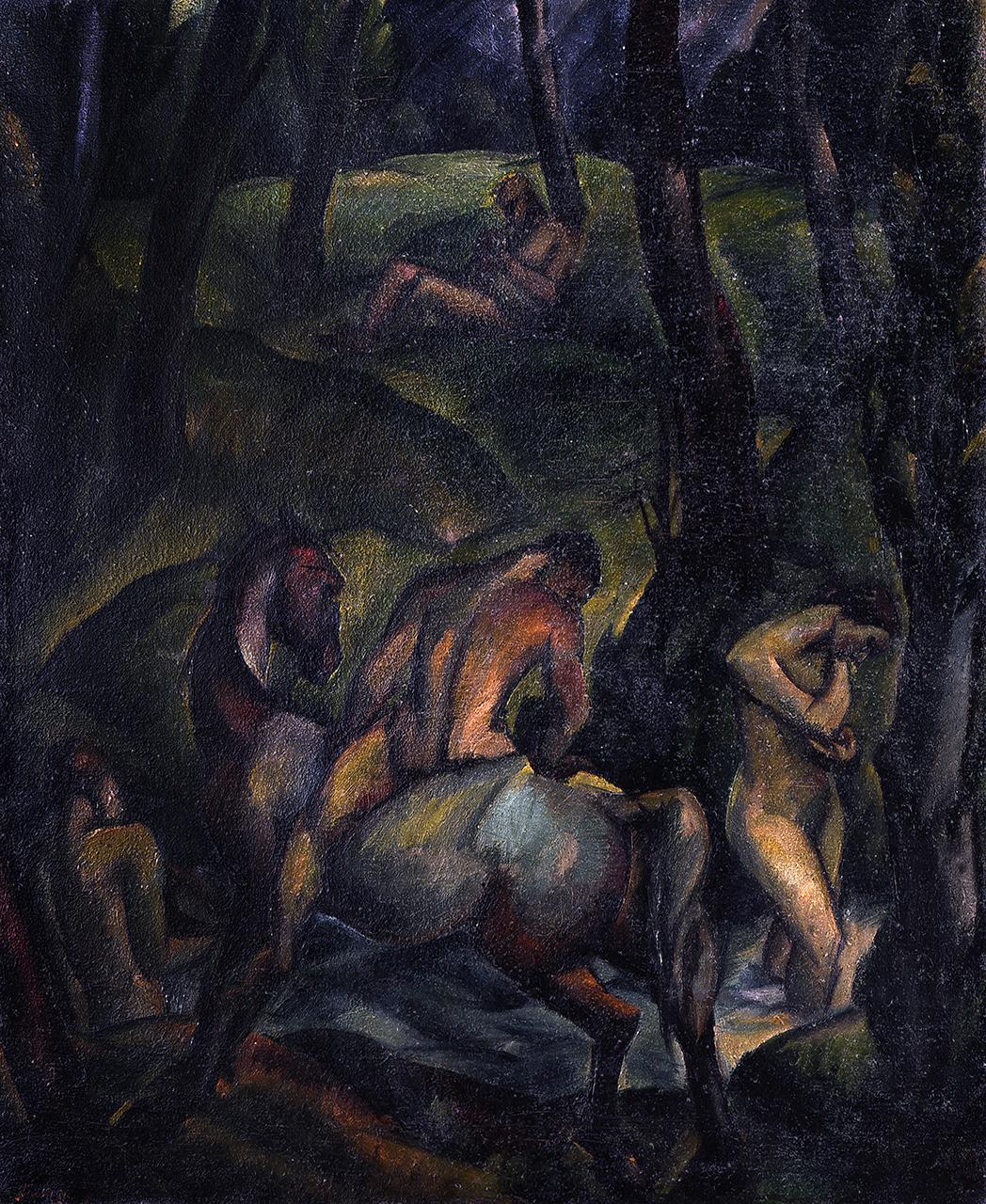
Gyula Derkovits (1894–1934), oil on canvas
The painting Horseman in the Forest by Gyula Derkovits reflects the mood of the turbulent post-war years. The figure of the rider is a symbol of human suffering, loneliness and struggle, with dark colours and dynamic lines that reinforce the sense of inner tension.
Géza Faragó (1877–1928), Andor Székely (1877–1945), paper, canvas, tempera,
Part of the festive decoration for the Lower House of the Parliament. .