Although the majority of the collection is made up of (rubber) stamps, its composition is much more varied and interesting. The objects include many different types of stamps, including some dry seals. Signature seals and the coat of arms seals of several noble families form a special group, as do various illegal anti-war handstamps, clichés, printing presses and cylinders made during the Second World War. Although much of the material in the collection is homogeneous in function and use, there are many variations in size and shape. The reason for that is the tastes, characteristics, customs and standards of different periods. The circular shape is the most common and is the typical authenticating and validating form of official documents, while the oval shape (lying or standing) is mostly used as a representative, private seal of civil organisations. The so-called "long stamp" is also used, which can vary in shape from a single line to a square, depending on the length of the inscription. Oblong stamps are generally not authentic, but are used to indicate (header pattern) and provide information (most commonly used in government offices: "Secret"; "Confidential"; "Cancelled"; "Delivered"; "To be forwarded") about the document, or to classify the document, to place it in the bureaucratic system. A third type of long stamp is also common and frequently used: the so-called "blank" stamps, also known as stamp templates. Stamps are also classified according to their materials, i.e. copper, bronze, metal alloys, wood, rubber and plastic.
Contact Vilmos Gál, gal.vilmos@mnm.hu
Composition of the collection
The party stamps form one of the most interesting and varied units in the collection. It includes stamps of the Independent Smallholders, Agrarian Workers and Civic Party, the Hungarian Democratic Party (Balogh Party, 1947), the National Peasant Party, the Hungarian Radical Party and some stamps of the Civic Radical Party. We also have two confiscated stamps of the National Socialist Party – Hungary Movement of 1939. Among the party stamps, we must highlight the huge collection of the Hungarian Social Democratic Party. That agroup of objects is unique not only because of its considerable quantity (388 items), but also because of its temporal extent (1890–1948).
The Hungarian Communist Youth League (KISZ), established after the suppression of the 1956 Revolution and War of Independence, was supposed to open new horizons within the communist movement for young people who had actively participated in the revolution. In the 1950s, the pioneer movement was created for the age group under 14, also following the Soviet model (and at the same time adopting the organisational and activity elements of scouting, but re-ideologising them). Many of the stamps of the organisations listed above are now in the museum's collection. The largest amount was provided by the pioneer movement (57 items) and the KISZ (156 items).
Some material is also available from the areas of state administration.
The collection is fully processed, each item has been inventoried, an object record has been made for each item, and in addition to the record system based on the inventory number, they are catalogued on a thematic basis, too.
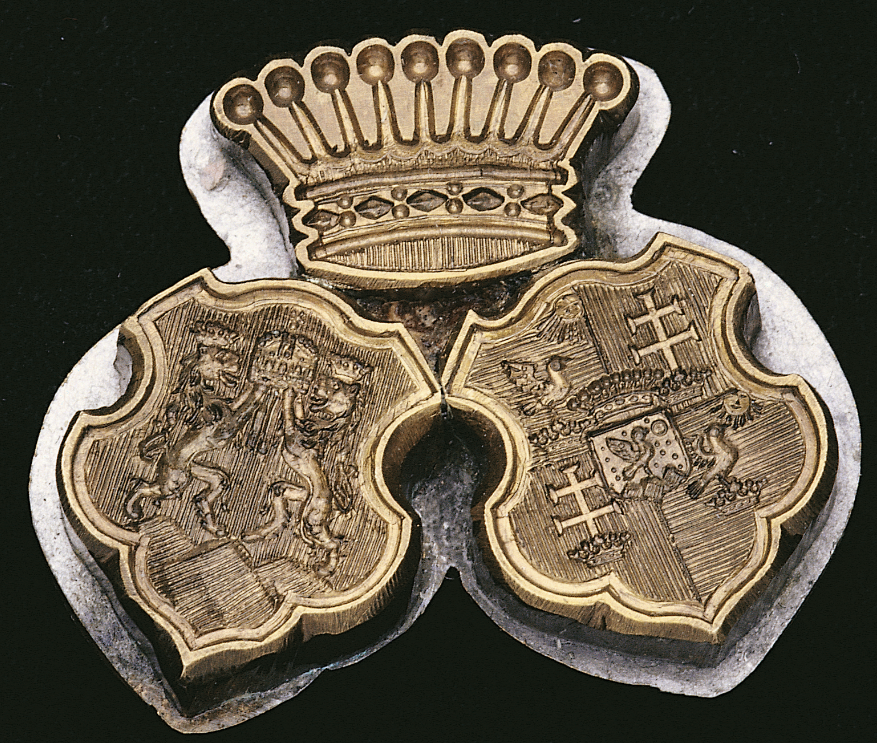
The marriage coat of arms of the Count Széchenyi and Count Andrássy families. A double shield with the crests of the two families, surmounted by a nine-pointed count's coronet.
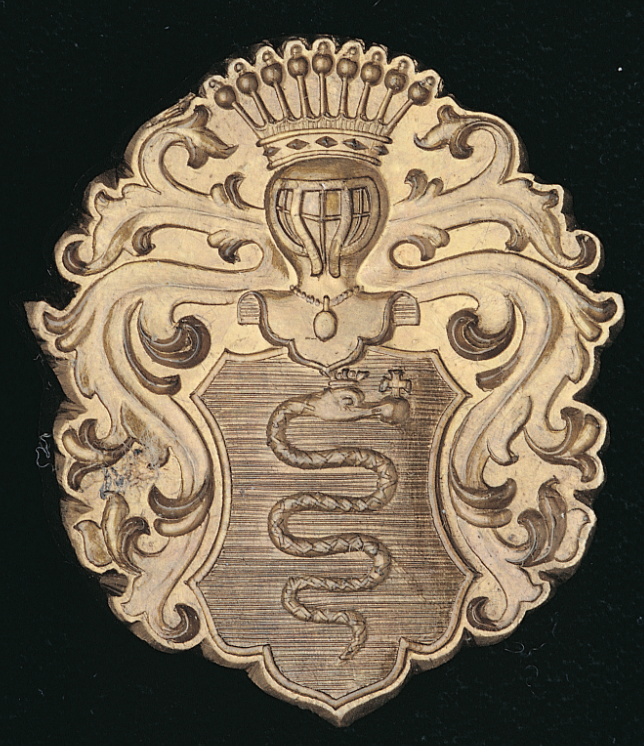
The stamp depicts the coat of arms of the Count Bethlen family.
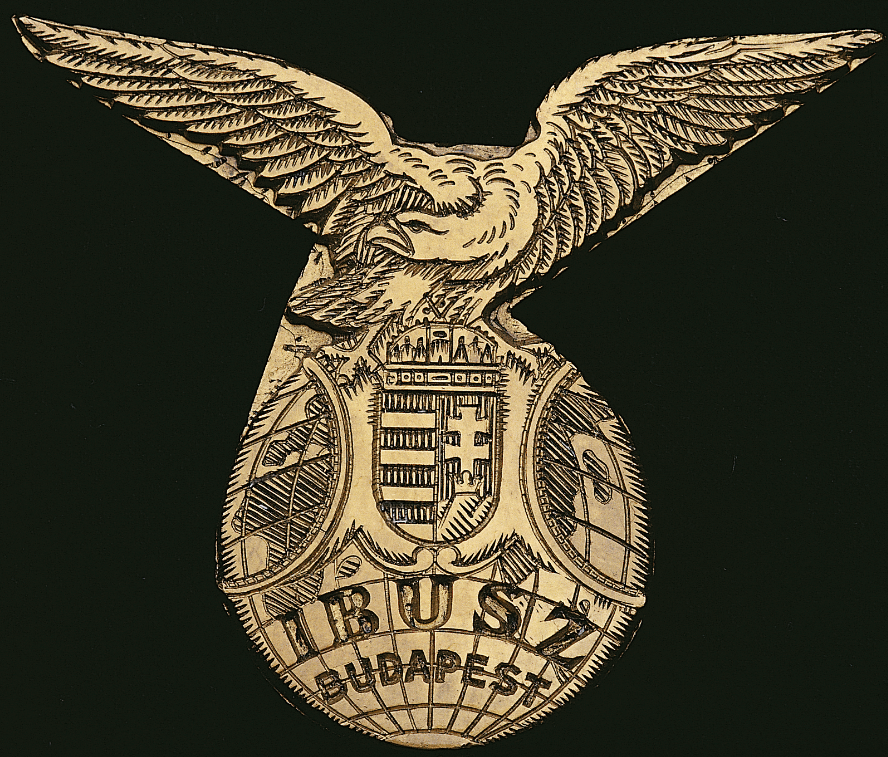
The central part of the IBUSZ (national travel company) stamp shows the globe with an eagle with extended wings and the Hungarian coat of arms with the crown, below the inscription IBUSZ. BUDAPEST
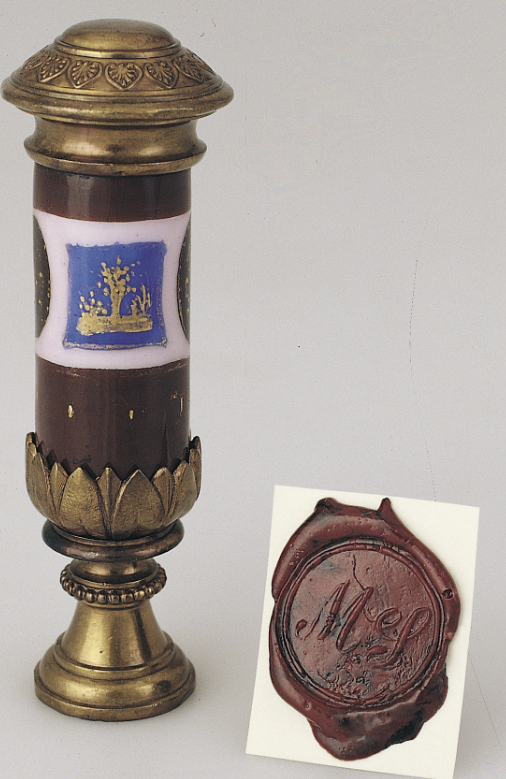
Porcelain tongue, ornate, neo-Renaissance style seal with the letters M I.