The Archaeological Animal Bone Collection of the Hungarian National Museum was established in 1953 by Sándor Bökönyi as the fifth independent collection of the Archaeology Department. The collection was based on animal bone remains from contemporary archaeological excavations and from the Prehistoric Collection. The Collection contains 78,513 animal bones from 388 sites. The oldest finds come from the sites of Magyarád (1869–70), Szihalom (1870), Kiskevély Cave and Pusztaszentjános (1887). The collection comprises animal bone material from two foreign excavations, Abdallah Nirqi (Nubia, 1964) and Hana (Northern Mongolia 1963).
The Archaeological Animal Bone Collection of the Hungarian National Museum preserves remains of all the large mammal species of the Carpathian Basin in the last twelve thousand years. In addition, the collection includes the most complete excavation documentation of domestic animal skeletons belonging to the Hungarians and also to peoples once inhabited the Carpathian Basin. In 2004 Miklós Kretzoi's comparative bird and mammal bone material was donated to the Collection.
Contact: Dr. Peter Csippán, csippan.peter@hnm.hu
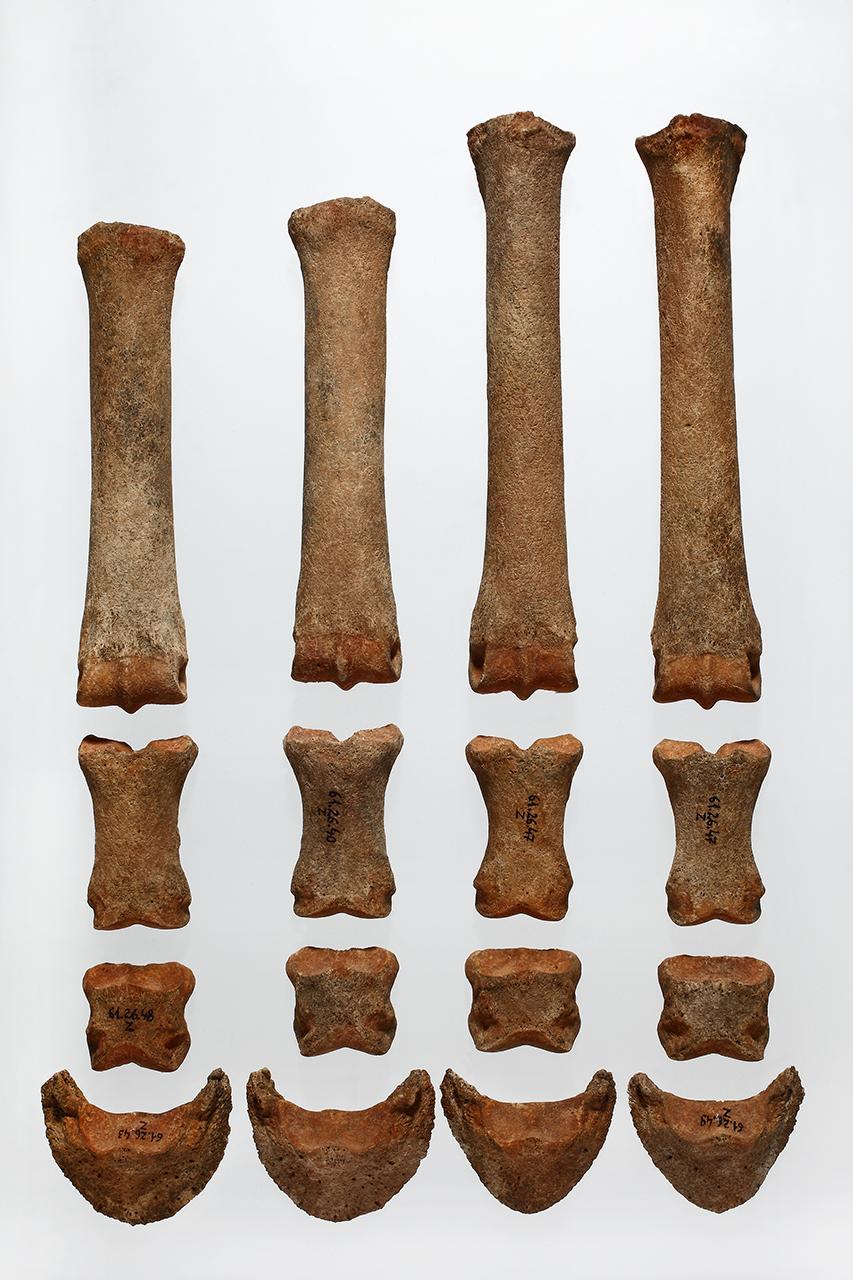
The horse's head, together with the four leg ends, comes from a partial horse burial of the Hungarian Conquest period (Orosháza, grave 4). In the Conquest sacrificial pits and graves whole skeletons (identified animals: cattle, dog, wolf, fox, deer) and partial skeletons, separate heads and individual bones were found. There are two types of partial skeletons: one with only the head and the four leg ends (horse, cattle), the other with different skeletal parts (badger, cat, deer).
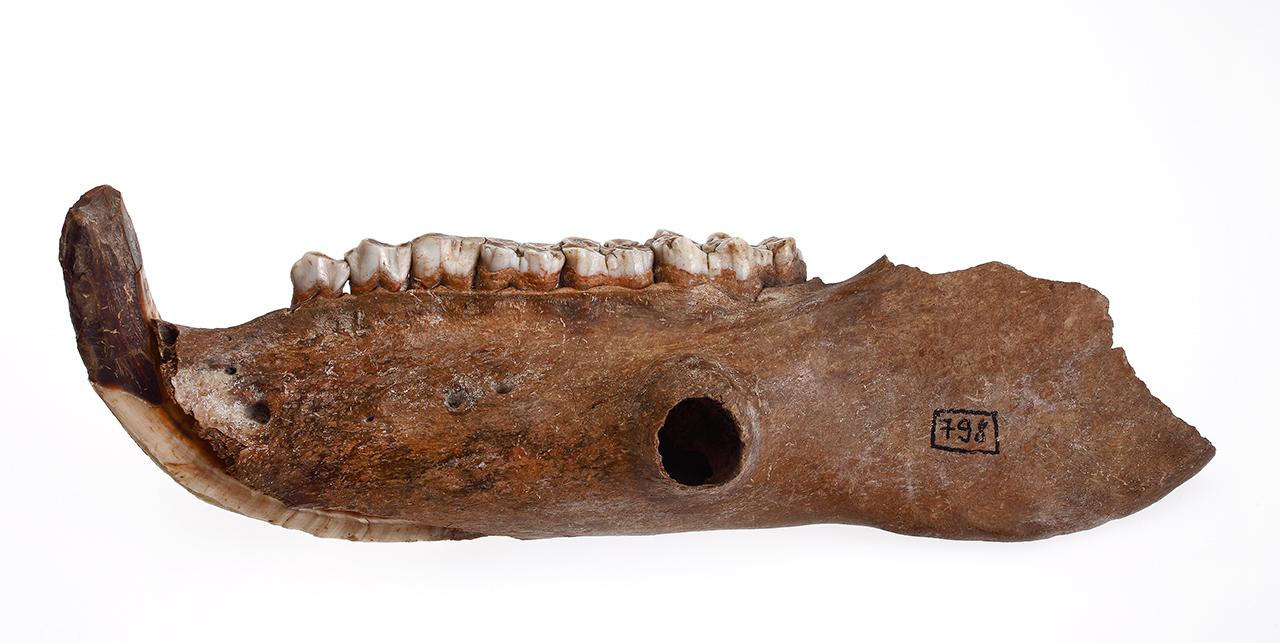
The size of the lower tusk of some of the domestic pigs from Zalavár was found to be almost identical to that of the boar. The outer wall of the mandibles of these animals had a protrusion the size of a peanut, caused by the overgrowth of the root of the lower tusk, which turned sideways and pushed the outer wall of the mandible out. In extreme cases, the root end of the tusk has broken through the top of the protrusion, creating a large fistula opening. Previously these pigs were considered a separate breed, but the phenomenon has proved to be a pathological lesion.
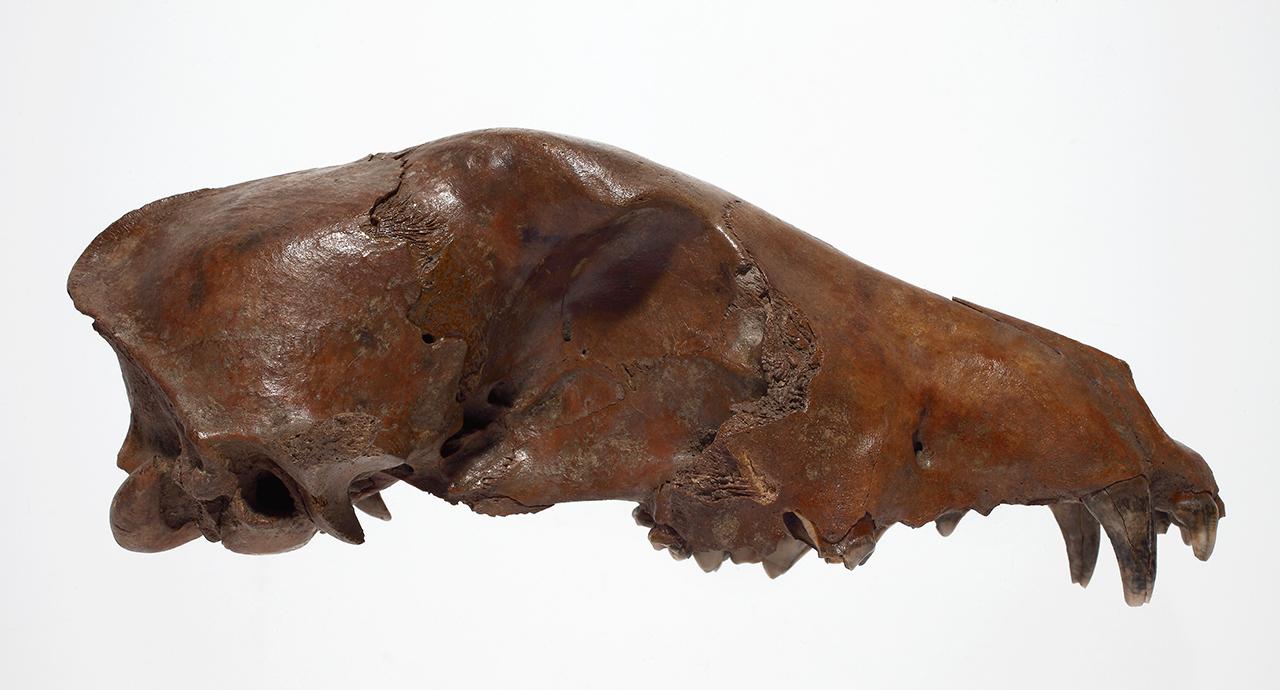
The Árpád era dog skull comes from Zalavár. Based on its characteristics, it belonged to a male, adult, greyhound-type specimen. Dogs of this breed were kept for hunting. In the Árpád era, they may have hunted buffalos, brown bears, deer, wild boar and roe deer, and fur-bearing animals such as wolves, red foxes, badgers, martens and beavers.
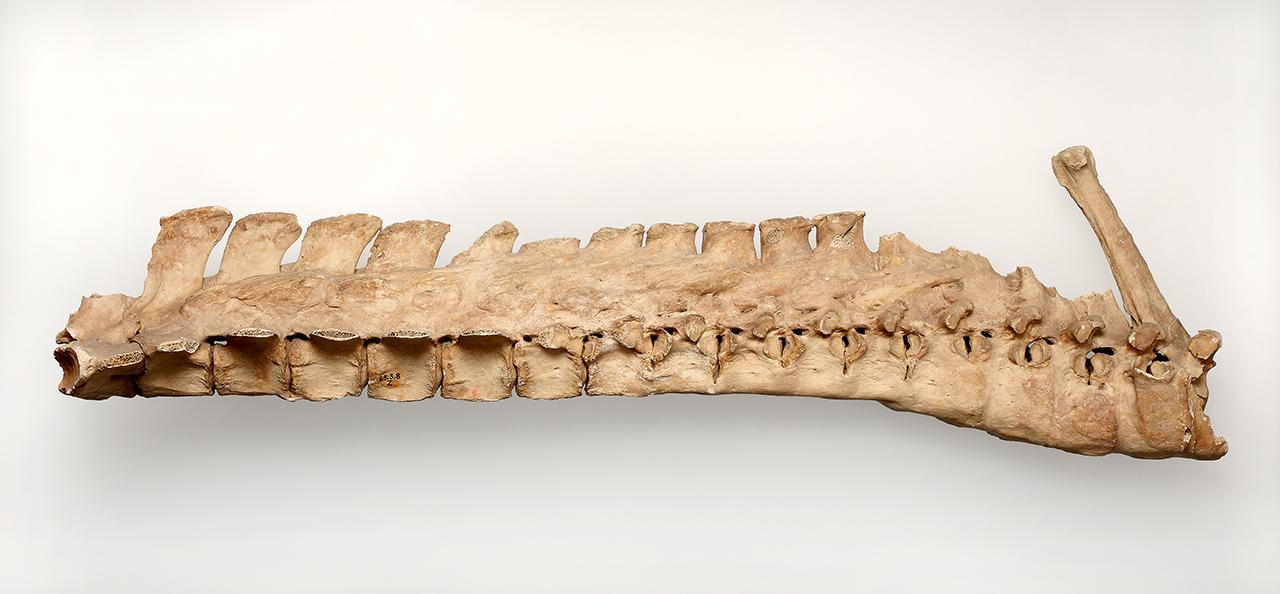
The degenerated vertebral column belongs to the skeleton of a stallion of about 8 years old. The skeleton, together with the remains of a male dog, comes from a Germanic cemetery. The fusion of the 17 vertebrae of the spinal column, forming the "bamboo spine", was caused by inflammatory processes. This type of inflammation is observed in saddle horses, but in the case of the Keszthely horse it may be associated with a serious disease affecting the bones and joints.
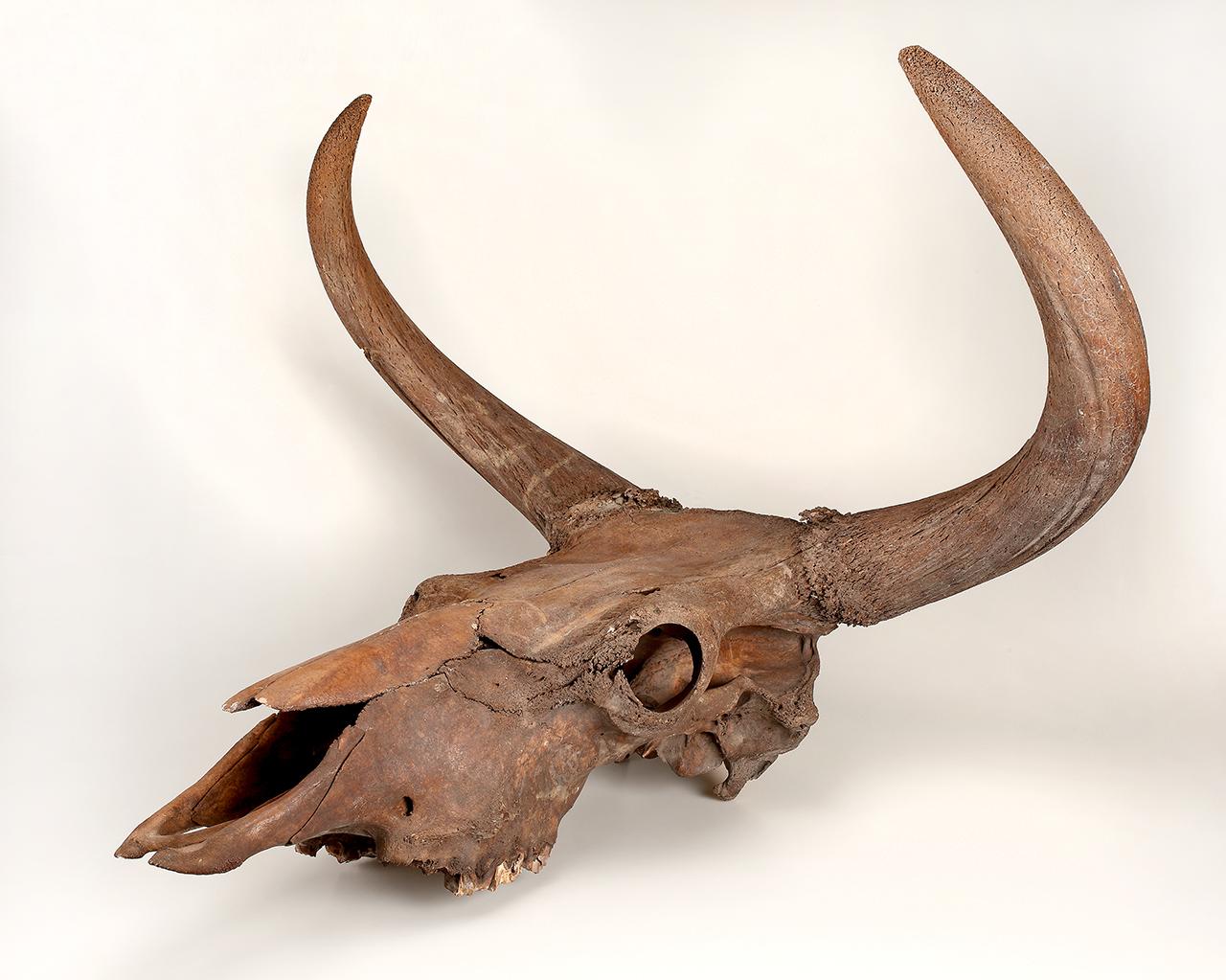
The auroch found in Kecel-Rózsaberek is one of the most complete auroch skeletons in Eastern and South-eastern Europe. Dating from the Mesolithic period, the 8-10-year-old bull had a wither height of about 1.6 metres. The auroch, ancestor to today's cattle was a large herbivore, now extinct. According to our current knowledge, its latest occurrence in the territory of Hungary is related to Zalavár.
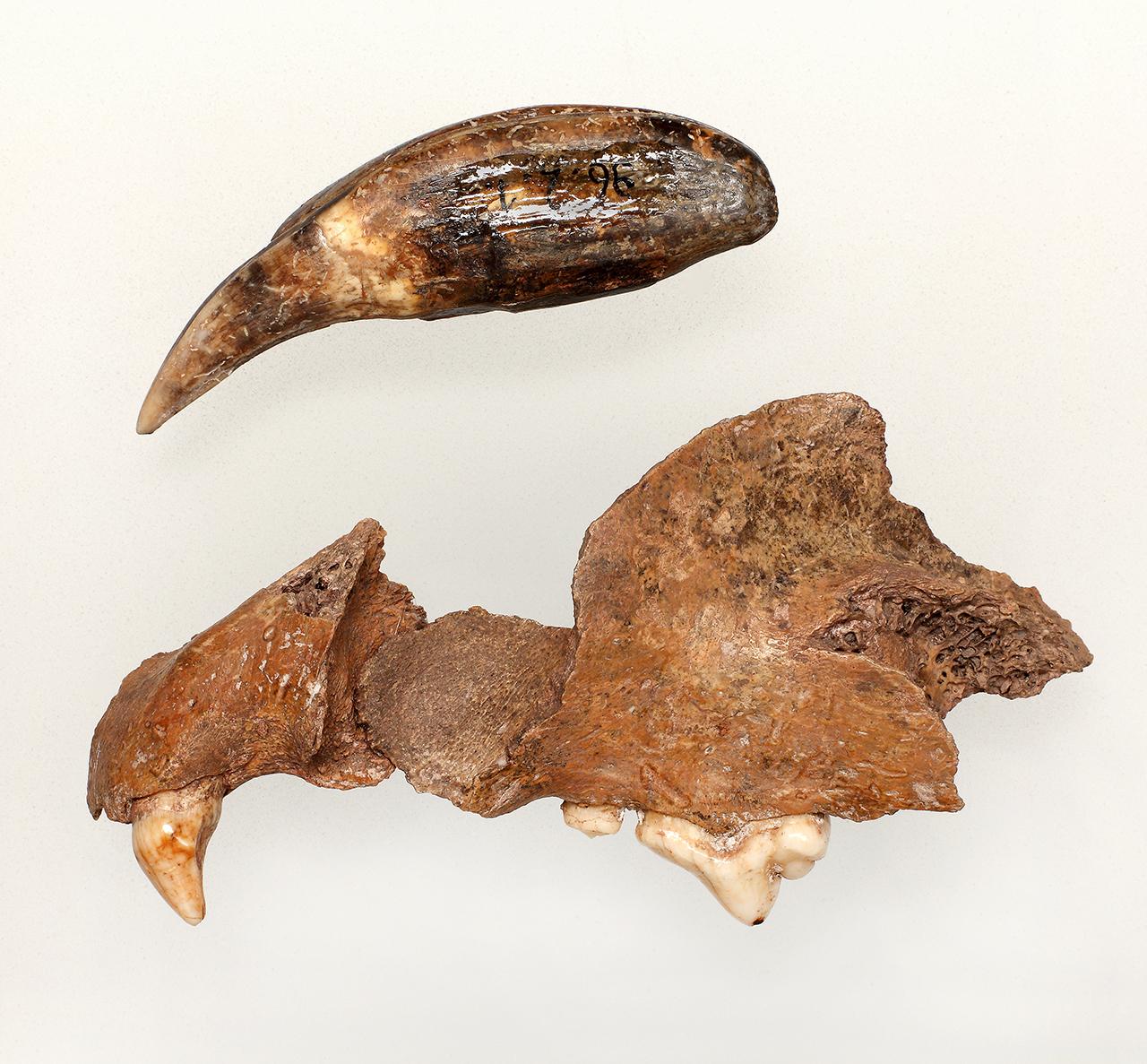
The right upper canine tooth of the lion was found at Tiszalúc-Sarkad, the left upper jaw fragment at Gyöngyöshalász-Encspuszta at a Late Bronze Age site. The small-sized Asiatic/Persian lion arrived in the Carpathian Basin with the so-called Late Neolithic-Cresassian "continental" faunal wave, where it lived in forests and forest-steppe environment. The second occurrence of this species in the Carpathian Basin may be related to ecological/climatic change.