Commemorative medals
The most important part of the collection consists of commemorative medals relating to Hungarian and European historical events, as well as portrait medals of historical figures dating from the 15th century to the present day. In addition, there are several significant groups of particular interest from the perspective of cultural history, including baptism medals, Freemasons’ medals, and various series of award medals. Within the category of religious medals, the most comprehensive collection unit is formed by the papal commemorative medals. This internationally significant collection comprises more than 30,000 items. The collection further preserves impressive medal series connected to events in economic, industrial, and artistic life.
Contact Márta Pallag, pallag.marta@hnm.hu
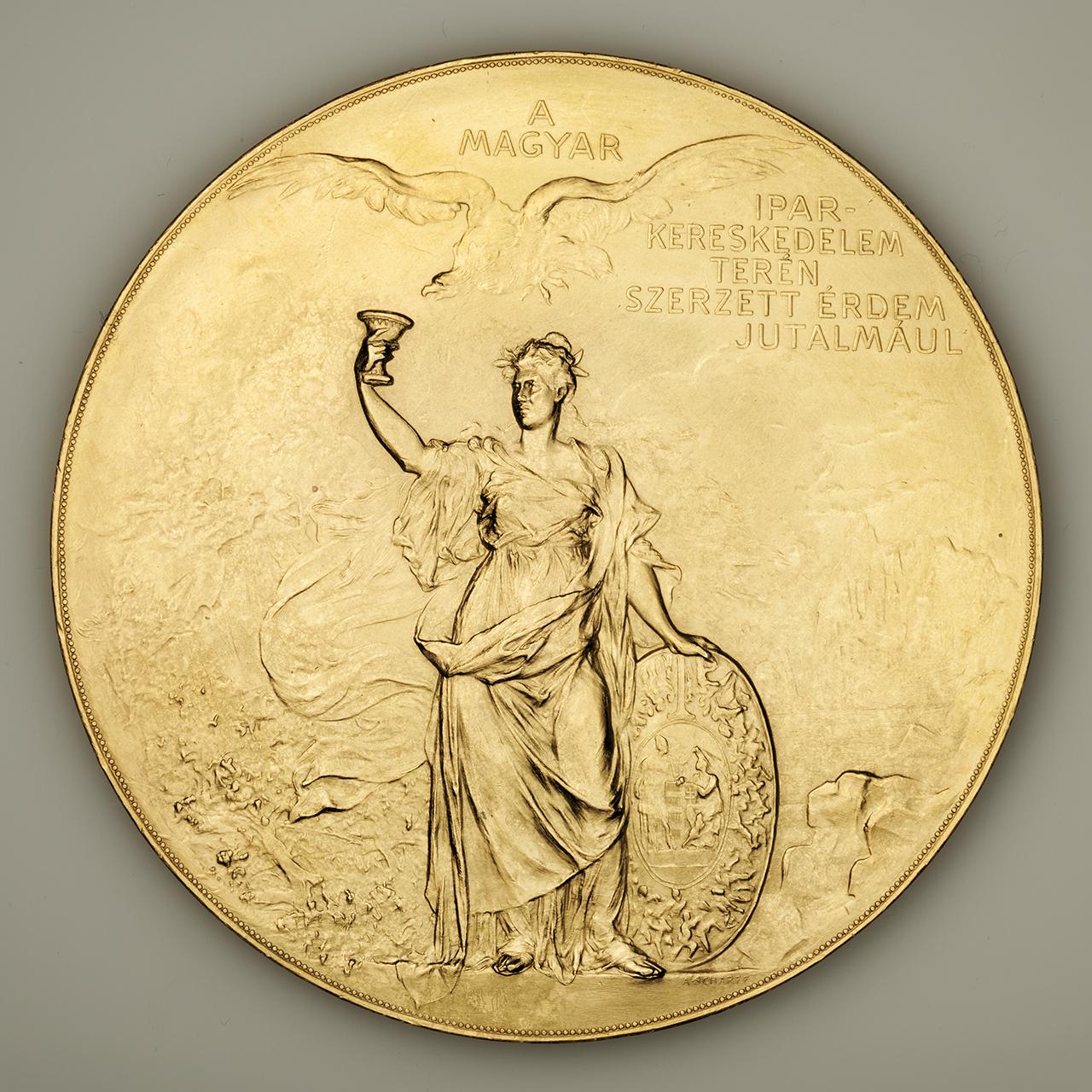
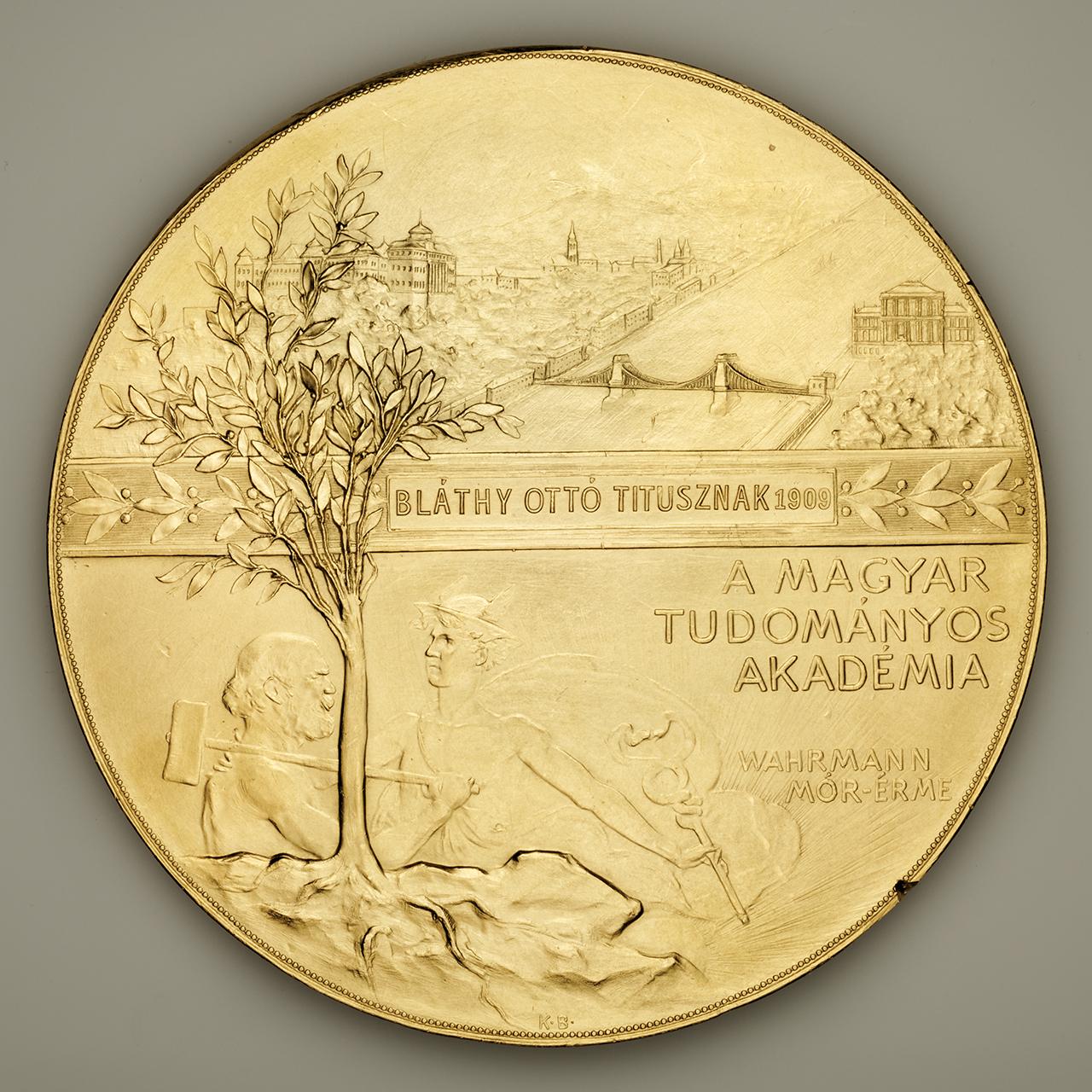
The prestigious award, named after its founder Mór Wahrmann (1832–1892), was conferred every three years by the Hungarian Academy of Sciences between 1897 and 1933 upon scholars, engineers, and inventors who had achieved outstanding results in the fields of Hungarian commerce and industry. Designed by the Viennese medal artist Anton Scharff and struck at the Körmöcbánya (today: Kremnica, Slovakia) Mint, this gold prize medal is represented by only a single known example from the first series—the medal awarded in 1909 to the physicist Ottó Bláthy. It is struck, diameter: 80 mm; weight: 371.28 g.
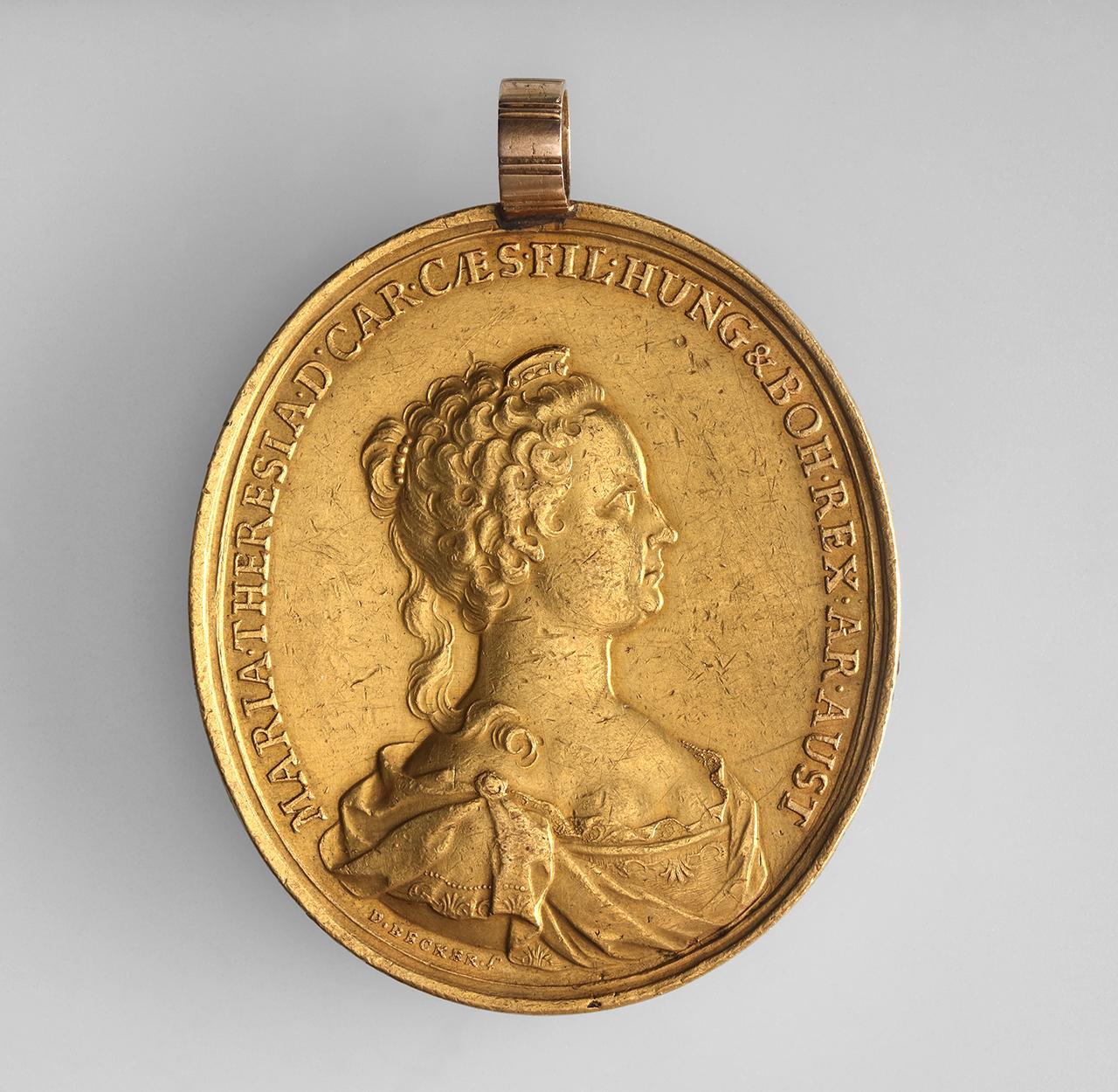
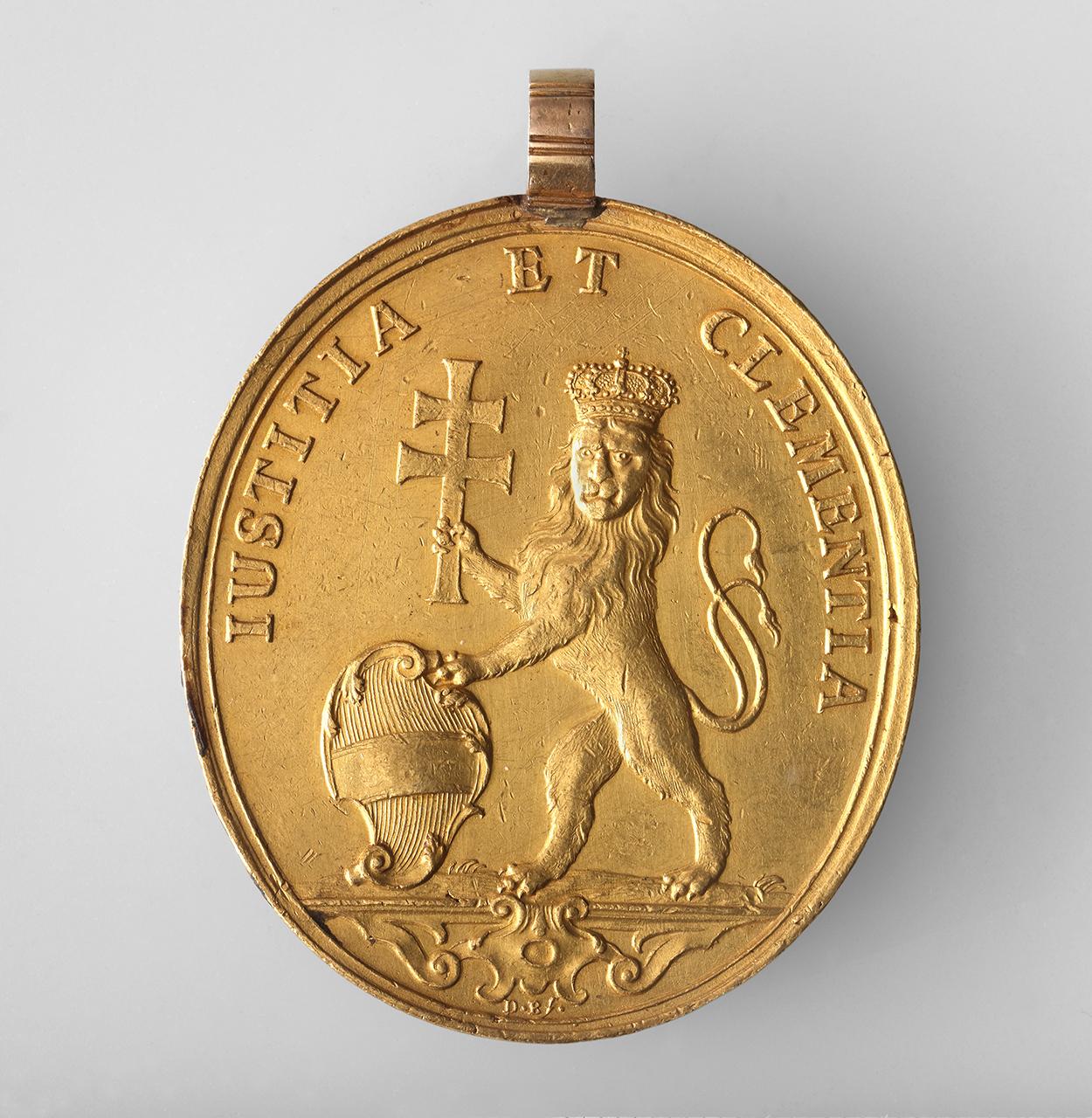
The oval medal, fitted with a suspension loop, depicts a youthful portrait of Maria Theresa, Holy Roman Empress and Queen of Hungary, on the obverse. The reverse shows a crowned lion leaning on the Austrian coat of arms, holding the double cross in its paw. Above it appears the ruler’s motto: Iustitia et Clementia (“Justice and Clemency”). This finely executed medal was produced by the Becker workshop and was bestowed by the queen as an expression of royal clemency, awarded to loyal subjects of the court who had rendered outstanding service. The struck gold medal is 43 x 48 mm.
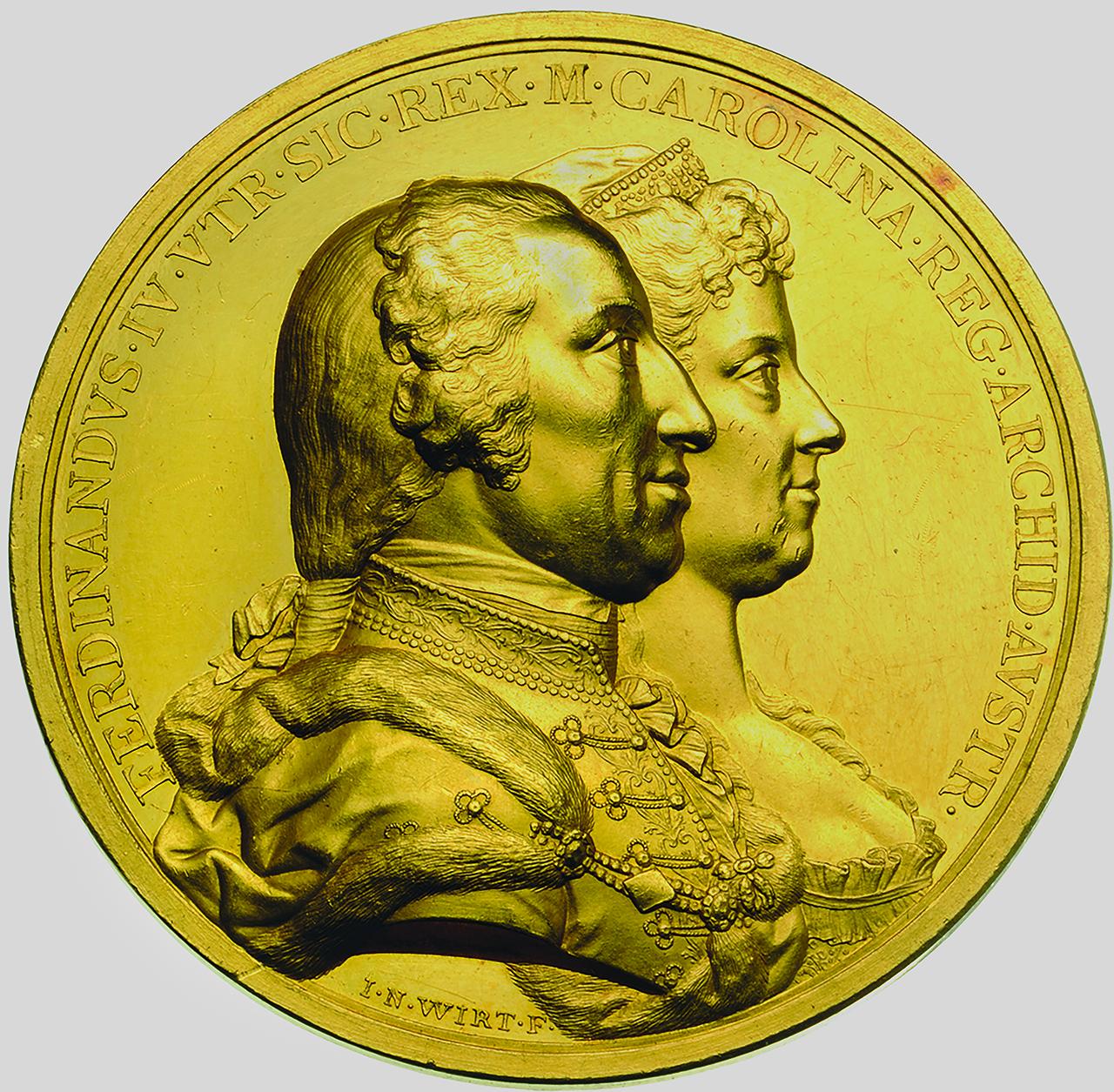
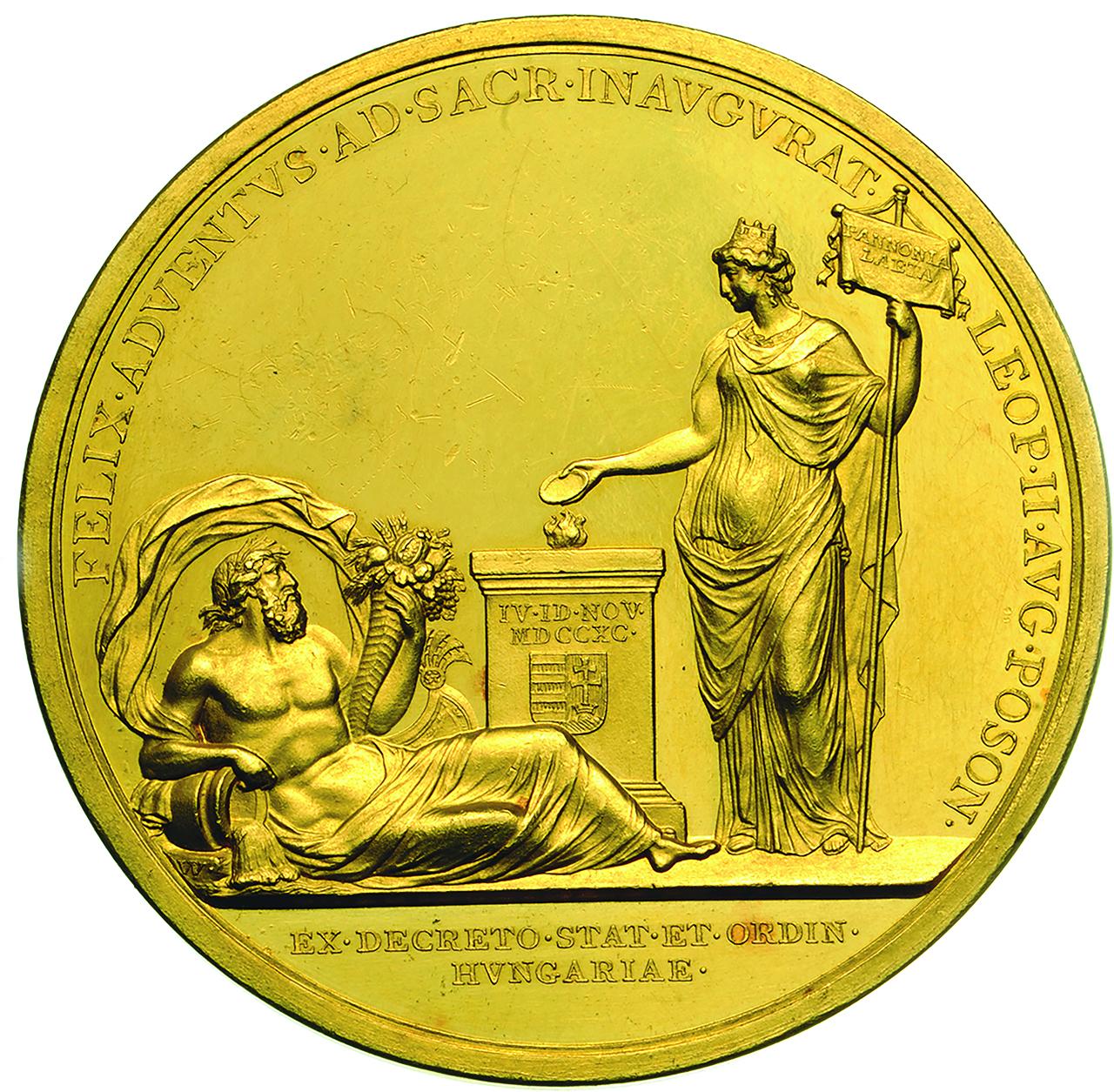
The coronation of Leopold II as King of Hungary took place in 1790 in Pozsony (today: Bratislava, Slovakia). At the coronation ceremony, the new monarch’s brother-in-law, Ferdinand IV of Bourbon, King of Naples, and his wife Maria Carolina, appeared dressed in Hungarian ceremonial costume. This gesture so greatly won the favour of the Hungarian Estates that, at the initiative of Count Ferenc Széchényi, a commemorative medal was commissioned through public subscription. The obverse of the medal depicts the Neapolitan royal couple wearing Hungarian ceremonial attire. The medal was designed by the Viennese medal artist Johann Nepomuk Wirth, and the gold and silver examples were produced in 1791. Some of the gold specimens were presented to the counties, while others were personally taken by Count Széchényi to Naples and presented to King Ferdinand IV and his wife. The gold 20-ducat-coin is struck, weight: 69,75 g, diameter: 48 mm.